
As the July 31, 2026, deadline approaches, small business owners and plan sponsors across the United States are preparing to navigate the complexities of the Patient-Centered Outcomes Research Institute (PCORI) fee. Established as a component of the Patient Protection and Affordable Care Act (ACA), the PCORI fee is a mandatory federal assessment designed to fund research into the clinical effectiveness of various medical treatments. While often managed by insurance carriers for fully-insured plans, the responsibility for reporting and paying these fees falls directly on employers who sponsor self-insured health plans, including various types of Health Reimbursement Arrangements (HRAs).
The PCORI fee represents a critical, albeit often overlooked, compliance obligation for the modern employer. Failure to adhere to the reporting requirements can result in significant financial penalties and administrative complications. This guide provides a comprehensive overview of the PCORI fee structure, the legislative history behind the mandate, and the specific steps required for organizational compliance in the 2026 tax year.
The Origin and Mission of the Patient-Centered Outcomes Research Institute
The Patient-Centered Outcomes Research Institute was established as an independent, non-profit organization through the ACA in 2010. Its primary mission is to conduct comparative clinical effectiveness research (CER). This research is intended to assist patients, clinicians, purchasers, and policymakers in making informed health decisions by examining which medical treatments and strategies work best for specific patient populations.
Unlike traditional medical research that may focus on the development of new drugs, PCORI-funded studies typically compare existing treatments to determine their real-world impact on patient outcomes. By focusing on "patient-centered" metrics—such as quality of life, recovery time, and symptom management—the institute aims to shift the healthcare landscape toward more personalized and effective care. The funding for this research is provided by the Patient-Centered Outcomes Research Trust Fund (PCORTF), which is financed through a combination of general federal revenue and the specific excise fees paid by health insurance issuers and self-insured plan sponsors.

Legislative Timeline and the Extension of the PCORI Mandate
The PCORI fee was originally designed as a temporary measure. When first implemented, the fee was scheduled to expire for plan years ending after September 30, 2019. However, the value of the institute’s research and the ongoing need for stable funding led to a significant legislative extension.
- March 23, 2010: The Affordable Care Act is signed into law, creating PCORI and the associated funding mechanism.
- December 2019: As the original expiration date neared, Congress passed the Further Consolidated Appropriations Act of 2020. This bipartisan legislation extended the PCORI fee for an additional ten years.
- September 30, 2029: The current sunset date for the PCORI fee. Under existing law, the fee will apply to all plan years ending before this date.
This extension underscores the federal government’s commitment to comparative effectiveness research as a pillar of healthcare reform. For employers, it means that PCORI compliance will remain a standard part of the annual tax and benefits cycle for the foreseeable future.
Determining Liability: Who Must Pay the PCORI Fee?
The determination of who owes the PCORI fee depends largely on the structure of the health benefits offered to employees. The IRS distinguishes between "specified health insurance policies" and "applicable self-insured health plans."
Fully-Insured Plans
For traditional fully-insured group health plans, the insurance carrier is responsible for calculating and paying the PCORI fee. Employers with these plans typically see the cost of the fee passed through in their monthly premiums, but they do not have a separate filing requirement with the IRS.
Self-Insured Plans and HRAs
The reporting burden shifts to the employer if they sponsor a self-insured plan. In the modern small business environment, this most frequently applies to those offering Health Reimbursement Arrangements (HRAs). Because HRAs are considered self-insured group health plans under the ACA, they are subject to PCORI fees. Specifically, the following arrangements require employer filing:

- Qualified Small Employer HRA (QSEHRA): Designed for businesses with fewer than 50 full-time equivalent employees that do not offer a group medical plan.
- Individual Coverage HRA (ICHRA): An arrangement that allows employers of any size to reimburse employees for individual health insurance premiums.
- Group Coverage HRA (GCHRA): Also known as an integrated HRA, this is offered alongside a traditional group health insurance plan.
The Nuance of Integrated Plans
There is a specific exception for integrated HRAs. If an employer offers both a self-insured medical plan and an HRA, and both are sponsored by the same entity and have the same plan year, they can be treated as a single "plan" for PCORI purposes. However, if an employer offers a fully-insured medical plan alongside a GCHRA, the employer must still pay the PCORI fee for the HRA, while the insurer pays the fee for the medical plan.
Exemptions and Non-Applicable Benefits
Not all employee benefits are subject to the PCORI mandate. The IRS has identified several "excepted benefits" that do not require fee payment. These include:
- Health Savings Accounts (HSAs): Because HSAs are individual accounts and not group health plans, they are exempt.
- Stand-alone Dental and Vision Plans: If these benefits are offered through a separate policy or are not considered part of the "major medical" coverage, they are exempt.
- Flexible Spending Accounts (FSAs): Most health FSAs qualify as excepted benefits, provided the employer contribution is limited and employees have access to a group medical plan.
- Expatriate Coverage: Plans designed primarily for employees working outside the United States are generally exempt.
Fee Structure and Historical Data
The PCORI fee is calculated based on the "average number of lives covered" under the plan. The fee amount is adjusted annually by the Department of Health and Human Services (HHS) to reflect changes in the projected per capita amount of National Health Expenditures.
For the 2026 filing season, the fee amounts are as follows:
- $3.84 per covered life: For plan years ending on or after October 1, 2025, and before October 1, 2026.
- $3.47 per covered life: For plan years ending on or after October 1, 2024, and before October 1, 2025.
Historical Fee Trends
| Plan Year Ending Date | Fee Per Covered Life |
|---|---|
| Oct 1, 2025 – Sept 30, 2026 | $3.84 |
| Oct 1, 2024 – Sept 30, 2025 | $3.47 |
| Oct 1, 2023 – Sept 30, 2024 | $3.22 |
| Oct 1, 2022 – Sept 30, 2023 | $3.00 |
| Oct 1, 2021 – Sept 30, 2022 | $2.79 |
This upward trend reflects the rising costs of healthcare and the expanded scope of PCORI’s research initiatives. For a small business with 50 covered lives, the annual fee is now approximately $192, a modest sum compared to other taxes, but one that carries high penalties for neglect.
Calculating the Number of Covered Lives
The IRS provides three primary methods for employers to determine the "average number of lives" for their self-insured plans. Employers must use one of these methods consistently throughout the plan year.
1. The Actual Count Method
The plan sponsor adds the total of covered lives (employees and dependents) on each day of the plan year and divides by the number of days in the plan year. While precise, this requires meticulous daily record-keeping.
2. The Snapshot Method
The sponsor counts the number of covered lives on a single day in each quarter (or an average of days in the quarter) and divides the total by four. The dates used in each quarter must be consistent (e.g., the first day of each quarter).
3. The Form 5500 Method
For plans that file a Form 5500, the sponsor can use the participant counts reported on that form. This is often the simplest method for larger organizations, though it may not be applicable to smaller businesses that are exempt from Form 5500 filing.
Note for HRA Sponsors: In the case of an HRA, the employer is only required to count the employees participating in the HRA. Spouses and dependents covered by the HRA are generally not counted as separate "lives" for the HRA portion of the fee calculation, provided the HRA is the only self-insured plan the employer offers.
Reporting and Payment: IRS Form 720
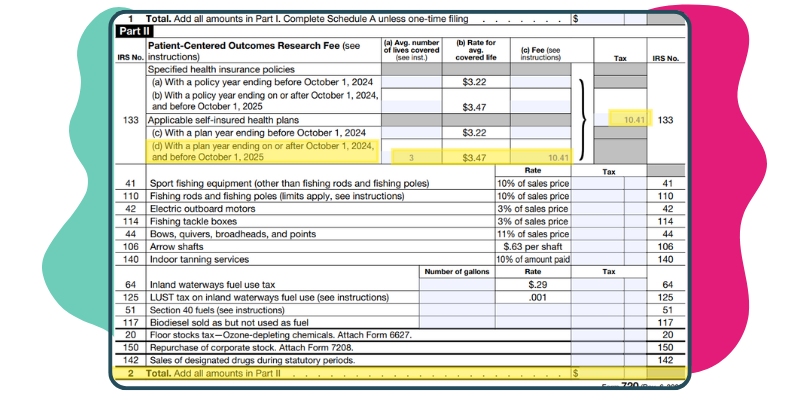
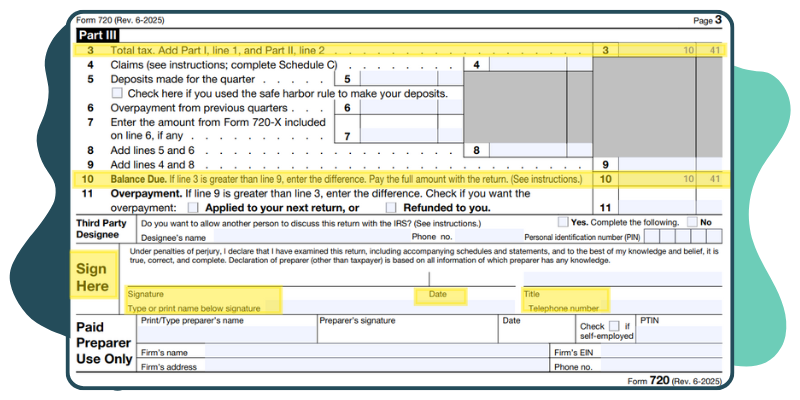
The PCORI fee is reported annually on IRS Form 720, the Quarterly Federal Excise Tax Return. Although Form 720 is typically a quarterly filing, the PCORI fee is only reported once a year, specifically in the second quarter (the return due by July 31).
If an organization does not have other excise tax liabilities (such as fuel taxes or telecommunications taxes), they only file Form 720 in July. The form must include the total fee due and be accompanied by Form 720-V, the payment voucher.
Consequences of Non-Compliance and Expert Insights
Failure to file Form 720 or pay the PCORI fee by the July 31 deadline can trigger penalties under Internal Revenue Code §6651. The standard penalty for failing to file a return is 5% of the unpaid tax for each month the return is late, capped at 25%. Additionally, interest is charged on any late payments from the original due date.
David Blain, CEO of BlueSky Wealth Advisors, emphasizes that the administrative cost of rectifying a missed payment often far exceeds the fee itself. "Forgetting or choosing not to pay this fee can lead to penalties and interest charges, which can be significant and add unnecessary costs," Blain noted. He observed that miscalculations in covered lives are common during annual audits, increasing the administrative burden on small HR departments.
Blain recommends that employers set digital reminders for the July 31 deadline and maintain a "compliance folder" that documents the specific method used to calculate covered lives. This documentation is vital in the event of an IRS inquiry or a routine business audit.

Broader Implications and Fact-Based Analysis
The persistence of the PCORI fee highlights a broader trend in the American healthcare system: the move toward value-based care and healthcare consumerism. By funding research that compares the effectiveness of treatments, the government aims to reduce wasteful spending on procedures or medications that offer little marginal benefit over cheaper or safer alternatives.
For small businesses, the rise of HRAs like the ICHRA has revolutionized benefit offerings, allowing for more predictable costs. However, this shift also transforms the employer from a passive purchaser of insurance into a "plan sponsor" with increased regulatory responsibilities. The PCORI fee is a reminder that with the flexibility of self-insured arrangements comes the duty of federal compliance.
While the individual fee amounts may seem negligible, the aggregate data generated by PCORI research has influenced national clinical guidelines for conditions ranging from asthma to heart disease. For employers, the "return on investment" for the PCORI fee is theoretically a more efficient healthcare market where employees receive treatments that are proven to work, potentially lowering long-term insurance premiums and improving workforce productivity.
In conclusion, as July 31, 2026, approaches, small business owners must ensure they have accurately calculated their covered lives and prepared their Form 720. Seeking professional advice from tax consultants or utilizing specialized HRA administration software can streamline this process, ensuring that the organization remains in good standing with the IRS while supporting the national effort to improve healthcare outcomes.