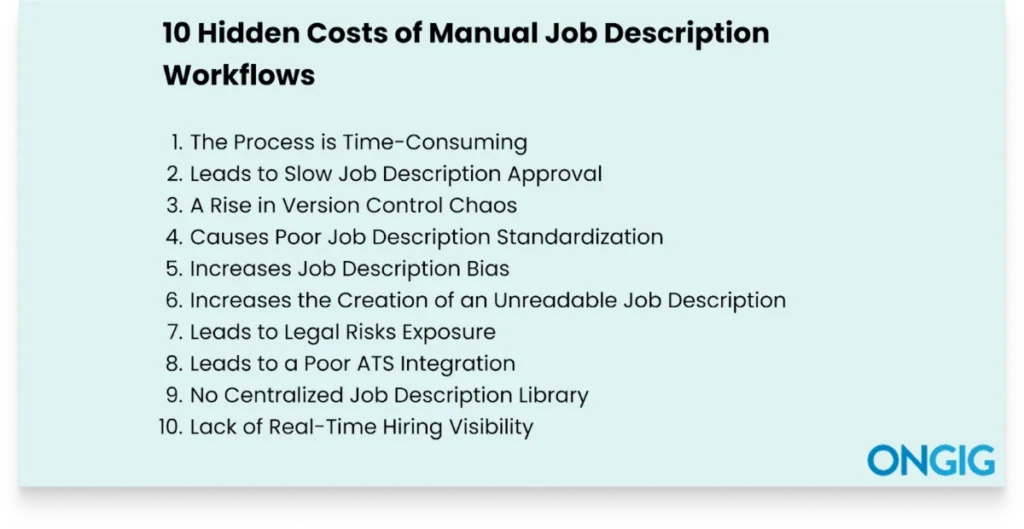
The seemingly innocuous task of creating job descriptions (JDs) often masks significant inefficiencies and financial drains within organizations. What appears to be a standard administrative function, when executed through outdated, manual workflows, can severely impede talent acquisition, escalate operational costs, and expose companies to substantial legal and reputational risks. These antiquated processes, characterized by a lack of visibility and fragmented communication, are increasingly out of step with the demands of a dynamic talent market and the complexities of modern employment law.
The Pervasive Problem of Time Consumption and Inefficiency
At the heart of manual job description workflows lies an inherent inefficiency that wastes valuable time and resources. Each new hiring need often initiates a process from scratch, as organizations lack centralized repositories of past JDs or customizable templates. This absence of foundational tools means HR professionals and hiring managers repeatedly invest hours in drafting, formatting, and refining content that could otherwise be streamlined. Industry reports indicate that HR professionals spend an average of 30% of their time on administrative tasks, with JD creation and management being a significant component of this burden. A recent survey of HR leaders, for instance, revealed that the average time-to-fill for critical roles is extended by an average of two weeks due to manual JD processes, directly impacting productivity and revenue generation. The lack of live content guidance during the writing phase further exacerbates this, leading to drafts that require extensive revisions, prolonging the cycle even further.
The Bottleneck of Manual Approvals
Job description approval is rarely a solitary task; it involves a complex web of stakeholders, including hiring managers, legal teams, Diversity, Equity, and Inclusion (DEI) specialists, and compensation analysts. In a manual system, this multi-stage approval process transforms into a significant bottleneck. Documents are circulated via email, feedback is compiled across various platforms, and conflicting edits often lead to confusion and delays. Without a structured workflow, tracking progress becomes challenging, and accountability can be elusive. This approval mess can stall the JD process for weeks, leading to missed publishing dates and the loss of access to top-tier talent who are often quickly snapped up in competitive markets. Research by Gartner suggests that slow internal approval processes can increase recruitment costs by 15-20% per hire, highlighting the tangible financial impact of these delays.
Navigating the Labyrinth of Version Control Chaos
Poor version control is a silent productivity killer, forcing teams into repetitive and often frustrating work as they attempt to reconcile edits and identify the most current iteration of a job description. When JDs lack a central repository, they proliferate across disparate files, shared drives, and individual inboxes, creating a breeding ground for confusion. This leads to team members inadvertently working on outdated versions, duplicating efforts, and making errors that require subsequent correction. The challenges extend to an inability to track who made what changes and when, making it nearly impossible to maintain a clear audit trail. As Marcus Chen, a veteran HR operations consultant, aptly notes, "The absence of a single source of truth for job descriptions is a silent killer of productivity, leading to significant rework and frustration." Ultimately, this chaos contributes directly to delayed JD publication and an inconsistent employer brand.
Eroding Consistency: The Challenge of Standardization
Maintaining consistency across job descriptions becomes an insurmountable challenge for organizations, particularly those experiencing rapid growth or managing a high volume of diverse roles. Manual processes make it difficult to enforce standardization across critical elements such as tone, language, legal disclaimers, DEI statements, required qualifications, and compensation ranges. Without standardized guidelines and automated checks, JDs often exhibit inconsistencies that can confuse candidates, misrepresent the company culture, and even lead to compliance issues. This lack of uniformity necessitates repeated edits and revisions after initial publication, consuming additional hours and resources. Companies with highly standardized recruitment processes report a 50% improvement in candidate quality and 20% faster hiring cycles, underscoring the strategic advantage of consistency.
The Unseen Barrier: Increasing Job Description Bias
One of the most insidious hidden costs of manual JD workflows is the increased likelihood of unconscious bias creeping into the language, inadvertently deterring qualified candidates from diverse backgrounds. Manually crafting JDs makes it exceedingly difficult to identify and eliminate subtle biases such as gender-coded words, ageist terminology, ableist language, or cultural assumptions. Such biases can create an unwelcoming environment for women, LGBTQ+ individuals, people with disabilities, and other underrepresented groups, narrowing the talent pool and undermining an organization’s diversity, equity, and inclusion goals. Studies show that job descriptions containing gender-coded words can significantly deter qualified candidates from applying, leading to a narrower talent pool. Sarah Jenkins, a diversity and inclusion specialist, emphasizes, "Inclusive language in JDs isn’t just a best practice; it’s a fundamental requirement for attracting a truly diverse workforce and mitigating legal exposure." Failing to address these biases can severely hamper an organization’s ability to build a truly representative workforce.
Compromising Candidate Experience: The Unreadable Job Description
In today’s competitive job market, candidates often scan job descriptions much like consumers evaluating a product. They need to quickly ascertain if they are qualified and interested. Manual processes are highly prone to creating unreadable JDs, characterized by dense paragraphs, excessive jargon, inconsistent formatting, and complex vocabulary. Factors such as sentence length, paragraph structure, and the use of active voice significantly impact readability, and maintaining these manually across numerous JDs is arduous and prone to human error. Candidates spend an average of 49 seconds reviewing a job description before deciding whether to apply, making readability a critical factor in attracting applications. An unreadable JD can lead to high bounce rates, reduced application numbers, and a negative perception of the employer brand, directly impacting the quality and quantity of applicants.
Mounting Legal Risks and Compliance Gaps
Manually written job descriptions are a significant legal liability. Without a standardized, automated procedure, organizations are highly susceptible to compliance gaps. The lack of a clear audit trail means it’s difficult to prove who reviewed and approved specific content, or when. More critically, the unchecked proliferation of unconscious biased language can lead to JDs that are discriminatory against particular groups, putting the organization on the wrong side of employment law. Non-compliance with regulations such as those enforced by the OFCCP (Office of Federal Contract Compliance Programs) in the U.S., or equivalent bodies globally, can result in substantial fines, legal challenges, and severe reputational damage. Attorney David Lee, specializing in employment law, warns, "Without a robust, auditable system for JD management, organizations are essentially operating blind to potential legal liabilities that can cost millions in penalties and settlements." The financial and reputational fallout from a single non-compliant JD can be immense.
Integration Hurdles and Data Silos
Manually created JDs exist in disparate silos—Word documents, Google Drives, email attachments—preventing seamless integration with critical HR systems like Applicant Tracking Systems (ATS). This fragmentation necessitates extensive manual data entry, reformatting, and tedious uploads, consuming valuable HR time and introducing opportunities for errors. The absence of a unified data source means that recruitment data cannot be easily aggregated or analyzed, hindering insights into the hiring pipeline. This lack of seamless integration creates operational friction, reduces data accuracy, and prevents organizations from leveraging their HR technology stack to its full potential, ultimately impacting overall recruitment efficiency and effectiveness.
The Absence of a Centralized Knowledge Hub
The lack of a centralized job description library is a foundational problem stemming from manual workflows. When JDs are scattered across various personal and shared drives, teams are forced to "reinvent the wheel" for every new role. This leads to inconsistent messaging, a failure to leverage past successful JDs, and significant delays in updating existing descriptions. Without a single, accessible source of truth, tracking historical changes, understanding the evolution of a role, or ensuring compliance updates are universally applied becomes nearly impossible. This fragmented approach hinders collaboration, slows down the recruitment process, and ensures that organizations consistently miss out on attracting top talent due due to prolonged hiring cycles.
Blind Spots in Recruitment: Lack of Real-Time Hiring Visibility
Effective talent acquisition relies on real-time visibility into the hiring pipeline and its alignment with strategic business goals. Manual JD workflows, however, shroud this critical data in obscurity. Relying on spreadsheets, email threads, and disconnected documents makes it impossible to track key recruitment metrics in real time. Leaders cannot readily answer questions such as the average time a JD spends in approval, the number of JDs currently in draft, or the overall progress of recruitment efforts against targets. This lack of visibility forces the job description process to operate on assumptions rather than data-driven insights, leading to suboptimal decision-making, an inability to identify and rectify bottlenecks promptly, and ultimately, missed opportunities to secure top talent. Organizations leveraging advanced analytics in recruitment report a 25% improvement in hiring efficiency, underscoring the value of real-time data.
The Solution: Embracing Job Description Management Software
The antidote to the myriad hidden costs of manual JD workflows lies in the adoption of specialized job description management software. These platforms centralize the entire JD lifecycle, offering robust features that address each challenge. They provide customizable templates, a centralized library for all JDs, and automated workflows for drafting, review, and approval. Version control is inherent, ensuring a single source of truth and a comprehensive audit trail for compliance. Advanced text analysis capabilities detect and flag biased language, promote readability, and enforce standardization across all job postings. Seamless integration with Applicant Tracking Systems (ATS) eliminates manual data entry, while real-time dashboards offer unparalleled visibility into the recruitment pipeline. Such platforms transform the JD creation process from a chaotic, time-consuming burden into a strategic, efficient, and compliant operation.
The Future of JD Creation: A Hybrid Approach with AI and Human Expertise
While job description software offers significant automation, the most effective approach to JD creation often involves a strategic hybrid of AI-powered tools and human oversight. AI can efficiently generate initial drafts, perform preliminary bias checks, and suggest improvements for readability and compliance, dramatically accelerating the initial stages. However, human expertise remains indispensable for adding nuance, embedding company culture, refining specific requirements, and making ethical judgments that AI cannot fully replicate. This symbiotic relationship minimizes the limitations of each approach. To succeed with this hybrid model, organizations must develop clear documentation and guidelines. This includes defining when AI should be used, establishing review protocols, specifying brand voice and tone, outlining legal and compliance checks, and detailing the process for human refinement. Such documentation ensures consistency, reduces back-and-forth, and maximizes the benefits of both advanced technology and human insight.
Broader Implications for Talent Acquisition and Organizational Health
The transition from manual to automated job description workflows extends far beyond mere process improvement; it fundamentally reshapes an organization’s talent acquisition strategy and overall health. By eliminating inefficiencies, reducing bias, ensuring compliance, and enhancing candidate experience, companies can significantly improve their employer brand, attract a wider and more diverse pool of qualified candidates, and accelerate their time-to-hire for critical roles. This strategic shift transforms the HR function from a reactive administrative unit to a proactive, data-driven engine that directly supports business growth. In an increasingly competitive global talent landscape, investing in sophisticated JD management is not merely an operational upgrade but a strategic imperative for long-term organizational success and resilience.