The United States labor market is projected to experience significant growth in labor productivity over the next decade, driven by accelerating AI adoption, according to new projections from the Bureau of Labor Statistics (BLS) for the period 2025-2035. Contrary to widespread concerns about job displacement due to artificial intelligence, the BLS report indicates a future characterized by labor shortages, a profound shift in required skills, and a growing emphasis on human-centric roles, necessitating a fundamental reorientation for businesses and human resources professionals alike.
The BLS Employment Projections: 2025-2035, released recently, paints a picture of a US economy expected to expand its Gross Domestic Product (GDP) by an estimated 22% over the next ten years. However, the workforce is only anticipated to grow by a modest 3.5% during the same period. This disparity implies a projected annual growth in labor productivity of nearly 2%, a figure that will compel companies across all sectors to intensify their investment in and integration of AI technologies. This strategic imperative to boost output with a comparatively smaller workforce is expected to create unforeseen labor deficits in numerous areas, even as AI enhances the capabilities of existing workers, transforming them into what some experts term "Superworkers."
Workforce Growth Slowdown and Demographic Shifts
A key finding of the BLS report is the significantly slower growth rate of the US workforce compared to previous decades. The projected 3.5% expansion is less than a third of the 10.9% growth observed in the preceding ten-year period. This deceleration is attributed to a confluence of factors, including declining birth rates, an aging population, and restrictive immigration policies.
The aging demographic is particularly noteworthy. The segment of the workforce aged 65 and over is projected to grow by 21% over the next decade, reaching 8.5% of the total workforce, a rate seven times faster than overall workforce expansion. Data from AARP suggests that approximately 10% of workers over 65 are choosing to "unretire," indicating a trend toward extended careers. This demographic shift presents both challenges and opportunities for employers. It underscores the necessity for robust generational diversity programs and a critical re-evaluation of hiring and compensation practices that may inadvertently discriminate against older workers. A recent AARP survey indicated that nearly a quarter of workers over 50 feel "left behind" in the workplace, highlighting a need for age-inclusive strategies.

Furthermore, the report acknowledges the impact of current immigration policies on workforce availability. Analysis by publications like The Economist has pointed to the economic costs of such policies, suggesting they will exacerbate existing and future workforce shortages. The combination of reduced birth rates, an aging population, and a constrained immigration landscape creates a challenging environment for businesses seeking to fill open positions.
The Rise of Healthcare and the Automation of Routine Tasks
The BLS projections highlight substantial growth in the healthcare sector, particularly in home health and personal care. These roles are expected to account for 5.5 million individuals, with an anticipated growth rate of 18%. Registered nurses are also projected to see significant demand, comprising 3.7 million jobs and experiencing the highest percentage wage growth among all segments. The role of nurse practitioners is set to expand by 41%, with average wages projected to rise from $132,000 to $181,000. Overall, healthcare is expected to contribute 37% of all job growth, increasing its share of total US employment from 13.3% to 14%.
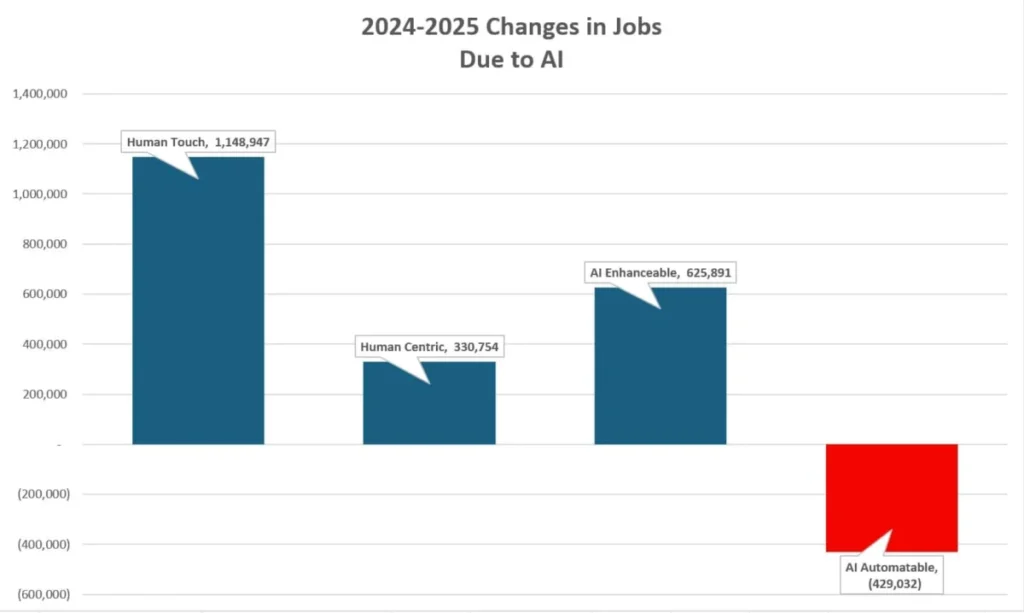
Simultaneously, AI is poised to continue its impact on low-wage administrative jobs. The BLS identified 830 distinct job titles and categorized them into four groups: human-touch, human-centric, AI-enabled, and AI-automated. Jobs experiencing the most rapid decline include cashiers, clerks, bookkeepers, secretaries, receiving clerks, retail managers, and tellers. These administrative positions, representing approximately 13% of the current job market, are susceptible to automation. This trend is also extending to certain IT roles, such as computer support specialists, programmers (excluding software developers), testers, and data entry personnel, which are seeing declining numbers and wages.
The "Superworker" Phenomenon and Evolving Job Roles
The overarching narrative emerging from the BLS projections, amplified by analyses from labor market experts, is the concept of the "Superworker." Rather than widespread job elimination, AI is expected to augment human capabilities, transforming existing roles and creating new opportunities. The BLS data suggests that AI has the potential to fully automate around 13% of jobs, but this figure does not account for the physical robots and the nuanced ways AI can enhance human work.
The analysis categorizes jobs based on their reliance on human interaction and empathy. Approximately 61% of US jobs involve physical or human-centered work, such as those in healthcare, skilled trades (electricians, plumbers), and caregiving professions. While AI may not fully automate these roles, it can provide significant support through enhanced scheduling, training, and data analysis, thereby increasing the efficiency and effectiveness of these "Superworker" roles.
In contrast, jobs requiring high levels of human touch and empathy are projected to see sustained or increased demand. These roles, which form the majority of the workforce, are being redefined by AI’s ability to handle routine tasks, allowing individuals to focus on more complex problem-solving, critical thinking, and interpersonal engagement.
Stability in Management, Sales, and Teaching
Contrary to some predictions, management positions are expected to remain stable and even grow. The BLS anticipates that the increasing complexity of organizations, especially those leveraging AI, will necessitate more sophisticated management structures. The concept of "Supermanagers" who can effectively guide AI-enhanced teams is gaining prominence.
Within the sales sector, while some retail sales roles may decline by 3-5%, high-value sales positions requiring strategic thinking and relationship building are expected to grow. Teaching roles are also projected to remain steady, driven by the ongoing need for upskilling and reskilling in response to evolving industry demands and the adoption of new learning methodologies.
The Shifting Landscape of Wages and Skills
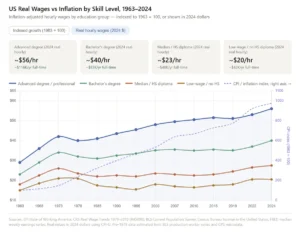
The analysis of wage trends reveals a clear movement of "wage premiums" towards "Superworker" job families. Roles that are "AI-enabled" are experiencing wage growth at approximately twice the rate of inflation. For instance, a software engineer leveraging AI is transitioning from a purely programming role to one of product leadership and complex problem-solving. Similarly, an HR business partner equipped with AI tools can shift from data retrieval to strategic consulting and advisory functions. This indicates a devaluation of routine tasks and a premium placed on the strategic, analytical, and interpersonal skills that AI complements rather than replaces.
The BLS report and related analyses underscore a significant divergence in job market trajectories. While administrative and repetitive tasks are increasingly automated, roles demanding creativity, critical thinking, emotional intelligence, and complex problem-solving are becoming more valuable. This necessitates a proactive approach to workforce development, focusing on continuous learning and skill adaptation.

Implications for Businesses and Policymakers
The projected labor shortages and the accelerated AI transformation present a critical juncture for businesses. CEOs and CHROs are urged to develop what are termed "Dynamic Organizations" – agile structures capable of adapting to rapid changes in workforce needs and technological capabilities. This involves strategic investments in AI implementation, not just for efficiency but for augmenting human capital. Furthermore, the report suggests that the HR profession itself is experiencing a boom, with a heightened demand for professionals skilled in talent management, organizational design, and employee development in the age of AI.
For policymakers, the findings highlight the need to address the root causes of workforce slowdown, including the impact of immigration policies and the support for an aging workforce. Investing in education and training programs that equip individuals with the skills required for "Superworker" roles will be crucial to mitigate potential economic stagnation.
Looking Ahead: A Future of Enhanced Human Potential
The BLS projections for 2025-2035 paint a future where AI acts as a catalyst for human potential rather than a wholesale replacement. The narrative of widespread job losses is being superseded by one of profound job transformation and the emergence of labor shortages in key sectors. Human-touch and human-centric jobs are set to become increasingly vital, amplified by AI to create more efficient and impactful "Superworker" roles. Professionals in knowledge-intensive fields can anticipate continued growth.
Sectors such as healthcare, manufacturing, logistics, retail, entertainment, hospitality, and transportation will need to prioritize hiring, training, and enablement strategies to navigate these shifts. The economy will likely see a continued decline in routine jobs, replaced by roles demanding higher levels of cognitive and emotional engagement. The successful implementation of AI will require a strategic focus from leadership on managing people for growth, skills development, retention, and overall engagement, making human capital management more critical than ever.
The detailed BLS research provides a granular view of occupational forecasts, and tools like Galileo are emerging to offer personalized career guidance based on this data. The overarching takeaway is clear: the future of work in the US is not one of scarcity of jobs, but of evolving job requirements and a growing demand for uniquely human skills, augmented by the power of artificial intelligence.