
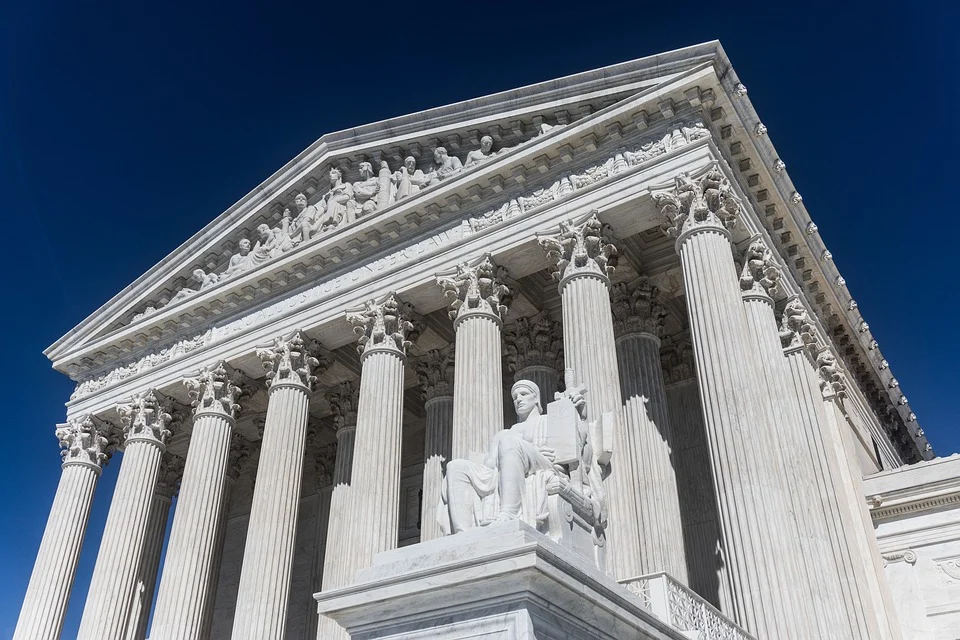
On June 5, 2025, the Supreme Court of the United States issued a per curiam decision dismissing the writ of certiorari in Laboratory Corporation of America Holdings v. Davis, a case that legal analysts and corporate defendants had expected would provide a definitive answer to a long-standing debate in class action litigation. By dismissing the writ as "improvidently granted," the nation’s highest court bypassed an opportunity to clarify whether federal courts may certify a class action under Federal Rule of Civil Procedure 23 when the proposed class includes members who have not suffered a concrete injury. The decision leaves a significant circuit split intact and preserves the status quo for employers and service providers facing massive statutory damage claims in jurisdictions like the Ninth Circuit.
Background of the Dispute: The Labcorp Kiosk Litigation
The case originated from a dispute over the accessibility of self-service check-in kiosks at patient service centers operated by Laboratory Corporation of America Holdings (Labcorp). In an effort to streamline patient intake, Labcorp introduced touchscreen kiosks that allowed individuals to check in for appointments, provide insurance information, and manage paperwork without immediate staff intervention. While these kiosks were intended to improve efficiency, they were not designed with screen-reading technology or tactile interfaces, rendering them inaccessible to blind or visually impaired patients.
The plaintiffs, Luke Davis and Julian Vargas, both of whom are legally blind, filed a class action lawsuit alleging that the inaccessible kiosks violated Title III of the Americans with Disabilities Act (ADA) and the California Unruh Civil Rights Act. Labcorp argued that it provided meaningful access because every patient service center maintained a front desk staffed by employees who could perform the same check-in functions manually. Furthermore, Labcorp contended that many members of the proposed class—potentially numbering over 100,000—preferred checking in at the front desk and thus suffered no "injury in fact" from the presence of the kiosks.
Under the California Unruh Civil Rights Act, any violation of the ADA is considered a violation of state law, entitling plaintiffs to a minimum of $4,000 in statutory damages per offense. With a class size of 100,000 individuals, Labcorp faced a potential liability of approximately $500 million per year, regardless of whether every class member actually attempted to use or was deterred by the kiosks.
The Procedural Path to the Supreme Court
The U.S. District Court for the Northern District of California initially certified the class under Rule 23(b)(3), finding that common questions of law and fact predominated. Labcorp appealed this certification to the U.S. Court of Appeals for the Ninth Circuit, arguing that the class was fatally overbroad because it included thousands of individuals who were never actually harmed. The Ninth Circuit affirmed the district court’s order, maintaining its position that the presence of uninjured members does not necessarily preclude class certification, provided the class is defined to focus on the defendant’s conduct.
Labcorp subsequently petitioned the Supreme Court for a writ of certiorari. The Court granted the petition in late 2024, specifically to address the question: "Whether a federal court may certify a class action under Rule 23(b)(3) when the class includes members who lack Article III standing or have not suffered a concrete injury."
However, during the pendency of the Supreme Court review, the district court issued an order clarifying the class definition. The plaintiffs argued that this clarification rendered Labcorp’s appeal moot. While the Supreme Court did not provide a detailed explanation in its June 5, 2025, dismissal, the "improvidently granted" (DIG) designation often occurs when the Court determines that procedural complications or changes in the lower court record prevent the case from serving as a clean vehicle for deciding the legal question at hand.
The Kavanaugh Dissent and the TransUnion Precedent
The dismissal was not unanimous in sentiment. Justice Brett Kavanaugh penned a sharp dissent, expressing frustration with the Court’s decision to walk away from the issue. Justice Kavanaugh argued that the threshold argument regarding mootness was "insubstantial" and that the core legal question remained ripe for adjudication.
Justice Kavanaugh’s dissent emphasized that allowing classes "overinflated with uninjured members" creates an environment of "judicial blackmail," where companies are forced into massive settlements to avoid the risk of ruinous statutory damages. He pointed out that if a class member has not been injured, they cannot share a common injury with the rest of the class, thereby failing the predominance requirement of Rule 23(b)(3).
Kavanaugh’s position is rooted in the 2021 Supreme Court decision in TransUnion LLC v. Ramirez. In that case, the Court held that "every class member must have Article III standing in order to recover individual damages." The TransUnion decision was a landmark for defense counsel, but it left open a procedural loophole: does the standing requirement apply at the class certification stage, or only at the final judgment stage? By dismissing the Labcorp case, the Court has allowed this ambiguity to persist.
Data and Trends: The Rise of ADA and Statutory Damage Litigation
The stakes of the Labcorp dismissal are highlighted by recent litigation trends. According to data tracked by Seyfarth Shaw, ADA Title III federal lawsuit filings have reached record highs in recent years. California remains the primary epicenter for these filings due to the lucrative nature of the Unruh Act’s statutory damages.
| Year | ADA Title III Filings (Federal) | California Filings (Approx.) |
|---|---|---|
| 2021 | 11,452 | 5,930 |
| 2022 | 10,214 | 4,850 |
| 2023 | 11,800 | 6,100 |
| 2024 | 12,400 (Projected) | 6,500 |
The data suggests that approximately 10,000 class action lawsuits are filed annually in the United States across various sectors, including employment, consumer privacy, and disability access. In California, the ability to claim $4,000 per violation without proof of actual financial loss makes class actions an extremely high-leverage tool for plaintiffs’ attorneys. For a company like Labcorp, which operates thousands of locations, the inclusion of uninjured members in a class can inflate potential damages from a manageable sum to half a billion dollars, as noted in Justice Kavanaugh’s dissent.
Implications for Employers and Corporate Defendants
The Supreme Court’s decision to "DIG" the case is a significant setback for employers and corporate defendants seeking a uniform national standard for class certification. The primary implications of this dismissal include:
1. Persistence of the Circuit Split
The dismissal ensures that the legal landscape remains fragmented. The Ninth Circuit continues to allow the certification of classes containing uninjured members, whereas other circuits, such as the Second and Eleventh, have historically applied more stringent standing requirements at the certification stage. This encourages "forum shopping," where plaintiffs’ attorneys prioritize filing in jurisdictions known for more lenient class certification standards.
2. Increased Settlement Pressure
Without a Supreme Court ruling to limit class size based on standing, defendants face continued pressure to settle. The "threat of massive liability" described by Justice Kavanaugh remains a potent weapon for plaintiffs. When a class is certified with 100,000 members, the cost of discovery and the risk of a trial often make settlement the only viable business decision, regardless of the merits of the underlying claims.
3. Evidentiary Focus on Individualized Inquiry
In the near term, defense strategies must pivot toward emphasizing the individualized nature of injury. To defeat class certification, defendants must present evidence showing that determining whether a class member was "injured" requires a person-by-person inquiry. If a court finds that these individualized questions outweigh the common questions, class certification should, in theory, be denied under Rule 23’s predominance requirement.
4. Economic Consequences for Consumers and Workers
Justice Kavanaugh’s dissent touched on the broader economic impact of these lawsuits. When companies face massive litigation costs and statutory damage awards, those costs are frequently passed on to the public. This can manifest as higher prices for healthcare services, reduced dividends for retirement accounts holding corporate stock, and stagnant wages for workers as companies divert capital toward legal reserves.
Timeline of Key Events in Labcorp v. Davis
- 2021-2022: Plaintiffs Luke Davis and Julian Vargas file suit in California, alleging kiosk inaccessibility under the ADA and Unruh Act.
- 2023: The U.S. District Court for the Northern District of California certifies a class of approximately 100,000 blind individuals.
- Early 2024: The Ninth Circuit Court of Appeals affirms the class certification, rejecting Labcorp’s argument regarding uninjured members.
- September 2024: Labcorp files a petition for a writ of certiorari with the U.S. Supreme Court.
- November 2024: The Supreme Court grants certiorari, signaling its intent to resolve the Rule 23 standing issue.
- Spring 2025: Oral arguments take place; the United States joins as amicus curiae, supporting the view that uninjured members should not be included in damages classes.
- June 5, 2025: The Supreme Court dismisses the writ as "improvidently granted."
Conclusion: A Temporary Reprieve for Plaintiffs
While the Supreme Court’s dismissal is a victory for the plaintiffs in the Labcorp case, it is likely only a temporary reprieve for the plaintiffs’ bar. The issues raised by Justice Kavanaugh and the conflict with the TransUnion precedent suggest that the Court remains interested in the intersection of Article III standing and Rule 23.
For now, the decision serves as a reminder of the procedural complexities of Supreme Court litigation. A case that appears to be a perfect vehicle for a landmark ruling can be derailed by minor adjustments in the lower court record. Until another case with a "cleaner" procedural history reaches the high court, employers must navigate a patchwork of standards, particularly in the Ninth Circuit, where the inclusion of uninjured class members remains a powerful tool for large-scale litigation. Corporate defendants are advised to continue documenting the availability of alternative accommodations and the specific usage patterns of their services to provide the evidentiary basis for challenging class predominance in future disputes.








