
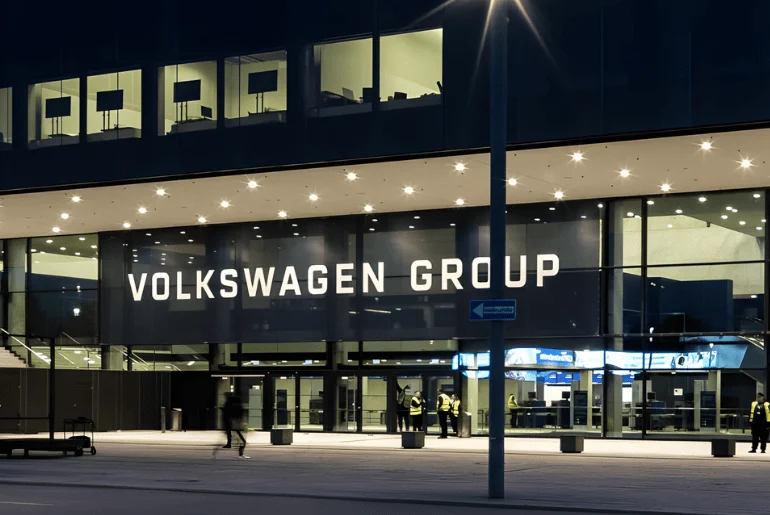
Volkswagen Group, one of the world’s largest automotive manufacturers, is embarking on an intensified phase of its ambitious restructuring programme, projecting an additional 50,000 global job eliminations as it navigates a tumultuous period marked by escalating competition, shifting market demands, and persistent cost pressures. This latest round of cuts, sanctioned under the company’s overarching "Future Plan 2030," significantly expands its workforce reduction targets, bringing the cumulative total of planned job losses to nearly 100,000 by the close of the decade. These substantial measures underscore a profound strategic pivot aimed at bolstering profitability, streamlining operations, and securing long-term viability in an increasingly volatile global automotive landscape.
The newly announced 50,000 positions will be phased out on top of approximately 50,000 job reductions already in motion across the sprawling Volkswagen Group, which encompasses an array of iconic brands including the eponymous Volkswagen passenger cars, luxury marques Audi and Porsche, and the exotic supercar manufacturer Lamborghini, among others. While the specific locations and timelines for these latest eliminations remain undisclosed by the company, it has been confirmed that management positions will also be affected, supplementing existing workforce adjustments already underway at key brands like Volkswagen, Audi, and Porsche. This comprehensive approach signals a deep structural overhaul impacting all echelons of the corporate hierarchy and operational footprint.
Navigating a Challenging Global Automotive Landscape
Volkswagen’s aggressive restructuring comes as the automotive industry faces unprecedented headwinds and transformative shifts. The German automotive giant, like many traditional OEMs, is grappling with a confluence of challenges: intense competition, particularly from agile and cost-effective Chinese electric vehicle (EV) manufacturers such as BYD, Nio, and XPeng; a discernible slowdown in demand across critical markets like China and Europe; persistently high production costs, especially within its legacy German facilities; and the lingering specter of geopolitical tensions manifesting in trade disputes and tariffs, notably from the United States.
The shift towards electric mobility, while a strategic imperative for Volkswagen following the ‘Dieselgate’ scandal, has proven to be a capital-intensive and complex transition. Developing new EV platforms, investing in battery technology, and retooling existing factories or building new ones have placed immense financial strain on the company. Furthermore, software development, epitomized by the challenges faced by its in-house software division Cariad, has emerged as a significant hurdle, delaying product launches and adding to development costs. Volkswagen’s historical reliance on high-volume internal combustion engine (ICE) production and its complex, multi-brand structure, while once a strength, now presents challenges in adapting swiftly to the leaner, digitally-driven EV era dominated by newer entrants like Tesla.
Chronology of Workforce Adjustments and Strategic Shifts
Volkswagen’s workforce adjustments are not new; they represent a continuous effort to optimize its global footprint and cost structure. Prior to these latest announcements, the company had already seen a significant contraction in its German workforce, a key indicator of its domestic streamlining efforts. From approximately 275,000 employees in Germany in 2023, the number had decreased to 254,000 as of June 30, 2026, reflecting ongoing efficiency programmes and natural attrition. This trend underscores a broader pattern of rationalization that has been gaining momentum over the past few years, driven by a recognition of the need for greater agility and cost-competitiveness.
The "Future Plan 2030" itself is a multi-faceted strategy designed to address these systemic issues. It was first conceptualized as a roadmap for Volkswagen’s transformation into a leading provider of sustainable mobility, emphasizing electrification, digitalization, and new business models. However, its implementation has been accelerated and intensified in response to deteriorating market conditions and the need for more drastic measures to achieve financial targets. The plan encompasses not just job cuts but also a radical simplification of its product portfolio, a re-evaluation of its manufacturing strategy, and a fundamental overhaul of its management and corporate structure.
Product Portfolio Rationalization: A Strategic Imperative
Beyond workforce reductions, a cornerstone of Volkswagen’s restructuring strategy is a profound simplification of its product portfolio. The group plans to halve its extensive model range and drastically cut the number of variants and configurations by approximately 75 percent by 2035. This audacious move is expected to yield significant operational efficiencies and economies of scale. By focusing on a narrower, more strategically aligned range of core models, Volkswagen aims to achieve higher production volumes for individual models, thereby reducing manufacturing costs per unit and enhancing profitability.
This strategy addresses a long-standing criticism of Volkswagen’s sprawling product line-up, which, while offering unparalleled choice to consumers, has often led to increased complexity in design, engineering, supply chains, and marketing. For example, consolidating platforms and reducing the number of unique components across models can unlock substantial savings in development and production. This rationalization is also critical for the transition to electric vehicles, as it allows for greater investment and focus on fewer, high-volume EV platforms, such as the MEB and upcoming SSP (Scalable Systems Platform), which are crucial for achieving cost parity with ICE vehicles and competing effectively with EV pure-plays.
Statements and Reactions from Stakeholders
While Volkswagen has yet to provide granular details on the latest job cuts, official statements from the company’s leadership have consistently emphasized the necessity of these drastic measures for long-term survival and competitiveness. CEO Oliver Blume and CFO Arno Antlitz have repeatedly highlighted the imperative to improve efficiency and reduce costs to fund future investments in electric vehicles, software, and autonomous driving technology. They are likely to reiterate that these decisions, though painful, are essential to safeguard the remaining jobs and ensure the company’s future viability in a rapidly evolving industry.
The prospect of such extensive job losses is, predictably, met with significant concern from employee representatives and powerful labor unions, particularly the Works Council (Betriebsrat) in Germany. The Works Council, which holds considerable sway within Volkswagen’s co-determined governance structure, has historically advocated for job security and fair social plans for affected employees. While acknowledging the challenges facing the automotive industry, union leaders are expected to demand comprehensive retraining initiatives, early retirement schemes, and robust severance packages to mitigate the social impact of the cuts. They will also likely push for guarantees of future investment in new technologies at existing German plants to secure the remaining jobs and ensure a just transition.
Industry analysts generally view Volkswagen’s aggressive restructuring as a necessary, albeit challenging, step. Many have pointed to the company’s relatively high fixed costs and lower profit margins compared to some competitors as areas needing urgent attention. Analysts will be closely watching the execution of the plan, particularly how effectively Volkswagen manages the delicate balance between cost reduction and maintaining innovation capabilities. The market’s reaction will hinge on the perceived credibility and impact of these measures on Volkswagen’s financial performance and its competitive standing in the EV race.
The Future of German Manufacturing Sites
A particularly sensitive aspect of the restructuring revolves around the future of several key German manufacturing sites. Volkswagen has explicitly stated that it has not yet identified "competitive vehicle-production allocations" for four facilities – Emden, Zwickau, Hanover, and Neckarsulm – for the 2031-2034 period. While the company has refrained from announcing immediate closures, it has committed to examining "alternative uses" for these plants.
These sites represent significant historical and economic anchors in their respective regions. Zwickau, for instance, has been famously transformed into a dedicated EV production plant, a flagship project for Volkswagen’s electric transition. Emden is also a significant EV production hub. The uncertainty surrounding their long-term production allocation signals the depth of the challenges Volkswagen faces in matching production capacity with market demand and cost efficiency. The "alternative uses" could range from component manufacturing, battery cell production, or even repurposing for other industrial activities, but the primary concern remains the high-value vehicle assembly jobs. Any decision to reduce or cease vehicle production at these sites would have profound socio-economic implications for the surrounding communities and the broader German industrial landscape.
Broader Business Realignment and Management Simplification
The restructuring extends far beyond manufacturing and workforce. Volkswagen plans a fundamental simplification of its management structure, aiming to expedite decision-making processes and enhance organizational agility. This involves reducing bureaucratic layers and empowering operational units, a crucial step for a company often criticized for its complex internal politics and slow pace of innovation compared to nimbler tech-driven competitors.
Furthermore, the group intends to reassess its vast portfolio of businesses and investments. It plans to reduce its shareholdings and non-core businesses by approximately one-third through sales, divestitures, and other realignments. This strategic pruning aims to sharpen Volkswagen’s focus on its core automotive competencies, releasing capital that can be reinvested into critical areas like EV development, software, and advanced manufacturing technologies. Examples might include divesting from peripheral mobility services or non-strategic joint ventures, allowing for a more concentrated effort on its primary mission.
Financial and Market Implications
The financial implications of these restructuring efforts are multi-faceted. In the short term, significant one-off costs associated with severance packages, retraining, and potential plant reconfigurations will likely impact earnings. However, the long-term objective is to achieve substantial cost savings and improve the group’s operating margin. Volkswagen aims to reduce fixed costs and material costs significantly, targeting billions in annual savings that can then be channeled into research and development or distributed as shareholder returns.
For investors, the success of this plan will be crucial. While job cuts and plant uncertainties can create negative sentiment, a clear path to improved profitability and a leaner, more agile organization could ultimately boost investor confidence. The market will be looking for tangible evidence of improved efficiency, accelerated EV adoption, and successful software integration. Volkswagen’s ability to execute this complex transformation without disrupting its core operations or alienating key stakeholders will be a defining factor in its future market valuation and competitive standing.
In conclusion, Volkswagen Group’s intensified restructuring programme, marked by an additional 50,000 global job cuts and a total reduction target approaching 100,000 by 2030, represents a monumental undertaking. It is a stark acknowledgment of the seismic shifts occurring within the global automotive industry and a determined effort by one of its giants to adapt and thrive. While the path ahead is fraught with challenges – from managing significant social impact to navigating technological complexities and fierce competition – these measures are deemed essential for Volkswagen to secure its position as a leading force in the era of sustainable and digital mobility. The coming years will be critical in determining whether these aggressive steps pave the way for a revitalized and more resilient Volkswagen Group.








