
Workable, a leading provider of human resources software, has unveiled a significant enhancement to its platform: the introduction of HRIS roles with defined scope. This new functionality empowers multi-entity organizations to assign granular access permissions within their HR information system (HRIS), directly addressing long-standing challenges related to data privacy, regulatory compliance, and operational efficiency across diverse geographical and organizational structures. The update allows companies to precisely control who sees and manages employee data, ensuring that access aligns strictly with specific roles, legal entities, departments, or countries, thereby mitigating risks associated with over-provisioned access and eliminating administrative bottlenecks.
For organizations operating across multiple legal entities, distinct brands, or a global footprint spanning numerous countries, the distribution of HR responsibilities is inherently decentralized. A common scenario involves an HR manager in Athens overseeing Greek employees, while a people operations lead in Boston manages the U.S. entity, and a UK payroll manager requires access exclusively to bank details and pay rates for the London team. Prior to this update, granting administrative access within Workable typically meant providing unfettered access to the entire account—encompassing every employee, every document, and every HR setting across the whole organization. This posed a critical dilemma for growing enterprises: either risk over-provisioning access, thereby exposing sensitive employee data and incurring significant privacy and compliance liabilities, or centralize all HR administration through a small core team, inevitably leading to slower processes and an overburdened central HR department drowning in requests that local teams were perfectly capable of handling. Workable’s new solution directly resolves this uncomfortable choice, offering a sophisticated yet intuitive mechanism for access control.
The Core Functionality: Granular Access Defined
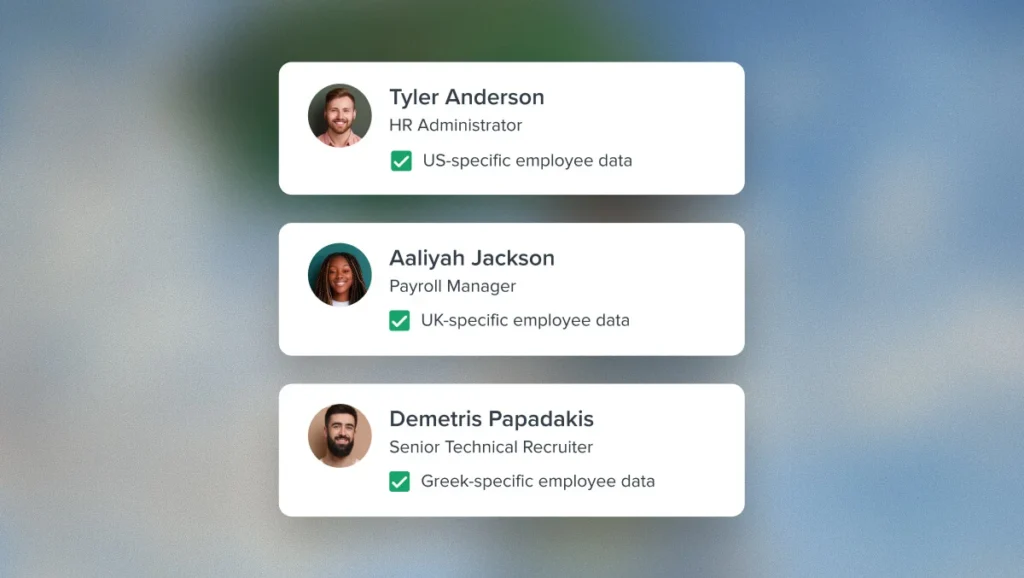
The fundamental change introduced by Workable is the ability to assign HRIS roles with a meticulously defined scope. When inviting a new account member or modifying an existing one, administrators can now select a specific role and precisely delineate its applicability. For instance, an HR administrator can be configured to manage only U.S. employees and the HR settings pertinent to that entity, with no visibility or control over data or settings pertaining to other regions. This targeted access ensures that individuals only interact with the data and functions relevant to their specific responsibilities, significantly enhancing data security and operational precision.
This enhancement is built upon the existing segmentation capabilities within Workable’s platform, meaning there are no complex permission sets to design, maintain, or troubleshoot. The scope can be configured in mere seconds, directly within the account member management interface. Consider an organization managing three distinct legal entities across three different countries. With the new scoped roles, each local HR lead can be assigned an HR Admin role specifically scoped to their respective entity. This empowers them to independently manage onboarding processes, maintain employee profiles, handle local documentation, and adjust relevant HR settings for their specific employee population. Simultaneously, the central HR team retains an overarching account-wide view, ensuring strategic alignment and oversight. Crucially, this system ensures that employee data remains segregated between entities, a vital feature given the disparate privacy and compliance requirements mandated by different national and regional jurisdictions.
Addressing Critical Challenges in Global HR Management
The introduction of granular HRIS scoped roles is not merely a technical upgrade; it represents a strategic response to the increasingly complex landscape of global human resources and data management. Access control extends far beyond a simple IT or compliance checklist item; it is the cornerstone of confident delegation within a distributed organizational structure. When access permissions are precisely aligned with job responsibilities, local HR teams can operate with greater autonomy and efficiency. This decentralization prevents central HR from becoming a bottleneck, enabling them to shift their focus from routine administrative tasks to strategic initiatives that drive organizational growth. More importantly, sensitive employee data, including salary information, personal documents, and confidential details, is restricted to only those individuals who genuinely require it for their duties. For organizations contending with country-specific regulations—such as the General Data Protection Regulation (GDPR) in the European Union, the California Consumer Privacy Act (CCPA) in the United States, or other stringent data separation policies—this feature becomes an indispensable component of their IT, administrative, and compliance infrastructure.
The Evolving Landscape of Global HR and Data Privacy
The challenges faced by multi-entity organizations in managing their human capital are multifaceted and continually evolving. Operating across diverse legal frameworks, cultural norms, and economic environments necessitates a highly adaptable HR strategy. Historically, HRIS systems struggled to provide the necessary flexibility, often forcing companies into rigid structures that compromised either efficiency or compliance. The problem of "over-provisioning" access became particularly acute with the digital transformation of HR. As more sensitive data migrated to digital platforms, the risk associated with broad access permissions escalated dramatically. A single point of failure or an individual with excessive access could inadvertently expose the entire organization to data breaches, reputational damage, and severe regulatory penalties. Conversely, a centralized HR model, while seemingly secure, often led to operational paralysis, with a small team struggling to process a high volume of requests from across the globe, impacting employee experience and slowing down critical HR functions like onboarding and payroll processing.
The past decade has witnessed a dramatic tightening of data privacy regulations worldwide. GDPR, enacted in 2018, set a global benchmark for data protection, imposing strict rules on how personal data, including employee information, is collected, stored, processed, and shared. Its principles of data minimization, purpose limitation, and accountability have profound implications for HR systems. Following GDPR, numerous other jurisdictions introduced similar legislation, such as Brazil’s Lei Geral de Proteção de Dados (LGPD), China’s Personal Information Protection Law (PIPL), and various state-level laws in the U.S. like the CCPA and Virginia’s CDPA. These regulations often mandate data residency requirements, consent mechanisms, and the right to erasure, all of which are complicated by broad, untargeted access to employee data. Workable’s new scoped roles directly facilitate compliance with these diverse and demanding regulatory environments by ensuring that data access is inherently limited and auditable.
Supporting Data and Industry Trends
The financial and reputational costs associated with data breaches are substantial. According to IBM’s 2023 Cost of a Data Breach Report, the average cost of a data breach reached an all-time high of $4.45 million, representing a 15% increase over three years. Breaches involving sensitive employee or customer data are often among the most expensive due to the regulatory fines and damage to trust. The report also highlights that human error and system misconfiguration are significant contributors to breaches, underscoring the importance of robust access control mechanisms. In the HR context, a single unauthorized access to payroll information or sensitive medical records could trigger not only financial penalties but also class-action lawsuits and severe brand erosion.
Beyond security, HR efficiency metrics underscore the need for streamlined operations. Research indicates that organizations with highly efficient HR processes experience better employee engagement, lower turnover rates, and improved overall business performance. Conversely, HR bottlenecks can lead to delays in critical processes like talent acquisition, performance management, and employee support, directly impacting employee satisfaction and productivity. By empowering local HR teams with the autonomy to manage their specific populations, Workable’s solution directly contributes to improved HR efficiency and a more positive employee experience. This decentralization aligns with broader organizational trends towards agile methodologies and distributed workforces, where rapid decision-making at the local level is crucial for competitive advantage.
Workable’s Development Trajectory and Strategic Vision
Workable has consistently positioned itself as an innovator in the HR technology space, evolving from a robust applicant tracking system (ATS) to a comprehensive HRIS solution. The development of granular HRIS scoped roles is a logical progression in Workable’s commitment to meeting the evolving needs of its diverse client base, particularly those in the Premier and Enterprise segments. This feature likely emerged from extensive feedback sessions with multi-national corporations and large enterprises grappling with the intricacies of global HR management. The company’s product development roadmap has consistently focused on enhancing usability, scalability, and security, recognizing that these pillars are fundamental to supporting modern, complex organizations.
While a precise public timeline for the feature’s development is not detailed, its release reflects a strategic foresight in anticipating and addressing the future demands of HR. It represents an investment in reinforcing the platform’s utility for larger organizations that require sophisticated controls without sacrificing ease of use. A Workable spokesperson, hypothetically the Chief Product Officer, might state: "Our new scoped roles are a game-changer for global HR teams. We understand the immense pressure our clients face in balancing operational agility with stringent compliance requirements. This feature empowers local HR professionals to operate effectively within their specific domains, while providing central teams with the confidence that sensitive data is secure and accessible only to those who truly need it. It’s about enabling growth without compromise, allowing our clients to scale globally with peace of mind."
Broader Impact and Implications for the HR Tech Landscape
The implications of Workable’s new granular HRIS scoped roles extend across several dimensions:
-
For HR Professionals: This feature transforms the role of HR. Local HR teams gain unprecedented autonomy, shifting from administrators awaiting central approval to empowered strategic partners who can swiftly address the unique needs of their regional employee populations. Central HR teams, in turn, are liberated from mundane administrative tasks, allowing them to focus on high-level strategic initiatives such as talent strategy, organizational development, and cultural alignment across the enterprise. This division of labor can significantly reduce HR burnout and foster a more proactive, strategic HR function.
-
For Organizations: The most immediate benefit for organizations is a significantly enhanced security posture. By minimizing the scope of access, the attack surface for potential data breaches is drastically reduced. Furthermore, compliance with complex, country-specific regulations becomes more manageable, as the system inherently enforces data segregation. This reduces the legal and financial risks associated with non-compliance. Operationally, the improved agility at the local level translates into faster decision-making, quicker response times to employee needs, and more efficient execution of HR processes. This scalability is critical for companies undergoing rapid expansion into new markets, as the HR infrastructure can adapt dynamically without compromising control or security. Over the long term, these efficiencies and risk reductions can translate into substantial cost savings.
-
For the HR Technology Industry: Workable’s move sets a new benchmark for access control within HRIS platforms. It signals to the broader HR tech industry that robust, granular, and easily configurable security features are no longer optional but essential for serving the enterprise market. This innovation may spur other HRIS providers to enhance their own security and segmentation functionalities, driving further advancements in data governance and user management across the sector. It reflects a continuing trend towards highly configurable, secure, and user-centric enterprise software solutions that can seamlessly integrate into complex, distributed organizational models.
In conclusion, Workable’s introduction of granular HRIS scoped roles represents a pivotal advancement in human resources technology. By providing a practical and intuitive solution to the long-standing tension between operational efficiency and data security in multi-entity organizations, Workable is empowering businesses to navigate the complexities of global HR management with greater confidence and control. This feature is currently available to Workable’s Premier and Enterprise plan subscribers. Organizations interested in leveraging these advanced capabilities can configure entity or department-scoped roles through their account members settings or refer to the comprehensive step-by-step guide available in Workable’s help center. The move underscores Workable’s continued commitment to innovation, positioning it as a critical partner for enterprises striving for excellence in a dynamic and highly regulated global talent landscape.






