
Workable, a leading provider of hiring software, has officially unveiled its new Enterprise plan, a strategic enhancement designed to address critical challenges in talent acquisition data management and security for mid-market and enterprise organizations. The new offering fundamentally re-architects reporting capabilities and access controls, aiming to eliminate common frustrations such as reliance on manual data compilation in spreadsheets and the necessity of granting overly broad system access to view specific metrics. This move signifies Workable’s commitment to providing sophisticated, scalable solutions that empower HR leaders, talent acquisition teams, and executives with precise, real-time data insights while upholding robust security and compliance standards.
Addressing Industry Frustrations: The Catalyst for Innovation
For years, growing organizations have grappled with the limitations of standard Applicant Tracking Systems (ATS) when it comes to sophisticated data analysis and granular access management. A prevalent issue involves talent acquisition (TA) professionals and HR teams spending countless hours exporting raw data into external tools like Microsoft Excel to construct custom reports that their existing ATS cannot generate. This "Excel purgatory" not only drains valuable time and resources but also introduces potential for human error and delays critical decision-making processes. Furthermore, the dilemma of granting full system access to individuals who only require visibility into a single data point presents significant security vulnerabilities and often contravenes internal data governance policies. These operational inefficiencies and security concerns have become increasingly pronounced as companies scale, demanding more intricate data segmentation and stricter access protocols.
The Workable Enterprise plan emerges directly from these persistent industry pain points. By rebuilding reporting and access controls from the ground up, Workable aims to provide an integrated solution that removes the need for external business intelligence (BI) tools, costly consultants, or dedicated operational resources solely for data maintenance. The objective is clear: to furnish TA leaders, HR teams, and executives with the depth of insight necessary to make confident, data-driven decisions swiftly and securely within a unified platform.
The Evolution of ATS Reporting: From Basic to Bespoke
The journey of Applicant Tracking Systems has seen a significant evolution from mere applicant databases to comprehensive talent acquisition suites. Initially, ATS platforms offered basic reporting on metrics like candidate volume and hiring stages. Over time, as data became central to strategic HR, these systems introduced more sophisticated pre-built reports. Workable’s existing Standard and Premier plans already provide a robust foundation, featuring over 25 pre-built reports, advanced filtering options, the ability to save customized report configurations, and scheduled report delivery. These features cater effectively to a wide range of organizations, enabling them to monitor key performance indicators (KPIs) and track recruitment progress.
However, the demands of larger, more complex enterprises extend beyond even these advanced capabilities. These organizations often require highly specific, cross-functional data views that are unique to their operational models, departmental structures, and compliance mandates. The Enterprise plan takes this established reporting foundation and elevates it with three critical new capabilities: a custom report builder, dynamic dashboards, and advanced permission sets. These additions are not merely incremental improvements; they represent a fundamental shift towards truly bespoke data visualization and control within the ATS environment.
Unlocking Data-Driven Decisions: The Custom Report Builder
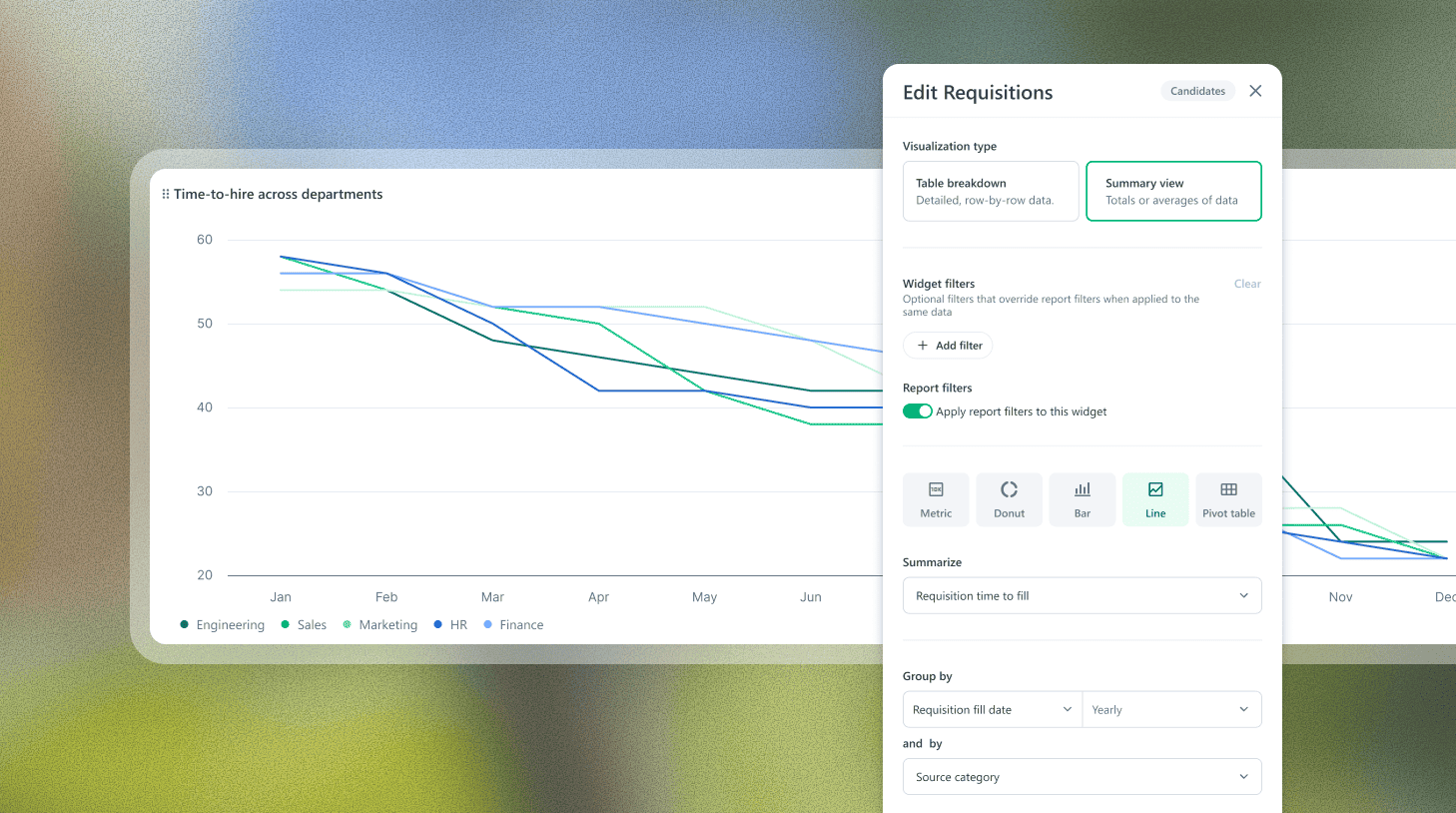
At the heart of the Workable Enterprise plan’s enhanced analytical power is its intuitive custom report builder. Designed with user accessibility in mind, this tool requires no specialized technical skills or extensive training, democratizing access to powerful data insights across the organization. Users can initiate report creation by selecting from a diverse range of data sources, including candidates, jobs, offers, and employees, among others. This flexibility allows for a holistic view of the talent acquisition lifecycle and its broader impact on human capital.
Once a data source is chosen, users can meticulously select the specific fields they wish to include, apply granular filters to narrow down the data set, and then choose from various visualization options to present the information clearly and effectively. Whether it’s tracking candidate source effectiveness, analyzing offer acceptance rates by department, or monitoring time-to-hire trends across different roles, the custom report builder provides the tools to answer virtually any recruitment-related query. Crucially, reports can be saved and securely shared with colleagues, with each viewer only seeing the data permitted by their individual access permissions. This built-in security layer ensures data integrity and compliance, preventing unauthorized access to sensitive information while still fostering collaborative data utilization. The ability to create, save, and share highly tailored reports empowers TA leaders to move beyond generic metrics and delve into the specific insights that drive their strategic objectives, leading to more informed decision-making without external tools or extensive data manipulation.
Dynamic Insights for Every Stakeholder: The Power of Customizable Dashboards
Complementing the custom report builder are dynamic dashboards, which offer personalized, real-time views of critical data for various stakeholders within an organization. Operating on a similar principle of ease of use, these dashboards allow users to select a set of widgets—such as charts, tables, or single-metric Key Performance Indicators (KPIs)—and arrange them into a view that is directly relevant to their role and responsibilities.
For instance, a recruiter might configure a dashboard to display real-time pipeline activity, upcoming interview schedules, and candidate status updates, enabling them to manage their workload and track progress efficiently. Conversely, an executive might opt for a dashboard focused on high-level strategic metrics like overall headcount attainment against targets, average time-to-fill trends across the organization, and diversity and inclusion statistics. The fundamental advantage here is that each stakeholder receives a tailored, contextually relevant view of the data, updated instantaneously. This eliminates information overload and ensures that decision-makers at all levels have immediate access to the most pertinent insights required for their specific functions. The dynamic nature of these dashboards promotes agility, allowing organizations to react quickly to changing recruitment landscapes and make proactive adjustments to their talent strategies.
Fortifying Data Security and Compliance: Advanced Permission Sets
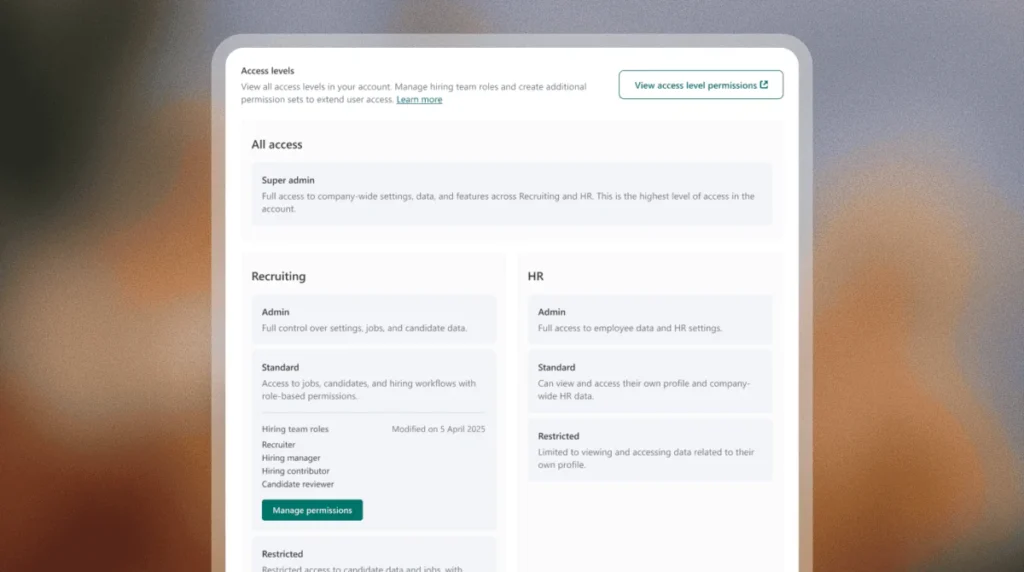
Perhaps one of the most significant advancements within the Enterprise plan lies in its sophisticated permission sets, which build upon Workable’s existing role-based access structure (e.g., Admin, Recruiter, Hiring Manager). This feature introduces unprecedented layers of control, moving beyond rigid, predefined roles to offer highly granular management of user capabilities and data visibility. Instead of starting from scratch, administrators can take an existing role as a baseline and then precisely extend or restrict specific functionalities and data access according to organizational requirements.
Consider a scenario where the Finance department needs to view budget-related data pertaining to hiring, such as cost-per-hire or agency fees, but does not require access to sensitive candidate details, including personally identifiable information (PII) or interview feedback. With the Enterprise plan’s permission sets, this can be easily configured. Similarly, for organizations with multiple offices or complex regional structures, a "Regional Admin" role can be created and scoped specifically to one particular office or geographical area, ensuring they only see and manage data relevant to their jurisdiction.
The implications for data privacy, compliance, and internal security are profound. In an era of stringent data protection regulations like GDPR, CCPA, and various industry-specific compliance frameworks, the ability to control who sees what data at such a detailed level is invaluable. Changes to permission sets apply immediately across the system and are fully auditable, providing a clear trail for compliance checks and internal governance. This robust access control mechanism not only safeguards sensitive information but also streamlines operations by ensuring that users only interact with the data and functionalities pertinent to their roles, reducing potential for errors and enhancing overall system security posture.
Strategic Impact on Mid-Market and Enterprise Organizations
The Workable Enterprise plan is meticulously engineered for mid-market and enterprise organizations, typically those employing 500 or more individuals, that have outgrown the visibility and control offered by Standard or Premier plans. These larger entities inherently possess more complex organizational structures, diverse departmental needs, and often operate across multiple geographies, demanding a more sophisticated approach to talent acquisition data and system governance.
The plan is particularly useful for organizations:
- With complex reporting needs: Companies that require highly specific, cross-functional reports to inform strategic decisions beyond standard recruitment metrics.
- Operating in regulated industries: Sectors like finance, healthcare, or government, where stringent data privacy and compliance regulations necessitate granular control over access to sensitive candidate information.
- Managing large, distributed teams: Enterprises with multiple hiring teams, regional offices, or distinct business units that require tailored data views and localized administrative controls without compromising central oversight.
- Prioritizing data security and integrity: Organizations for whom protecting candidate PII and internal recruitment data is paramount, requiring robust access management and audit capabilities.
- Seeking to reduce reliance on external BI tools: Companies aiming to consolidate their tech stack and empower HR and TA teams to generate advanced insights directly within their ATS, thereby reducing costs and improving efficiency.
This strategic offering enables these organizations to move beyond reactive hiring to a proactive, data-driven talent strategy, aligning recruitment efforts more closely with broader business objectives and ensuring a compliant and secure operational environment.
Executive Vision: Workable’s Commitment to Enterprise Solutions
"The launch of our Enterprise plan marks a pivotal moment for Workable and for the future of talent acquisition technology," stated a hypothetical Workable CEO, John Smith. "We recognized a significant gap in the market where growing companies were either bogged down by manual data workarounds or forced to compromise on security by granting excessive access. Our Enterprise plan is a direct response to these challenges, born from extensive feedback from our customers and a deep understanding of the evolving needs of large-scale talent acquisition operations."
Smith further elaborated, "Our goal was straightforward: empower TA leaders, HR teams, and executives with unparalleled depth of insight and control, without the need for additional BI tools or dedicated consultants. We believe that confident, strategic decisions stem from immediate access to accurate, relevant data, and that security should never be an afterthought. This plan delivers on both fronts, providing a robust, intuitive platform that scales with the most demanding enterprise requirements."
Industry Perspectives: Analysts Weigh In
Industry analysts have noted the growing imperative for HR technology solutions to offer more sophisticated data analytics and robust security features. "The shift towards integrated, intelligent HR platforms is undeniable," commented Sarah Chen, a leading HR Tech analyst at Global Insights. "Workable’s new Enterprise plan is well-positioned to meet the escalating demands of larger organizations for highly customizable reporting and granular access controls. In today’s competitive talent landscape, the ability to quickly derive actionable insights from recruitment data and ensure stringent data governance is no longer a luxury but a fundamental necessity. Solutions that can deliver this internally, without requiring external tools, offer significant advantages in terms of cost, efficiency, and compliance." Chen emphasized that such developments reflect a broader trend where HR technology vendors are evolving their offerings to become more comprehensive and strategic business partners rather than mere transactional tools.
Availability and Future Outlook
The Workable Enterprise plan is available immediately for organizations ready to elevate their talent acquisition capabilities. It encompasses all the features and benefits of the Premier plan, augmented by the full reporting customization suite and advanced access controls. Existing Workable clients interested in upgrading are encouraged to contact their account managers, while new organizations can schedule a demo to experience the comprehensive features of the Enterprise plan firsthand.
This strategic introduction underscores Workable’s dedication to innovation and its responsiveness to the complex needs of the enterprise market. As the landscape of talent acquisition continues to evolve, driven by data, compliance, and efficiency demands, integrated platforms offering such sophisticated control and insight will be crucial for organizations seeking to gain a competitive edge in attracting and retaining top talent. The Enterprise plan positions Workable as a key enabler for large organizations striving for operational excellence and strategic advantage in their human capital initiatives.






