This week marked a significant moment in enterprise technology as Workday announced a comprehensive and forward-thinking artificial intelligence strategy, anchored by its newly integrated technology platform, Sana. For industry observers and users alike, this announcement represents a pivotal shift in how businesses will interact with their core operational systems, promising a more intuitive, efficient, and intelligent future. This deep dive into Workday’s AI ambitions is informed by early insights into the Sana platform, a technology that has been instrumental in powering advanced AI solutions for several years.
Understanding Sana: The AI-First Foundation
At its core, Sana is not merely a product company but an artificial intelligence innovator. Founded in 2016 by Joel Hellermark, the company’s initial vision was to leverage machine learning and AI to fundamentally enhance how individuals learn, access knowledge, and collaborate within professional environments. In its nascent stages, Sana collaborated with pioneers like OpenAI, even before the widespread public release of ChatGPT, to develop sophisticated AI-driven learning systems.
As Sana matured and secured investment, its strategic direction bifurcated into two distinct yet complementary product lines: Sana Learning, a next-generation, AI-native system for content and learning, and Sana Agents, an elegantly designed platform that consolidates multiple large language models (LLMs) into a user-friendly productivity interface.
The Sana Agents platform, which serves as the technological bedrock for solutions like Galileo, empowers users with a versatile suite of capabilities. These include querying any available LLM, managing and integrating diverse data sources and documents, generating visual content such as images and presentations, recording and analyzing meetings, and meticulously crafting prompts, workflows, and even subordinate agents. The platform effectively functions as an "agent platform," sitting atop various AI models to simplify their utilization, manage historical interactions, and facilitate the creation of personalized productivity agents.
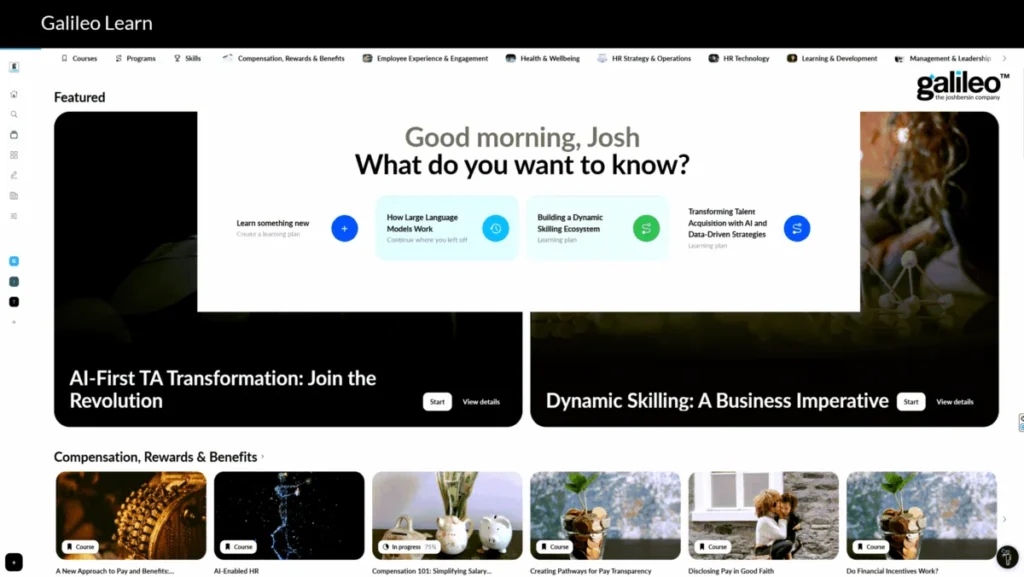
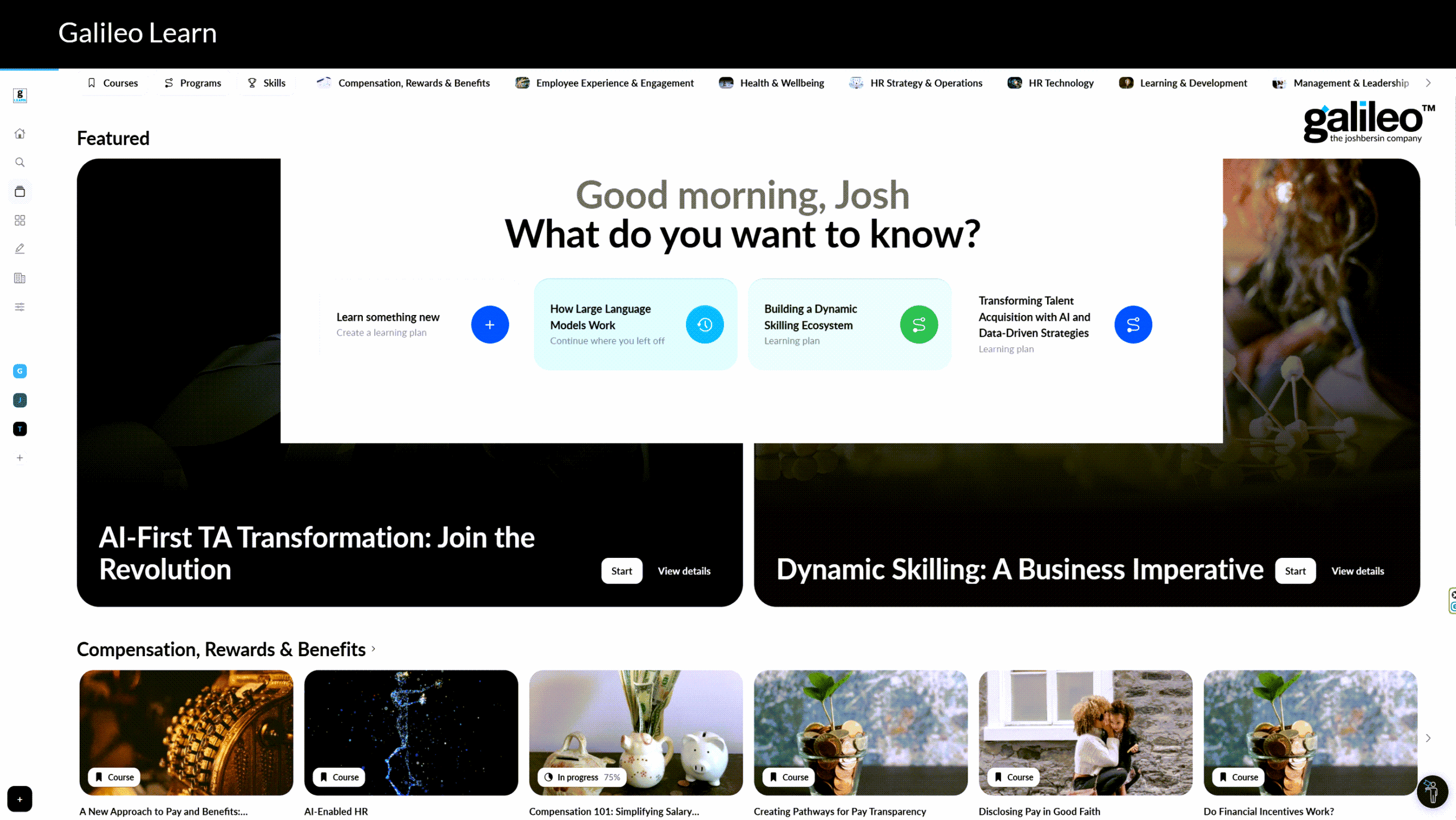
Sana Learning, now integrated into offerings like Galileo Learn, represents a sophisticated learning environment designed to support training, coaching, assessments, and a broad spectrum of educational initiatives. While not the primary focus of this immediate announcement, Sana Learning is poised to become a cornerstone of Workday’s future business endeavors, particularly within the burgeoning field of "Dynamic Enablement." The seamless integration of Galileo and Galileo Learn allows users to execute applications, access extensive knowledge bases, and engage in learning activities within a unified experience. Notably, Sana Agents, accessible via a mobile application, also features advanced voice generation capabilities, enabling personalized interactions such as Galileo speaking in a user’s own voice.
Workday’s Strategic Pillars: Four Key Announcements
Following its acquisition of Sana, Workday has outlined a robust roadmap for integrating and expanding its AI capabilities. The company has unveiled four pivotal announcements that redefine its approach to enterprise AI:
1. Sana for Workday: Democratizing Access to Core Systems
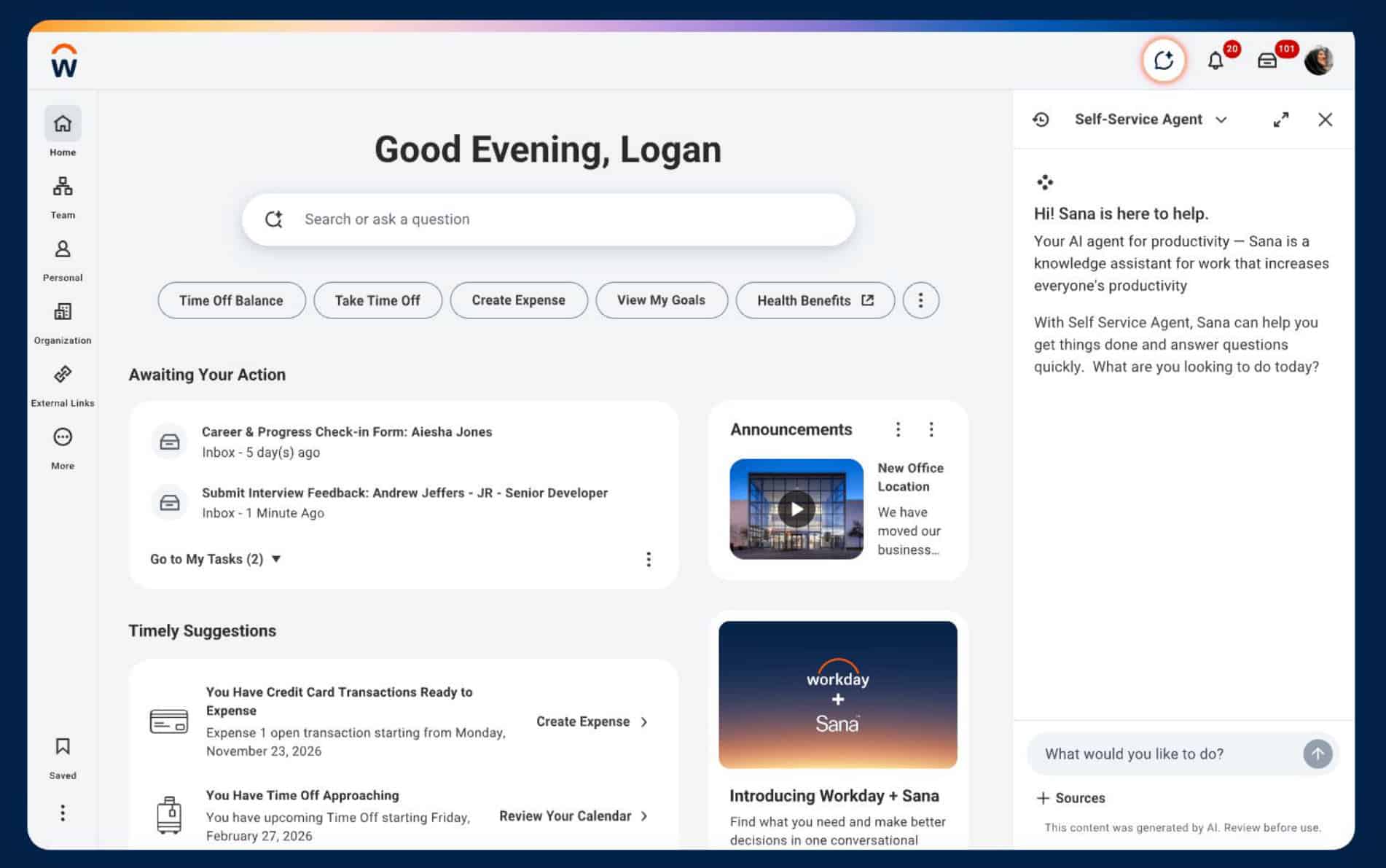
Effective immediately, all Workday customers gain access to a new, streamlined Workday interface branded as Sana for Workday. This integration brings the entirety of a company’s Workday transactions and data directly into the Sana Agent environment. This means employees and managers can engage with their Workday system through natural language queries, request reports, initiate transactions, and analyze data without navigating the complexities of the traditional Workday interface. The inherent security protocols of Workday are meticulously preserved, ensuring that each user only accesses the data and performs the transactions for which they have explicit authorization. For users of platforms like Galileo, this translates to the potent intelligence of their AI assistant being directly applied to all Workday-related information. This initial step is transformative, effectively "unlocking" the Workday system for a broader audience, including casual users, managers, and operational teams, by abstracting away the traditional user interface complexities.
2. Sana Enterprise: The Unified Front Door to the Digital Workplace
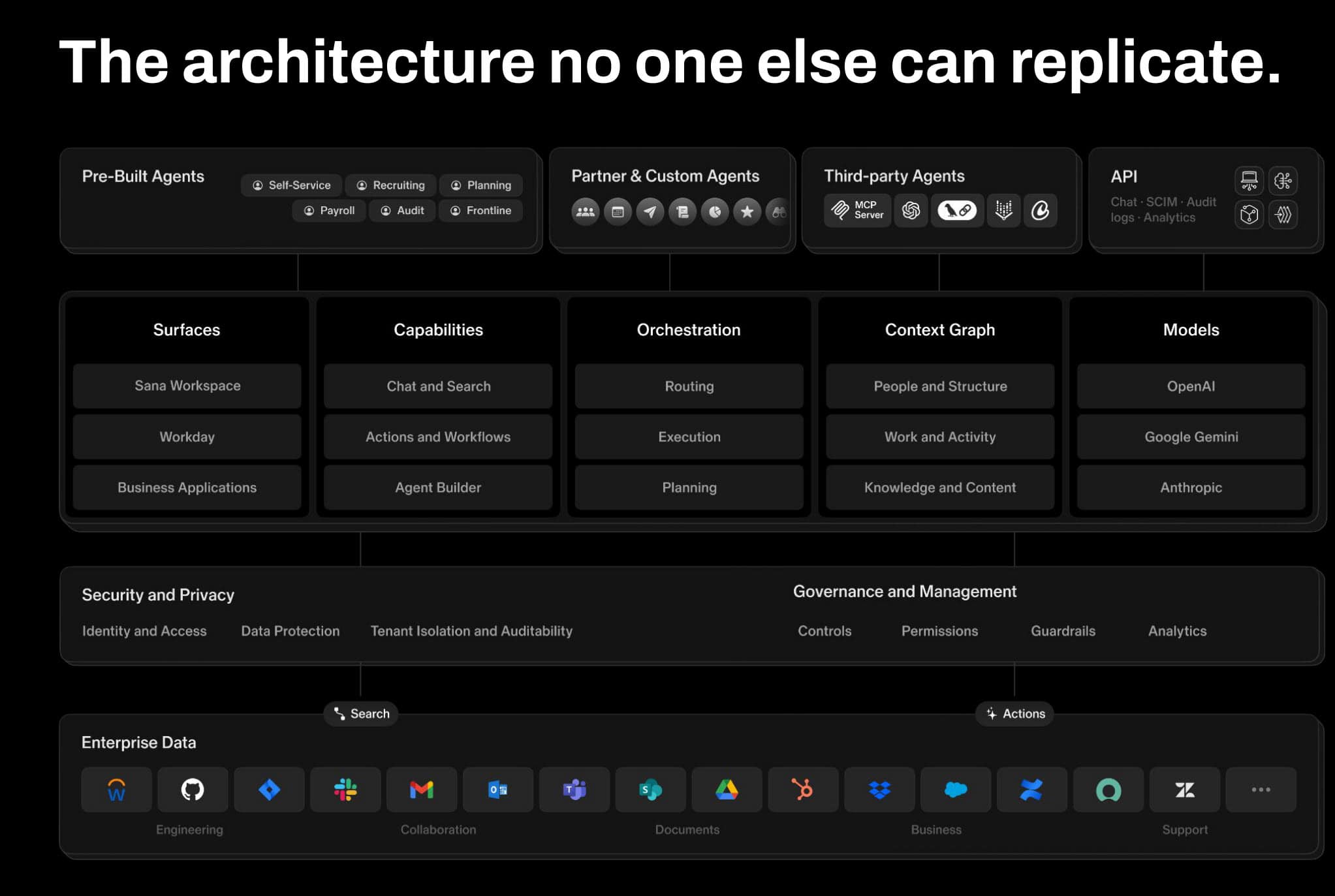
Workday is also introducing Sana Enterprise, an advanced, licensed version of the Sana platform. This upgraded offering enables users to seamlessly connect with a multitude of other enterprise systems, including prominent platforms like Salesforce, Microsoft Teams, Slack, and SharePoint, among others. This cross-system integration capability, already a proven feature in solutions like Galileo, allows for easy configuration and provides both read and write access to these external systems. Consequently, Sana Enterprise is positioned to serve as a unified "front door" for all users, competing directly with established employee experience platforms such as Microsoft Viva and ServiceNow. The inherent security frameworks, including job-level, role-based, and hierarchical permissions embedded within Workday, are inherited by Sana Enterprise. This ensures that IT departments can deploy the platform with confidence, without concerns regarding disparate security, data privacy, or authentication protocols.

3. Sana as Workday’s Agent Development System: Empowering Customization
A crucial aspect of Workday’s new AI strategy is the designation of Sana as its primary Agent Development System. This empowers users, managers, HR teams, and corporate developers to build their own AI-powered applications and agents with unprecedented ease. Sana utilizes a visual workflow development tool, allowing for the drag-and-drop creation of "steps" or "prompt paths" to construct bespoke applications. Future iterations are planned to incorporate tools like Flowise, further enhancing its capabilities as a robust, low-code development studio. This functionality opens the door for companies to develop thousands of custom agents and applications tailored to specific business needs. A compelling demonstration showcased an employee travel booking agent capable of adhering to company policies, sourcing flights, obtaining approvals, and processing expense reports – all within a single, intuitive workflow. The potential for third-party developers to contribute to this ecosystem is also significant.
4. Sana’s AI Infrastructure: The Backbone of Workday’s AI Future
Underpinning these advancements, Sana’s underlying AI infrastructure is set to become the foundational AI architecture for Workday. Previously, Workday branded its AI initiatives under the "Illuminate" umbrella to highlight its evolving AI capabilities. Moving forward, all new AI agents developed by Workday will operate within and be powered by the Sana infrastructure. This strategic consolidation ensures a unified and efficient approach to AI development and deployment across the entire Workday ecosystem. The architecture diagrams illustrate that Workday’s native business rule and security frameworks will remain paramount, operating above Sana to facilitate secure and compliant application development.
Implications of the Workday-Sana Integration
The implications of these announcements for Workday customers are profound and far-reaching:
Enhanced User Experience: A Leap in Intuitiveness and Efficiency
For users who have navigated the intricacies of traditional enterprise software interfaces, the integration of Sana represents a significant upgrade in user experience. Based on extensive use of the Sana platform, it is characterized by its elegance, ease of use, speed, and overall user satisfaction. This is a stark contrast to the often-cited complexity of existing Workday user interfaces. The ability to store documents, integrate seamlessly with Microsoft and Google tools, and potentially establish Sana as a primary desktop experience offers a more modern and fluid way of working. For organizations that embrace Sana Enterprise, Workday is effectively offering a robust "employee experience platform" that can rival established competitors. While the competitive landscape for employee experience platforms is intense, Workday’s direct integration with its core data and transactional systems provides a distinct advantage.
Accelerated App Development and AI Literacy
Workday customers now possess a high-productivity environment for building custom applications and fostering AI literacy among their workforce. The Sana platform empowers any employee to explore, learn, and develop their own AI solutions. The inherent connection between Sana Agents and Sana Learning ensures that employee training and enablement are intrinsically linked, with pre-existing libraries, such as Galileo Learn’s extensive catalog of courses on management, leadership, and HR, becoming immediately accessible. The platform’s ability to connect to various LLMs, including Claude, OpenAI, and Gemini, from a single interface ensures that employees can ask questions and perform transactions within Workday using their preferred AI models. For those inclined to build, Sana offers an accessible AI studio where prompts can be stored, and complex workflows with branching logic can be visually constructed and edited, mirroring the intuitive nature of building GPTs in native LLM platforms.
Robust AI Engineering Capabilities
The acquisition of Sana brings a seasoned AI engineering powerhouse into Workday’s fold. The Sana team possesses deep expertise in areas critical to AI deployment, including data labeling, LLM optimization, Retrieval-Augmented Generation (RAG) pipelines, and the nuanced tuning required for AI performance. This established proficiency means that Workday’s internal AI projects are likely to accelerate, become more efficient, and be architected with greater coherence and interoperability. The strategic positioning of Sana’s infrastructure beneath Workday’s native business rules and security architecture ensures that AI applications are built upon a foundation of trust and compliance.

World-Class AI-Native Learning System
Sana Learning stands out as one of the most advanced AI-native learning platforms available in the market. The learning and development technology sector, a market valued at hundreds of billions of dollars, represents a significant new opportunity for Workday and its customer base. The integration of such a sophisticated learning system positions Workday to play a leading role in the evolution of corporate education and skill development.
Navigating the Competitive AI Landscape
While Workday’s advancements are significant, the enterprise AI market is dynamic and highly competitive.
- Oracle has developed its own robust AI Studio and a comprehensive AI stack, leveraging its substantial market presence and resources.
- SAP is pursuing a similar strategy with Joule, its AI agent designed to interact with SAP and SuccessFactors applications. The "agentification" of enterprise systems is now a clear race between these major players.
- Microsoft presents a formidable challenge with its suite of AI offerings, including Microsoft Copilot, Copilot Studio, Agent365, and the WorkIQ intelligence layer. These tools offer an integrated experience akin to Sana Enterprise, though they are primarily tethered to the Microsoft 365 ecosystem. While direct Workday integration is still evolving, the parallels in functionality are notable.
- LLM Providers themselves, such as OpenAI, Anthropic, and Google’s Gemini, have established themselves as primary AI partners for many organizations. The existing budgets and strategic commitments to these providers may present a hurdle for companies to adopt entirely new front-end agent platforms, though the unique integrations offered by Sana, particularly with Workday and its learning capabilities, may justify the investment.
- Google and Microsoft are actively building integrations into their core productivity suites, including email, search, file management, and app development tools, mirroring the integrated approach of Sana.
- The rapid pace of innovation means that new development tools and AI products can emerge unexpectedly. Workday’s entry into the front-end productivity space necessitates continuous adaptation to emerging trends, new models, LLMs, and communication tools.
- ServiceNow, a major player in the enterprise service management space, has acquired Moveworks, an agent platform directly competitive with Sana. With a market capitalization nearly double that of Workday, ServiceNow is also strategically positioned in this emerging market.
Despite the competitive pressures, Workday’s deep integration with its existing customer base and its commitment to making Sana adoption seamless and attractive are expected to be key differentiators.
Workday, Sana, and Galileo: A Synergistic Partnership
The partnership between Workday and Galileo is set to deepen significantly. Effective immediately, Workday and Sana customers can integrate Galileo’s HR intelligence and extensive knowledge corpus directly into their Workday environment. This means that Galileo’s advanced HR intelligent agent, along with its more than 400 pre-built prompts and workflows, can now access and leverage Workday data seamlessly. Furthermore, the Galileo Learn library, comprising over 750 courses in HR, leadership, technology, and management, can be activated within Workday’s instance of Sana Learning. This positions Galileo as an "instant-on" solution that capitalizes on the integrated Workday-Sana experience, offering a comprehensive package for organizations seeking to enhance their HR operations and employee development.
The Evolving AI Landscape and Workday’s Position
The enterprise AI landscape is characterized by a multitude of platforms and tools, with no single "one-size-fits-all" solution. Organizations typically utilize a combination of solutions, including Microsoft Copilot, OpenAI, Anthropic’s Claude, and other specialized AI tools. However, Workday, by leveraging its existing foundation of billions invested in HR data, security, and financial management, is strategically positioned to cut through the complexity. While the future trajectory of major AI companies remains uncertain, with further acquisitions and innovations anticipated, the integration of Sana offers Workday customers a secure and compelling pathway forward. The company’s commitment to harnessing the power of AI, coupled with the user-centric design of Sana, signals a significant evolution in how businesses will operate and empower their workforces in the years to come.