
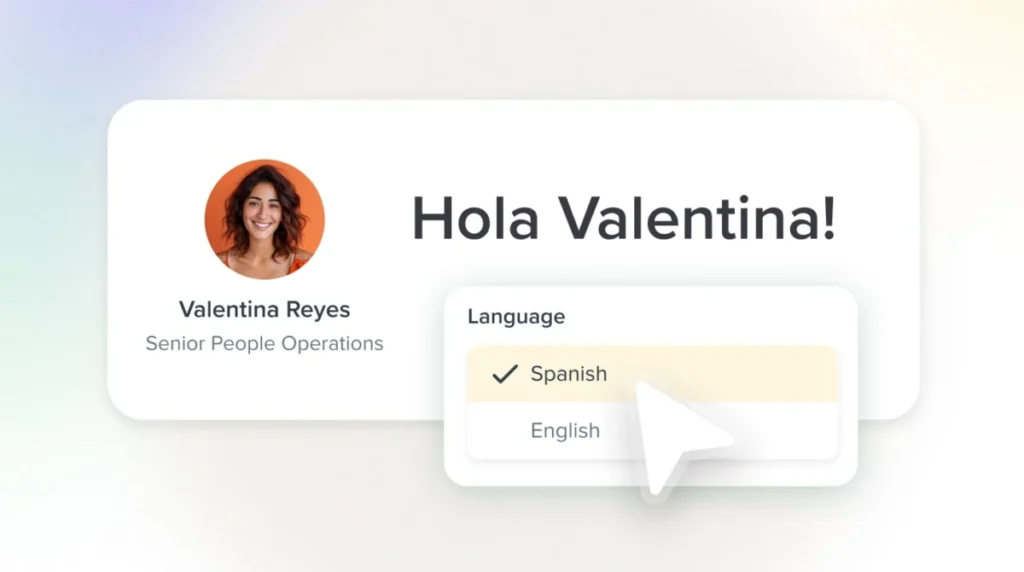
Workable, a leading provider of recruiting and HR software, has officially launched full support for Spanish (Latin America) within its platform’s user interface and HR module, addressing a long-standing need for Spanish-speaking teams across the region. This strategic update ensures that recruiting and human resources professionals in Latin America can now operate their workflows in a language that accurately reflects their regional vocabulary, idioms, and cultural conventions, moving beyond the previous reliance on English or generic Spanish translations. The new locale is immediately available to all Workable users on every plan, at no additional cost, underscoring the company’s commitment to enhancing user experience and fostering greater operational efficiency in key global markets.
For years, HR and recruiting professionals in Latin American countries leveraging Workable’s platform have navigated their daily tasks through an English-language interface. While many possess proficiency in English, the intricate nature of human resources, particularly in areas like candidate communication, compliance, and internal policy management, often benefits immensely from native-language support. The previous setup introduced potential friction points, ranging from minor linguistic inaccuracies to a broader disconnect in workflow and communication style, which could subtly impact productivity and user satisfaction. The introduction of a dedicated Spanish (Latin America) locale directly addresses these challenges, providing a more intuitive and culturally aligned experience.
Workable’s Strategic Imperative: Tapping into the Latin American Market
Workable’s move is not merely a linguistic upgrade but a significant strategic pivot towards deeper market penetration and user engagement within the rapidly expanding Latin American economy. The region, comprising over 650 million people, boasts a substantial and growing professional workforce. According to reports from the World Bank and various economic agencies, Latin America’s digital transformation is accelerating, with a corresponding surge in demand for sophisticated HR technology solutions. Countries like Brazil, Mexico, Argentina, Colombia, and Chile are seeing robust growth in their tech sectors, driving a need for efficient and localized recruitment tools. The decision to offer a distinct Latin American Spanish version, as opposed to a generalized Spanish, highlights a nuanced understanding of the market’s diversity. European Spanish, while linguistically related, often differs significantly in colloquialisms, terminology, and even grammatical preferences from the variants spoken across Central and South America. This tailored approach is crucial for capturing the authenticity required for effective professional communication in a localized context.
The HR software market in Latin America is projected to experience a compound annual growth rate (CAGR) of over 10% in the coming years, driven by increased digitalization, remote work trends, and a heightened focus on talent acquisition and retention. Companies operating in this dynamic environment require tools that not only streamline processes but also resonate culturally with their employees and candidates. By investing in granular localization, Workable aims to solidify its position as a preferred HR tech partner, empowering local businesses to optimize their talent strategies without linguistic impediments.
A Deep Dive into the Localization: Beyond Mere Translation
The newly implemented Spanish (Latin America) support is more than a simple translation of existing English text. Workable emphasizes that it is a "distinct locale built for LATAM," incorporating regional vocabulary, idioms, and formatting conventions specific to the region. This meticulous approach ensures that terms related to job roles, legal frameworks, and HR processes are accurately represented, avoiding the awkwardness or misunderstandings that can arise from generic translations. For instance, the term for "resume" or "CV" might vary, as could phrases used in performance reviews or onboarding documents. Such attention to detail reflects a deeper commitment to user experience and operational precision, which is paramount in critical functions like recruiting and HR.
This level of localization also extends to the formatting of dates, currencies, and addresses, ensuring consistency with local standards. For HR professionals, this means reduced cognitive load and fewer opportunities for errors, allowing them to focus more on strategic initiatives rather than linguistic interpretation. In a competitive talent landscape, a seamless, native-language experience for both recruiters and candidates can significantly enhance an organization’s employer brand and improve the overall hiring process.
The Implementation Process: Seamless Transition for Users
Workable has designed the rollout of the new language feature to be as user-friendly as possible. For new users signing up, the platform will intelligently detect the browser’s language settings. If set to a supported language like Spanish (Latin America), the interface will automatically load in that language, eliminating any manual setup. This "zero-configuration" approach minimizes onboarding friction and ensures immediate access to the localized experience.
For existing users, Workable will not automatically switch their language preference to avoid disrupting current workflows. Instead, if an existing user’s browser is set to a localized language, they will see a prominent banner prompting them to update their language preference. This banner includes a direct link to their Profile Settings, simplifying the navigation to the language selection menu. Furthermore, existing users who are already operating in Spanish (likely a European Spanish workaround) or Greek (another supported language) will receive an automated notification when the new feature is live, providing clear guidance on how to make the switch to the Latin American variant.
The platform also offers granular control over language settings. Each individual user can select their preferred language independently through their Profile Settings. This means that within a single organization, different team members can work in different languages – for example, a Spanish-speaking recruiter can use the LATAM Spanish UI, while a colleague might prefer English. This individual-level control eliminates the need for account-wide administrative changes, promoting flexibility and catering to diverse multinational teams or teams with varying language proficiencies. The language selector is visible to all users, empowering them to manage their own interface preferences at any time, a process Workable estimates takes merely ten seconds.
A Broader Vision: Workable’s Global Language Rollout Timeline
The launch of Spanish (Latin America) is positioned as the "first step in a broader language rollout," signaling Workable’s ambitious plan for global expansion and deep localization. The company has outlined a clear timeline for the introduction of several other key languages, demonstrating a methodical approach to serving its international user base.
- Early June 2026: French (France), French (Canada), Dutch, and Danish are targeted for release. This phase addresses significant markets in Europe and North America, further enhancing Workable’s reach and usability in these regions. The distinction between French (France) and French (Canada) again underscores Workable’s commitment to regional linguistic nuances.
- September 2026: Spanish (Spain) and Italian are planned for release. This will complete the comprehensive Spanish offering, catering to both major dialects, and introduce support for another significant European language market.
- In the Pipeline: German and Portuguese are also confirmed to be under development, without specific release dates yet. Portuguese, particularly Brazilian Portuguese, will be critical for engaging with the largest economy in Latin America and a substantial global market. German will solidify Workable’s presence in one of Europe’s largest and most economically powerful nations.
This phased rollout strategy suggests a robust investment in linguistic and cultural adaptation, ensuring that each new language support is developed with the same level of precision and regional specificity as the Spanish (Latin America) launch. The overarching philosophy articulated by Workable is that "Every team using Workable should be able to work in the language they think in," a powerful statement about user-centric design and global inclusivity.
Implications and Industry Impact
Workable’s robust localization initiative carries significant implications for both the company itself and the broader HR technology landscape.
For Workable:
- Enhanced Market Penetration: This move will undoubtedly open up new opportunities and accelerate growth in the Latin American market, where language barriers previously might have been a subtle deterrent.
- Competitive Advantage: By offering superior localization compared to competitors who might only provide generic translations or no Spanish support at all, Workable gains a significant edge. This can be a decisive factor for companies choosing an HR software platform.
- Improved User Loyalty and Engagement: A more intuitive, native-language experience leads to higher user satisfaction, increased platform adoption, and stronger customer retention.
- Reinforced Brand Image: Workable positions itself as a globally-minded, user-centric company that understands and values the diversity of its user base.
For Latin American Businesses:
- Increased Efficiency: HR and recruiting teams can operate more swiftly and accurately when working in their native language, reducing the time spent on linguistic interpretation or clarification.
- Better Candidate Experience: Recruiters can craft job descriptions, communicate with candidates, and manage applications in a way that feels more natural and professional to local talent, improving the overall candidate journey.
- Reduced Error Rates: Minimizing linguistic ambiguities in complex HR processes, from contract generation to performance management, can lead to fewer errors and better compliance.
- Empowered Workforce: Employees in HR roles feel more confident and competent when using tools that speak their language, fostering a more productive and engaged workforce.
For the HR Tech Industry:
- Setting a New Standard: Workable’s detailed approach to regional localization could pressure other global HR tech providers to follow suit, leading to a broader improvement in language support across the industry.
- Highlighting the Importance of Nuance: This initiative underscores that "global" does not mean "one-size-fits-all." True global reach requires deep understanding of regional and cultural differences, especially in fields as sensitive as HR.
- Facilitating Global Talent Acquisition: As companies increasingly operate across borders, localized HR tools become essential for managing diverse international workforces and tapping into global talent pools effectively.
The announcement reflects a maturing HR technology market where basic functionality is no longer enough. Companies are now seeking platforms that integrate seamlessly into their unique operational and cultural contexts. Workable’s investment in distinct regional language support is a testament to this evolving demand, signifying a shift towards truly global, yet locally relevant, HR solutions. This approach not only serves existing customers better but also paves the way for broader adoption in regions where localized experiences are paramount for business success. The future of global talent acquisition and management will undoubtedly be shaped by such thoughtful and comprehensive localization efforts.






