Workday’s recent announcement of a comprehensive AI strategy, anchored by its newly integrated technology platform Sana, marks a significant inflection point for the human capital management (HCM) giant. This strategic pivot, detailed in a series of key announcements, aims to transform how employees interact with enterprise systems, learn, and collaborate. For existing partners and users of Sana, like the creators of the HR Superagent Galileo, this move signifies a validation of the platform’s potential and an acceleration of its impact.
Understanding Sana: An AI-First Foundation
At its core, Sana Labs, the entity behind the Sana platform, has consistently prioritized artificial intelligence. Founded in 2016 by Joel Hellermark, the company’s initial vision was to leverage machine learning and AI to revolutionize knowledge access, learning, and workplace collaboration. Even before the widespread adoption of tools like ChatGPT, Sana collaborated with pioneering AI entities like OpenAI to develop an AI-driven learning system.
As the company matured and secured investment, Sana strategically divided its focus into two distinct product lines: Sana Learning, an advanced, AI-native system for content and learning, and Sana Agents, an intuitive platform designed to consolidate multiple Large Language Models (LLMs) into a seamless productivity experience.
Sana Agent, the engine powering platforms such as Galileo, empowers users to query any LLM, manage diverse data sets and documents, generate visual content including images and presentations, record and analyze meetings, and craft sophisticated prompts and workflows. It essentially functions as an "agent platform," overlaying any AI model to simplify its usage, maintain historical context, and facilitate the creation of personalized productivity agents.
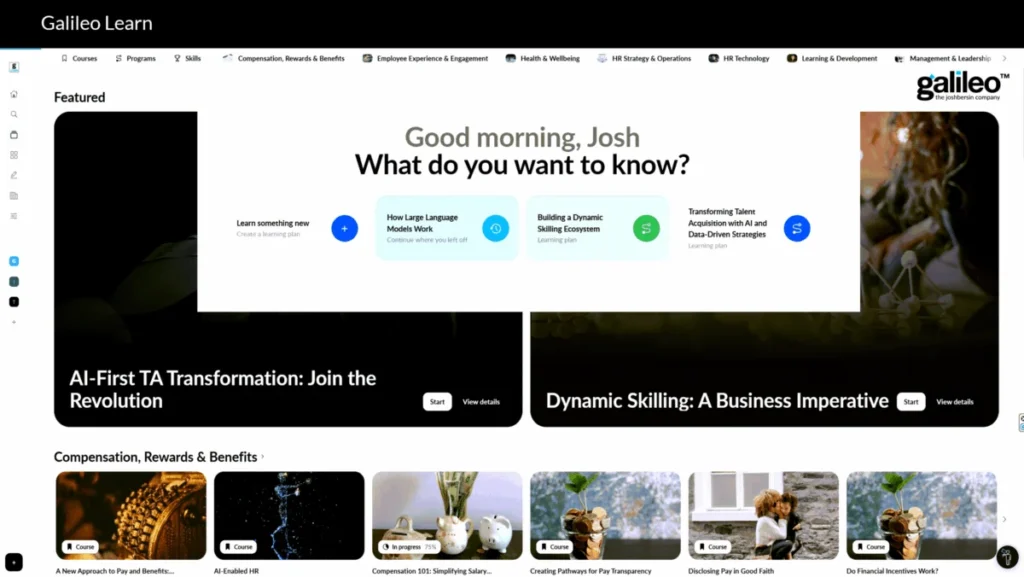
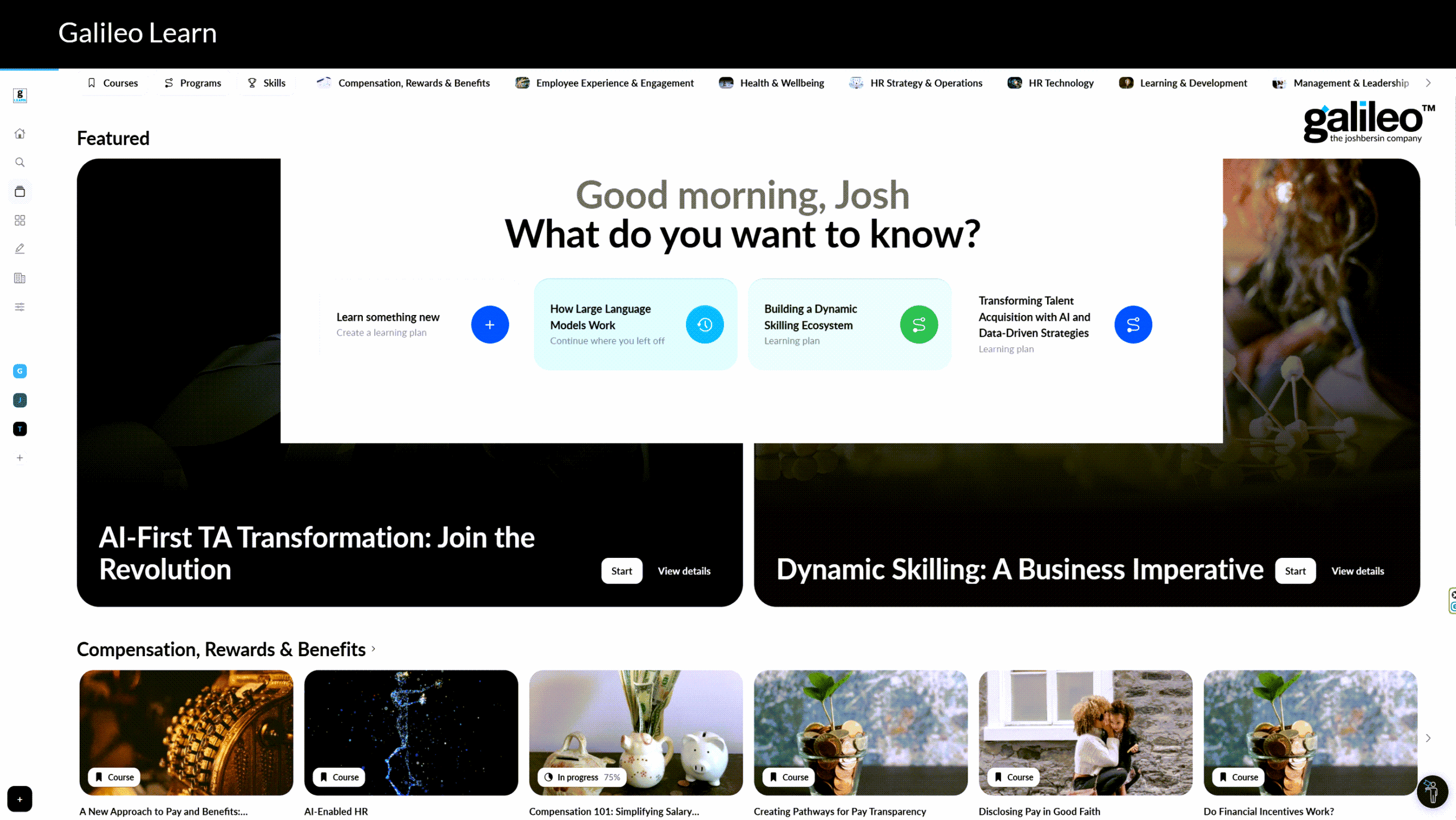
Sana Learning, which is marketed as Galileo Learn, offers a sophisticated learning environment that has been at the forefront of developing training modules, coaching programs, and assessments. While not the primary focus of this announcement, Sana Learning is poised to become a substantial and profitable component of Workday’s business, contributing to what is termed "Dynamic Enablement." The integration of Galileo with Galileo Learn creates a unified experience where users can access applications, tap into a vast knowledge base, and engage in learning activities seamlessly. Furthermore, Sana Agent’s capabilities extend to a mobile application and advanced voice generation, allowing for personalized interactions, such as Galileo speaking in a user’s own voice.
Workday’s Four Pillars of AI Transformation
Workday’s integration of Sana has culminated in four pivotal announcements, outlining a clear roadmap for its AI-driven future:
1. Sana for Workday: Democratizing Access to Core HCM Functions
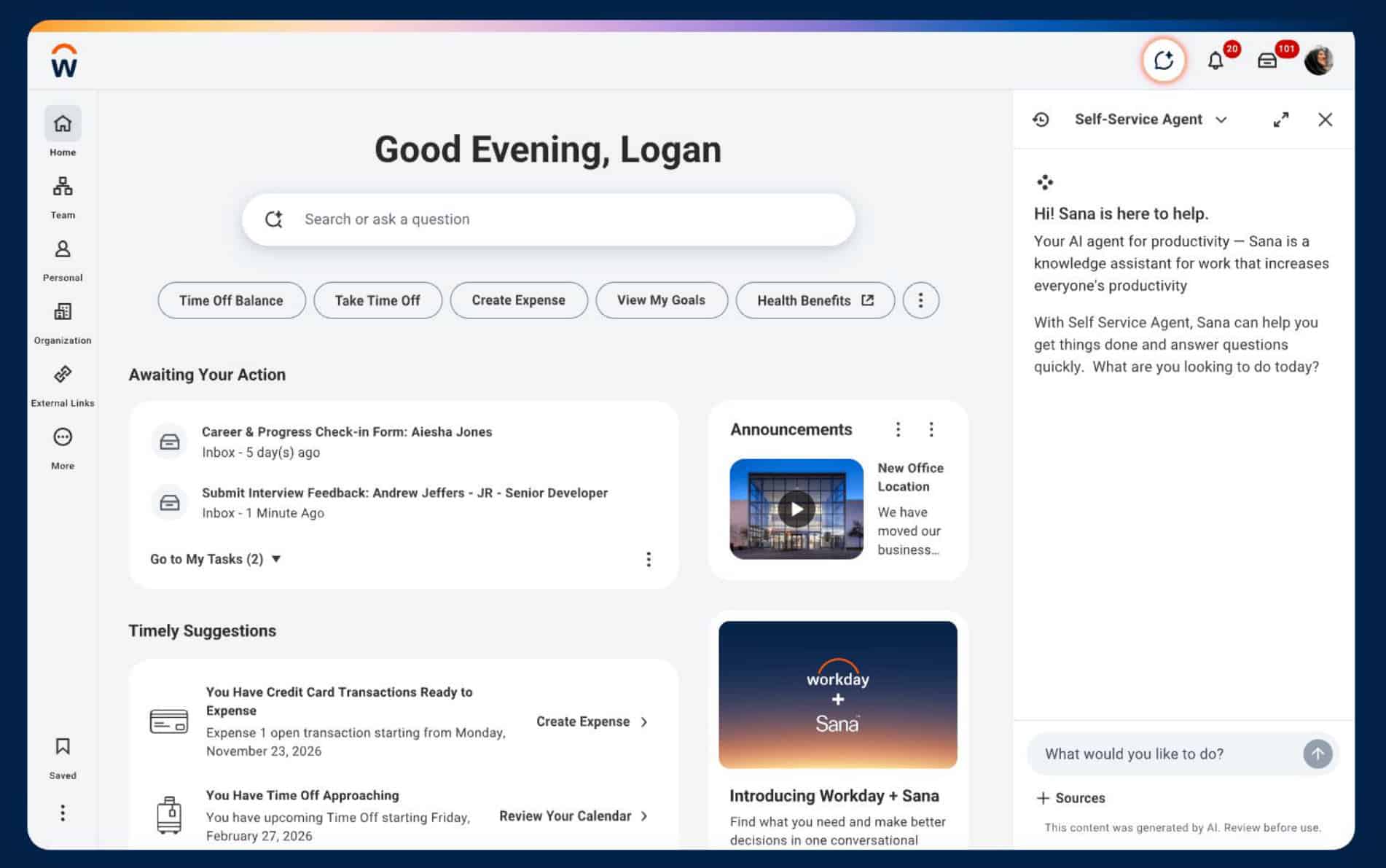
Effective immediately, all Workday customers gain access to "Sana for Workday," a new interface that directly integrates Workday’s transactional data and functionalities within the Sana Agent environment. This groundbreaking development allows employees and managers to interact with their Workday system using natural language queries. Tasks such as asking questions, generating reports, initiating transactions, and analyzing data are now accessible directly through the Sana Agent, eliminating the need to navigate Workday’s complex traditional interface. Crucially, Workday’s robust security protocols are maintained, ensuring that each user only has access to the data and transactions relevant to their role and permissions. For users of platforms like Galileo, this means the intelligence of their HR Superagent can be directly applied to all Workday information, unlocking unprecedented insights and operational efficiencies. This initiative is seen as a monumental step in making the Workday system more accessible and user-friendly for a broader range of employees.
2. Sana Enterprise: The Unified Front Door for Organizational Systems
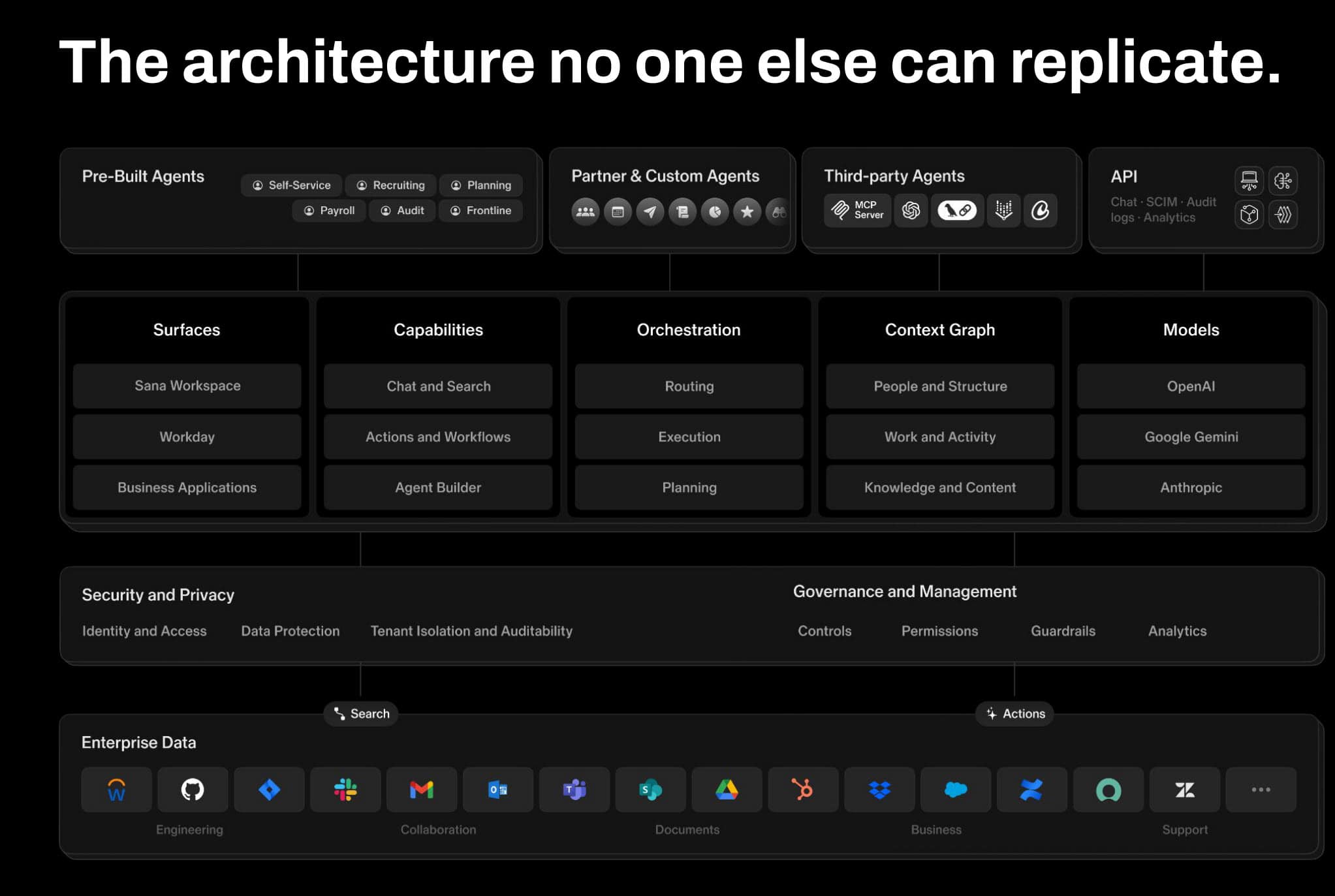
Workday is also launching "Sana Enterprise," an enhanced version of the Sana platform that requires an upgraded license. This advanced offering extends Sana’s capabilities beyond Workday, enabling seamless integration with a multitude of other enterprise systems, including Salesforce, Microsoft Teams, Slack, and SharePoint. Companies that have already deployed Sana Enterprise as their primary interface, such as Galileo, have found its configuration to be straightforward, providing users with both read and write access to these integrated systems. This positions Sana Enterprise as a potential "front door" for all organizational interactions, competing directly with established employee experience platforms like Microsoft Viva and ServiceNow. A significant advantage of Sana Enterprise is its inheritance of Workday’s embedded security layers, job-level hierarchies, and role-based permissions. This inherent security architecture allows IT departments to deploy the platform with reduced concerns about data privacy and authentication complexities across different systems.

3. Sana as the Agent Development System: Empowering In-House Innovation
A third key announcement declares Sana as Workday’s official Agent Development System. This empowers users, managers, HR teams, and corporate developers to build their own custom AI agents and applications within the Sana environment. Sana employs a user-friendly workflow development tool, enabling the creation of applications through a drag-and-drop interface of "steps" or "prompt paths." Workday has further plans to integrate visual coding tools like Flowise in the coming quarters, enhancing Sana’s capabilities as a robust development studio. This democratization of application development is expected to lead to the creation of thousands of specialized agents and applications across organizations. An example demonstrated involves an employee travel booking application that can manage company travel policies, identify flights, seek approval for exceptions, and process expense reports, all within a single, intuitive workflow. The potential for third-party developers to also contribute to this ecosystem is significant.
4. Sana’s AI Infrastructure as Workday’s Core AI Backbone
The fourth announcement solidifies Sana’s AI infrastructure as the foundational technology for all of Workday’s future AI initiatives. Previously, Workday branded its AI agents under the "Illuminate" umbrella. Moving forward, new AI agents developed by Workday will operate within and leverage the Sana infrastructure. This integration ensures a cohesive and scalable AI architecture for the company. The architectural diagrams provided by Workday illustrate how Sana acts as the AI layer, sitting above the core Workday business rules and security framework, facilitating the development and deployment of AI-powered applications.
Broader Implications and Customer Impact
These announcements carry substantial implications for Workday customers and the broader enterprise software landscape.
Enhanced User Experience and Employee Engagement
The most immediate impact for Workday customers is a significant upgrade to the user experience. Having been a daily user of Sana for nearly three years, the platform is described as elegant, intuitive, fast, and enjoyable to use – a stark contrast to the often complex interfaces of traditional enterprise software. The ability to store documents, integrate Workday data with tools like Microsoft 365 and Google Workspace, and potentially make Sana the primary desktop experience offers a compelling proposition. For organizations adopting Sana Enterprise, Workday is effectively offering a competitive employee experience platform that can rival offerings from Microsoft Viva, ServiceNow, and Zoom/Workvivo. While the employee experience platform market is highly competitive, Workday’s direct integration with its core HCM data provides a distinct advantage.
Accelerated App Development and AI Education
Workday customers now possess a powerful and accessible tool for building custom applications and fostering AI literacy among their workforce. The Sana platform allows any employee to explore, learn about, and even build AI solutions. The tight integration between Sana Agents and Sana Learning ensures that employee training and enablement are seamlessly integrated. For instance, Galileo Learn, with its extensive library of over 750 courses in management, leadership, and HR, becomes immediately available. This integrated approach allows users to access various LLMs (including Claude, OpenAI, and Gemini) from a single interface and interact with Workday data for both informational queries and transactional tasks. The visual workflow module in Sana provides an intuitive "AI studio" for users who prefer to build and customize their own solutions, featuring branching logic and an easy-to-edit visual interface.
A Robust AI Engineering Powerhouse
The acquisition of Sana brings a highly experienced AI engineering team into Workday’s fold. This team possesses deep expertise in critical areas such as data labeling, LLM optimization, Retrieval Augmented Generation (RAG) pipelines, and various AI tuning challenges. This in-house capability is expected to accelerate Workday’s AI development cycles, improve efficiency, and ensure that AI projects are architected cohesively. The integration strategy emphasizes maintaining Workday’s native business rules and security architecture above the Sana layer, facilitating the secure and compliant development of AI applications.

A World-Class AI-Native Learning System
Sana Learning represents one of the most advanced AI-native platforms available in the market today. The learning and development technology sector, a market valued in the hundreds of billions of dollars, presents a significant new opportunity for Workday and its clientele. This sophisticated platform is poised to redefine how organizations approach employee training and continuous learning.
The Competitive Landscape and Strategic Positioning
While Workday’s strategy is compelling, the enterprise AI market is intensely competitive.
- Oracle has developed its own advanced AI Studio, underpinned by its proprietary AI infrastructure, positioning itself as a significant competitor with a larger market capitalization.
- SAP is pursuing a similar path with Joule, its AI Agent designed to interact with SAP and SuccessFactors applications. While Joule may have some early advantages, Workday’s integration with Sana creates a formidable competitive dynamic.
- Microsoft with its suite of Copilot products, Copilot Studio, Agent365, and the WorkIQ intelligence layer, offers a comparable integrated experience, particularly for users within the Microsoft 365 ecosystem. While direct Workday integration is still evolving, the overall approach mirrors Sana Enterprise’s ambition.
- LLM Providers such as OpenAI, Anthropic, and Google (Gemini) have established themselves as foundational AI providers. Companies that have already committed significant budgets to these providers may find it challenging to justify additional investment in a new agent front-end, although the specific integrations offered by Sana, particularly within Workday and its learning capabilities, may prove compelling.
- Google and Microsoft are also actively building integrated experiences across their productivity suites, encompassing email, search, file management, and app development tools, mirroring the strategic direction of Sana.
- ServiceNow, a major player in the enterprise service management space, has bolstered its AI agent capabilities through the acquisition of Moveworks. With a market capitalization nearly double that of Workday, ServiceNow is aggressively targeting this market segment.
The rapid pace of innovation in the AI and development tool space means Workday must remain agile, continuously adapting to new models, LLMs, communication tools, and emerging development paradigms.
Workday, Sana, and Galileo: A Synergistic Partnership
For Galileo, the announcement marks a formal partnership with Workday. This collaboration enables Workday and Sana customers to seamlessly integrate Galileo’s HR Intelligence and knowledge corpus directly into their Workday environment. Galileo’s HR intelligent agent and its extensive library of over 400 pre-built prompts and workflows can now directly leverage Workday data. Furthermore, the Galileo Learn library, comprising over 750 courses in HR, leadership, technology, and management, can be activated within Workday’s Sana Learning environment. This positions Galileo as an "instant-on" solution that maximizes the value of the integrated Workday-Sana ecosystem.
The Evolving AI Landscape
The current AI landscape is characterized by diversity, with many organizations utilizing a mix of platforms like Microsoft Copilot, OpenAI, Claude, and other specialized AI tools. Workday, by leveraging its substantial investments in HR data, security, and financial management, coupled with the Sana platform, is well-positioned to cut through this complexity. While the future trajectory of major AI companies remains unpredictable, and further acquisitions are likely, Workday’s integration of Sana offers a strategic and secure pathway for its customers navigating the evolving world of enterprise AI. The company’s commitment to providing a unified, intelligent, and accessible experience across its product suite signals a significant step forward in the application of AI within the modern enterprise.