This week, enterprise cloud software giant Workday announced a comprehensive and forward-thinking artificial intelligence strategy, with its recently acquired technology platform, Sana, at its core. The announcement signals a significant shift in Workday’s approach to AI integration, aiming to democratize access to its powerful human capital management (HCM) and financial management systems through an intuitive, agent-driven interface. For industry observers and existing Workday customers, the implications are substantial, promising a more accessible, productive, and adaptable future for enterprise software utilization.
Understanding Sana: An AI-First Foundation
At the heart of Workday’s new AI initiative is Sana Labs, a company that has established itself as an AI-first innovator. Founded in 2016 by Joel Hellermark, Sana’s initial vision was to leverage machine learning and artificial intelligence to fundamentally improve how individuals learn, access knowledge, and collaborate within professional environments. Early in its development, Sana collaborated with pioneering AI entities, including OpenAI, even before the widespread public launch of ChatGPT, to build a sophisticated AI-driven learning system.
As the company matured and secured investment, its strategic focus evolved into the development of two distinct, yet complementary, product lines: Sana Learning and Sana Agents. Sana Learning emerged as a next-generation, AI-native platform designed for content delivery and personalized learning experiences. Concurrently, Sana Agents was conceived as an elegantly designed agent platform, capable of unifying multiple large language models (LLMs) into a seamless and user-friendly productivity ecosystem.
The Sana Agents platform, which underpins solutions like Galileo, an HR Superagent, empowers users to interact with various LLMs, manage diverse datasets and documents, generate visual content such as images and presentations, record and analyze meetings, and craft custom prompts and sophisticated workflows. Essentially, Sana Agents functions as an "agent platform" that sits atop any AI model, simplifying its usage, preserving interaction history, and facilitating the creation of bespoke productivity agents.
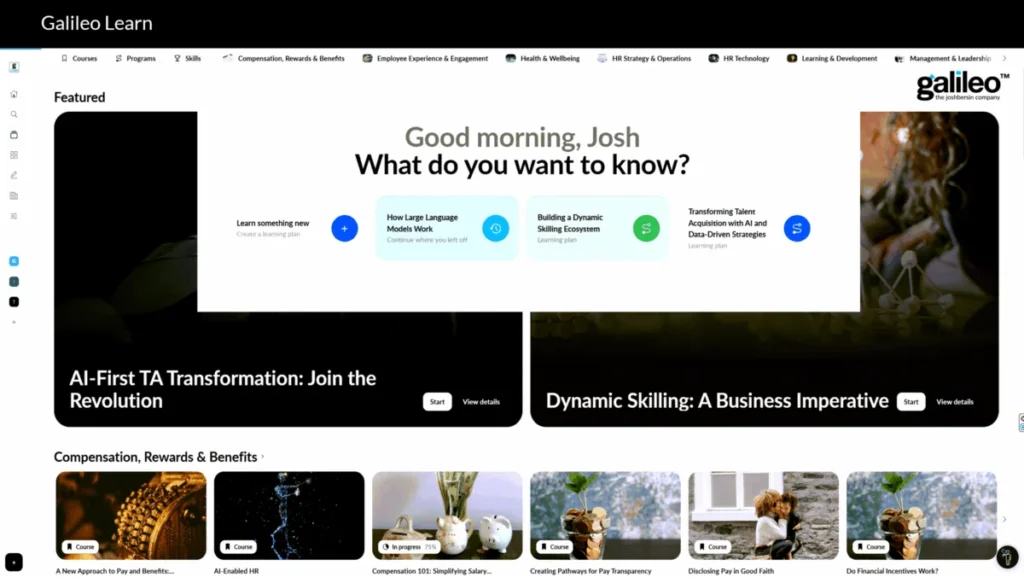
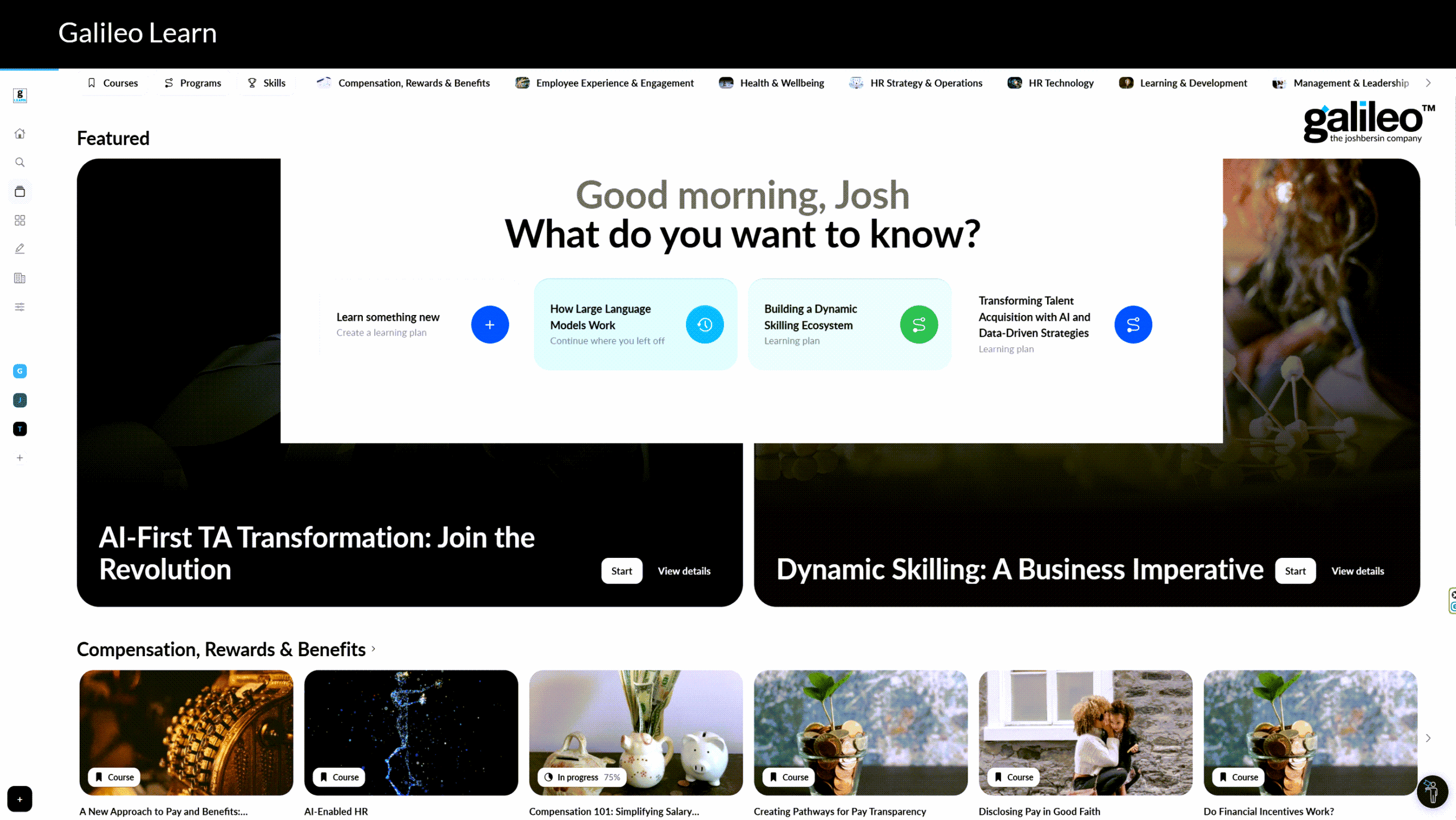
Sana Learning, rebranded as Galileo Learn by some of its early adopters, offers a sophisticated learning environment that has been instrumental in developing training modules, coaching programs, and assessment tools. While this article primarily focuses on the agent platform’s impact on Workday’s broader strategy, it’s important to note Sana Learning’s potential to form the bedrock of a significant and profitable business for Workday in the emerging field of "Dynamic Enablement." The integration of Galileo’s capabilities with Galileo Learn allows users to seamlessly run applications, access a comprehensive knowledge corpus, and engage in learning activities within a unified experience. Furthermore, the Sana Agent platform’s mobile application and advanced voice generation capabilities, exemplified by Galileo’s ability to replicate a user’s voice, underscore its commitment to accessible and personalized user interactions.
Workday’s Strategic Pillars: Four Key Announcements
The acquisition of Sana by Workday has quickly translated into a series of impactful announcements, outlining a clear roadmap for AI integration. These announcements can be broadly categorized into four key strategic pillars:
1. Sana for Workday: Unlocking the Core HCM and Financials
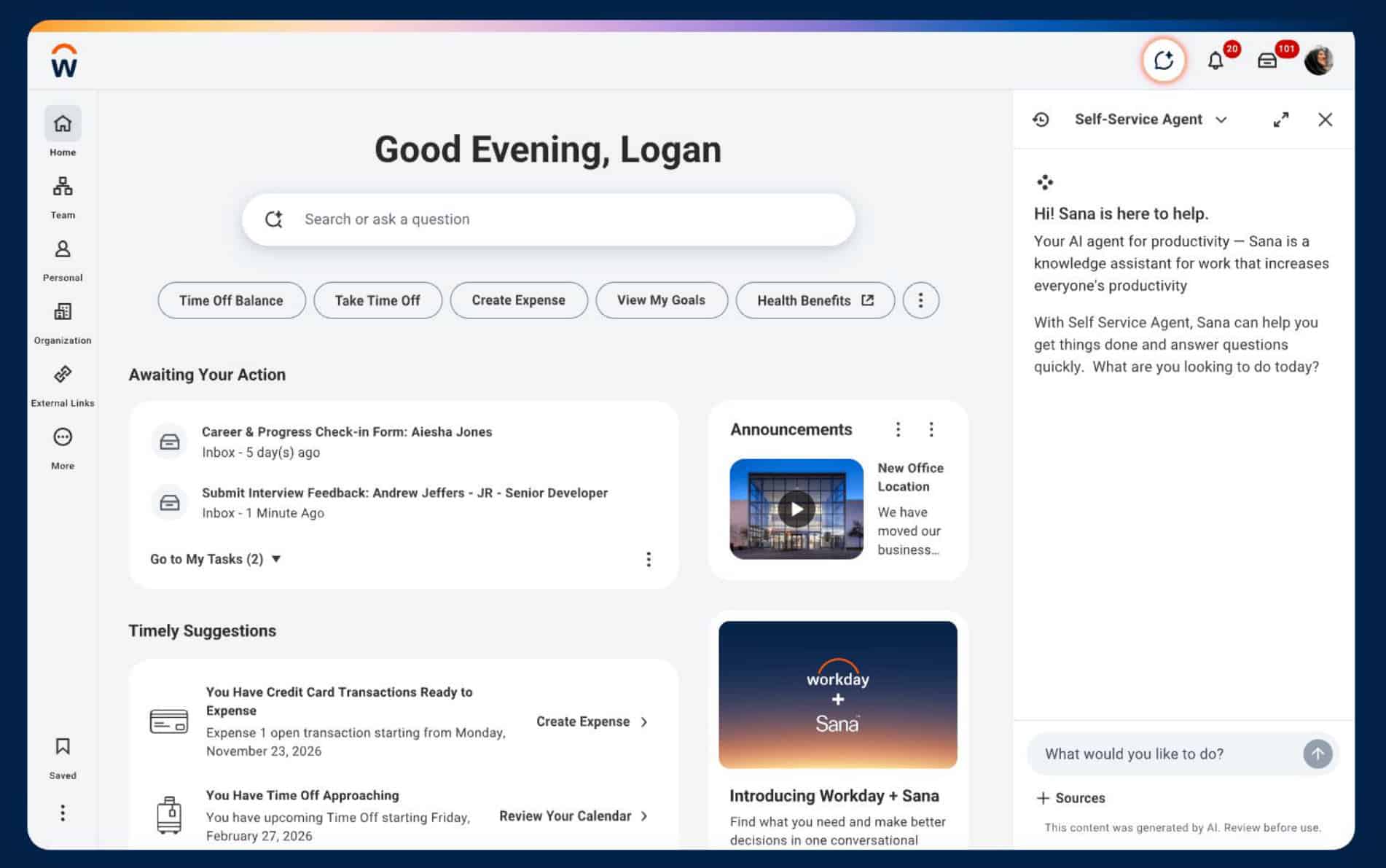
Effective immediately, all Workday customers gain access to a newly integrated Workday interface dubbed "Sana for Workday." This significant development brings the transactional capabilities and vast data repositories of Workday systems directly into the Sana Agent environment. This integration empowers employees and managers to interact with their company’s Workday data in a natural language format, enabling them to ask questions, run reports, initiate transactions, and perform various other tasks without navigating the often complex traditional Workday interface.
Crucially, Workday’s robust security protocols are embedded within Sana for Workday. This ensures that each user is presented with only the data and transactions to which they are authorized, maintaining the integrity and confidentiality of sensitive information. For users of solutions like Galileo, this means that the intelligence and analytical power of their HR Superagent can be directly applied to all Workday data, providing deeper insights and more actionable outcomes. This initial step is transformative, as it "unlocks" the Workday system for a broader audience, including casual users, managers, and operational teams, thereby reducing the learning curve and increasing productivity.
2. Sana Enterprise: The Unified Front Door to Enterprise Systems
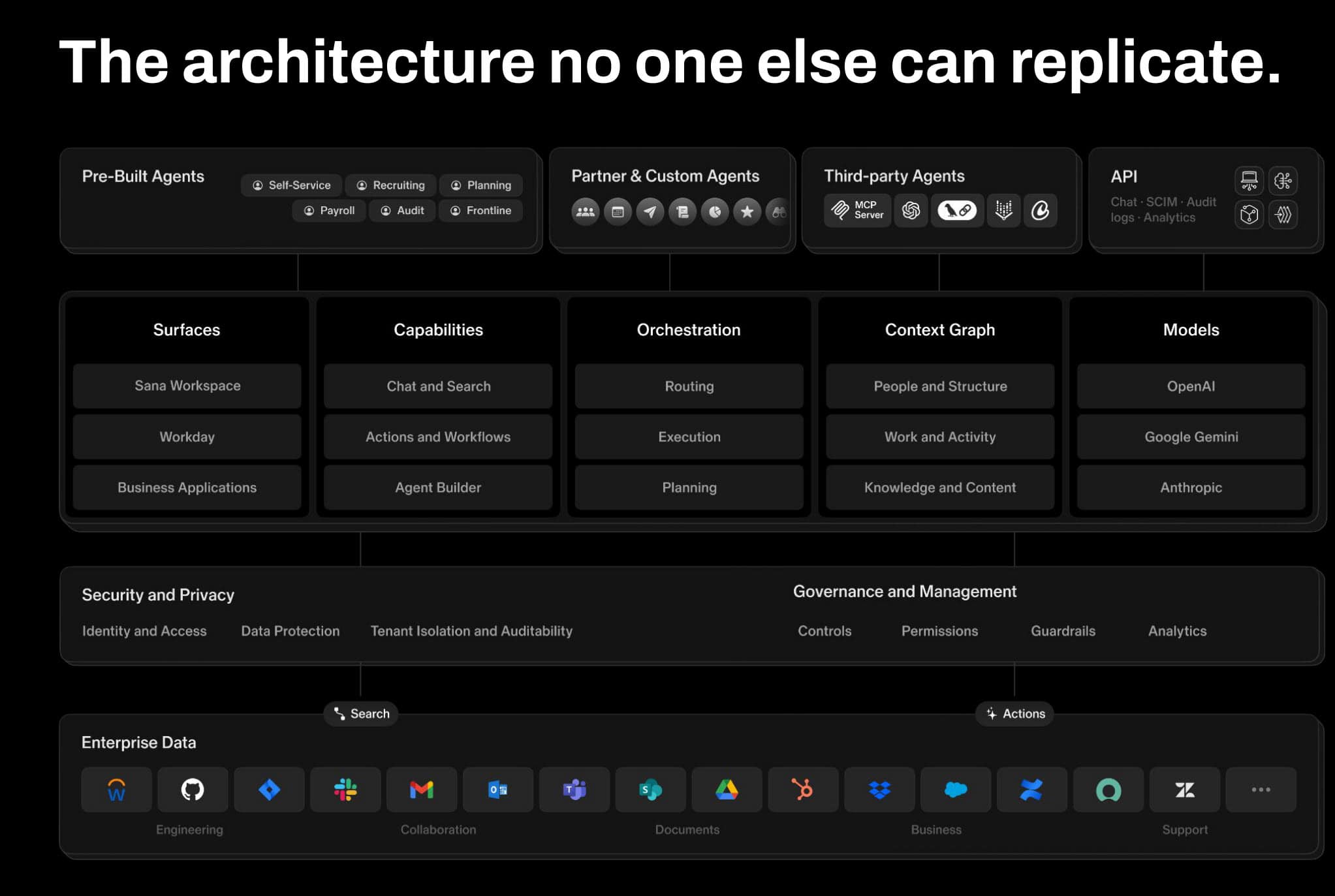
Workday is also introducing an upgraded version of the Sana platform, known as Sana Enterprise. This enhanced offering, available with an upgraded license, expands Sana’s capabilities to integrate with a wider array of enterprise systems, including popular platforms such as Salesforce, Microsoft Teams, Slack, and SharePoint.

Early adopters and users of Galileo have already leveraged this integration feature, citing its ease of configuration and the provision of read/write access to these external systems. This positions Sana Enterprise as a potential "front door" for all enterprise users, fulfilling a role similar to that of established employee experience platforms like Microsoft Viva and ServiceNow. The inherent security layers and organizational hierarchy information embedded within Workday are inherited by Sana Enterprise, alleviating concerns for IT departments regarding data privacy, security, and authentication across disparate systems. This allows for a more cohesive and secure digital workspace.
3. Sana as the Agent Development System: Empowering Customization
A pivotal aspect of Workday’s AI strategy is the establishment of Sana as its primary Agent Development System. This means that users, managers, HR teams, and corporate developers will now have the tools to build their own custom AI agents within the Sana platform. Sana employs a visual workflow development tool, allowing for the drag-and-drop creation of "steps" and "prompt paths" to build custom applications. Future enhancements are planned, including the integration of low-code/no-code tools like Flowise, further enhancing Sana’s capabilities as a robust development studio.
This democratized development environment enables organizations to create bespoke applications tailored to specific business needs. For instance, a common use case demonstrated involves an employee travel booking application that can manage company travel policies, identify flight options, facilitate approval workflows, and streamline expense reporting. The expectation is that organizations will develop thousands of such agents and applications, with the potential for third-party developers to contribute to this ecosystem.
4. Sana’s AI Infrastructure: The Engine for Workday’s AI Future
The underlying AI infrastructure of Sana is now designated as the foundational AI infrastructure for Workday. Previously, Workday branded its AI initiatives under the "Illuminate" umbrella. Moving forward, all new AI agents developed by Workday will operate within and be powered by the Sana infrastructure. This strategic decision signifies a commitment to leveraging Sana’s advanced AI capabilities to drive Workday’s future AI innovations. The architectural diagrams illustrate a layered approach, where Workday’s native business rules and security frameworks remain integral, sitting above the Sana layer to ensure secure and efficient application development.
Implications and Broader Impact for Customers
The strategic announcements from Workday carry significant implications for its extensive customer base, promising a fundamental enhancement in user experience and operational efficiency.
A Revolution in User Experience
For years, the user interface of traditional HCM and financial software has been a point of friction for many employees. Sana for Workday promises a dramatic upgrade, offering an elegant, intuitive, and fast user experience. Based on extensive use of the Sana platform, its design is often lauded for its ease of use and enjoyable interaction. This contrasts with the perceived complexity of many traditional enterprise software interfaces. The ability to store documents, integrate Workday data with prevalent tools like Microsoft 365 and Google Workspace, and even establish Sana as a primary desktop experience fundamentally alters how employees interact with critical business systems. For organizations that adopt Sana Enterprise, Workday is positioning itself as a formidable competitor in the burgeoning employee experience platform market, challenging established players like Microsoft Viva and ServiceNow.
Accelerated App Development and AI Education
The integration of Sana as an agent development system provides Workday customers with a powerful, high-productivity pathway to create custom applications and foster AI literacy among their workforce. As a user of the Sana platform, any employee can explore, learn, and even build their own AI-driven solutions. The seamless integration of Sana Agents with Sana Learning ensures that employee training and enablement are intrinsically linked. This means that as employees learn about AI, they can immediately apply that knowledge to build practical solutions. Furthermore, the platform’s ability to connect with multiple LLMs, including those from OpenAI, Anthropic, and Google Gemini, as well as internally developed models, provides a unified access point for diverse AI capabilities. Employees can ask questions and transact with Workday data from this single, integrated experience, fostering a culture of innovation and efficiency. For those inclined to build, Sana offers an accessible AI studio where prompts can be stored, and complex workflows with branching logic can be visually constructed and edited.

Leveraging Sana’s AI Engineering Prowess
The acquisition of Sana brings a highly experienced AI engineering team into Workday’s fold. This team possesses deep expertise in critical areas such as data labeling, LLM optimization, Retrieval-Augmented Generation (RAG) pipelines, and various AI tuning challenges. This internal capability is expected to significantly accelerate Workday’s AI development cycles, enhance the efficiency of AI projects, and ensure that new AI solutions are architected for interoperability and scalability. The architecture clearly delineates that Workday’s established business rules and security protocols will remain paramount, providing a secure foundation upon which Sana’s AI infrastructure can be built. This synergy ensures that Workday’s core strengths in enterprise data management and security are augmented by Sana’s cutting-edge AI expertise.
A World-Class AI-Native Learning System
Sana Learning stands out as one of the most advanced AI-native platforms in the market. The learning and development sector represents a substantial opportunity, estimated to be worth hundreds of billions of dollars in technology and content. Workday’s acquisition of Sana positions it to capitalize on this greenfield opportunity, offering its customers a state-of-the-art platform for employee training and skill development. The integration of Galileo Learn, with its extensive library of courses in management, leadership, and HR, further enhances the value proposition, providing immediate access to comprehensive learning resources.
The Competitive Landscape: A Dynamic Arena
While Workday’s strategic move with Sana is significant, the enterprise AI landscape is increasingly competitive.
- Oracle: Oracle has made substantial investments in its own AI Studio and has developed a comprehensive AI stack, operating within its own robust infrastructure. With its significant market capitalization and established presence, Oracle presents a formidable competitor.
- SAP: SAP is pursuing a similar strategy with Joule, its AI agent designed to interact with SAP applications and subsystems. While Joule may have certain advantages in specific areas, Workday’s integration of Sana creates a direct and compelling race to "agentify" enterprise systems.
- Microsoft: Microsoft’s suite of AI offerings, including MS Copilot, Copilot Studio, and Agent365, represents a significant competitive force. While MS Copilot may not yet have direct Workday integration, its unified experience within the Microsoft 365 ecosystem offers a comparable approach to Sana Enterprise. The overlap in functionalities, such as file sharing and meeting recording, highlights the parallel advancements in this space.
- LLM Providers: Major LLM providers like OpenAI, Anthropic, and Google Gemini have already captured significant market share and budgets. For organizations that have already committed significant resources to these foundational AI models, adopting a new front-end agent platform like Sana may require careful cost-benefit analysis. However, the unique integration with Workday data and the robust learning capabilities offered by Sana could justify the investment.
- Other Cloud Giants: Companies like Microsoft and Google are also actively integrating AI into their productivity suites, including email, search, file management, and application development tools, mirroring Sana’s trajectory.
- Emerging Innovations: The pace of innovation in the AI space is relentless. Workday’s entry into the front-end productivity business necessitates continuous adaptation to emerging trends, new LLMs, and evolving communication tools. The company will need to remain agile to maintain its competitive edge.
- ServiceNow: ServiceNow, a major player in enterprise workflow automation, has recently acquired Moveworks, an agent platform that directly competes with Sana. With ServiceNow’s significant market presence, Workday clients have multiple choices, though Workday aims to make the adoption of Sana as seamless and attractive as possible.
Workday, Sana, and Galileo: A Synergistic Partnership
The integration of Galileo into the Workday-Sana ecosystem is poised to offer immediate value to customers. As official partners with Workday, Galileo’s HR Intelligence and extensive knowledge corpus can be directly integrated into Workday and Sana. This means that Galileo’s HR intelligent agent, along with its pre-built prompts and workflows, can seamlessly access and leverage Workday data. The Galileo Learn library, offering over 750 courses in HR, leadership, technology, and management, can also be activated within Workday’s version of Sana Learning. This makes Galileo a powerful "instant-on" solution that amplifies the capabilities of the entire Workday-Sana experience, offering a compelling proposition for organizations seeking to enhance their HR operations and employee development.
The Evolving AI Landscape: A World of Options
Discussions with numerous organizations reveal a common understanding: there is no single, universal AI platform that suits every enterprise. Companies typically deploy a hybrid approach, utilizing a mix of solutions like Microsoft Copilot, OpenAI, Anthropic’s Claude, and other specialized AI tools. In this context, Workday’s strategic integration of Sana, leveraging the billions of dollars invested in Workday’s HR data, security, and financial management capabilities, is well-positioned to cut through the complexity. While the future trajectory of major AI companies remains unpredictable, with further acquisitions and innovations likely, for existing Workday customers, adopting Sana represents a strategic and secure choice for their evolving AI needs.