This week, Workday announced a significant and forward-thinking Artificial Intelligence strategy, anchored by its newly integrated technology platform, Sana. As a long-standing partner and user of Sana for three years, the implications of this announcement are deeply understood through the lens of developing the HR Superagent Galileo, which itself is built upon the Sana platform. This comprehensive strategy marks a pivotal moment for Workday, aiming to redefine how enterprises interact with their core business data and empower their workforces through advanced AI capabilities.
The Genesis and Evolution of Sana Labs
To fully grasp Workday’s strategic direction, understanding Sana Labs’ origins is crucial. Founded in 2016 by Joel Hellermark, Sana Labs was conceived with an AI-first ethos, prioritizing product development as a secondary objective. Hellermark’s initial vision centered on leveraging machine learning and artificial intelligence to fundamentally enhance how individuals learn, access knowledge, and collaborate within professional environments. In its nascent stages, Sana Labs collaborated with pioneering AI entities, including OpenAI, even before the widespread launch of ChatGPT, to construct an innovative AI-driven learning system.
As the company matured and secured significant investment, the strategic decision was made to bifurcate its development into two distinct product lines: Sana Learning and Sana Agents. Sana Learning emerged as a next-generation, AI-native system for content and learning, designed to revolutionize educational delivery within organizations. Complementing this, Sana Agents was developed as an elegantly designed platform that aggregates multiple Large Language Models (LLMs) into a cohesive and user-friendly productivity experience.
Sana Agents: The Engine of Modern Productivity
Sana Agents, the foundational technology powering solutions like Galileo, empowers users with a versatile suite of capabilities. This platform allows individuals to query any LLM, seamlessly manage and incorporate data and documents, generate visual assets such as images and presentations, record and analyze meetings, and develop intricate prompts, workflows, and even sub-agents. In essence, Sana Agents functions as an "agent platform" that sits atop any AI model, simplifying access, managing historical interactions, and facilitating the creation of personalized productivity tools. This adaptability makes it a powerful engine for streamlining complex workflows and enhancing employee efficiency.
Sana Learning: Pioneering Dynamic Enablement
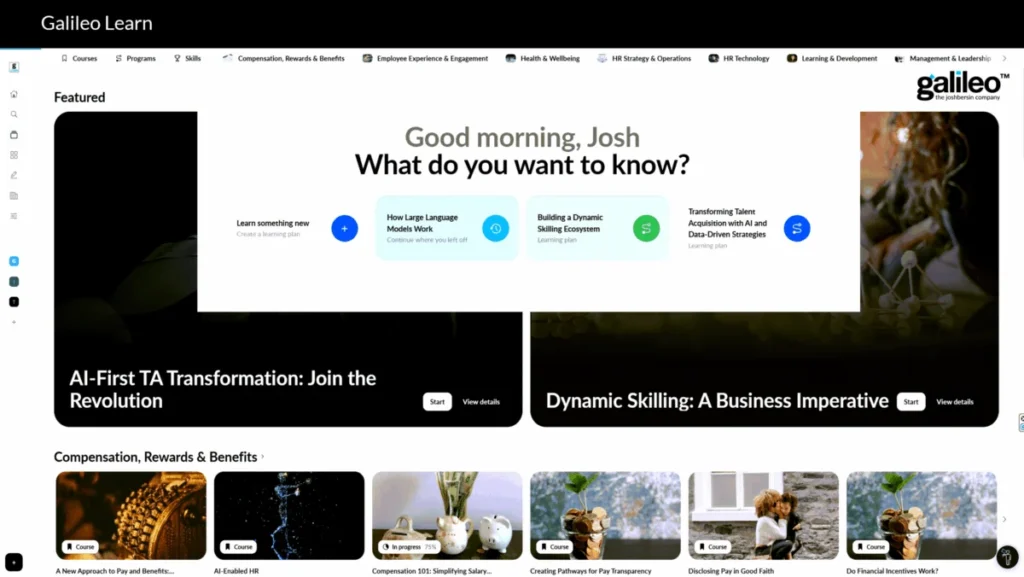
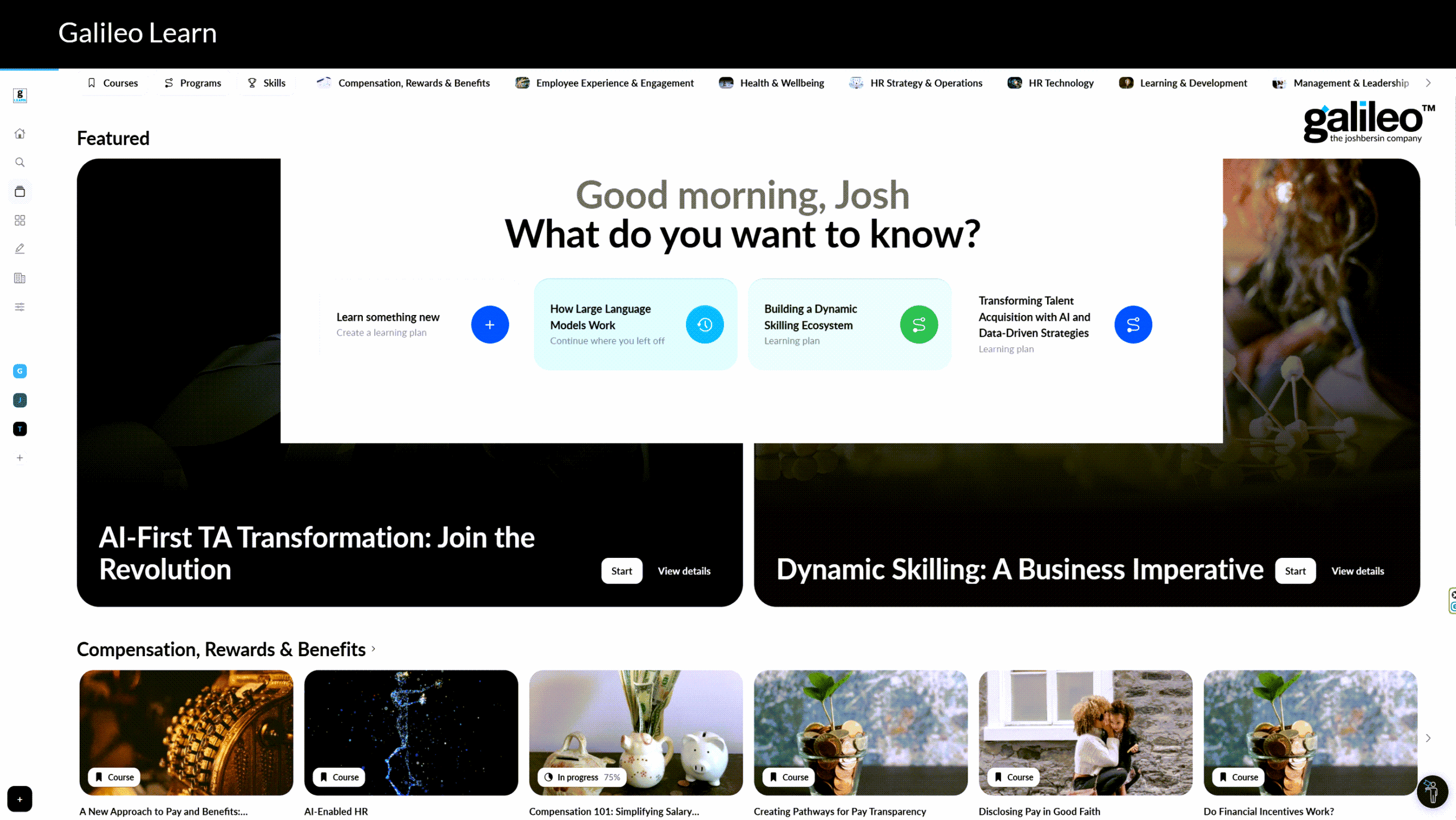
While this article focuses on Workday’s broader AI strategy, Sana Learning, which has been branded as Galileo Learn, warrants mention for its significant impact. This sophisticated learning platform has consistently set industry benchmarks in developing training modules, coaching programs, assessments, and a myriad of other educational resources. The author posits that Sana Learning forms the bedrock of what could become a substantial and highly profitable business for Workday, specifically within the emerging domain of "Dynamic Enablement." This concept emphasizes continuous, personalized, and context-aware learning opportunities tailored to the evolving needs of the workforce. The integration of Galileo and Galileo Learn offers users a unified experience, enabling them to execute applications, access a vast knowledge base, and engage in learning within a single, cohesive environment. Furthermore, Sana Agents boasts a mobile application and advanced voice generation capabilities, exemplified by Galileo’s ability to replicate a user’s voice, adding a layer of personalization and accessibility.
Workday’s Four Pillars of AI Integration
Following its acquisition, Workday has outlined an aggressive roadmap for integrating Sana into its ecosystem, marked by four key announcements:
1. Sana for Workday: Unified Access to Core Systems
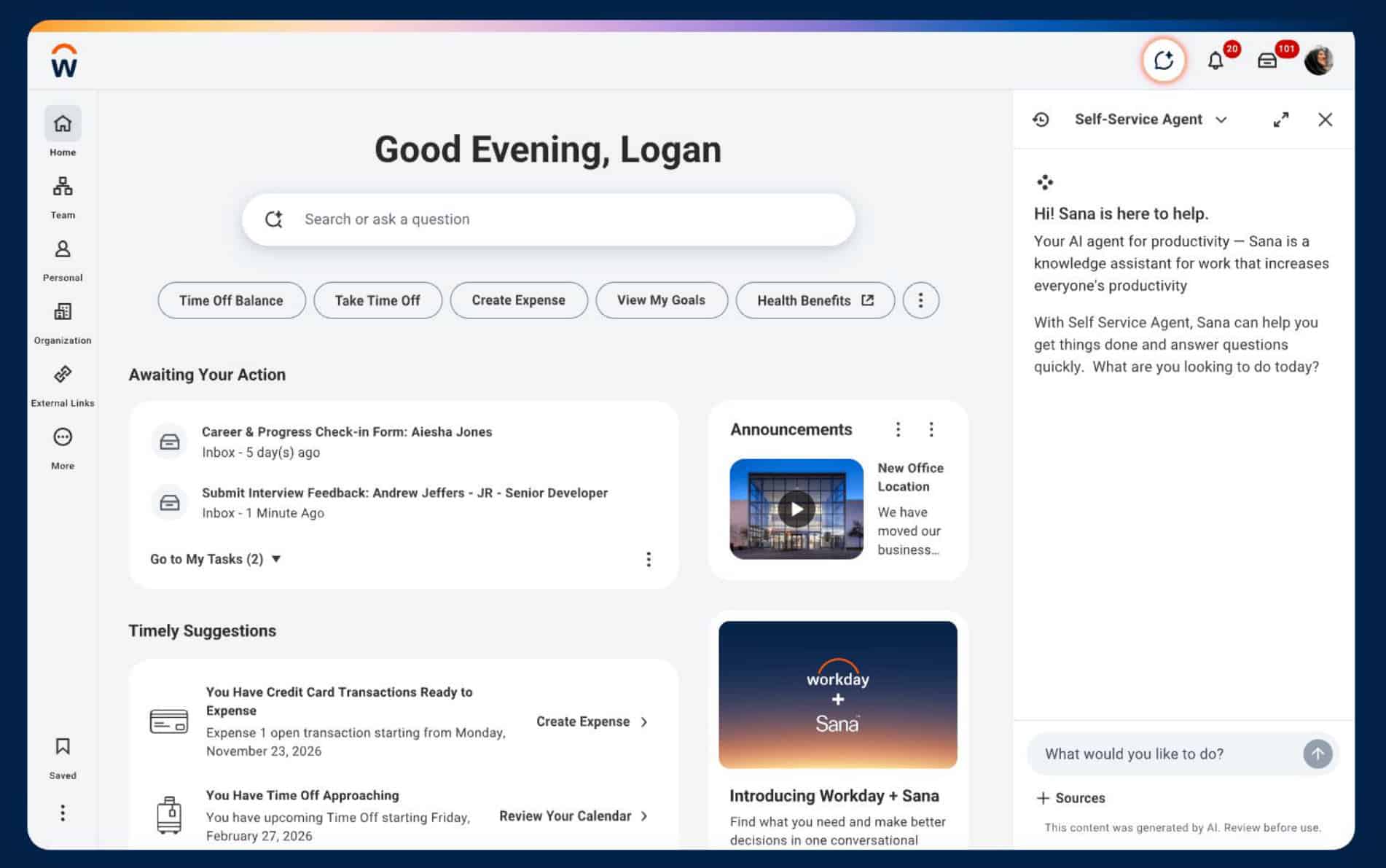
Effective immediately, all Workday customers gain access to a novel Workday interface named Sana for Workday. This integration brings Workday transactions and data directly into the Sana Agent environment. This means employees and managers can interact with their company’s core data by simply asking questions, generating reports, initiating transactions, or performing analyses, all within the intuitive Sana interface. Crucially, Workday’s robust security protocols are inherently embedded, ensuring that each user only accesses data and transactions to which they are authorized. For users of Galileo, this translates to the application of its advanced intelligence directly to the entirety of their Workday information. This initial step represents a significant advancement, effectively "unlocking" the Workday system for a broader audience, including casual users, managers, and HR and IT teams, by circumventing the traditional complexity of the Workday interface.
2. Sana Enterprise: The Unified Front Door
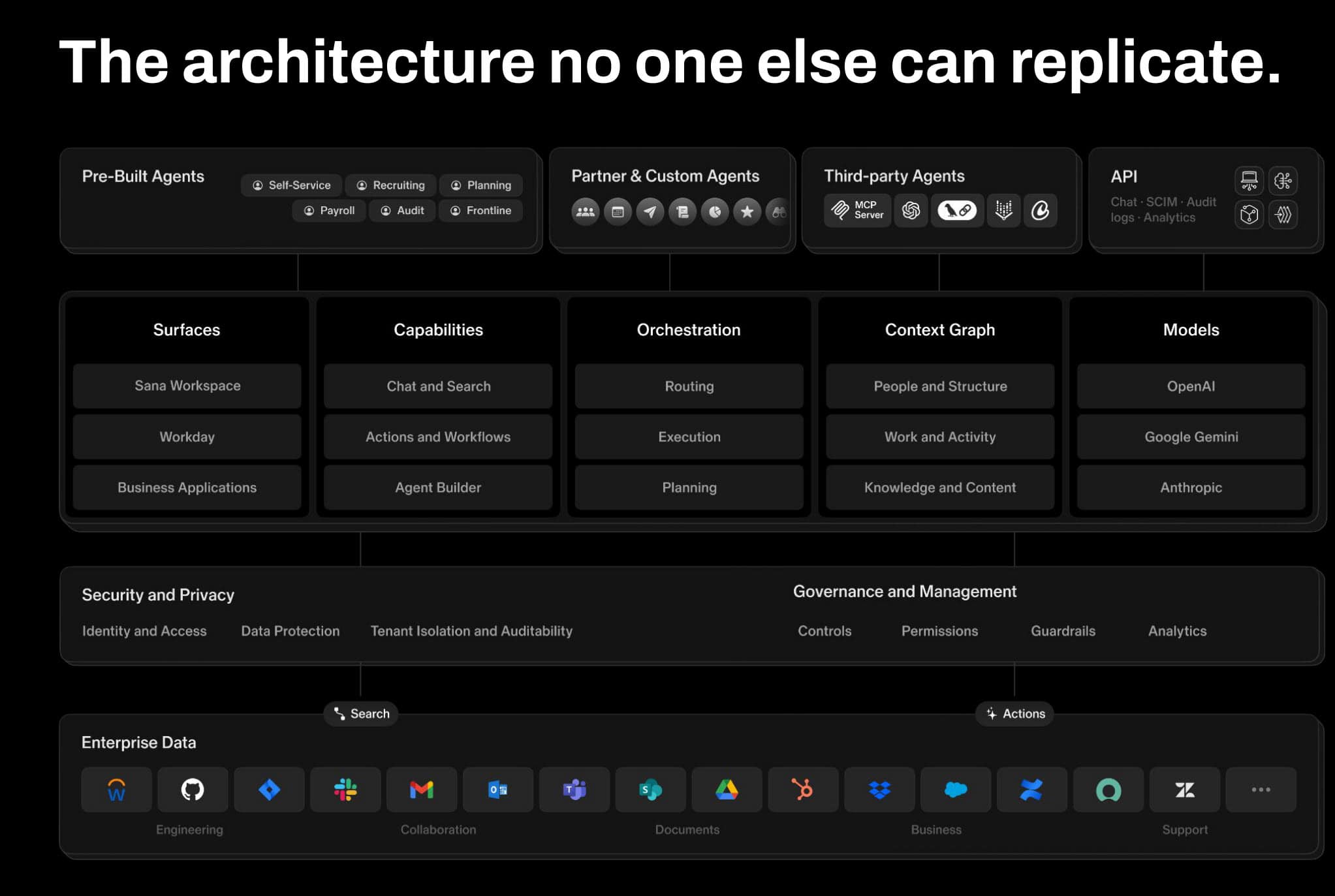
Workday is also introducing an upgraded version of Sana, branded as Sana Enterprise. This enhanced platform, requiring an upgraded license, extends Sana users’ capabilities to interact with a broader array of enterprise systems, including Salesforce, Microsoft Teams, Slack, SharePoint, and others. This integration feature, already leveraged within Galileo, offers straightforward configuration and provides users with both read and write access to these disparate systems. Consequently, Sana Enterprise is positioned to serve as the "front door" for all organizational users, assuming a role analogous to those played by Microsoft Viva, ServiceNow, and other employee experience platforms. Because Sana Enterprise inherits Workday’s embedded security layers, job-level, role-based, and hierarchical information, IT departments can deploy it with confidence, without concerns regarding divergent security, data privacy, and authentication rules.

3. Sana as the Agent Development System
A third critical announcement designates Sana as Workday’s primary Agent Development System. This empowers users to construct their own custom agents within the Sana platform. Sana employs a visual workflow development tool, enabling users to drag and drop "steps" or "prompt paths" to build sophisticated applications. Workday plans to integrate no-code development tools, such as Flowise, into Sana, further enhancing its capabilities as a robust, drag-and-drop development studio. This functionality will allow employees, managers, HR teams, and corporate developers to create internal applications with unprecedented ease. An illustrative example demonstrated an application for employees to book travel, adhere to company travel policies, find flights, obtain exception approvals, and complete expense reports. It is anticipated that organizations will develop thousands of such agents and applications, with the potential for third-party developers to contribute significantly to this ecosystem.
4. Sana’s AI Infrastructure as Workday’s Foundation
The fourth major announcement solidifies Sana’s AI infrastructure as the underlying AI architecture for Workday. Previously, Workday branded its AI initiatives under the "Illuminate" umbrella to highlight its advancements. Moving forward, all new AI agents developed by Workday will operate within and be supported by the Sana infrastructure. This strategic integration positions Sana as the core AI engine driving Workday’s future innovations, ensuring a cohesive and scalable approach to artificial intelligence across the organization’s product suite.
Broader Implications of Workday’s AI Strategy
The ramifications of Workday’s comprehensive AI strategy are far-reaching, particularly for its extensive customer base.
Enhanced User Experience and Employee Engagement
Perhaps the most immediate impact for Workday customers will be a substantial upgrade to the user experience. Having utilized Sana extensively, the author notes its elegant design, ease of use, speed, and overall enjoyable interaction, contrasting it with the perceived complexity of the current Workday interface for many users. The ability to store documents, integrate Workday into familiar tools like Microsoft and Google, and establish Sana as a primary desktop experience promises to significantly improve daily workflows. For organizations adopting Sana Enterprise, Workday is effectively delivering a competitive employee experience platform that can rival established players such as Microsoft Viva and ServiceNow. While the highly competitive nature of the employee experience market presents challenges, Workday’s inherent integration with its core system offers a distinct advantage.
Accelerated App Development and AI Literacy
Workday customers will now benefit from a highly productive pathway to build applications and cultivate AI literacy among their employees. As users of Sana Agents, any employee can explore, learn, and develop their own AI solutions. The seamless connection between Sana Agents and Sana Learning ensures that employee training and enablement are immediately integrated. For instance, Galileo Learn, with its extensive library of courses on management, leadership, and HR, becomes readily accessible within the Sana Learning environment. The platform’s ability to connect with various LLMs, including Claude, OpenAI, and Gemini, or even internally developed models, allows users to access diverse AI capabilities from a single interface. This unified approach simplifies the process of querying information, transacting with Workday, and exploring AI functionalities. For those inclined towards building, Sana offers an intuitive AI studio, enabling the creation of complex workflows with branching logic and visual editing capabilities, mirroring the prompt and GPT-building functionalities found in native LLM platforms.
Fortified AI Engineering Capabilities
Workday’s acquisition of Sana brings a wealth of AI engineering expertise in-house. The Sana team possesses deep experience in data labeling, LLM optimization, Retrieval-Augmented Generation (RAG) pipelines, and other critical AI tuning issues. This direct experience, gained through collaborations on projects like Galileo, suggests that Workday’s AI initiatives will benefit from accelerated development cycles, increased efficiency, and a more cohesive architectural design. The integration strategy, which preserves Workday’s native business rule and security architecture above Sana, ensures that the development of AI-powered applications remains grounded in established enterprise governance.

A World-Class AI-Native Learning System
Sana Learning represents one of the most advanced AI-native platforms available in the market today. The learning and development technology and content market, valued in the hundreds of billions of dollars, presents a significant greenfield opportunity for Workday and its clientele. By incorporating this sophisticated learning system, Workday is not only enhancing its own offerings but also providing customers with a powerful tool to upskill their workforce in an era of rapid technological change.
Navigating the Competitive Landscape
While Workday’s AI strategy is robust, it enters a dynamic and competitive marketplace. Competitors like Oracle and SAP are also aggressively pursuing AI integration. Oracle’s AI Studio, powered by its own AI infrastructure, and SAP’s Joule AI Agent, designed to access its application suite, represent significant challenges. Microsoft, with its suite of AI tools including MS Copilot, Copilot Studio, Agent365, and the WorkIQ intelligence layer, offers a comparable integrated experience, particularly within the Microsoft 365 ecosystem.
The proliferation of LLM providers such as OpenAI, Anthropic, and Google’s Gemini also adds complexity. Companies may have already invested in these foundational AI models, potentially making it challenging to justify additional investment in a new front-end agent platform. However, Sana’s unique integration with Workday and its robust learning capabilities may present a compelling value proposition. Furthermore, technology giants like Microsoft and Google are concurrently developing similar integrated experiences across their productivity suites, underscoring the industry-wide shift towards AI-powered interfaces. The rapid pace of innovation in AI also means that Workday must remain agile, adapting to emerging development tools, new models, and evolving communication platforms to maintain its competitive edge. ServiceNow, having acquired Moveworks, an agent platform that directly competes with Sana, further intensifies the landscape, positioning itself as a major contender in this evolving market.
Workday, Sana, and Galileo: A Synergistic Partnership
For Galileo, this partnership signifies a formal alignment with Workday. As of this announcement, Workday and Sana customers can seamlessly integrate Galileo’s HR Intelligence and knowledge corpus directly into their Workday environments. This integration allows Galileo’s HR intelligent agent and its extensive library of over 400 prompts and workflows to directly access and leverage Workday data. Similarly, the Galileo Learn library, comprising over 750 courses in HR, leadership, technology, and management, can be activated within a customer’s instance of Sana Learning. In essence, Galileo functions as an "instant-on" solution that capitalizes on the entire Workday Sana experience, offering a powerful and integrated HR solution.
The Evolving AI Ecosystem
The current AI landscape is characterized by its diversity, with many organizations employing a mix of AI tools, including MS Copilot, OpenAI, Claude, and other specialized solutions. Workday, by leveraging its extensive investments in HR data, security, and financial management, combined with the Sana platform, is well-positioned to cut through this complexity. While the future trajectory of major AI players remains unpredictable, and further consolidation through acquisitions is likely, the integration of Sana offers Workday customers a secure and strategic choice for their AI adoption journey. The convergence of Workday’s enterprise data prowess with Sana’s advanced AI capabilities promises to unlock new levels of productivity, efficiency, and employee empowerment.