The intricate tapestry of the modern workforce continues to evolve at a rapid pace, as evidenced by a series of significant developments across various sectors this past week. From a landmark discrimination settlement involving a global consulting giant to an unexpected revelation about artificial intelligence’s impact on recruitment, and shifts in employee compensation and development strategies, the landscape of human resources is undergoing profound transformation. These diverse events, published on September 17, 2026, collectively paint a picture of an industry grappling with technological integration, legal complexities, and the ever-present need to attract, retain, and fairly compensate talent.
Accenture Faces $25 Million Settlement Over Discrimination Allegations
In a development that has sent ripples through the corporate world, management and technology consulting firm Accenture has agreed to pay $25 million to settle allegations from the U.S. Department of Justice (DOJ) concerning discriminatory hiring and promotional practices. The allegations, which specifically cite violations of the False Claims Act, claim that since 2017, Accenture engaged in practices that discriminated against individuals based on race and sex. While Accenture has not admitted wrongdoing, the settlement underscores the heightened scrutiny on corporate diversity, equity, and inclusion (DEI) initiatives and the potential legal pitfalls they present if not implemented carefully and equitably.
The False Claims Act, a federal law that imposes liability on persons and companies who defraud governmental programs, was invoked in this context due to Accenture’s contracts with federal agencies. The DOJ asserted that Accenture received federal funds while allegedly engaging in employment practices that violated federal anti-discrimination laws, thereby making false claims about its compliance. This case highlights a critical nexus where federal contracting meets employment law, compelling companies to ensure their internal policies align with broader legal frameworks.
Background and Context of the Allegations
The specifics of the DOJ’s allegations against Accenture have not been fully detailed in public statements beyond general claims of race and sex discrimination in hiring and promotions. However, the mention of "DEI-motivated hirings" in some related discussions suggests that the core of the issue might revolve around whether Accenture’s efforts to enhance diversity inadvertently led to preferential treatment or quotas that disadvantaged certain groups, thereby constituting discrimination. This scenario is a growing concern for companies vigorously pursuing DEI goals, as the legal interpretation of affirmative action and diversity targets can be complex and contentious. While fostering a diverse workforce is widely recognized as a business imperative and a moral good, the methods employed must strictly adhere to anti-discrimination statutes, ensuring that no individual is unfairly excluded or preferred based on protected characteristics.
This settlement follows a broader trend of increased legal challenges to corporate DEI programs, particularly in the wake of recent Supreme Court rulings that have re-evaluated race-conscious admissions policies in higher education. Legal experts have noted that companies must navigate a delicate balance: promoting diversity without creating reverse discrimination. The Accenture case serves as a stark reminder that even well-intentioned DEI initiatives require robust legal oversight to prevent unintended discriminatory outcomes.
Timeline of Events
While the precise timeline leading to the DOJ’s investigation and settlement with Accenture remains somewhat confidential, the public announcement indicates that the alleged discriminatory practices commenced as early as 2017. This suggests a multi-year investigation by the DOJ, likely initiated by whistleblowers or internal complaints, culminating in the formal allegations and subsequent settlement agreement in 2026. The prolonged nature of such investigations is typical, involving extensive document review, interviews, and legal negotiations.
Statements and Reactions
Following the settlement, the U.S. Department of Justice released a statement emphasizing its commitment to ensuring fair employment practices among federal contractors and upholding the integrity of government contracting. A spokesperson for the DOJ likely reiterated that companies receiving federal funds have a responsibility to adhere to all applicable laws, including those prohibiting discrimination.
Accenture, in a likely measured response, would have communicated its decision to settle the matter to avoid protracted and costly litigation, allowing the company to focus on its core business. Such statements typically emphasize a company’s commitment to diversity and inclusion, while simultaneously denying the specific allegations of wrongdoing that led to the settlement. They often highlight ongoing efforts to foster an equitable workplace and reaffirm dedication to legal compliance.
Broader Implications for Corporate DEI
The Accenture settlement carries significant implications for corporations globally, particularly those with government contracts. It reinforces the necessity for rigorous legal review of all DEI initiatives, especially those pertaining to hiring, promotion, and talent management. Companies are now compelled to scrutinize their metrics and targets to ensure they do not inadvertently create a system that could be construed as discriminatory. Legal departments will likely be advising a shift towards "diversity of thought" and "equitable opportunity" rather than prescriptive demographic quotas. This case may prompt many organizations to re-evaluate their DEI frameworks, prioritizing process fairness and merit-based systems while still striving for a representative workforce. The settlement underscores that while the pursuit of diversity is laudable, the path must be legally sound and genuinely equitable for all.
Chipotle Expands Apprenticeship Program to Over 4,200 Stores
In a contrasting development focused on proactive talent development, fast-casual restaurant chain Chipotle Mexican Grill has announced ambitious plans to expand its Apprentice program to more than 4,200 company-owned locations by the end of 2027. This significant expansion underscores Chipotle’s commitment to internal talent growth and addresses a critical need for skilled leadership within the quick-service restaurant (QSR) industry. The program, designed for high-performing employees aspiring to management positions, offers a structured pathway for career advancement, combining on-the-job training with mentorship and educational components.
Background and Context of Apprenticeships in QSR
The QSR sector has historically struggled with high turnover rates and a perceived lack of clear career paths for frontline employees. Apprenticeship programs, traditionally associated with skilled trades, are increasingly being adopted by service industries to combat these challenges. Chipotle’s program serves as a strategic tool to not only develop a pipeline of qualified managers but also to enhance employee retention and engagement. By investing in its workforce through structured learning and advancement opportunities, Chipotle aims to foster a culture of growth and loyalty, differentiating itself in a highly competitive labor market. The program often includes training in areas such as financial management, team leadership, customer service excellence, and operational efficiency, equipping apprentices with a comprehensive skill set necessary for successful management roles.
Timeline and Program Evolution
Chipotle initially launched its Apprenticeship program as a pilot initiative in select locations, recognizing the need for a more formalized development pathway. The success of these initial phases, likely measured by improved retention of participants, enhanced performance metrics, and a steady stream of internal promotions, has clearly spurred this major expansion. The target of over 4,200 stores by the end of 2027 represents a rapid scaling up, indicating strong confidence in the program’s efficacy and its strategic importance to the company’s long-term operational goals. This expansion suggests a phased rollout, ensuring quality and consistency across a vast network of restaurants.
Supporting Data and Industry Trends
Industry data consistently shows that companies with robust internal development programs experience lower turnover and higher employee satisfaction. According to a 2024 report by the National Restaurant Association, career development opportunities are a key factor in attracting and retaining talent in the foodservice sector. Apprenticeship programs, in particular, have demonstrated a high return on investment, with participants often staying with their employers longer and performing at higher levels. For instance, a Department of Labor study found that 94% of apprentices are still employed nine months after completing their programs. Chipotle’s investment aligns with these findings, positioning the company as a leader in workforce development within its industry.
Statements and Reactions
A senior executive from Chipotle, likely the Chief People Officer or CEO, would have emphasized the company’s dedication to its employees’ professional growth, stating that the apprenticeship program is a cornerstone of its talent strategy. Such statements typically highlight how investing in employees translates into better customer service and stronger business performance. Employees participating in the program would likely express enthusiasm for the clear career progression and the opportunity to gain valuable skills and experience, seeing it as a tangible commitment from their employer. Labor experts and vocational training advocates would laud Chipotle’s initiative as a model for other QSR businesses, demonstrating how to build a sustainable and skilled workforce from within.
Broader Impact and Implications
Chipotle’s expanded apprenticeship program has significant implications beyond its own operations. It sets a benchmark for the broader QSR and retail industries, encouraging other companies to adopt similar structured development pathways. This trend could lead to a more professionalized frontline workforce, higher wages, and improved working conditions across the sector, ultimately benefiting both employees and consumers. By creating viable career ladders, Chipotle is not only addressing its own talent needs but also contributing to a more skilled and stable workforce, potentially reducing reliance on external hiring for management roles and fostering a stronger sense of loyalty and commitment among its employees.
Amazon Boosts Employee Discounts on Groceries and Essentials
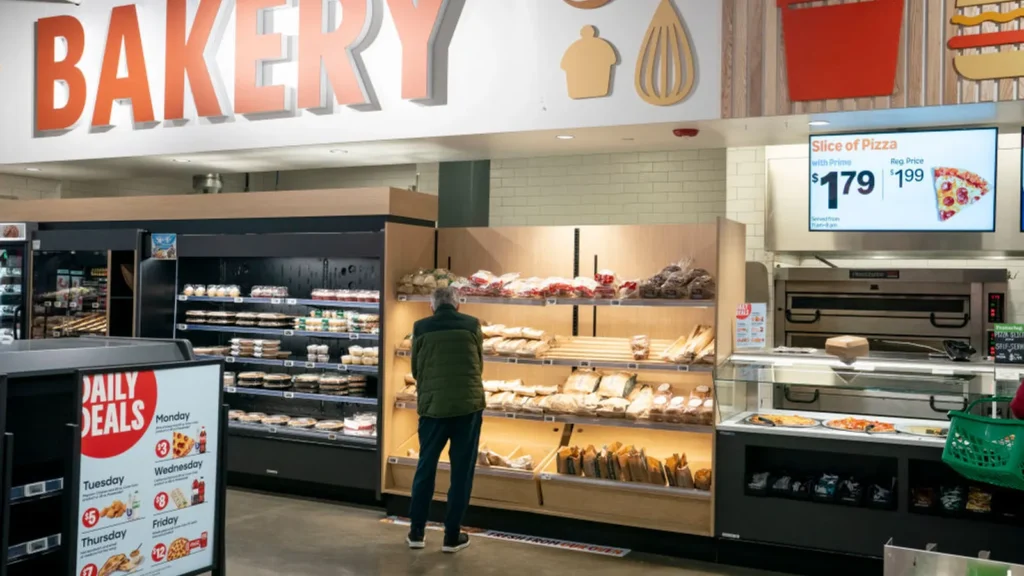
In a move aimed at enhancing employee welfare and mitigating the impact of rising living costs, Amazon has announced a 10% discount for all U.S. employees on eligible grocery and everyday essentials purchased on Amazon.com and Whole Foods Market online. Additionally, employees will receive an even more substantial 20% off in Whole Foods stores. This benefit, complementing Amazon’s existing compensation packages, reflects a growing corporate awareness of the financial pressures faced by a significant portion of the workforce.
Background and Context of Employee Benefits
Amazon, a colossal employer with a vast logistics and retail operation, has consistently been in the spotlight regarding employee compensation and benefits. While the company has made headlines for increasing its minimum hourly starting wage (recently reaching $20 per hour for core operations full-time employees, effective December 12, 2024, as per the image caption), non-wage benefits like discounts play a crucial role in overall employee value proposition. In an inflationary economic environment, where grocery prices have seen significant increases, providing tangible savings on everyday necessities can be as impactful as a direct wage hike, particularly for lower-wage earners. This discount serves as a practical measure to improve the financial well-being of its extensive employee base, enhancing the attractiveness of working for the e-commerce giant.
Timeline of Wage and Benefit Adjustments
Amazon has periodically adjusted its wages and benefits in response to market conditions, labor activism, and competitive pressures. The latest reported minimum wage increase to $20 per hour in December 2024 (as per the image caption), followed by this discount announcement in September 2026, indicates a continuous effort to remain competitive as an employer. These changes often align with peak hiring seasons or major economic shifts, demonstrating Amazon’s responsiveness to the needs of its workforce and the broader economic climate.
Supporting Data on Cost of Living and Employee Satisfaction

The rising cost of living, particularly for essentials like groceries, has been a major concern for households across the U.S. According to the Bureau of Labor Statistics, food prices have seen consistent increases over the past few years, impacting household budgets significantly. Employee benefits that directly address these costs, such as grocery discounts, are highly valued. A survey by the Society for Human Resource Management (SHRM) in 2025 indicated that benefits impacting daily expenses are among the most appreciated by employees, often contributing to higher job satisfaction and reduced financial stress. By offering these discounts, Amazon is not only providing a financial perk but also addressing a fundamental need, potentially fostering greater loyalty and morale among its employees.
Statements and Reactions
An Amazon spokesperson would likely have articulated that these enhanced discounts are part of the company’s ongoing commitment to supporting its employees and their families, acknowledging the current economic environment. Employees, particularly those managing tight budgets, would likely express appreciation for the practical financial relief offered by the discounts, which directly impact their weekly expenses. Labor analysts might view this move as a strategic component of Amazon’s total compensation package, designed to attract and retain talent in a competitive market where other retailers are also vying for workers.
Broader Impact and Implications
Amazon’s decision to offer substantial grocery discounts could influence other large retailers and employers to consider similar non-wage benefits. As the line between work and personal life blurs, and as companies increasingly recognize their role in employee well-being, such practical benefits could become a more common feature of compensation packages. This move also burnishes Amazon’s image as an employer that cares for its workforce, potentially countering some of the negative perceptions it has faced regarding working conditions. Ultimately, it highlights a broader trend towards holistic employee support that extends beyond basic wages to encompass quality of life considerations.
AI’s Unexpected Drawback: Slowing Down the Hiring Process
Despite the widespread enthusiasm and significant investment in artificial intelligence (AI) tools for recruitment, a recent report by staffing company ManpowerGroup reveals an unexpected challenge: 25% of employers believe AI has actually slowed down the speed of hiring. This finding contradicts the prevailing narrative that AI is a panacea for streamlining and accelerating the recruitment lifecycle, prompting a re-evaluation of how AI is being implemented and its true impact on HR efficiency.
Background and Context of AI in Recruitment
Over the past few years, AI adoption in human resources has surged, with tools promising to revolutionize every stage of recruitment. AI-powered platforms are used for resume screening, candidate matching, chatbot interactions for initial inquiries, scheduling interviews, and even analyzing video interviews for sentiment and personality traits. The primary drivers for this adoption have been the desire to reduce time-to-hire, minimize human bias, enhance candidate experience, and handle large volumes of applications more efficiently. Companies invested heavily, expecting AI to act as a force multiplier for their HR teams.
Timeline of AI Adoption and Emerging Concerns
The widespread adoption of AI in HR began gaining significant traction around 2018-2020, with many companies implementing various tools post-pandemic to manage increased remote hiring and a fluctuating labor market. Initial reports often highlighted positive outcomes, focusing on potential efficiencies. However, as implementation matured, anecdotal evidence of challenges began to surface, ranging from biased algorithms to integration difficulties. The ManpowerGroup report, published in 2026, represents a more formalized assessment of these growing pains, indicating that the initial optimism may have been overly simplistic.
Supporting Data and Common Pitfalls
The ManpowerGroup report likely draws from surveys and data collected from a broad spectrum of employers, providing a statistically significant insight into AI’s real-world impact. Other research has also begun to shed light on potential downsides. For instance, a 2025 study by the Institute for Corporate Productivity (i4cp) found that while AI improved some aspects of recruitment, many organizations struggled with the complexity of integrating diverse AI tools into existing HR tech stacks. Common pitfalls include:
- Over-filtering: AI algorithms, if not meticulously trained and monitored, can be overly aggressive in filtering out qualified candidates based on predefined keywords or patterns, leading to a smaller, less diverse talent pool.
- Bias Reinforcement: If historical hiring data, which may contain human biases, is used to train AI models, the AI can perpetuate and even amplify those biases, leading to discriminatory outcomes.
- Implementation Challenges: Integrating AI tools with existing Applicant Tracking Systems (ATS) and other HR software can be complex, time-consuming, and require significant IT resources.
- Lack of Human Oversight: Over-reliance on AI without sufficient human review can lead to missed opportunities or poor candidate experiences, as AI lacks the nuanced understanding of human interaction.
- Learning Curve: HR professionals need time and training to effectively utilize and manage AI tools, which can initially slow down processes rather than speed them up.
Statements and Reactions
A spokesperson for ManpowerGroup would have articulated that while AI holds immense potential, its implementation requires careful strategic planning and continuous optimization. They might have stressed that AI is a tool to augment human decision-making, not replace it, and that companies need to invest in proper training and integration. HR tech vendors, while acknowledging these challenges, would likely emphasize the ongoing improvements in AI algorithms and user interfaces, suggesting that the initial slowdowns are part of a learning curve for both the technology and its users. HR professionals, meanwhile, would resonate with the findings, sharing experiences of navigating complex AI systems and the unexpected need for more human intervention to correct AI-generated errors or biases.
Broader Impact and Implications
This revelation has profound implications for the future of AI in HR. It calls for a more pragmatic and critical approach to AI adoption, emphasizing thoughtful integration, ethical considerations, and ongoing validation of algorithmic performance. Companies may shift from a "deploy and forget" mentality to one of continuous monitoring and iterative improvement. The focus will likely turn towards leveraging AI for specific, well-defined tasks where it genuinely adds value (e.g., administrative automation), while retaining human oversight for critical decision-making points in the hiring process. This could lead to the development of more sophisticated, human-centric AI tools and a greater emphasis on "augmented intelligence" rather than purely automated processes in recruitment.

Adjusting Personality for Work: A Core Professional Skill
A recent survey by Express Employment Professionals in conjunction with Harris Poll has revealed a striking insight into workplace dynamics: 86% of U.S. job seekers believe that adjusting one’s personality to fit in at work is a core professional skill. This statistic highlights the widespread practice of "code-switching" or impression management in professional settings, where individuals adapt their behavior, communication style, and even appearance to align with perceived organizational norms and expectations.
Background and Context of Workplace Conformity
The concept of adjusting one’s personality, often referred to as code-switching or impression management, is not new. It reflects the inherent human desire to belong and succeed within social structures, including the workplace. For decades, professional development advice has often emphasized the importance of fitting into company culture. However, in an era increasingly focused on authenticity, diversity, equity, and inclusion, this widespread practice raises important questions about its psychological toll on individuals and its impact on fostering truly inclusive environments. The survey suggests that job seekers perceive this as a necessary survival skill in the competitive labor market.
Timeline and Enduring Workplace Expectations
This phenomenon is less about a specific timeline of events and more about an enduring, though evolving, workplace expectation. While recent years have seen a push for greater authenticity and psychological safety at work, the survey indicates that the pressure to conform remains strong. The Express Employment Professionals-Harris Poll survey, conducted recently (likely in 2026 or late 2025), captures current sentiments, showing that despite progressive discussions around workplace culture, the practical reality for many job seekers involves strategic adaptation.
Supporting Data and Psychological Impact
Numerous studies have explored the psychological impact of code-switching. Research published in the Journal of Applied Psychology in 2023 indicated that while code-switching can lead to career advancement and social acceptance, it often comes at the cost of increased emotional labor, stress, and reduced feelings of authenticity and belonging. This can lead to burnout and lower job satisfaction over time. For marginalized groups, the pressure to code-switch can be particularly acute, as they may feel compelled to suppress aspects of their identity to avoid stereotypes or discrimination. The Express Employment Professionals-Harris Poll, leveraging a reputable methodology, provides quantitative evidence that this is not an isolated phenomenon but a widely accepted "skill" among job seekers.
Statements and Reactions
A spokesperson for Express Employment Professionals would likely interpret the findings as a reflection of the current demands of the job market, where adaptability and cultural fit are highly valued. They might advise job seekers on how to navigate this without compromising their core values. Organizational psychologists would emphasize the dual nature of code-switching: a necessary adaptation for some, but a potential barrier to genuine inclusion and well-being for others. They might advocate for organizations to cultivate cultures where authenticity is celebrated, thereby reducing the perceived need for employees to "adjust" their personalities. Diversity and inclusion advocates would view the statistic as a call to action for employers to create more psychologically safe and inclusive environments where employees feel comfortable bringing their whole selves to work.
Broader Impact and Implications
The survey’s findings have significant implications for organizational culture, leadership, and talent management. If a large majority of job seekers feel compelled to adjust their personalities, it suggests that many workplaces may still lack true psychological safety and inclusive environments. This could stifle innovation, reduce employee engagement, and lead to higher turnover as individuals seek environments where they can be more authentic. For employers, the challenge is to move beyond superficial diversity to create cultures where genuine differences are not just tolerated but valued and integrated. This requires leadership commitment, training on unconscious bias, and policies that promote inclusivity, allowing employees to thrive without feeling the constant pressure to conform. The goal should be to foster environments where adapting to a professional setting does not equate to suppressing one’s true self.
Conclusion: A Dynamic HR Landscape
The collection of developments from the past week underscores the dynamic and multifaceted nature of human resources in the mid-2020s. From legal battles over DEI practices to proactive talent development initiatives, innovative employee benefits, and a critical re-evaluation of HR technology, organizations are continuously adapting to an evolving workforce and economic climate. The Accenture settlement serves as a cautionary tale for the delicate balance required in DEI implementation, while Chipotle’s expansion of its apprenticeship program highlights a forward-thinking approach to talent pipeline development. Amazon’s enhanced employee discounts demonstrate a practical response to economic pressures, and the ManpowerGroup report on AI in hiring calls for a more nuanced and strategic integration of technology. Finally, the Express Employment Professionals-Harris Poll survey on personality adjustment reveals enduring human elements within professional environments that demand careful consideration from employers. Together, these stories illustrate a complex and ever-changing landscape where strategic HR management is more critical than ever for organizational success and employee well-being.