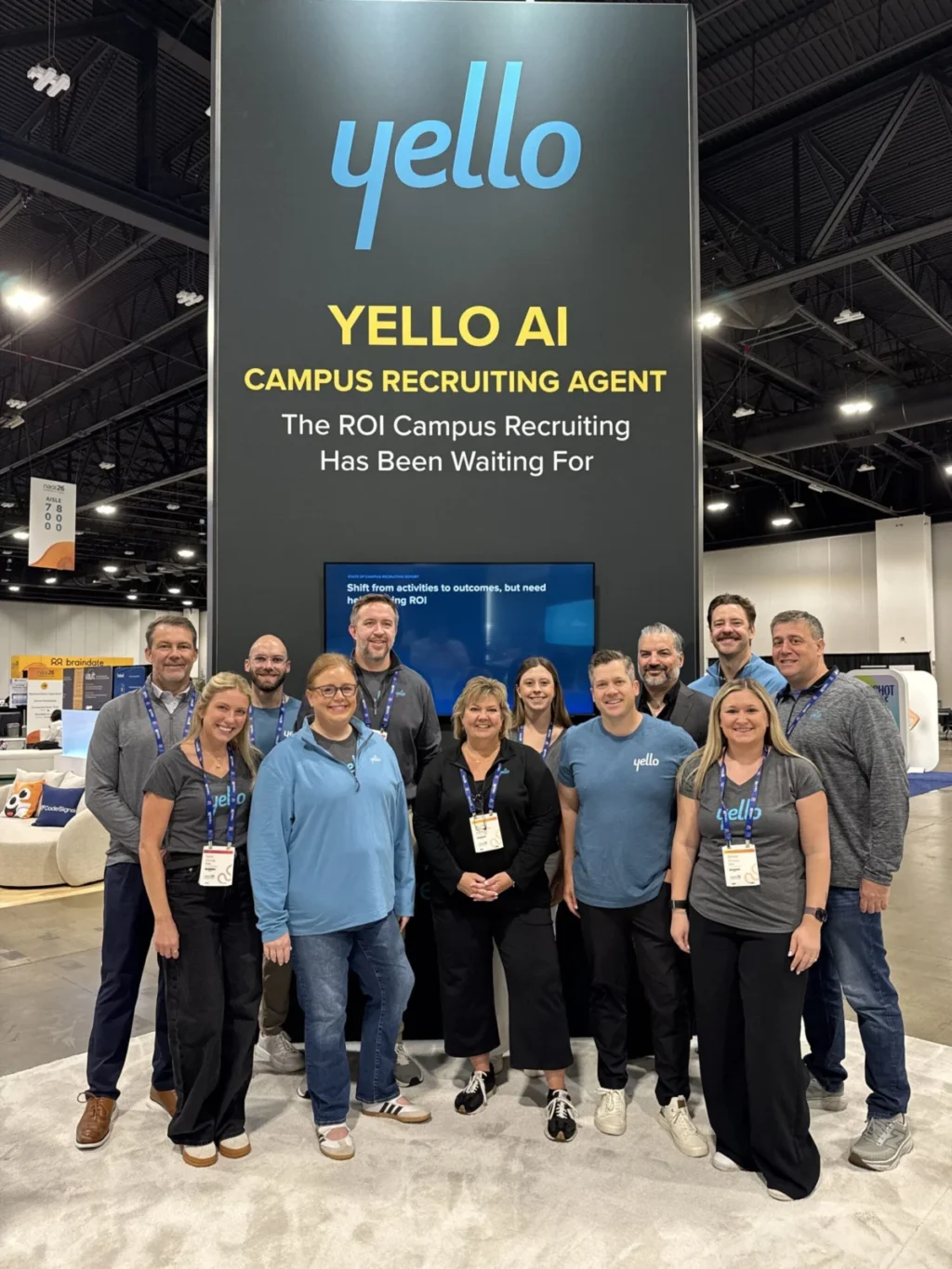
Denver, CO – The National Association of Colleges and Employers (NACE) annual conference, NACE26, held from June 4-7, 2024, in Denver, Colorado, served as a pivotal gathering for the early talent community, spotlighting critical trends and technological advancements reshaping campus recruiting. Amidst a robust agenda of discussions and networking, Yello, a leading talent acquisition software provider, made a significant impact as a platinum sponsor, debuting its AI Campus Recruiting Agent and announcing a strategic partnership with Symplicity. These revelations underscored the conference’s overarching themes: the transformative, yet nuanced, role of artificial intelligence, the evolution of event strategies, and the persistent challenge of offer reneges in a competitive talent landscape.
NACE, as the premier organization connecting college career services professionals and employers, annually convenes to discuss best practices, research, and emerging trends in the recruitment and employment of college students and recent graduates. Its conferences are crucial forums for industry leaders to exchange insights, anticipate future challenges, and showcase innovative solutions. NACE26, in particular, highlighted a period of significant flux, driven by technological acceleration and shifting candidate expectations. Attendees, comprising talent acquisition specialists, HR executives, and career services directors, engaged in a vibrant dialogue centered on optimizing the early talent pipeline amidst an increasingly complex environment.
The Evolving Role of Artificial Intelligence in Campus Recruiting
One of the most prominent themes at NACE26 was the pervasive influence of artificial intelligence on recruiting practices. While AI’s presence in campus talent acquisition is undeniable, its application remains largely concentrated in top-of-funnel activities, primarily sourcing and candidate communications. Yello’s own "State of Campus Recruiting report" presented at the conference revealed that approximately 26% of current AI usage is dedicated to sourcing and 25% to candidate communications. This data points to a clear pattern: AI is widely adopted for initial outreach and candidate identification, tasks that can be efficiently automated.
However, the discussions in Denver frequently highlighted a significant gap: AI’s underutilization in critical areas such as data analysis and demonstrating return on investment (ROI). Recruiters expressed a clear preference for AI tools that alleviate administrative burdens and automate recurring tasks, thereby freeing them to focus on high-value interactions with candidates. This sentiment was a central tenet of Yello’s session, "Can Campus Recruiting Be Autonomous? The Answer Is Complicated," featuring Tamara Welch of LPL Financial, Matthew Brink of NACE, and Dan Bartfield of Yello. The panelists and the audience largely concurred that the ultimate goal is not fully autonomous recruiting, where AI makes all decisions, but rather augmented recruiting, where AI empowers human recruiters to engage more strategically.
The analysis presented during the session underscored that for AI to be truly effective in campus recruiting, it must be purpose-built to address the unique challenges of this sector, such as navigating complex university systems, managing diverse candidate pools, and fostering long-term relationships. By automating manual processes like scheduling, initial screening, and event logistics, AI can grant recruiters invaluable time to cultivate meaningful connections, conduct more in-depth interviews, and ultimately make more informed hiring decisions.
A critical ethical dimension of AI’s integration was also explored: candidate perception. Matthew Brink noted that students often express wariness towards employers who rely excessively on AI in their hiring processes, especially when its use is not transparently disclosed. A hiring experience that feels impersonal or overly automated can deter highly qualified candidates and subtly erode an employer’s brand reputation. This underscores the need for a balanced approach, where AI enhances efficiency without compromising the human element that is vital for attracting and retaining top early talent. The implication is clear: the future of AI in early talent acquisition lies in its ability to serve as an intelligent assistant, streamlining operations and providing data-driven insights, while preserving and amplifying the crucial human touchpoints that define a positive candidate journey.
Rethinking Event Strategy for Enhanced ROI
Beyond AI, NACE26 brought into sharp focus the imperative for employers to fundamentally rethink their approach to campus recruiting events. The session "Purpose Over Presence: Rethinking Your Event Strategy for Better ROI," featuring Vincent Bond from Synchrony, Kristin Leek from Boeing, and Christopher Cantu from Marathon Petroleum, articulated a common frustration: despite escalating application volumes, identifying genuinely qualified candidates has become increasingly challenging. The panelists attributed this paradox, in part, to the proliferation of AI-assisted resume tools, which can homogenize candidate profiles and make distinguishing top talent more difficult – a phenomenon aptly described by Vince Bond as "AI fighting AI."
In response to this dynamic, these industry leaders advocated for a strategic shift towards earlier and more intentional investments in relationship building, primarily through targeted in-person events. The traditional model of attending numerous career fairs with the hope of sifting through a high volume of candidates is giving way to an outcomes-based approach. Recruiters are now meticulously evaluating which events yield the highest return on investment, measured not just by attendance or applications, but by the quality of hires and successful placements.
Christopher Cantu’s analogy of career fairs as the "end zone" – the stage for closing deals, not initiating relationships – resonated deeply with attendees. The groundwork, he explained, must commence months, or even years, prior, through consistent touchpoints and targeted engagement. This proactive strategy includes hosting specialized workshops, participating in mentorship programs, sponsoring student organizations, and engaging with academic departments. This sustained engagement cultivates "relationship equity," which is increasingly recognized as the competitive differentiator in campus recruiting. This equity helps mitigate the challenges posed by surging application volumes and the rising concern of candidate fraud, ensuring that recruiters are connecting with pre-qualified, genuinely interested individuals.
The implication for employers is that event participation must evolve from a broad-stroke, high-volume activity to a highly strategic, precision-guided effort. Success will increasingly hinge on the ability to foster authentic connections, demonstrate genuine interest in candidates’ long-term development, and leverage events as critical milestones in a carefully constructed engagement journey. This paradigm shift demands sophisticated planning, robust tracking mechanisms, and a commitment to measuring tangible outcomes rather than mere activity.
Addressing the Persistent Challenge of Offer Reneges
Another pressing issue that permeated discussions at NACE26 was the persistent challenge of offer reneges. In today’s competitive talent market, an accepted offer is no longer a definitive guarantee of employment. Panelists and attendees alike underscored the necessity of treating the post-offer period as an active, critical phase of the recruiting journey. The consensus was that consistent, personalized communication between the offer acceptance and the candidate’s start date is paramount for retaining top talent. Employers who maintain proactive engagement during this window reported significantly lower renege rates, often linking this success directly to the robust relationship-building efforts initiated much earlier in the recruitment cycle.
Yello’s virtual session, "Designing the Complete Journey: From Pre-Boarding to Off-Boarding," led by Ahva Sadeghi of Yello, introduced the "KEEP framework" as a structured approach to maintaining candidate engagement throughout the entire journey. KEEP, an acronym for Kick Off, Engage, Enable, and Perform, outlines four pillars designed to seamlessly transition a candidate from offer acceptance to their first day on the job. The framework emphasizes early communication (Kick Off), continuous personalized interaction (Engage), providing necessary resources and support (Enable), and setting expectations for success (Perform).
Sadeghi also delved into the common reasons why candidates renege, which often include receiving a more attractive competing offer, finding a better cultural fit elsewhere, experiencing cold feet, or simply feeling a lack of communication and connection from the employer post-offer. The true cost of a renege extends far beyond the immediate loss of a candidate; it encompasses wasted recruitment resources, time spent restarting the hiring process, potential damage to employer brand if the candidate shares a negative experience, and impacts on team morale and productivity. The session highlighted how customers utilizing Symba, a pre-boarding and engagement platform, have successfully reduced their renege rates by over 55%, demonstrating the tangible benefits of a structured and empathetic post-offer engagement strategy.
These discussions highlighted a clear industry shift: the recruitment process does not end with an accepted offer. Instead, it transitions into a crucial pre-boarding phase that requires dedicated attention, personalized communication, and a commitment to nurturing the candidate’s enthusiasm and commitment. Effective renege mitigation strategies are becoming an indispensable component of successful early talent acquisition, safeguarding investments and ensuring a strong start for new hires.
Yello’s Transformative Announcements at NACE26
NACE26 also served as the platform for Yello’s two significant announcements, both designed to address the challenges and opportunities discussed throughout the conference.
First, Yello officially launched its AI Campus Recruiting Agent. This innovative, AI-powered solution is engineered to automate a multitude of manual tasks, fundamentally simplifying the process of building events, sourcing candidates, managing campaigns, and scheduling interviews. The agent’s core value proposition lies in its ability to liberate recruiting teams from administrative burdens, allowing them to redirect their focus to the essential work of engaging meaningfully with candidates.
The AI Campus Recruiting Agent is designed to flip the traditional campus recruiting model. Historically, recruiters would attend events hoping that the right candidates would visit their booth. Yello’s agent proactively identifies best-fit candidates and pre-schedules interviews even before the event commences. This involves handling the intricate logistics of event creation and management, intelligently matching and prioritizing candidates based on predefined criteria, orchestrating outreach campaigns, and seamlessly scheduling interviews. Recruiters can now arrive at an event with a pre-populated interview schedule, filled with candidates who are not only qualified but also specifically aligned with their open roles, significantly enhancing efficiency and the quality of interactions. This innovation aligns perfectly with the conference’s emphasis on augmented, rather than autonomous, AI, providing a powerful tool that enhances human capability rather than replacing it.
Second, Yello announced a pivotal new partnership with Symplicity, a global leader in student employability and engagement solutions. This collaboration grants Yello customers unparalleled access to Symplicity’s expansive network of over 600,000 early talent candidates. Symplicity, renowned for its comprehensive suite of solutions for higher education institutions, connects millions of students with career opportunities through its widespread network of university career services offices.
Through this integration, employers leveraging the Yello Campus Recruiting Agent can now match against active candidates from the Symplicity database, in addition to candidates already present in their own Applicant Tracking Systems (ATS), Yello’s proprietary database, WayUp, and over 35 other diverse sourcing channels across the web. This partnership significantly expands the reach and precision of candidate sourcing for Yello users, addressing the critical need to identify and engage qualified early talent amidst intense competition. By combining Yello’s sophisticated AI matching capabilities with Symplicity’s vast and verified candidate pool, the partnership offers a powerful synergy, streamlining the early talent acquisition process and connecting employers with a broader spectrum of high-potential candidates.
Broader Impact and Future Implications
The insights gleaned from NACE26, coupled with Yello’s strategic announcements, paint a clear picture of an early talent acquisition landscape in rapid transformation. The future of campus recruiting will be characterized by a sophisticated interplay of technology and human strategy. Artificial intelligence will become an indispensable tool for efficiency, automation, and data-driven insights, but its most impactful application will be in augmenting human recruiters, enabling them to focus on empathy, relationship building, and strategic engagement.
Event strategies will continue to evolve from volume-based to outcomes-driven, with a greater emphasis on cultivating long-term relationships and measuring tangible ROI. The post-offer phase will be recognized as a critical "recruiting zone," demanding proactive and personalized engagement to mitigate renege rates and ensure successful onboarding. Yello’s AI Campus Recruiting Agent and its partnership with Symplicity are poised to play a significant role in this evolution, providing recruiters with the tools and reach necessary to navigate these complexities successfully. By embracing these shifts, early talent professionals can move beyond reactive hiring to proactive, strategic talent acquisition, securing the next generation of leaders and innovators for their organizations.