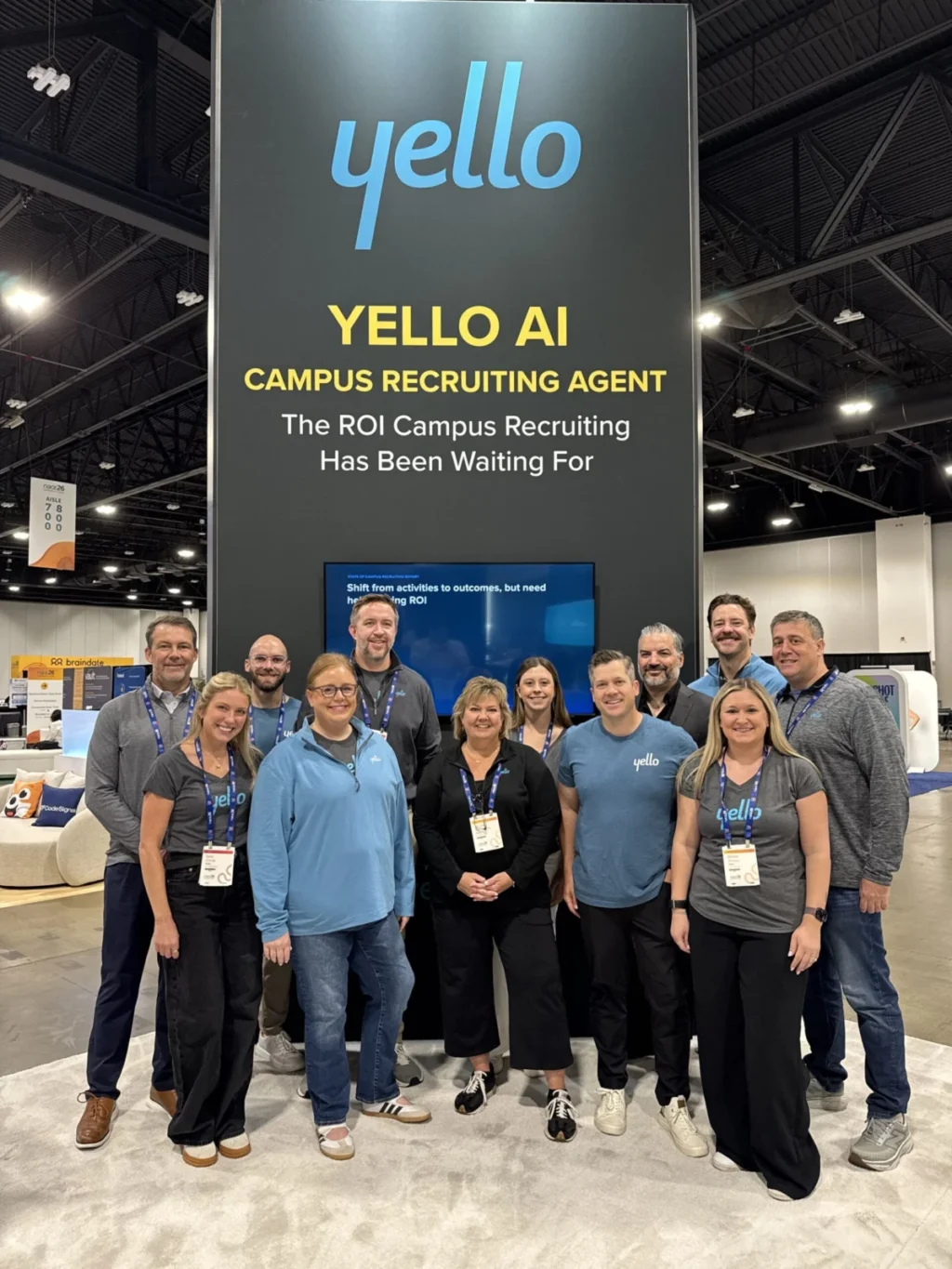
Denver, CO – The National Association of Colleges and Employers (NACE) annual conference, NACE26, held recently in Denver, served as a pivotal gathering for the early talent community, where industry leaders converged to address the shifting dynamics of campus recruiting. Against a backdrop of technological advancement and evolving candidate expectations, Yello, a prominent provider of early talent acquisition software, made significant announcements, including the debut of its AI Campus Recruiting Agent and a strategic partnership with Symplicity. As a platinum sponsor, Yello played a central role in the discussions, hosting speaking sessions, networking events, and engaging with attendees at their booth, signaling a transformative period for the sector.
The NACE annual conference is widely recognized as the premier event for professionals engaged in connecting college students and graduates with employers. It provides a crucial forum for career services practitioners and corporate recruiters to share best practices, discuss emerging trends, and forge connections that shape the future workforce. NACE26, held in the vibrant city of Denver, brought together hundreds of experts from across the United States, all grappling with the complexities of attracting, engaging, and retaining top early career talent in an increasingly competitive and technologically influenced market. This year’s agenda was heavily weighted towards understanding the impact of artificial intelligence, optimizing recruitment strategies, and mitigating prevalent challenges such as offer reneges.
Yello’s robust presence at NACE26 underscored its commitment to leading innovation in early talent acquisition. As a platinum sponsor, the company not only showcased its latest solutions but also actively contributed to the intellectual discourse through two highly anticipated speaking sessions. The first, titled "Can Campus Recruiting Be Autonomous? The Answer Is Complicated," featured an insightful panel discussion with Tamara Welch from LPL Financial, Matthew Brink from NACE itself, and Dan Bartfield from Yello. This session delved into the nuanced role of AI in recruitment, exploring whether the ultimate goal should be full autonomy or simply empowering recruiters to focus on higher-value tasks. The second session, "Purpose Over Presence: Rethinking Your Event Strategy for Better ROI," brought together Vincent Bond of Synchrony, Kristin Leek of Boeing, and Christopher Cantu of Marathon Petroleum to discuss the evolving objectives and measurement of success for in-person recruitment events. Beyond these formal presentations, Yello facilitated informal connections through a popular rooftop happy hour and constant engagement at their exhibition booth, fostering conversations that illuminated the industry’s most pressing concerns.
The Evolving Role of AI in Early Talent Acquisition
One of the most pervasive themes at NACE26 was the transformative, yet complex, influence of Artificial Intelligence on recruiting practices. While AI’s potential to revolutionize efficiency is widely acknowledged, the discussions emphasized the critical importance of how it is deployed. Yello’s own "State of Campus Recruiting report," a key data point frequently referenced during the conference, revealed that current AI usage in early talent acquisition is predominantly concentrated at the top of the recruitment funnel. Specifically, 26% of AI application is found in candidate sourcing, and another 25% in initial candidate communications. This data indicates that while AI is effectively streamlining initial outreach and candidate identification, its potential for deeper analytical insights and strategic decision-making remains largely untapped.
A significant gap emerged in the discussions: the area where AI could yield the most substantial impact—data analysis and proving return on investment (ROI)—is precisely where it is least utilized. Recruiters at NACE26 voiced a clear preference: they are not seeking AI to make hiring decisions on their behalf, but rather to automate the extensive administrative burdens and repetitive tasks that consume valuable time. This administrative load often diverts recruiters from engaging directly and meaningfully with candidates, which is increasingly recognized as the cornerstone of successful early talent acquisition.
The panel discussion "Can Campus Recruiting Be Autonomous? The Answer Is Complicated" directly addressed this dichotomy. The consensus among the panelists and the audience leaned heavily towards leveraging AI to free recruiters for higher-value work, rather than pursuing full recruitment autonomy. The implication is profound: for AI to be truly effective in campus recruiting, it must be purpose-built to address the unique challenges of this niche, such as managing large volumes of applications from diverse academic backgrounds and fostering authentic connections with students. By automating manual processes like initial screening, scheduling, and data entry, AI can empower recruiters to dedicate more time to critical activities like personalized candidate engagement, relationship building, and strategic planning.
However, the ethical dimensions of AI in hiring were also a prominent sub-theme. Matthew Brink from NACE highlighted a critical concern: students are increasingly wary of employers who rely too heavily on AI in their hiring processes, particularly when its use is not transparently disclosed. A recruitment process that feels impersonal or overly automated can deter highly qualified candidates and subtly erode an employer’s brand reputation. This underscores the need for a balanced approach, where AI augments human interaction rather than replacing it, maintaining a human-centric experience at every stage of the candidate journey. The analysis suggests that responsible AI implementation, characterized by transparency and a focus on enhancing human connection, will be paramount for maintaining trust and attracting top talent.
Rethinking Event Strategy for Enhanced ROI
Another critical discussion point at NACE26 revolved around a fundamental shift in employer approaches to recruitment events. The traditional model of attending numerous career fairs with the hope of serendipitously encountering suitable candidates is giving way to a more intentional, outcomes-based strategy. The panelists in the "Purpose Over Presence: Rethinking Your Event Strategy for Better ROI" session—Vincent Bond, Kristin Leek, and Christopher Cantu—unanimously articulated a common challenge: while application volumes continue to soar, the quality of qualified candidates seems to be declining.
This paradox, they noted, is partly attributable to the proliferation of AI-assisted resume tools available to candidates. As Vincent Bond succinctly put it, "every resume looks the same now," indicating an "AI fighting AI" scenario where candidates use generative AI to craft applications, and employers, in turn, use AI to filter them. This technological arms race has complicated the initial identification of truly qualified individuals.
In response, these industry leaders are advocating for a more strategic investment in earlier and more intentional relationship building, primarily through targeted in-person events. The purpose of these events has fundamentally changed. Instead of focusing on high-volume interactions at general career fairs, employers are shifting towards events designed for deeper engagement with a smaller, pre-qualified pool of candidates. The emphasis is now on measuring success not by activity (e.g., number of resumes collected) but by tangible outcomes, such as the number of quality hires generated and the overall return on investment.
Christopher Cantu provided a compelling analogy, describing career fairs as the "end zone"—the point where offers are closed, rather than where relationships begin. The crucial groundwork, he explained, is laid months, sometimes even years, in advance through consistent touchpoints and targeted engagements. This proactive approach fosters "relationship equity," which is rapidly becoming the competitive edge in campus recruiting. It allows employers to cut through the noise of high application volumes, mitigate the risks of candidate fraud, and ensure they are connecting with individuals who genuinely align with their organizational culture and needs. This strategic shift reflects a broader industry recognition that genuine connections, built over time, are indispensable in a market saturated with generic applications and impersonal digital interactions.
Addressing the Persistent Challenge of Candidate Reneges
The issue of candidate reneges—when an accepted job offer is subsequently declined—was a "hot topic" that resonated deeply across NACE26, particularly given its direct financial and operational impact on employers. The consensus was clear: an offer acceptance no longer signifies a done deal. In today’s competitive early talent market, the period between offer extension and the candidate’s start date must be treated as an active recruiting phase.
Industry experts and panelists stressed that consistent, personalized communication during this crucial window is not merely beneficial but a "must-have" to retain top talent. This post-offer engagement builds on the relationship equity established earlier in the recruitment process, demonstrating to candidates that they are valued and anticipated. Several panelists shared anecdotal evidence suggesting a strong correlation between robust relationship-building efforts during events and lower renege rates, reinforcing the holistic nature of effective talent acquisition.
In a virtual session titled "Designing the Complete Journey: From Pre-Boarding to Off-Boarding," Yello’s Ahva Sadeghi introduced the "KEEP framework," a structured approach designed to maintain candidate engagement throughout the entire journey. KEEP, an acronym for Kick Off, Engage, Enable, and Perform, outlines four pillars that guide an employer’s interaction with a candidate from the moment an offer is accepted through to their first day and beyond. This framework addresses critical aspects such as initial onboarding communications, ongoing engagement touchpoints, providing resources and support, and setting the stage for successful performance. Sadeghi also shared valuable insights into the primary reasons candidates renege, which often include receiving a better offer, a lack of continued communication, or feeling disconnected from the employer post-offer. She further highlighted the substantial true cost of reneges for employers, encompassing wasted recruitment resources, lost productivity, and potential damage to reputation. Significantly, Sadeghi presented compelling data illustrating how Symba customers have successfully reduced their renege rates by more than 55% through the implementation of similar proactive engagement strategies. This data underscores the effectiveness of a structured, human-centric approach to post-offer candidate management.
Yello’s Transformative Announcements at NACE26
NACE26 also served as the platform for Yello’s two significant announcements, which are poised to reshape how early talent acquisition teams operate. These innovations directly respond to the challenges and trends identified throughout the conference, particularly the need for more efficient, data-driven, and relationship-focused recruiting.
First, Yello officially launched its AI Campus Recruiting Agent, an innovation designed to automate manual tasks and simplify key recruitment activities. This AI-powered agent is engineered to streamline event building, candidate sourcing, campaign management, and interview scheduling. The overarching goal is to liberate recruiting teams from the administrative burden of managing software and processes, allowing them to redirect their focus to the most critical aspect: engaging meaningfully with candidates.
The Yello Campus Recruiting Agent fundamentally "flips the model" of traditional campus recruiting. Historically, the process has often involved recruiters showing up to events and hoping the right candidates visit their booth. With the new agent, Yello aims to transform this reactive approach into a proactive one. The agent identifies best-fit candidates and pre-schedules interviews before an event even begins. This capability handles the heavy lifting of event logistics, candidate matching and prioritization based on specific criteria, initial outreach, and precise interview scheduling. Recruiters can now arrive at an event with a pre-populated interview schedule comprising candidates who are genuinely qualified and interested in their roles. This not only dramatically improves efficiency but also significantly enhances the ROI of recruitment events by ensuring higher quality interactions from the outset. This innovation directly addresses the pain points discussed at NACE26, allowing recruiters to transition from administrative burden to strategic candidate engagement.
Second, Yello announced a pivotal new partnership with Symplicity, a leading provider of student success and engagement technology. This collaboration is set to expand candidate access significantly for Yello customers. Through this integration, Yello users will now have direct access to Symplicity’s extensive network of over 600,000 early talent candidates. This means that employers utilizing the Yello Campus Recruiting Agent can leverage Symplicity’s robust database in addition to their existing talent pools from their Applicant Tracking Systems (ATS), their own Yello database, WayUp, and over 35 other diverse sourcing channels across the web.
This partnership is a game-changer for candidate sourcing. It provides Yello customers with a broader, more diverse, and active pool of early talent, enhancing their ability to match with the most suitable candidates. By integrating Symplicity’s network, Yello’s AI Campus Recruiting Agent gains access to an even richer dataset for its matching algorithms, further refining the precision of candidate identification and interview scheduling. This collaboration significantly amplifies Yello’s ability to connect employers with a diverse and qualified talent pool, leveraging Symplicity’s extensive network to enrich the candidate sourcing process. The announcement was met with enthusiasm, as it promises to alleviate one of the most persistent challenges in early talent acquisition: finding and engaging with the right candidates efficiently.
Broader Implications and Future Outlook
The discussions at NACE26 and Yello’s subsequent announcements collectively paint a clear picture of the future of early talent acquisition: it will be more strategic, data-driven, relationship-focused, and profoundly technology-enabled. The industry is moving beyond superficial metrics and towards a deep understanding of candidate quality, engagement, and retention.
The launch of the Yello Campus Recruiting Agent and the Symplicity partnership are not merely product updates; they represent a strategic evolution designed to tackle the core challenges articulated at the conference—the "AI fighting AI" paradox, the need for better event ROI, and the imperative to reduce renege rates. By automating the mundane and optimizing the strategic, Yello aims to empower recruiters to be more effective and human in their approach. This paradigm shift ensures that technology serves as an enabler of deeper human connections, rather than a barrier.
In an increasingly competitive landscape where early talent is a critical asset for organizational growth, the ability to efficiently identify, engage, and retain top candidates will differentiate leading employers. The insights from NACE26, coupled with Yello’s innovative solutions, underscore a future where early talent acquisition is characterized by purposeful technology, authentic relationships, and a relentless focus on delivering measurable outcomes. The trajectory indicates a movement towards a more sophisticated, empathetic, and ultimately, more successful era of campus recruiting.