
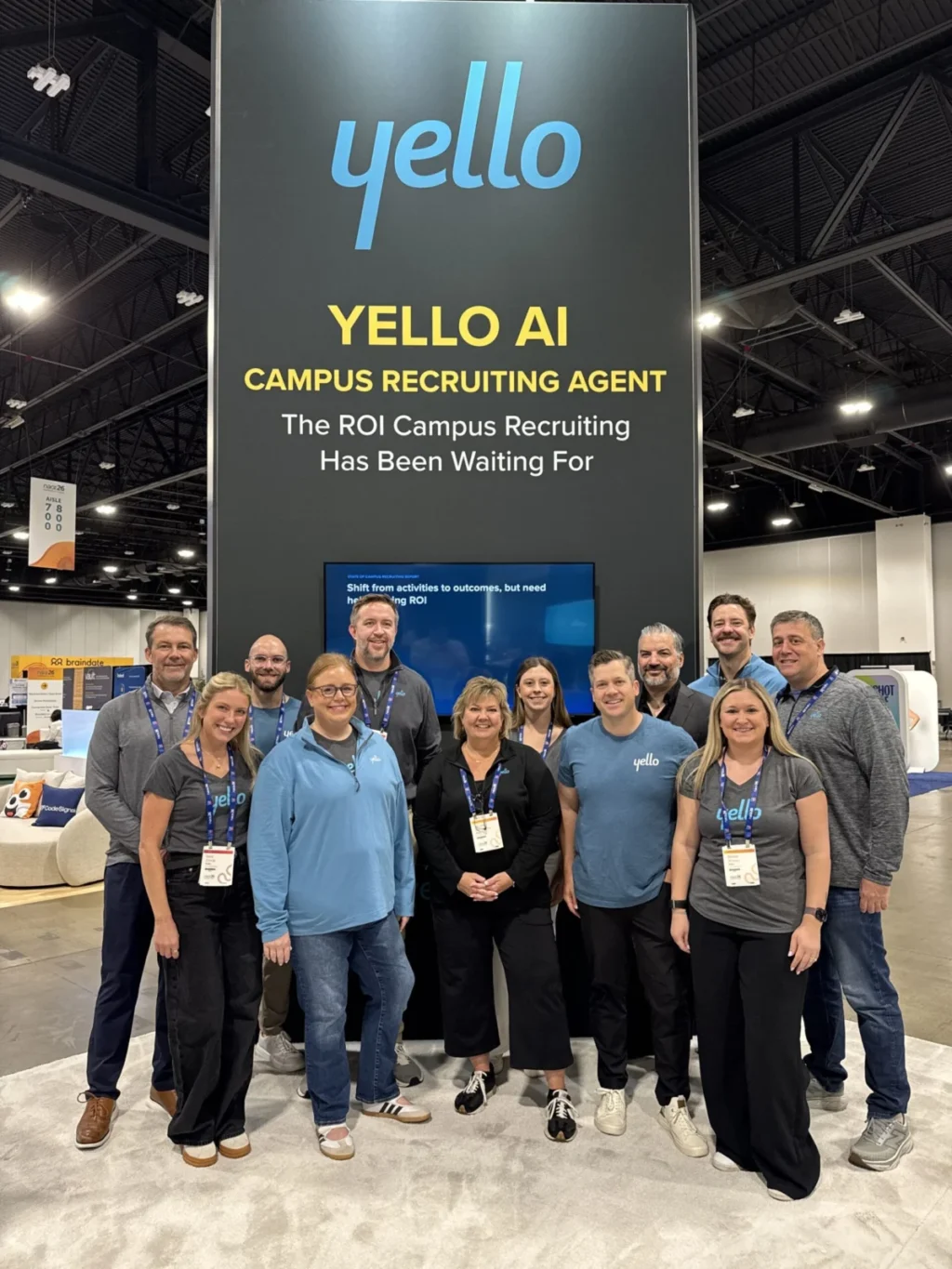
Denver, CO – The early talent acquisition landscape is undergoing a significant transformation, a reality brought into sharp focus at NACE26, the annual conference of the National Association of Colleges and Employers, recently held in Denver. As a platinum sponsor, Yello played a pivotal role in shaping discussions, introducing groundbreaking technologies, and fostering connections within the early talent community. The event served as the platform for Yello to debut its innovative AI Campus Recruiting Agent and announce a strategic partnership with Symplicity, underscoring a broader industry shift towards more strategic, data-driven, and human-centric approaches to talent acquisition. The prevailing themes emerging from the conference centered on the evolving role of artificial intelligence, a recalibration of event strategies, and persistent challenges related to offer reneges.
NACE26: A Confluence for Early Talent Innovation
The National Association of Colleges and Employers (NACE) stands as the leading authority on career development and collegiate recruiting. Its annual conference, NACE26, is a cornerstone event for professionals dedicated to connecting students and recent graduates with meaningful career opportunities. Held in Denver, Colorado, this year’s gathering brought together hundreds of recruiters, career services professionals, and technology providers to discuss best practices, share insights, and explore the future of early talent acquisition. The conference provides an invaluable forum for understanding the dynamic interplay between academic institutions and employers, addressing critical issues ranging from skill gaps and diversity initiatives to the impact of emerging technologies. Yello’s prominent presence as a platinum sponsor underscored its commitment to leading innovation in this vital sector, facilitating numerous conversations, hosting dedicated speaking sessions, and engaging attendees at its interactive booth, complemented by a networking rooftop happy hour.
The Evolving Role of AI: Augmentation Over Autonomy
One of the most intensely debated topics at NACE26 was the increasing integration of artificial intelligence into recruiting processes. While AI’s potential for streamlining tasks is widely acknowledged, the consensus among attendees and panelists was clear: its application must be purpose-built and strategically implemented to avoid alienating candidates and compromising the human element of recruiting.
Yello’s "State of Campus Recruiting report," a key reference point during discussions, revealed that while AI adoption is growing, its current usage is largely concentrated in top-of-funnel activities. Approximately 26% of current AI usage in campus recruiting is dedicated to sourcing, with another 25% focused on candidate communications. This indicates a strong inclination towards automating initial outreach and identification. However, the report also highlighted a significant gap: AI’s potential for robust data analysis and demonstrating return on investment (ROI), areas where it could have the most profound impact, remains largely untapped. This discrepancy resonated deeply with recruiters at the conference.
"The conversations in Denver consistently showed that recruiters aren’t looking for AI to make hiring decisions for them," stated Dan Bartfield, Chief Operating Officer at Yello, who participated in a key panel discussion. "Their primary desire is for AI to handle the administrative burdens and repetitive tasks that consume valuable time, allowing them to focus on more meaningful interactions with candidates." This sentiment was echoed during Yello’s session, "Can Campus Recruiting Be Autonomous? The Answer Is Complicated." The panel, featuring Tamara Welch, Director of Early Talent Acquisition at LPL Financial, Matthew Brink, Vice President of Programs and Services at NACE, and Yello’s Dan Bartfield, delved into the nuanced distinction between achieving fully autonomous recruiting and simply empowering recruiters to concentrate on higher-value work.
Tamara Welch emphasized the critical need for a human touch in building genuine connections. "While AI can certainly enhance efficiency, the essence of early talent acquisition lies in relationship building," Welch remarked. "Candidates, especially those just starting their careers, seek authenticity and personal engagement. Over-reliance on AI without disclosure can create an impersonal experience that detracts from our employer brand." Matthew Brink further elaborated on this point, noting that students are increasingly wary of employers who heavily leverage AI in their hiring processes, particularly when its use is not transparent. An opaque or overtly automated process can inadvertently deter highly qualified candidates and subtly damage an organization’s reputation in the competitive talent market. The audience unequivocally favored AI as an assistive tool designed to augment human capabilities, thereby freeing recruiters to dedicate more time to engaging with candidates, building rapport, and making informed, human-led decisions. The implication is clear: for AI to be truly effective in campus recruiting, it must be developed with the unique needs and ethical considerations of this demographic in mind.
Rethinking Event Strategies: From Presence to Purpose
Another major theme at NACE26 was the fundamental shift in how employers approach recruitment events. The traditional model of attending numerous career fairs with the hope of serendipitously finding suitable candidates is being replaced by a more intentional, outcomes-based approach. This transformation is driven by several factors, including the sheer volume of applications and the challenge of identifying genuinely qualified candidates amidst the prevalence of AI-assisted resumes.
"We’re seeing an interesting dynamic where application volumes continue to climb, yet the quality of candidates surfaced through initial screenings can be inconsistent," observed Vincent Bond, Vice President of Talent Acquisition at Synchrony, during the session "Purpose Over Presence: Rethinking Your Event Strategy for Better ROI." Bond succinctly articulated the dilemma: "Every resume looks the same now. It’s almost as if AI is fighting AI, with candidates using generative tools and employers using AI to evaluate those submissions." This phenomenon necessitates a strategic pivot towards earlier, more deliberate investment in relationships.
Kristin Leek, Director of University Relations at Boeing, and Christopher Cantu, Campus Recruiting Manager at Marathon Petroleum, joined Bond in detailing their organizations’ evolving strategies. They highlighted a shift away from measuring success purely by the number of interactions at a career fair towards evaluating events based on their ability to drive quality hires and genuine engagement. "The purpose of the in-person event has fundamentally changed," Leek explained. "It’s no longer just about mass screening; it’s about targeted engagement and deepening relationships."
Cantu offered a compelling analogy: "Think of career fairs as the ‘end zone’ – the place where you finalize commitments, not where you initiate contact." He emphasized that the critical groundwork for successful recruitment happens months, sometimes even years, before a formal event. This involves targeted outreach, bespoke events, and consistent touchpoints that build "relationship equity." In an increasingly competitive landscape, this equity serves as a crucial competitive advantage, helping teams navigate rising application volumes and mitigate the risks of candidate fraud. The strategic implication is a move towards high-impact events designed for deeper engagement and conversion, rather than broad-net casting. Employers are increasingly scrutinizing event ROI, seeking to optimize their resources by focusing on venues and activities that yield the highest quality talent and alignment with organizational needs.
Addressing the Challenge of Offer Reneges
The persistent issue of offer reneges remained a prominent concern throughout NACE26, underscoring the fierce competition for top early talent. Offer acceptance no longer signifies a guaranteed hire, with many organizations experiencing a notable uptick in candidates withdrawing after initial acceptance. Industry data suggests that renege rates for early career roles can range from 10-20% in competitive sectors, with some reports indicating even higher figures. The financial and operational costs associated with reneges are substantial, including wasted recruitment resources, delayed project timelines, and potential impacts on team morale.
Panelists and attendees universally agreed that the period between offer acceptance and the candidate’s start date must be treated as an active recruiting phase. Consistent, personalized communication is no longer a luxury but a necessity for retaining top talent. "Maintaining engagement post-offer is paramount," stated one recruiter during an informal discussion. "Candidates are often juggling multiple offers, and our role is to keep them excited, informed, and connected to our organization until Day One." This proactive approach, panelists noted, is significantly bolstered by the relationship-building efforts initiated during pre-offer events. Candidates who feel a genuine connection to the company and its culture are less likely to renege.
Yello addressed this critical challenge in its virtual session, "Designing the Complete Journey: From Pre-Boarding to Off-Boarding," led by Ahva Sadeghi, Yello’s Senior Director of Product Marketing. Sadeghi introduced the KEEP framework – Kick Off, Engage, Enable, and Perform – as a structured approach to maintaining candidate engagement throughout the entire journey.
- Kick Off: The initial onboarding and welcome phase, setting a positive tone.
- Engage: Continuous, personalized communication to keep candidates connected and informed about their new role and the company culture.
- Enable: Providing resources and support to ensure a smooth transition and preparation for their start date.
- Perform: Integrating them into the team and fostering their growth once they begin.
Sadeghi also delved into the underlying reasons why candidates renege, which often include receiving a better offer, lack of consistent communication from the initial employer, or a misalignment of expectations. She highlighted the true cost for employers, extending beyond immediate recruitment expenses to encompass lost productivity, potential project delays, and negative impacts on employer brand. Illustrating the effectiveness of strategic engagement, Sadeghi shared compelling data on how Symba customers have successfully reduced their renege rates by more than 55%, demonstrating the tangible benefits of a well-executed post-offer engagement strategy. This emphasizes the importance of a holistic approach to candidate experience, extending far beyond the initial offer.
Yello’s Transformative Announcements at NACE26
NACE26 served as the backdrop for two significant announcements from Yello, poised to reshape how organizations approach early talent acquisition. These innovations directly address the themes and challenges discussed throughout the conference.
The Yello Campus Recruiting Agent: Automating for Human Connection
Yello officially launched its AI Campus Recruiting Agent, a revolutionary tool designed to automate manual tasks and simplify key aspects of the recruiting workflow. This AI-powered agent is engineered to free up recruiting teams from the administrative burden of building events, sourcing candidates, managing campaigns, and scheduling interviews, thereby allowing them to dedicate more time to meaningful candidate engagement.
"For too long, campus recruiting has been built around showing up to events and hoping the right candidates visit your booth," stated a Yello spokesperson during the unveiling. "We are flipping that model entirely. The Yello Campus Recruiting Agent proactively identifies your best-fit candidates and pre-schedules interviews even before the event begins." This represents a paradigm shift from a reactive to a proactive approach. The agent handles the heavy lifting of event management, candidate matching and prioritization based on predefined criteria, personalized outreach, and intricate interview scheduling. Recruiters can now arrive at an event with a pre-filled interview schedule, confident that they will be meeting with highly qualified candidates who genuinely align with their roles and organizational culture. This directly addresses the industry’s call for AI that augments rather than replaces human interaction, allowing recruiters to optimize their time and focus on building relationships and assessing cultural fit. The promise of the AI Campus Recruiting Agent is to deliver a measurable ROI by enhancing efficiency, improving candidate quality, and ultimately streamlining the path to successful hires.
Strategic Partnership with Symplicity: Expanding Candidate Reach
In a move set to significantly broaden candidate access for its customers, Yello also announced a new strategic partnership with Symplicity. Symplicity is a leading global provider of student success and engagement platforms, connecting millions of students with career opportunities through its extensive network of educational institutions. This collaboration grants Yello customers unparalleled access to Symplicity’s vast network of over 600,000 early talent candidates.
The integration of Symplicity’s database into the Yello Campus Recruiting Agent creates a powerful synergy. Employers leveraging the Yello agent can now match against active candidates not only from their own Applicant Tracking Systems (ATS) and their existing Yello database but also from WayUp, and crucially, from the comprehensive Symplicity database. This expanded reach extends to over 35 other diverse sources across the web, creating a truly unified and expansive talent pool.
"This partnership with Symplicity is a game-changer for early talent recruiters," commented a Yello executive. "It dramatically expands the reach and quality of our talent pool, empowering our customers to find the best-fit candidates more efficiently than ever before. Symplicity’s deep connections within the university ecosystem complement our mission to streamline and enhance campus recruiting." The partnership offers mutual benefits, providing Symplicity’s network of students with increased visibility to leading employers while equipping Yello’s clients with a richer, more diverse source of qualified early talent. This collaboration underscores a commitment to fostering a more connected and efficient ecosystem for early career development and recruitment.
Broader Impact and Future Implications
The insights and innovations showcased at NACE26, particularly those from Yello, signal a profound evolution in early talent acquisition. The industry is moving towards a model where technology and human connection are harmoniously integrated. AI is no longer a futuristic concept but a practical tool for optimizing workflows, allowing recruiters to focus on the strategic and relational aspects of their roles. Event strategies are becoming more targeted and outcomes-focused, emphasizing the cultivation of long-term relationships over transactional encounters. Furthermore, the imperative to engage candidates proactively throughout the entire recruitment journey, especially during the post-offer phase, is gaining critical importance in mitigating renege rates and securing top talent.
Yello’s AI Campus Recruiting Agent and its partnership with Symplicity are direct responses to these evolving needs. They represent a significant step towards a more intelligent, efficient, and candidate-centric approach to early talent acquisition. As the talent landscape continues to shift, organizations that embrace these innovations and prioritize genuine engagement will be best positioned to attract, hire, and retain the next generation of leaders. The future of campus recruiting lies in leveraging sophisticated technology to amplify human expertise, ensuring that every interaction is meaningful and every hire is a strategic success.






