Updated January 13, 2026 – Performance reviews, often characterized as corporate report cards, are frequently met with apprehension rather than anticipation. However, when executed with strategic intent, these evaluations can significantly bolster employee retention, engagement, productivity, and overall morale, serving as the bedrock of a robust performance management program. The prevailing sentiment suggests a need to pivot from retrospective assessments to forward-looking dialogues that unlock employee potential and foster continuous improvement. This evolution necessitates a fundamental shift in how performance conversations are structured, moving beyond a mere review of past actions to a dynamic exchange that propels individuals and teams toward future success.
The transformation from dreaded obligation to anticipated growth opportunity hinges on the art of asking the right questions. This approach aims to imbue performance reviews with a sense of purpose, moving beyond the perfunctory to the profoundly impactful. By equipping HR leaders and managers with a refined set of performance review questions, organizations can cultivate an environment where feedback is a catalyst for development, not a source of anxiety. This guide aims to provide a framework for crafting conversations that illuminate individual strengths, address challenges constructively, and chart a clear path toward professional aspirations, ultimately contributing to a brighter future for both employees and the organization.
Elevating the Impact of Employee Reviews
The traditional, checklist-style performance review is rapidly becoming obsolete. Modern organizations recognize the imperative to infuse these conversations with vitality and purpose. By revolutionizing the review process through incisive questioning, companies can move beyond superficial assessments to uncover invaluable insights. This shift fosters an effective performance review culture, one that thrives on constructive feedback and encourages employees to push the boundaries of their capabilities. The underlying philosophy is that performance reviews, when conducted thoughtfully, can be powerful tools for engagement and development, rather than mere administrative hurdles. This evolution is not merely about procedural change; it is about cultivating a mindset where performance discussions are seen as strategic investments in human capital.
Data from recent HR surveys consistently highlight a gap between the intended purpose of performance reviews and their actual impact. A significant percentage of employees report feeling that reviews do not adequately contribute to their development or career progression. This disconnect underscores the urgent need for a more engaging and effective approach. Organizations that successfully bridge this gap often report higher employee satisfaction, reduced turnover rates, and improved overall business performance. For instance, studies by organizations like the Society for Human Resource Management (SHRM) indicate that companies with more frequent and constructive feedback mechanisms experience a 14.9% lower turnover rate compared to those that do not. This suggests that the quality and focus of performance conversations are directly correlated with employee retention and commitment.
The Manager’s Pivotal Role in Performance Reviews
Managers are no longer solely evaluators; they are instrumental architects of team success. Possessing intimate knowledge of their team members’ daily contributions and challenges, they are uniquely positioned to unlock individual potential. Their mandate extends beyond setting clear performance goals and increasing feedback frequency; it involves transforming review time into a strategic dialogue centered on growth. The objective is to eliminate surprises during formal reviews, fostering a shared commitment to exploring strengths, addressing areas for improvement, and discussing employee aspirations. This proactive approach ensures that performance discussions are collaborative and future-oriented, rather than reactive and critical.
The efficacy of this managerial role is amplified by consistent training and the provision of appropriate tools. When managers are empowered with the skills to conduct insightful conversations and provided with platforms that facilitate ongoing feedback, the impact on employee development is substantial. Research indicates that employees who receive regular, constructive feedback from their managers are more likely to be engaged and motivated. A 2023 report by Deloitte found that organizations with continuous feedback processes see a 30% increase in employee engagement. This highlights the direct correlation between managerial effectiveness in performance discussions and overall employee sentiment and productivity.
Transforming Standard Review Dialogue into Engaging Conversations
The key to transforming a perfunctory performance review lies in tailoring conversations to align with individual career ambitions. This personalized approach creates an engaging experience for each employee, making every review as unique as the individual involved. It cultivates an environment where open, honest exchanges are the norm, focusing not only on past performance but also on co-creating a roadmap for future growth. This strategic shift can have a profound impact on employee engagement and development.
Standard Review Dialogue Example:
- Manager: "Your sales numbers met expectations this quarter. That’s good. However, your client feedback scores require improvement. Focus on this for the next quarter."
- Employee: "I understand. I will work on improving my client interactions."
This typical exchange is characterized by its brevity, lack of probing inquiry, and limited scope for discussion. The feedback is directive and lacks exploration of the underlying reasons for the client feedback scores or potential solutions.
Engaging and Effective Review Dialogue Example:
- Manager: "I’ve noticed you’ve consistently hit your sales targets, which is fantastic. What do you attribute your steady performance to?"
- Employee: "I believe it’s about deeply understanding customer needs. However, I sometimes find it challenging to manage difficult client interactions effectively."
- Manager: "It’s clear you have a real strength in client understanding. How about we explore some advanced communication strategies to turn those challenging interactions into opportunities? I’d also love to hear about your career goals and how I can support you in reaching them."
- Employee: "That would be great! I’ve been thinking about leadership roles and how I could start preparing for that path."
- Manager: "Excellent. Let’s outline some leadership development steps and see how we can align them with your current responsibilities to give you exposure and experience in that area. How does that sound?"
- Employee: "Sounds like a plan. I’m excited to see where this can go."
This contrasting dialogue demonstrates a marked difference. The manager actively seeks to understand the employee’s perspective, acknowledges strengths, identifies challenges collaboratively, and proactively discusses career aspirations. By framing the conversation around development and future opportunities, the manager fosters a sense of partnership and investment in the employee’s growth. This approach moves beyond a mere assessment of past performance to a strategic discussion about future potential, significantly enhancing engagement and motivation. This type of dialogue is more likely to lead to tangible improvements and a stronger employer-employee relationship.

The Art of Asking: Crafting Effective Performance Review Questions
Employee engagement often surges when performance reviews are framed by thoughtful, probing questions. These questions serve as springboards for dynamic dialogue, initiating a deep dive into an individual’s daily achievements, areas where targets may have been missed, and the fundamental elements that contribute to their best work. The objective is to ask questions that not only unpack the narrative behind performance data but also spark insights that can accelerate an employee’s growth trajectory. Key examples include inquiries about an employee’s strengths and how they are leveraged in their current role.
Setting the Scene: Performance Review Questions on Overall Performance
Before delving into specifics, it is crucial to frame performance reviews within a broader context. This involves taking a step back to view the complete picture before examining individual brushstrokes. Initiating conversations with questions that capture the overarching scope of an employee’s contributions and their satisfaction with their role can set a positive and productive tone.
-
Mediocre Questions:
- "Did you meet your goals this year?"
- "How do you feel about your performance?"
-
Great Questions:
- "Reflecting on the past year, what are you most proud of accomplishing in your role, and why?"
- "In what ways do you feel your contributions have most significantly impacted the team’s objectives?"
- "How does your current role align with your overall career aspirations?"
Unearthing the Gold: Performance Review Questions on Strengths and Challenges
The next step involves strategic inquiry designed to spotlight an employee’s resilience, resourcefulness, and readiness for improvement. These questions aim to uncover the underlying factors that contribute to both successes and setbacks.
-
Mediocre Questions:

- "What are your strengths and weaknesses?"
- "Where do you need to improve?"
-
Great Questions:
- "Can you provide an example of a time you faced a significant challenge in your role and how you navigated it?"
- "What skills or knowledge have you developed this year that you believe are most valuable to your work?"
- "Are there any tasks or responsibilities you find particularly draining or challenging? What makes them so?"
- "How can we better leverage your strengths to contribute to team or organizational goals?"
- "What opportunities for learning or development would help you overcome your current challenges?"
Looking Forward: Performance Review Questions on Future Outlook
Encouraging managers to shift their focus from the rearview mirror to a telescope is essential. Future-oriented questions transform a standard review into a launchpad for career trajectory and skill development, benefiting both the employee and the organization. These questions lay the groundwork for discussions about future performance reviews and professional development plans.
-
Mediocre Questions:
- "What do you want to do next year?"
- "Where do you see yourself in five years?"
-
Great Questions:
- "What are your professional development goals for the next 12-18 months, and what steps can we take together to achieve them?"
- "What new skills or experiences are you eager to acquire to advance your career within the company?"
- "What kind of projects or responsibilities would excite you and allow you to grow professionally?"
- "How can the organization support your long-term career aspirations?"
Getting Personal: Performance Review Questions for Individual Needs
Tailoring performance review questions is akin to curating a unique art exhibition; each piece requires a distinct frame. Managers should be encouraged to craft questions that resonate with the individual roles of their team members, probing the depths of their daily tasks and tapping into their personal career aspirations. This personalized approach ensures that each performance review contributes to individual development, positioning employees for success not only in their current roles but also in advocating for their own performance and achieving their career goals more efficiently.
-
Mediocre Questions:
- "Do you have any needs?"
- "Is there anything else you want to talk about?"
-
Great Questions:
- "What resources or support do you believe would enhance your effectiveness in your current role?"
- "Are there any aspects of your current workload that you find particularly unfulfilling or that you believe could be optimized?"
- "What does a ‘successful’ day or week look like for you in your current role?"
- "How can we ensure your work remains engaging and aligned with your personal growth objectives?"
- "What are your thoughts on the current work-life balance, and what, if anything, could be adjusted to improve it?"
Strengthening the Feedback Loop: Performance Review Questions for Continuous Growth
Cultivating a feedback loop within performance reviews is akin to nurturing a garden; it requires consistent care and attention to truly flourish. Managers should be guided to foster a culture where feedback is an integral part of the daily workflow, a steady rhythm rather than an infrequent symphony. These refined questions not only nurture employee growth but also fortify the manager-employee relationship, ensuring that each team member’s development remains an ongoing priority.
-
Mediocre Questions:
- "Do you have any feedback for me?"
- "Was the feedback I gave you helpful?"
-
Great Questions:
- "What is one thing I could do differently as your manager to better support your success?"
- "What are your thoughts on the frequency and quality of feedback you receive from me and other colleagues?"
- "How can we make the process of giving and receiving feedback more integrated into our daily work?"
- "What learning opportunities have you found most impactful recently, and how can we replicate that success?"
- "In what areas do you feel you could benefit from more specific guidance or coaching?"
Aligning the Stars: Performance Review Questions for Organizational Alignment
Connecting an employee’s daily work to the broader mission of the company is crucial for effective performance reviews. This involves helping each team member understand how their efforts contribute to the organization’s overarching goals, ensuring that every action propels the entire company forward. These questions aim to weave individual aspirations with the company’s broader narrative, transforming the performance review into a collaborative exploration of alignment and impact. It is about ensuring each employee feels like a vital part of the journey toward shared success.
-
Mediocre Questions:
- "Do you understand the company’s goals?"
- "Are you working on company priorities?"
-
Great Questions:
- "How do you see your current projects and responsibilities contributing to our company’s strategic objectives for this year?"
- "What are your thoughts on how our team’s work aligns with the broader organizational mission?"
- "Are there any areas where you see potential for greater collaboration with other departments to achieve shared company goals?"
- "How can we ensure that individual performance goals are clearly linked to the company’s key performance indicators (KPIs)?"
- "What insights do you have on how we, as a team or company, can better achieve our mission?"
From Conversation to Action: Following Up on Performance Reviews
The journey of a performance review does not conclude with the conversation; it marks the beginning of a crucial action phase. Transforming the insights gleaned from these discussions into actionable steps is paramount. This involves outlining clear, achievable objectives with defined timelines for performance review follow-up. This ensures that the momentum generated during the review propels continuous movement and growth.
Accountability is not a solitary endeavor but a shared partnership. Establishing support mechanisms, such as regular check-ins, and providing necessary resources or training, reinforces the organization’s commitment to employee development. This demonstrates a tangible investment in turning employee aspirations into concrete achievements. For instance, if a development plan for a new skill is agreed upon, follow-up might include scheduling training sessions, assigning relevant projects, and periodic progress reviews to ensure the employee is on track and supported.
Fostering a Culture of Continuous Development
HR leaders play a pivotal role in nurturing an organizational culture where growth and learning are integrated into the daily fabric of work. Encouraging a mindset that values ongoing development not only enhances individual careers but also enriches the organization as a whole. The conclusion of a performance review should not signal the end of the dialogue. Managers should be encouraged to maintain open lines of communication, fostering a dynamic where feedback and development discussions are an integral part of everyday work life. This continuous dialogue ensures that development is viewed as an ongoing journey, rather than a singular annual event.
This approach contributes to a more resilient and adaptable workforce, capable of navigating the ever-evolving demands of the modern business landscape. Organizations that prioritize continuous development often find themselves at the forefront of innovation and possess a significant competitive advantage due to their highly skilled and engaged workforce.
How Quantum Workplace Can Help Streamline Performance Reviews
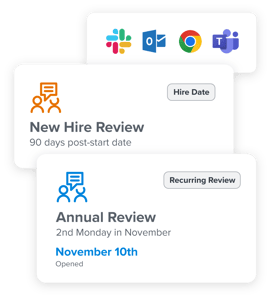
Performance conversations need not be arduous. Keeping managers and employees aligned requires engaging performance reviews. Quantum Workplace’s performance review software provides teams with reliable context, facilitating more objective and engaging discussions.
The platform offers several key features to enhance the performance review process:
- Customizable Reviews: The ability to tailor review modules ensures that assessments align with specific organizational culture and departmental needs, measuring what matters most.
- Manager Habit Building: Integration into existing workflows helps managers build positive performance habits, with formal conversation cycles ensuring consistent and appropriate touchpoints.
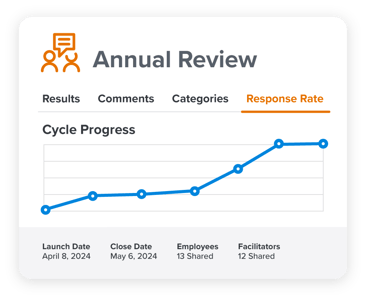
- Response Rate Tracking: Real-time monitoring of review cycle status keeps teams accountable and provides insights into performance ratings.
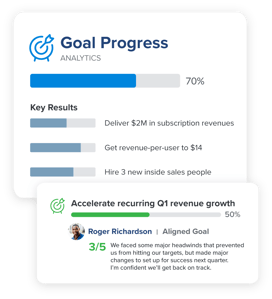
- Embedded Performance Goals: Goals can be seamlessly integrated into evaluations, enabling managers to conduct objective, effective, and growth-oriented conversations.
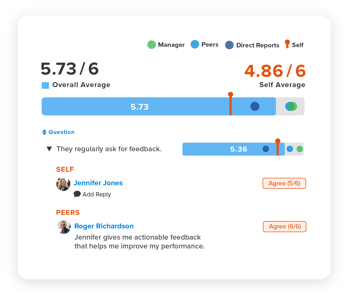
- Multi-Rater Feedback: Incorporating feedback from various sources provides a comprehensive view, orienting performance conversations around development.
- Data Visualization and Alignment: A talent dashboard offers a holistic view of organizational talent, enabling informed decisions about talent retention and development.
Conclusion
The journey through the art of asking the right questions, creating a conducive feedback environment, translating conversations into action, and fostering a culture of continuous development provides a comprehensive framework. These elements are the essential seeds for cultivating a vibrant, engaged, and high-performing team. HR leaders, in their role as sculptors of this new era of performance reviews, are equipped with the tools to carve out a space where growth, feedback, and development are interwoven into the very DNA of the organization. By championing these practices, HR not only elevates individual careers but also propels the organization toward a future where continuous improvement and engagement are the norm, not the exception.
Frequently Asked Questions About Performance Review Questions
What are the best performance review questions?
The most effective performance review questions encourage deep reflection, open communication, and a clear path for growth. They move beyond simple assessments to explore motivations, challenges, and aspirations.
What are performance review questions for achievements?
To effectively assess achievements, consider asking questions such as: "Can you detail your most significant accomplishments this past year and the impact they had?" or "Which of your achievements are you most proud of, and what made them successful?"
What are performance review questions for strengths and areas of improvement?
To evaluate strengths and areas for improvement, ask: "What skills do you believe are your greatest assets in your current role, and how are you utilizing them?" and "What specific areas do you believe present the most significant opportunities for your professional development?" These questions facilitate a balanced discussion focusing on commendable skills and avenues for growth.
What are performance review questions for career growth?
For career development, consider inquiries like: "What are your short-term and long-term career aspirations within the company?" and "What skills or experiences do you believe you need to acquire to reach your next career milestone?" These questions encourage employees to reflect on their professional goals and how the organization can assist in achieving them.