
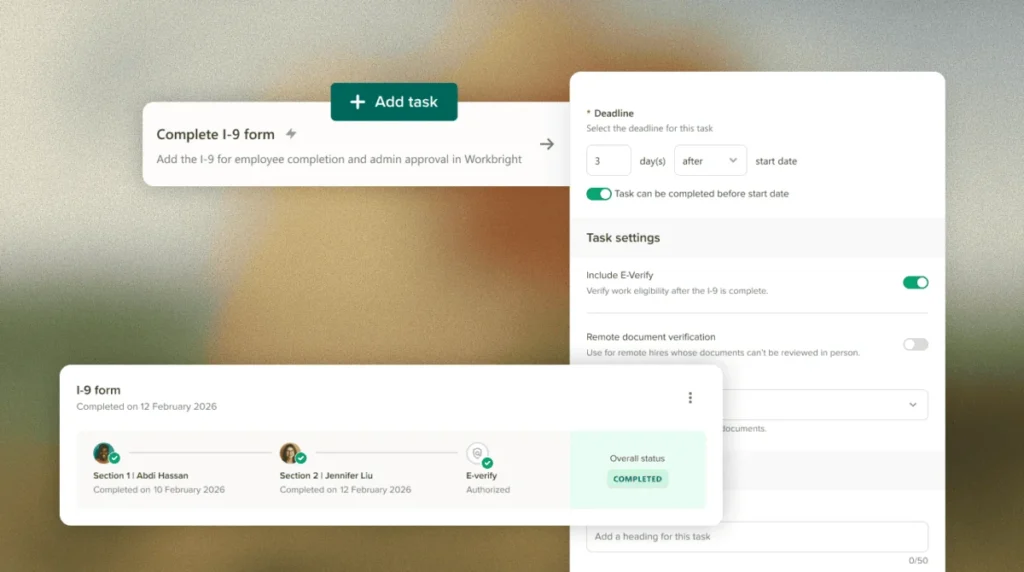
Workable, a prominent provider of recruiting software, has launched a comprehensive, integrated workflow designed to simplify and ensure compliance with U.S. employment eligibility verification requirements, specifically Form I-9 and E-Verify. This new functionality aims to eliminate the administrative burden traditionally associated with these critical processes, allowing U.S.-based teams to manage verification digitally within the Workable platform, thereby moving away from manual workarounds, duplicate data entry, and the use of disparate external systems. The development addresses long-standing challenges faced by human resources departments in maintaining federal compliance efficiently, particularly in an increasingly remote and hybrid work environment.
The Bedrock of U.S. Employment Verification: Form I-9
At the core of employment eligibility verification in the United States lies Form I-9, Employment Eligibility Verification. Mandated by the Immigration Reform and Control Act (IRCA) of 1986, this form serves as a crucial mechanism for employers to confirm the identity and employment authorization of all individuals hired for employment in the U.S. Its primary objective is to prevent the hiring of unauthorized workers, thereby upholding the integrity of the nation’s workforce laws. Every employer, regardless of size or industry, is legally obligated to complete and retain a Form I-9 for each new employee, including U.S. citizens and noncitizens.
The process is structured into three distinct sections. Section 1 is completed by the employee upon hire, attesting to their employment authorization status and providing personal details. This must be done on or before the first day of employment. Section 2, the employer’s responsibility, involves physically examining acceptable documents presented by the employee from the Lists of Acceptable Documents (List A, or a combination of List B and List C) to establish identity and employment authorization. This examination must occur within three business days of the employee’s first day of employment. Finally, Section 3 is used for reverification or rehires, ensuring ongoing compliance for certain employees or circumstances.
Non-compliance with I-9 regulations carries significant penalties. The U.S. Immigration and Customs Enforcement (ICE) regularly conducts audits, and employers found to have committed substantive or uncorrected technical violations can face civil monetary penalties ranging from hundreds to thousands of dollars per violation. Pattern or practice violations, such as knowingly hiring or continuing to employ unauthorized workers, can lead to much steeper fines and even criminal prosecution. In fiscal year 2022, ICE conducted 2,540 I-9 audits, resulting in 325 arrests and millions of dollars in fines, underscoring the serious implications of failing to adhere to these regulations.
E-Verify: An Electronic Layer of Assurance
Building upon the foundation of Form I-9, E-Verify is an internet-based system operated by the Department of Homeland Security (DHS) in partnership with the Social Security Administration (SSA). It allows enrolled employers to electronically confirm the employment eligibility of their newly hired employees by comparing the information provided on the Form I-9 against government databases. While voluntary for most employers, E-Verify is mandatory for federal contractors and subcontractors holding federal contracts with the Federal Acquisition Regulation (FAR) E-Verify clause, as well as for employers in an increasing number of states that have enacted their own mandatory E-Verify laws.
The E-Verify process involves the employer entering the employee’s Form I-9 data into the system, which then cross-references this information with records from the SSA and DHS. Within seconds, the system provides an employment eligibility confirmation or an indication that further action is needed, such as resolving a tentative non-confirmation (TNC). E-Verify offers an additional layer of assurance, helping employers to detect fraudulent documents or identity theft more effectively than a manual I-9 review alone. It plays a critical role in the U.S. government’s strategy to combat unauthorized employment and ensure a legal workforce.
However, E-Verify also presents its own set of procedural requirements and potential challenges. Employers must ensure data accuracy, adhere to strict timelines for query submission, and properly inform employees of their rights and the process for resolving TNCs. Missteps in the E-Verify process can lead to accusations of discrimination or procedural violations, further complicating the compliance landscape.
The Evolution of Compliance Challenges and the Rise of Digital Solutions
For decades, the standard practice for I-9 completion involved paper forms, manual document inspection, and physical storage. This traditional approach, while foundational, was inherently prone to inefficiencies and errors. HR professionals often found themselves grappling with a series of administrative burdens:
- Paperwork Overload: Managing physical forms, making copies of documents, and maintaining secure storage for potentially thousands of I-9s.
- Data Entry Errors: Manual transcription of information from paper forms into HR systems, leading to inaccuracies that could trigger compliance issues during an audit.
- Disparate Systems: Juggling between downloading PDF forms, scanning documents, using external E-Verify portals, and managing data in internal HRIS platforms.
- Audit Preparedness: The sheer volume and scattered nature of I-9 records made preparing for an ICE audit a daunting, labor-intensive task.
- Remote Hiring Complexities: The rise of remote work, significantly accelerated by the COVID-19 pandemic, exposed a critical flaw in the traditional I-9 process: the requirement for physical document inspection. Initially, employers relied on authorized representatives or third-party services to complete Section 2 for remote employees, adding layers of cost and complexity.
The COVID-19 pandemic acted as a catalyst for change. In March 2020, DHS announced temporary flexibilities allowing for remote inspection of I-9 documents, initially tied to employers operating remotely due to the pandemic. These flexibilities were extended multiple times, providing much-needed relief but also creating uncertainty about long-term solutions. Recognizing the permanent shift towards remote and hybrid work models, DHS finally introduced a permanent alternative procedure for remote document examination in July 2023. This landmark decision allows E-Verify enrolled employers in good standing to remotely examine employees’ documents via live video interaction, provided they retain copies of the documents and follow specific protocols. This new rule underscored the growing need for digital, integrated solutions that could seamlessly accommodate modern work arrangements while maintaining compliance.
Workable’s Answer: A Seamless, Integrated Compliance Workflow
It is against this backdrop of evolving regulations and persistent administrative hurdles that Workable’s new I-9 and E-Verify workflow emerges as a timely and impactful solution. The platform is designed to provide a unified, digital experience that addresses the core pain points identified by U.S. organizations.
A spokesperson for Workable highlighted the strategic importance of this development, stating, "Our goal has always been to simplify the complex world of hiring and HR. The I-9 and E-Verify processes have historically been a significant source of compliance risk and administrative overhead for U.S. employers. By integrating these critical functions directly into our platform, we’re not just offering a feature; we’re delivering peace of mind. Employers can now meet federal requirements with greater ease and accuracy, freeing up valuable HR time to focus on strategic initiatives rather than manual paperwork."
The workflow operates as follows:
- Digital Section 1 Completion: Upon onboarding, new hires receive an invitation to complete Section 1 of the I-9 form digitally within the Workable platform. This streamlines the employee experience, reduces the potential for illegible handwriting or missed fields, and ensures data is captured accurately from the outset.
- HR Document Review and Digital Section 2: HR teams can then review the employee’s submitted information and, critically, manage the document verification process. For employers utilizing the new DHS alternative procedure for remote document inspection, this can be facilitated through live video interaction. Once documents are verified, HR completes Section 2 digitally within Workable, eliminating the need for printing, scanning, or switching to other tools. The system guides HR through the necessary fields, ensuring all required information is captured correctly.
- Automated E-Verify Submission: For Workable customers who have opted into E-Verify, the system automatically submits the employee’s I-9 data to the E-Verify system during the completion process. This automation drastically reduces manual data entry, minimizes errors, and ensures timely submission, a key requirement for E-Verify compliance. Any potential discrepancies or tentative non-confirmations (TNCs) are flagged within the system, allowing HR to initiate the resolution process promptly.
- Centralized Record Keeping: All completed I-9 forms, associated documents, and E-Verify results are securely stored within the Workable platform, creating a centralized, easily auditable record. This eliminates the need for separate physical or digital archives and simplifies retrieval during compliance checks or audits.
Broader Impact and Implications for U.S. Organizations
The introduction of Workable’s integrated I-9 and E-Verify workflow signifies more than just a product update; it reflects a broader trend in HR technology towards holistic, compliant, and user-centric solutions. The implications for U.S. organizations are far-reaching:
- Enhanced Compliance and Risk Mitigation: By automating critical steps and embedding best practices, the system significantly reduces the risk of human error, missed deadlines, and procedural missteps that can lead to costly penalties. It ensures that organizations, particularly those with high hiring volumes or distributed workforces, can maintain a compliant posture with greater confidence.
- Significant Administrative Efficiency: HR teams can reclaim countless hours previously spent on manual data entry, paper management, and navigating multiple systems. This efficiency gain allows HR professionals to shift their focus from transactional tasks to strategic initiatives such as talent development, employee engagement, and organizational culture. According to a report by the Society for Human Resource Management (SHRM), administrative tasks consume a significant portion of HR’s time, and automation can reduce this burden by as much as 30%.
- Improved Employee Experience: A seamless digital onboarding experience, free from cumbersome paperwork, contributes positively to a new hire’s initial impression of the company. It reflects an organization’s commitment to modern processes and efficiency, setting a positive tone for their employment journey.
- Adaptation to the Modern Workforce: The solution is perfectly aligned with the realities of modern employment, particularly the prevalence of remote and hybrid work models. By facilitating compliant remote document verification, Workable empowers organizations to cast a wider net for talent, unconstrained by geographical limitations, without compromising on legal obligations.
- Strategic Advantage in a Competitive Market: In a tight labor market, anything that streamlines the hiring process and reduces administrative friction gives employers an edge. A robust, integrated compliance system can be a differentiator, allowing companies to onboard talent faster and more securely.
- Contribution to the HR Tech Ecosystem: This development reinforces the trend towards unified HR platforms that offer end-to-end solutions, from recruitment and onboarding to compliance and talent management. Such integrated systems are becoming essential for organizations seeking to optimize their entire employee lifecycle.
An industry analyst specializing in HR technology commented, "The move towards integrated compliance solutions like Workable’s is a natural and necessary evolution. With the increasing complexity of labor laws and the shift towards remote work, HR departments are under immense pressure. Solutions that not only automate but also embed compliance best practices directly into the workflow are invaluable. They represent a significant step forward in making HR operations not just efficient, but truly resilient."
Workable’s commitment to embedding the I-9 and E-Verify experience into its existing onboarding setup underscores its philosophy of creating a seamless and structured user journey. This integration means that compliance is not an afterthought or an external hurdle but an intrinsic part of the hiring process, ensuring that federal requirements are met with consistency and ease.
Organizations interested in exploring these advanced capabilities and understanding how Workable’s new integrated I-9 and E-Verify workflow can transform their compliance practices are encouraged to contact their account manager or request a comprehensive demonstration from the Workable team. This new offering positions Workable as a key enabler for U.S. employers navigating the intricate landscape of employment eligibility verification in the 21st century.






