
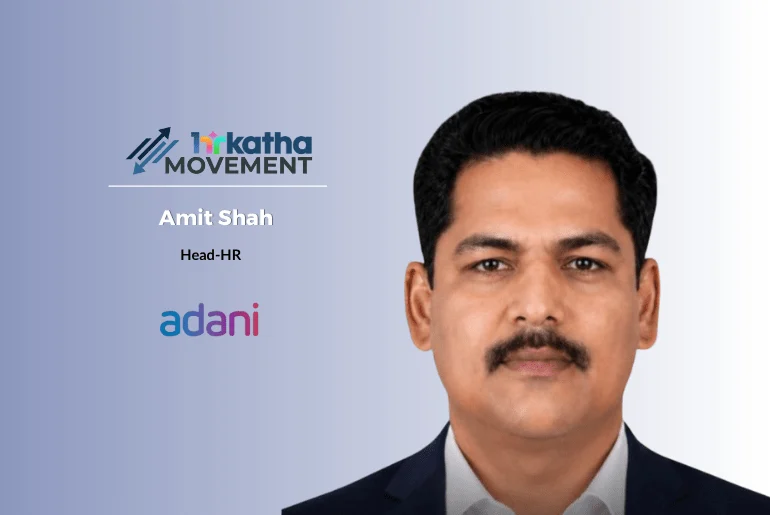
Adani Ahmedabad International Airport has officially announced the appointment of Amit Shah as its new Head – Human Resources, marking a significant advancement in his distinguished career within the expansive Adani Airport Holdings (AAHL) ecosystem. This strategic move, which Mr. Shah himself revealed via a professional update on LinkedIn, signals a renewed focus on talent management and employee experience at one of India’s pivotal aviation hubs. In his announcement, Mr. Shah conveyed his enthusiasm for contributing to the organization’s overarching growth objectives and fostering a progressive and positive work environment for all employees. The appointment underscores Adani’s commitment to strengthening its human capital framework across its rapidly expanding airport portfolio, positioning experienced leaders at the helm of critical functions.
A Strategic Move within Adani Airport Holdings
This appointment comes at a crucial juncture for Adani Airport Holdings, a subsidiary of the Adani Group, which has rapidly emerged as India’s largest airport operator. AAHL currently manages eight operational airports across the country, including Ahmedabad, Mumbai, Lucknow, Mangaluru, Guwahati, Jaipur, Thiruvananthapuram, and Navi Mumbai (under development). The conglomerate entered the airport sector through a successful bid for the privatization of six non-metro airports in 2019, followed by the acquisition of a controlling stake in Mumbai International Airport Limited (MIAL) in 2021, which includes the development rights for the greenfield Navi Mumbai International Airport. This aggressive expansion strategy has necessitated a robust and agile human resources framework capable of integrating diverse workforces, standardizing operational procedures, and cultivating a unified corporate culture across multiple geographies. The role of Head – Human Resources at Ahmedabad, a flagship airport, is therefore instrumental in translating AAHL’s strategic vision into tangible operational excellence and employee engagement.
Ahmedabad: A Key Hub in Adani’s Aviation Portfolio
Sardar Vallabhbhai Patel International Airport (SVPIA) in Ahmedabad is not merely an operational asset for Adani; it represents a strategically vital gateway in Western India, serving as a critical nexus for both domestic and international air traffic. Before its privatization and subsequent management by Adani, SVPIA had been undergoing significant infrastructure upgrades. Under Adani’s stewardship, the airport is poised for further modernization and capacity expansion to cater to the growing passenger and cargo demands of Gujarat, a state known for its industrial prowess and economic dynamism. In the fiscal year 2023-24, SVPIA handled a substantial volume of passenger traffic, demonstrating its importance in connecting millions of travelers annually. The airport’s cargo operations are equally significant, facilitating trade and logistics for various industries. Managing human resources at such a high-volume, complex operation requires specialized expertise in areas ranging from aviation-specific compliance and safety regulations to industrial relations and talent development for a diverse workforce, including air traffic controllers, ground handling staff, security personnel, retail employees, and administrative teams. Amit Shah’s extensive background within the Adani Group and his prior experience in managing HR for large-scale operations are expected to be key assets in navigating these complexities and driving the airport’s human capital agenda forward.
Amit Shah’s Extensive HR Journey: A Chronological Overview
Amit Shah brings over 15 years of comprehensive experience in human resources management, characterized by a track record of leadership in diverse industrial and service environments, with a significant tenure within the Adani Group itself. His career trajectory showcases a remarkable ability to manage complex HR functions, including large-scale recruitment, greenfield project setups, industrial relations, talent management, and statutory compliance, across various sectors such as manufacturing, solar energy, and aviation.
Prior to his current appointment at Ahmedabad, Amit Shah served as the Head HR at Mangaluru International Airport. This role, which he held from April 2025 to August 2026, was crucial in consolidating his experience within the airport operations segment of AAHL. In Mangaluru, he was responsible for the entire gamut of human resources, industrial relations (IR), and administration for a substantial workforce comprising approximately 200 on-roll employees and a much larger contingent of 1,200 contractual staff. His mandate included critical functions such as strategic manpower planning, end-to-end talent management, acquisition strategies, ensuring stringent compliance with labor laws and aviation regulations, and fostering employee engagement initiatives to ensure seamless airport operations. This hands-on experience at another key Adani airport provides him with invaluable insights into the unique challenges and opportunities prevalent in the aviation HR landscape, directly preparing him for his leadership role in Ahmedabad.
Pivotal Roles within Adani Group
Amit Shah’s journey within the Adani Group is extensive and marked by progressive responsibilities. Immediately preceding his role at Mangaluru, he served as a Lead HR Business Partner (HRBP) at Adani Airport Holdings (AAHL) from February 2021 to March 2025. This four-year and two-month tenure was instrumental in shaping his understanding of the group’s diversified airport operations. In this capacity, based out of Ahmedabad, he was tasked with overseeing manpower budget planning, streamlining HR operations, managing the entire employee lifecycle, ensuring statutory compliance, and strategically partnering with various business units including cargo, fuel farm operations, and head office teams across all eight airports under AAHL’s management. This multi-site, multi-functional HR leadership experience equipped him with a holistic perspective on the group’s human capital needs and the intricate coordination required to support a rapidly expanding national footprint.
Before his involvement with Adani Airport Holdings, Mr. Shah was a Human Resources Business Partner at Adani Solar, a key entity within the Adani Group’s renewable energy portfolio. From April 2016 to January 2021, a period spanning four years and ten months, he was based in Mundra, Gujarat. This role was particularly significant as he was instrumental in leading the HR setup for a massive 2 GW greenfield solar manufacturing project. His responsibilities included the challenging task of recruiting a substantial workforce, comprising 300 on-roll employees and an additional 3,000 outsourced staff, demonstrating his capability in large-scale talent acquisition and the establishment of robust HR infrastructure from scratch in a dynamic manufacturing environment. This experience with greenfield projects is highly relevant, as airport development often involves similar challenges in building teams and processes for new or significantly expanded facilities.
Foundational Experience in Manufacturing HR
Amit Shah’s professional foundation was meticulously built through a series of demanding HR roles in the manufacturing sector, which provided him with crucial insights into industrial relations, plant operations, and large workforce management.
His manufacturing HR journey includes a five-month stint as Plant HR Manager at Coromandel International from December 2015 to April 2016. Following this, he served as Manager-HR at LavaCast from August 2014 to November 2015. In this role, he was at the forefront of leading HR initiatives for a greenfield foundry joint venture with a Spanish firm, successfully recruiting 250 on-roll employees and an additional 700 contract staff, further honing his expertise in setting up HR systems for new industrial ventures.
Prior to LavaCast, he was the Plant HR Manager at Tata Group’s Automotive Stamping & Assembly from April 2013 to August 2014, gaining invaluable experience with one of India’s most respected conglomerates. His career began its professional trajectory as Senior Executive-HR at Jubilant Life Sciences, where he worked from September 2010 to March 2013. These foundational roles provided him with a comprehensive understanding of core HR functions, including recruitment, training, employee relations, performance management, and compliance within highly structured manufacturing environments, skills that are highly transferable to the complex operational landscape of airport management.
The Dynamic Landscape of Airport Human Resources
The human resources function within the aviation sector, particularly in airport management, presents a unique set of challenges and opportunities. Unlike traditional corporate environments, airports are highly regulated, safety-critical operations that require a diverse array of specialized skills. The workforce typically includes highly skilled professionals such as air traffic controllers, pilots, aircraft maintenance engineers, security personnel, and ground handling staff, alongside a large number of administrative, retail, and support staff. Managing such a heterogeneous workforce demands an HR leader who possesses not only strategic acumen but also a deep understanding of industry-specific regulations, safety protocols, and international standards.
Key HR challenges in the aviation sector include:
- Talent Acquisition and Retention: The global aviation industry often faces talent shortages in specialized roles. Attracting and retaining skilled professionals requires competitive compensation, robust training programs, and clear career progression paths.
- Regulatory Compliance and Safety Culture: Aviation HR must ensure strict adherence to national and international aviation regulations, labor laws, and safety standards. Fostering a strong safety culture through continuous training and awareness programs is paramount.
- Industrial Relations: Airports often operate with significant unionized workforces. Effective industrial relations management, including collective bargaining and grievance resolution, is crucial for operational stability.
- Employee Engagement and Well-being: Given the high-stress nature of many airport roles, promoting employee well-being, morale, and engagement is vital for productivity and service quality.
- Technological Integration: The increasing adoption of automation and AI in airport operations necessitates upskilling and reskilling the workforce to adapt to new technologies.
- Diversity and Inclusion: Building a diverse and inclusive workforce that reflects the global nature of aviation and caters to the needs of a diverse passenger base is a growing imperative.
Strategic Imperatives for HR Leadership in Aviation
In light of these challenges, an HR leader like Amit Shah at Adani Ahmedabad International Airport must focus on several strategic imperatives. Firstly, workforce planning must be agile and forward-looking, anticipating future growth in passenger traffic, cargo volume, and technological advancements. This includes identifying skill gaps and developing strategies for internal talent development and external recruitment. Secondly, talent management and development programs are crucial for nurturing future leaders and specialized experts within the organization, ensuring a sustainable talent pipeline. Thirdly, fostering a high-performance culture that is aligned with Adani’s vision for operational excellence and customer service is essential. This involves implementing robust performance management systems, recognition programs, and continuous feedback mechanisms. Finally, digitization of HR processes can enhance efficiency, improve employee experience, and provide data-driven insights for strategic decision-making. Amit Shah’s experience with large-scale HR operations and greenfield projects positions him well to address these strategic priorities.
Implications for Adani Ahmedabad International Airport
Amit Shah’s appointment as Head – Human Resources is expected to bring several positive implications for Adani Ahmedabad International Airport. His deep understanding of the Adani Group’s culture and strategic objectives, coupled with his extensive HR experience across multiple sectors, will likely lead to a more integrated and effective human capital strategy for SVPIA. This could translate into:
- Enhanced Employee Experience: By focusing on positive employee experience, Mr. Shah aims to improve morale, productivity, and retention rates, which are crucial for maintaining high service standards in an international airport.
- Streamlined HR Operations: His background in managing HR for large, complex organizations suggests a focus on optimizing HR processes, leveraging technology, and ensuring compliance with all relevant regulations.
- Strategic Workforce Development: With Ahmedabad poised for significant growth, Mr. Shah’s expertise in manpower planning and talent management will be critical in building a skilled and adaptable workforce capable of supporting future expansions and operational demands.
- Stronger Industrial Relations: His experience with IR in manufacturing and airport settings will be vital in maintaining harmonious labor relations, ensuring smooth operations free from disruptions.
Broader Vision: Adani’s Human Capital Strategy
This appointment is not an isolated event but rather indicative of Adani Airport Holdings’ broader human capital strategy. As the group consolidates its position as a dominant player in India’s aviation infrastructure, investing in robust HR leadership across its airports becomes paramount. The Adani Group, with its diverse portfolio spanning energy, ports, logistics, mining, and airports, understands that human capital is the cornerstone of sustainable growth. By appointing seasoned professionals like Amit Shah, AAHL aims to:
- Standardize Best Practices: Implement uniform HR policies and best practices across its network of airports, ensuring consistency in employee experience and operational efficiency.
- Build a Unified Culture: Foster a cohesive organizational culture that aligns with the Adani Group’s values of growth, responsibility, and nation-building, while respecting local nuances.
- Leverage Synergies: Create opportunities for cross-learning and talent mobility within the larger Adani ecosystem, maximizing human potential across different business verticals.
- Attract Top Talent: Position Adani Airport Holdings as an employer of choice in the aviation sector, attracting top talent through competitive offerings and a compelling employee value proposition.
Industry Perspectives on Talent Management in Aviation
Industry analysts often highlight the critical role of effective human resources in the success of airport operations. In an era of increasing passenger expectations, technological advancements, and intense competition, an airport’s ability to deliver seamless and safe services is directly linked to the competence and motivation of its workforce. Experts suggest that strategic HR leadership, particularly in developing countries with rapidly expanding aviation sectors like India, is key to navigating labor market dynamics, skill gaps, and the cultural integration challenges that arise from mergers, acquisitions, and greenfield developments. The emphasis on creating a "positive employee experience" by leaders like Amit Shah is reflective of a global trend where employee well-being and engagement are recognized as direct drivers of customer satisfaction and operational efficiency in service-oriented industries.
The appointment of Amit Shah as Head – Human Resources at Adani Ahmedabad International Airport therefore represents a calculated and significant step by Adani Airport Holdings to bolster its leadership team with seasoned expertise, ensuring that human capital remains a central pillar in its ambitious growth trajectory within the Indian and potentially global aviation landscape.








