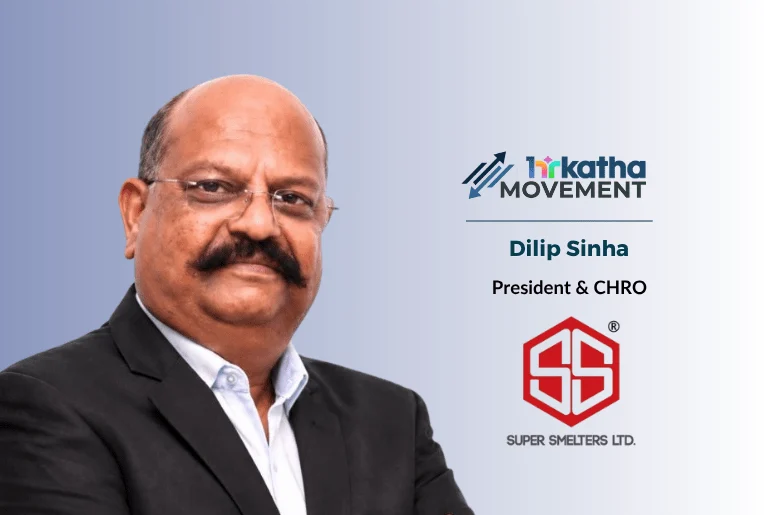
Super Smelters, a prominent Indian steel manufacturing company, has officially announced the appointment of Dilip Sinha as its new President and Chief Human Resources Officer (CHRO). This strategic move marks a significant enhancement to the company’s leadership team, bringing in a veteran HR professional with a career spanning over two decades across diverse and complex industrial landscapes. Sinha, who most recently served as President and CHRO at Jindal Steel & Power’s Angul operations, is expected to play a pivotal role in shaping Super Smelters’ human capital strategy, fostering organizational development, and driving a progressive work culture amidst the dynamic challenges and opportunities of the Indian steel sector.
A Strategic Move for Super Smelters
The appointment of a seasoned CHRO like Dilip Sinha underscores Super Smelters’ commitment to strengthening its human resources framework as a core pillar of its growth strategy. In an industry as capital-intensive and labor-dependent as steel manufacturing, effective human resource management is not merely an administrative function but a critical strategic imperative. Companies in this sector face multifaceted challenges including talent acquisition and retention for specialized roles, managing large workforces, ensuring industrial harmony, implementing advanced manufacturing technologies, and fostering a culture of safety and operational excellence. Sinha’s extensive experience in managing HR functions across large conglomerates, including heavy manufacturing, retail, and diversified groups, positions him uniquely to address these complexities and drive transformational change within Super Smelters.
The Indian steel industry is currently experiencing a robust growth phase, driven by ambitious government infrastructure projects, increased urbanization, and a burgeoning manufacturing sector under initiatives like ‘Make in India’. According to the World Steel Association, India is the second-largest crude steel producer globally, with production reaching 125.3 million tonnes in 2023. This growth trajectory, while promising, also necessitates a sophisticated approach to talent management. Companies like Super Smelters need to attract and retain highly skilled engineers, metallurgists, and operational staff, while simultaneously upskilling their existing workforce to adapt to Industry 4.0 technologies such as automation, artificial intelligence, and data analytics. The CHRO’s role in this environment extends beyond traditional HR to strategic workforce planning, digital HR transformation, leadership development, and fostering an inclusive and innovative work environment.
Dilip Sinha’s Illustrious Career Trajectory
Dilip Sinha brings a wealth of experience, accumulated through a distinguished career marked by significant leadership roles in some of India’s most respected organizations. His professional journey reflects a deep understanding of diverse organizational cultures and a proven track record in implementing impactful HR strategies.
Early Career & Foundation in Retail (2008-2012):
Sinha’s journey into leadership HR began notably with the Future Group, where he served as Chief People Officer for over four years, from 2008 to 2012. The Future Group, a pioneer in India’s modern retail sector, presented a unique set of HR challenges, including managing a vast and diverse workforce across various formats like hypermarkets, supermarkets, and specialty stores. In this role, Sinha was instrumental in building scalable HR systems, talent acquisition strategies for mass hiring, developing robust training programs, and fostering a customer-centric culture essential for the retail industry. His tenure at Future Group laid a strong foundation in managing large-scale human capital and navigating rapid organizational expansion.
Global HR Exposure (2012-2014):
Following his successful stint at Future Group, Sinha transitioned to the Astarch Group in 2012, taking on the critical role of Group Head (Global HR). For a year and nine months, he was responsible for overseeing HR operations across multiple international geographies. This experience provided him with invaluable insights into global HR best practices, cultural nuances in talent management, and the complexities of managing a diverse international workforce. It broadened his perspective beyond the Indian market, equipping him with a global mindset crucial for contemporary HR leadership.
Driving Organizational Development at Rajan Raheja Group (2014-2017):
In 2014, Dilip Sinha joined the Rajan Raheja Group as Group Head and Chief Human Resources Officer (CHRO). This conglomerate, with diversified interests across media, retail, manufacturing, and financial services, offered a complex landscape for HR intervention. During his two years and ten months there, Sinha dedicated his efforts to nurturing a proactive and progressive work culture. He spearheaded various organizational developmental (OD) and HR interventions aimed at enhancing employee engagement, improving leadership capabilities, and streamlining HR processes. A significant achievement during this tenure was ensuring the development of quality and efficient manpower and teams across the Group companies, as well as at the corporate office, thereby aligning human capital with strategic business objectives.
High-Impact Roles in Large Enterprises (2017-2024):
November of 2017 marked Sinha’s move to Reliance Retail, one of India’s largest and fastest-growing retail chains, where he took on the role of Head of HR. This position involved managing an exceptionally large and dynamic workforce, critical for Reliance Retail’s aggressive expansion strategy across various formats and geographies. His experience here would have involved scaling HR operations rapidly, implementing technology-driven HR solutions, and fostering a high-performance culture to support unprecedented growth.
Two years later, in 2019, he transitioned to the heavy manufacturing sector, joining JSW Steel as Senior Vice President and Head-Human Resources. JSW Steel, a major player in the Indian steel industry, presented distinct HR challenges related to industrial relations, operational efficiency, talent management in manufacturing plants, and ensuring compliance with stringent safety and environmental regulations. His over three and a half years at JSW Steel further solidified his expertise in managing HR for large-scale industrial operations.
In September of 2022, Sinha was handpicked by Vedanta Aluminium Metal for the role of Chief Human Resources Officer. Vedanta, a global diversified natural resources company, operates large-scale aluminium smelting and refining facilities. This role would have encompassed managing HR for a highly technical and capital-intensive industry, focusing on specialized talent acquisition, skill development, community relations, and sustainable HR practices.
Most recently, from November 2023 until his current appointment, he was with Jindal Steel & Power as President and CHRO for their Angul operations. Jindal Steel & Power’s Angul facility is one of India’s largest integrated steel plants, involving complex manufacturing processes and a substantial workforce. This role would have required acute leadership in industrial relations, talent strategy for a mega-plant, and fostering a high-performance, safety-conscious culture within a demanding operational environment.
The Evolving Role of a CHRO in Heavy Industry
The modern CHRO’s role has transcended traditional administrative functions, evolving into a strategic business partnership. In heavy industries like steel manufacturing, this evolution is particularly pronounced. A CHRO is now expected to be a key driver of organizational strategy, influencing everything from talent acquisition and retention to digital transformation and corporate culture.
Key responsibilities include:
- Strategic Workforce Planning: Anticipating future talent needs based on business goals, technological advancements, and market shifts. This involves identifying skill gaps and developing robust pipelines for critical roles.
- Talent Management and Development: Designing and implementing programs for leadership development, employee upskilling, and career progression to ensure a future-ready workforce. This is crucial in steel, where specialized technical skills are paramount.
- Organizational Development and Culture: Fostering a progressive, inclusive, and high-performance culture that aligns with company values and drives productivity. This includes initiatives around diversity, equity, and inclusion (DEI), employee well-being, and engagement.
- Industrial Relations and Compliance: Navigating complex labor laws, managing union relations, and ensuring a harmonious work environment, which is particularly vital in large manufacturing setups.
- HR Digital Transformation: Leveraging technology (HRIS, AI, analytics) to enhance HR efficiency, improve employee experience, and provide data-driven insights for strategic decision-making.
- Change Management: Leading organizational change initiatives, whether due to technological upgrades, market shifts, or strategic restructuring.
Dilip Sinha’s diverse background, encompassing both the agility of retail and the structured demands of heavy industry, equips him with a holistic perspective that will be invaluable in this multifaceted role at Super Smelters. His experience in organizational development and nurturing proactive work cultures is particularly relevant for a sector constantly striving for operational excellence and innovation.
Super Smelters: Navigating the Indian Steel Landscape
Super Smelters, as an Indian steel manufacturing company, operates within a highly competitive and strategically important sector. The company likely focuses on producing a range of steel products catering to various segments such as construction, infrastructure, automotive, and general engineering. The Indian steel industry, valued at over $100 billion, is characterized by significant capital investment, reliance on raw materials like iron ore and coal, and exposure to global commodity price fluctuations.
In recent years, the industry has benefited from strong domestic demand, propelled by the government’s focus on infrastructure development (e.g., roads, railways, ports, airports) and housing. However, it also faces challenges such as ensuring a stable supply of high-quality raw materials, managing environmental compliance and sustainability initiatives, optimizing energy consumption, and competing with global players. Furthermore, the push for ‘Atmanirbhar Bharat’ (self-reliant India) encourages domestic production and value addition, placing greater emphasis on operational efficiency and technological upgrades.
For Super Smelters, investing in human capital through a strategic CHRO appointment is a clear signal of its intent to not just meet market demand but also to build a sustainable competitive advantage. A strong HR foundation can lead to improved productivity, reduced attrition, enhanced innovation, and a more resilient workforce capable of adapting to future industry demands.
Anticipated Impact and Strategic Implications
Dilip Sinha’s appointment is expected to have several significant implications for Super Smelters:
- Enhanced Talent Strategy: With his track record, Sinha is likely to revamp Super Smelters’ talent acquisition and retention strategies, focusing on attracting top-tier engineering and operational talent, especially given the sector’s demand for specialized skills.
- Strengthened Organizational Culture: His experience in organizational development at the Rajan Raheja Group and fostering progressive work cultures will be critical in creating an environment that encourages innovation, collaboration, and high performance within Super Smelters.
- Leadership Development: Sinha will likely prioritize leadership development programs, nurturing future leaders from within the organization to ensure a strong succession pipeline. This is crucial for long-term stability in a complex manufacturing environment.
- Digital HR Transformation: Drawing on his diverse experience, he may lead initiatives to digitalize HR processes, leveraging technology to improve efficiency, employee experience, and data analytics for strategic decision-making.
- Industrial Harmony: His extensive experience in managing large workforces and industrial relations in heavy manufacturing will be instrumental in maintaining a harmonious and productive relationship with employees and unions, a vital aspect in the steel sector.
- Alignment with Business Goals: Ultimately, Sinha’s role will be to ensure that Super Smelters’ human capital strategy is tightly integrated with its overall business objectives, contributing directly to production targets, cost efficiencies, and market leadership.
Industry Reactions and Forward Outlook
The appointment has been met with positive sentiment within industry circles. While official statements are typically measured, the strategic intent is clear.
A spokesperson for Super Smelters, while not providing specific quotes, is understood to have conveyed the organization’s enthusiasm: "We are delighted to welcome Mr. Dilip Sinha to our senior leadership team. His unparalleled experience across diverse industries, particularly in large-scale manufacturing and retail, will be instrumental in shaping our human capital strategy, fostering a progressive work culture, and driving our growth objectives. We believe his vision for talent development and organizational excellence aligns perfectly with Super Smelters’ ambition to be a leader in the Indian steel sector."
Industry analysts also weighed in, highlighting the broader implications. An HR consultant from a leading firm, preferring anonymity due to client relationships, commented, "This appointment underscores the growing recognition among Indian industrial giants of HR’s strategic importance. Bringing in a seasoned professional like Dilip Sinha, with his extensive background in both manufacturing and consumer-facing sectors, signals Super Smelters’ commitment to investing in its people as a core competitive differentiator. His expertise in organizational development and talent retention will be crucial in navigating the complex talent landscape of the steel industry, which is grappling with both a demand for skilled labor and the need for digital transformation."
Dilip Sinha himself is expected to be invigorated by this new challenge. While no direct statement has been released, his philosophy likely aligns with a commitment to empowering employees and building robust organizational capabilities. He would likely express excitement about joining Super Smelters at such a pivotal time for the Indian steel industry, emphasizing collaboration with the leadership team to build a robust, agile, and future-ready workforce. His focus will undoubtedly be on nurturing a high-performance culture, leveraging technology for HR excellence, and empowering employees to achieve their full potential, thereby contributing significantly to the company’s strategic goals.
This strategic leadership hire is poised to be a significant asset for Super Smelters as it navigates the competitive landscape and capitalizes on the growth opportunities within the Indian steel market. His proven expertise and extensive background will undoubtedly prove invaluable in steering the company’s human resources function towards greater heights of excellence and strategic impact.