Employee turnover is one of the most expensive workforce challenges for industries today, especially in healthcare, financial services, manufacturing, and professional services, where replacing skilled talent can disrupt productivity, culture, and customer outcomes. The phenomenon, often exacerbated by the lasting ripples of the "Great Resignation" and evolving employee expectations, poses a formidable threat to organizational stability and growth across these critical sectors.
A Shifting Landscape: Understanding Modern Turnover Dynamics
The current climate of employee mobility is not merely a cyclical fluctuation but rather a reflection of profound shifts in the employer-employee relationship. Following the unprecedented disruptions of the early 2020s, the global workforce experienced a period of introspection, leading to a significant re-evaluation of career priorities. This era, colloquially termed the "Great Resignation" or "Great Reshuffle," saw millions voluntarily leaving their jobs in pursuit of better compensation, improved work-life balance, greater flexibility, and a stronger sense of purpose and recognition. While the initial surge of departures has somewhat stabilized, the underlying drivers of turnover persist, creating a "new normal" where talent retention remains a top strategic imperative for businesses worldwide.
Research from the Achievers Workforce Institute (AWI) consistently reveals a concerning pattern: between 12% and 14% of employees are actively job hunting at any given time. This statistic is particularly striking given that many of these individuals report strong trust in their managers and envision a long-term future with their current employer. This disconnect underscores a critical insight: even employees with an intent to stay are willing to leave if they do not feel genuinely valued, recognized, or connected to their overall experience at work. It highlights a fundamental shift from transactional employment to a demand for a more holistic and human-centric workplace.
The financial ramifications of high turnover are staggering. Beyond the immediate costs of recruitment, onboarding, and training, which can collectively amount to several times an employee’s annual salary—with some estimates placing it as high as four times for highly skilled roles—there are significant hidden costs. These include lost productivity during vacancies, reduced morale among remaining staff, diminished institutional knowledge, potential decline in service quality, and even damage to an organization’s employer brand. In a competitive global economy, the ability to retain top talent has transitioned from an HR concern to a core business strategy, directly impacting profitability, innovation, and long-term sustainability.
Industry in Focus: Deep Dives into High-Impact Sectors
While the challenge of turnover is universal, its intensity and specific drivers vary significantly across industries. Certain sectors, by their very nature, are more susceptible to the disruptive force of employee departures due to the specialized skills required, the demanding work environments, or the profound impact on critical public services.
Healthcare Under Strain: Battling Burnout and Shortages

The healthcare sector has endured a grueling half-decade, with its workforce on the front lines of a global pandemic and grappling with chronic understaffing and systemic pressures. This has pushed already stressed professionals to their breaking point, leading to alarming turnover rates. In 2025, registered nurse turnover reached 16.4%, while physician turnover stood at 13%. Hospitals reported average annual turnover rates of 20.7%, with even higher figures observed in nursing homes and home care settings, where the demands are often more intense and resources scarcer.
The Achievers Workforce Institute’s Healthcare Industry Recognition Report paints a stark picture: only 23% of surveyed healthcare staff feel productive at work. This low productivity is a direct consequence of widespread burnout and staffing shortages. The World Health Organization (WHO) forecasts a staggering 11-million worker shortfall in healthcare globally by 2030, indicating a crisis that transcends national borders. When roles remain unfilled, the burden intensifies for those who stay, creating a vicious cycle that erodes morale, compromises psychological safety, and further accelerates attrition. The moral injury experienced by healthcare workers, forced to provide suboptimal care due to resource constraints, adds another layer of complexity. Investing in a culture that prioritizes recognition, well-being, and genuine support is no longer a luxury but an absolute necessity for the sustainability of the entire sector and the quality of patient care. Hospitals and healthcare systems are increasingly exploring strategies like enhanced mental health services, flexible scheduling, and robust peer recognition programs, alongside competitive compensation, to stem the exodus.
Financial Services: Beyond the Paycheck
The financial services industry, traditionally known for its high-stress, high-reward environment, is also witnessing an upward trend in turnover, even amidst competitive paychecks. Data indicates that non-officer roles now experience approximately 20% turnover, while officer-level departures have nearly doubled since 2021, reaching 6.5%. This shift suggests that salary alone is no longer the sole determinant of employee loyalty.
Today’s financial professionals are seeking more than just lucrative compensation; they demand flexibility, a sense of purpose, and meaningful recognition. The rise of remote and hybrid work models has set new expectations for work-life integration. Employees want to feel valued for their contributions and expect employers to understand that performance is intricately linked to the well-being and engagement of their people, not just profit margins and company growth. The Financial Services Recognition Report from Achievers Workforce Institute found that a mere 19% of employees feel regularly recognized by their managers in a way that makes them feel valued. This pervasive lack of visibility and appreciation negatively impacts retention across the industry. Organizations must move beyond guesswork by tracking key retention metrics such as voluntary turnover, new hire exits, and employee satisfaction to build workplaces that inspire loyalty and prevent talent drain. The rapid pace of digital transformation and the emergence of fintech companies also create a dynamic environment where skilled talent is constantly sought after, further intensifying the need for robust retention strategies.
Manufacturing’s Workforce Dilemma: Cost, Safety, and Skills
In the manufacturing sector, turnover carries significant weight, impacting both morale and the critical bottom line. Deloitte estimates that replacing a single skilled frontline worker can cost anywhere from $10,000 to $40,000. With an average monthly quit rate of 1.6% across the industry, these costs accumulate rapidly. The Achievers Workforce Institute’s Manufacturing Recognition Report indicates that 13% of manufacturing employees are actively seeking new employment, underscoring the urgency of the issue.
Two major hurdles stand prominently: wage competition and workplace safety. While many manufacturers are increasing pay to remain competitive, compensation alone is often insufficient to address the root causes of turnover. A significant finding from AlertMedia’s Workplace Safety Report reveals that nearly one-third of manufacturing employees feel most ignored when it comes to workplace safety concerns. This highlights a critical disconnect: employees expect their feedback on safety to be heard, acknowledged, and acted upon. Manufacturers that proactively prioritize safety, foster transparent communication, and implement consistent recognition programs for employee contributions and safety adherence are better positioned to earn and retain their employees’ loyalty. Furthermore, the industry faces challenges related to an aging workforce and the need for continuous upskilling to adapt to automation and advanced manufacturing processes, making retention of skilled labor even more crucial.
Professional Services: Retaining the High-Achievers
The professional services industry, encompassing consulting, legal, and IT roles, has long been a magnet for high performers but also notorious for high turnover. Many companies in this space have seen attrition rates outpace hiring, leading to growing concerns about a shrinking pool of specialized talent.
The drivers behind these exits are multifaceted, revolving around career growth, job satisfaction, and workload. Professional services employees seek meaningful work, manageable hours, and a clear, well-defined career path, in addition to competitive compensation. When promotional opportunities stall, or the work becomes an unrelenting grind, top talent is quick to leverage their highly sought-after skills elsewhere. A survey of over 7,700 tech professionals found that one-third had switched jobs within the past two years, reflecting a highly mobile workforce. The Professional Services Recognition Report from Achievers Workforce Institute reinforces this trend, revealing that only 25% of employees envision a long-term career at their current company. Key reasons cited for seeking new opportunities include compensation, career development, and a desire for more engaging work, with 54% identifying heavy workloads as a primary stressor. Effective retention strategies in professional services must begin with robust recognition, comprehensive support systems, and open, honest conversations about what success truly entails – for both the business and the individuals who drive it. This includes fostering a culture that values output over hours and provides avenues for continuous learning and skill development.
Strategic Imperatives: Six Pillars of Retention Excellence
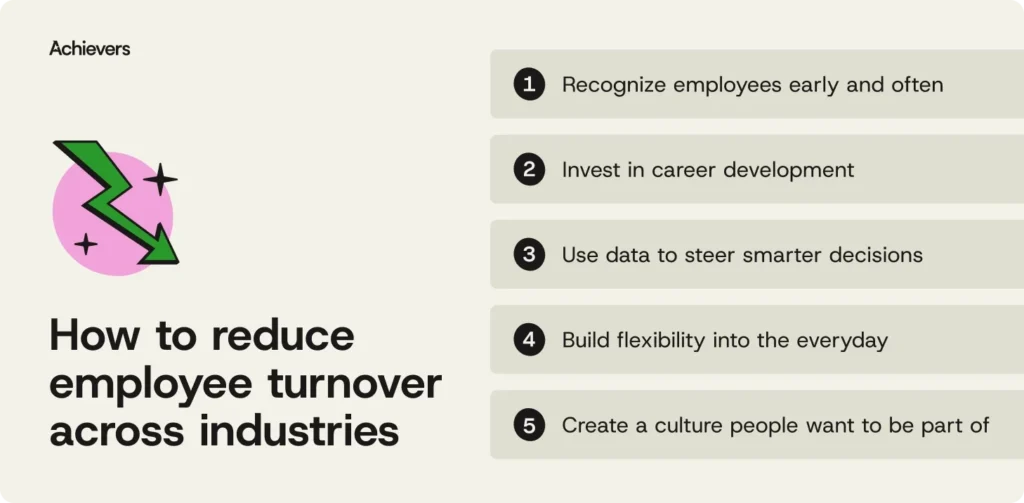
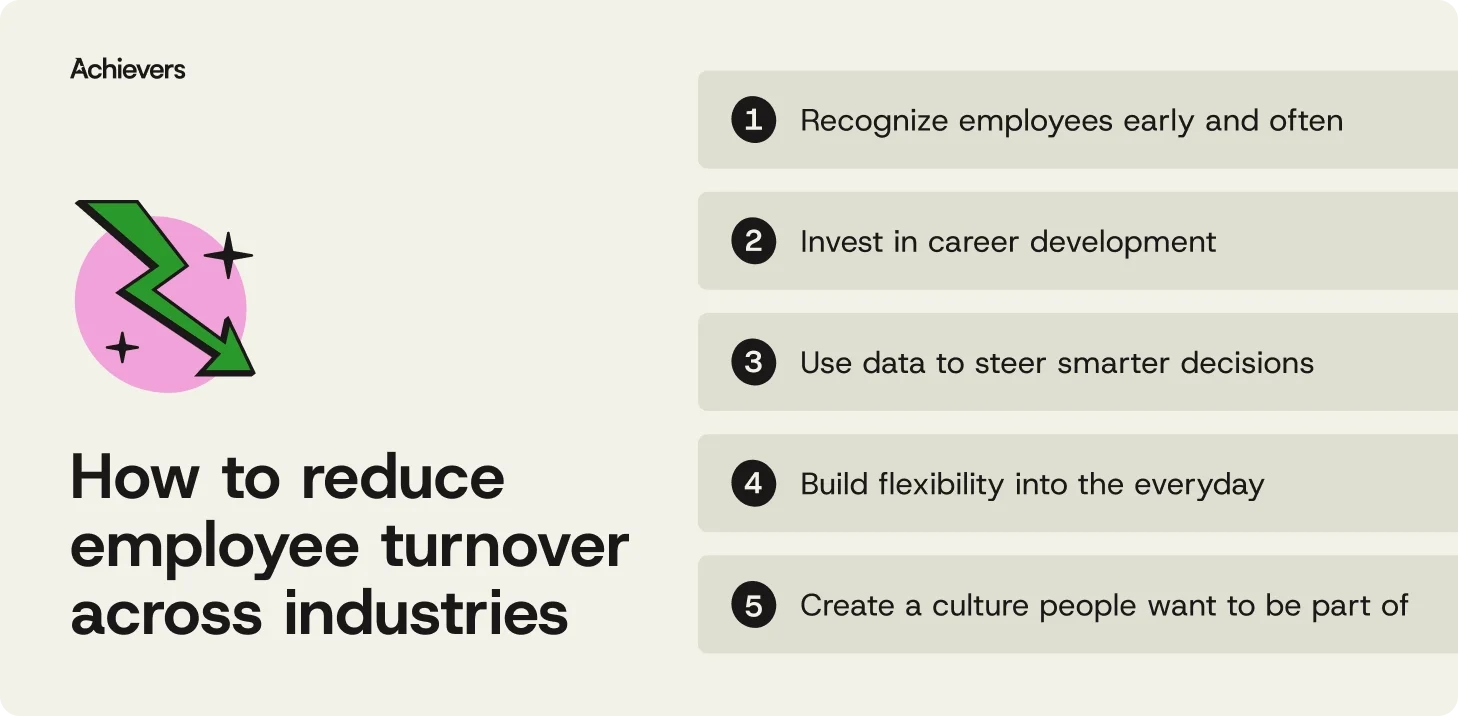
For organizations grappling with the sting of turnover, particularly in these high-impact industries, turning the tide is achievable with the right strategic approach. These proven methods focus on building engagement, fostering loyalty, and creating a workplace where top talent not only wants to stay but thrives.
-
Cultivating a Culture of Recognition and Appreciation: Recognition is far more than a morale booster; it is a powerful retention tool. Employees who feel seen and appreciated for their contributions are significantly more likely to remain with their employer. This involves recognizing achievements early, often, and meaningfully—moving beyond generic praise to specific, timely, and authentic acknowledgement that resonates with the individual. Digital recognition platforms can facilitate peer-to-peer and manager-to-employee recognition, making appreciation an integral part of daily operations.
-
Investing in Growth: Robust Career Development Pathways: To retain talent, organizations must provide compelling reasons for employees to grow within the company. Investing in career development signifies a promise of future opportunities. This includes offering structured training programs, mentorship initiatives, opportunities for cross-functional exposure, and clear, transparent pathways for advancement. When employees can visualize their long-term professional trajectory within an organization, their commitment and loyalty significantly increase.
-
Data-Driven Decisions: Leveraging People Analytics: The adage "you can’t fix what you can’t see" holds true for employee turnover. Utilizing real-time feedback mechanisms, such as pulse surveys, stay interviews, and exit interviews, combined with sophisticated people analytics, allows organizations to identify potential problems early. Predictive analytics can even flag employees at risk of leaving, enabling proactive interventions. This data-driven approach moves beyond guesswork, allowing for targeted strategies that address specific pain points before they escalate.
-
Embracing Flexibility: Redefining Work-Life Integration: The pandemic irrevocably changed perceptions of work-life balance, transforming it from a buzzword into a fundamental expectation. Organizations must integrate flexibility into their everyday operations, offering options such as hybrid work models, remote work arrangements, or flexible hours. This empowers employees to manage their personal and professional lives more effectively, reducing stress and increasing overall satisfaction and loyalty.
-
Building an Inclusive and Engaging Culture: A strong, positive workplace culture is a powerful magnet for talent. It’s built on trust, open communication, and the consistent reinforcement of shared values. This includes fostering psychological safety, where employees feel safe to express ideas and concerns without fear of reprisal, and actively promoting diversity, equity, and inclusion (DEI). Leaders play a crucial role in modeling desired behaviors and ensuring that every employee feels a sense of belonging and purpose within the organization.
-
Prioritizing Employee Well-being: A Holistic Approach: Retention is intrinsically linked to resilience. When employees feel genuinely supported—physically, mentally, and emotionally—they are far more likely to remain engaged and thrive. This means moving beyond basic benefits to comprehensive well-being programs, including access to mental health resources, stress management initiatives, employee assistance programs (EAPs), and promoting a culture that encourages healthy boundaries and self-care.
The Tangible Rewards of Retention: Beyond Cost Savings
Reducing employee turnover is not merely about plugging a financial leak; it’s about strategically cultivating a workplace where individuals are inspired to stay, contribute, and excel. The return on investment (ROI) is substantial and multifaceted.
While the direct financial savings from reduced recruitment, onboarding, and training costs are significant—potentially saving organizations hundreds of thousands to millions of dollars annually depending on their size and industry—the qualitative benefits are equally, if not more, impactful. A stable, motivated workforce translates into greater continuity in projects, deeper institutional expertise, enhanced team cohesion, and ultimately, superior service delivery, which customers invariably notice and appreciate. Conversely, high turnover chips away at morale, disrupts team dynamics, and sends valuable institutional knowledge out the door, hindering innovation and long-term strategic execution.
Consider the example of Vistex, a global software company with over 1,500 employees across 17 locations. Recognizing the critical link between employee engagement and business success, an internal survey revealed a simple yet profound insight: employees desired a better system for peer-to-peer recognition. After implementing the Achievers platform, Vistex experienced a remarkable 22% drop in turnover. This case demonstrates that sometimes the most impactful solutions stem from seemingly simple gestures, like a genuine "thank you," systematically integrated into the organizational culture.
Conclusion: A Strategic Imperative for Future Growth
While the intensity of turnover may have eased somewhat since the peak of the Great Resignation, its profound costs continue to pack a punch for industries like healthcare, financial services, manufacturing, and professional services. Indeed, no organization is entirely immune to the impact when top talent walks out the door, leaving a dent in productivity, culture, and the bottom line.
The solution lies in smarter, more intentional investment in the human capital that drives success. Organizations that lead in retention don’t merely hope for loyalty; they actively build it. This entails a proactive and continuous commitment to prioritizing employee engagement, implementing frequent and meaningful recognition, charting clear career development paths, offering flexible work options, and cultivating a vibrant culture that people genuinely want to be a part of. When these efforts are strategically grounded in real-time data and actionable insights, their effectiveness is amplified exponentially.
Platforms like Achievers are designed to remove the guesswork from engagement strategies, delivering actionable insights, facilitating high-frequency recognition, and enabling continuous feedback loops. These tools empower organizations to shape a workforce that is not only motivated to stay but also empowered to perform at its peak. Because in today’s dynamic global marketplace, keeping great people isn’t just good business practice—it is the fundamental engine for how the best businesses achieve sustainable growth and enduring success.