Human leadership is the foundation for AI success – harnessing technical power for the benefit of those we lead.
The rapid ascent of artificial intelligence (AI) is not merely a technological revolution; it is a profound mirror reflecting the essence of human leadership. While AI systems excel at processing vast datasets, identifying patterns, and executing complex tasks with unprecedented speed, they are fundamentally incapable of replicating the nuanced judgment, emotional intelligence, and relational capacities that define effective human leadership. This paradox positions leadership development at the epicenter of the current technological paradigm shift, urging a re-evaluation of what truly makes us human and how those distinct qualities become indispensable in an increasingly automated world.
The Paradox of AI: Exaggeration and Underestimation
AI is often characterized by both exaggeration and understatement. In the present, its capabilities are frequently overhyped, leading to unrealistic expectations about immediate transformative power. However, in terms of its long-term impact on the future of leadership and organizational dynamics, AI is consistently underestimated. This dichotomy creates a fertile ground for exploration, particularly for organizations and individuals focused on cultivating leadership skills.
Machine learning algorithms are designed to revolutionize decision-making processes by providing data-driven insights. Yet, they cannot replicate the intuitive, context-dependent judgments that seasoned leaders make instinctively. For instance, an AI might optimize supply chain logistics for efficiency, but it cannot foresee or manage the ripple effects of an unforeseen geopolitical event on employee morale or client relationships, which requires human empathy and strategic foresight. Similarly, while generative AI can produce content instantaneously, guiding teams to effectively and ethically integrate these tools into their workflows demands patience, mentorship, and a deep understanding of human learning curves.
Across all sectors and geographical regions, a universal question is emerging: How do we lead when our primary advantage is no longer raw intelligence, but our inherent humanity? This question underscores the critical need to identify and nurture the uniquely human attributes that AI cannot replicate.
AI as a Revealer of Leadership’s Future
The Center for Creative Leadership (CCL) is actively engaged in exploring these shifts in real-time, collaborating with leaders worldwide. Their research indicates that AI is not poised to replace leadership; rather, it is acting as a powerful catalyst, revealing the evolving requirements of effective leadership in the 21st century.
The leaders who will thrive in this new era will be those who can seamlessly bridge the gap between human and artificial intelligence. They will possess the discernment to recognize where human capabilities offer irreplaceable value and where AI can serve as a powerful amplifier of human potential. As AI systems become more sophisticated, the imperative for human leaders to lean further into their distinctly human strengths will intensify. This means cultivating the ability to build authentic connections that automated systems cannot facilitate, and transferring lived wisdom and experience that algorithms cannot replicate.
CCL is committed to empowering leaders to realize their unique human potential. Their approach involves research and experiential learning tailored to this pivotal moment, where technological advancement amplifies the essential nature of our humanity. The insights emerging from this work are not presented as definitive solutions but as acknowledgments of the inherent tensions leaders face – the delicate balance between trust and transformation, optimization and empathy, human judgment and machine intelligence. This is an ongoing dialogue, inviting broader participation.
Exploring Expert Perspectives on AI and Leadership
The conversation around AI and leadership is multifaceted, prompting critical questions that demand thoughtful consideration and expert analysis. CCL, through its extensive research and engagement with leaders, has identified several key areas of inquiry that are shaping this evolving landscape:
H2: Navigating Trust in the Age of AI
How do leaders build and maintain trust precisely when its foundations are most at risk due to the opaque nature of AI decision-making or the potential for algorithmic bias?
H2: Preserving Human Values in an Optimized World
When AI relentlessly pursues optimization, what fundamental human values and principles should leaders refuse to surrender, even in the face of potential efficiency gains?
H2: Defining the Irreducibly Human Core
As humans and AI increasingly converge and collaborate, what aspects of our being must remain fundamentally and irreducibly human to ensure ethical progress and meaningful engagement?
These questions represent the vanguard of leadership challenges, requiring leaders to cultivate a sophisticated understanding of both technological capabilities and human psychology.
The Evolving Landscape of Leadership: Data and Context
The integration of AI into the workplace is not a distant theoretical concept; it is a present reality impacting industries globally. For instance, a 2023 report by McKinsey & Company found that 55% of organizations surveyed had adopted AI in at least one business function, with a significant portion expecting further integration in the next three years. This rapid adoption is driven by the promise of enhanced productivity, cost reduction, and the potential for novel business models.
However, the implementation of AI is not without its complexities. Early adoption phases often reveal unforeseen challenges. A study by Gartner in late 2023 highlighted that while organizations are eager to leverage AI for efficiency, many struggle with the ethical implications, data privacy concerns, and the need for significant workforce reskilling. The report indicated that a primary bottleneck for AI adoption is not the technology itself, but the organizational readiness to manage its impact on people and processes.
Timeline of AI Integration and Leadership Evolution:
- Early 2010s: Emergence of machine learning as a practical tool, primarily in niche tech sectors. Leadership focus remains on traditional management principles.
- Mid-2010s: Increased adoption of AI in data analytics and customer service. Leadership begins to grapple with data-driven decision-making.
- Late 2010s: AI becomes more accessible, impacting areas like marketing and operations. Discussions around AI ethics and impact on jobs begin to surface.
- Early 2020s: Generative AI, such as large language models, explodes into public consciousness, democratizing AI capabilities. Leadership faces immediate challenges in integration, misinformation, and workforce adaptation.
- Present: Focus shifts to the strategic leadership of AI, emphasizing human-AI collaboration, ethical governance, and the cultivation of uniquely human skills. Organizations like CCL are actively researching and developing frameworks for this new paradigm.
Analyzing the Implications: A Human-Centric Approach
The implications of AI on leadership are far-reaching and necessitate a strategic, human-centric approach. While AI can automate routine tasks and provide data-driven insights, it cannot replace the essential human elements of leadership, such as:
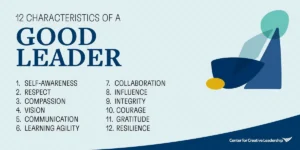
- Empathy and Emotional Intelligence: Understanding and responding to the emotions of team members, fostering psychological safety, and building strong interpersonal relationships are critical for engagement and retention. AI can analyze sentiment, but it cannot genuinely feel or express empathy.
- Ethical Judgment and Moral Compass: Leaders are responsible for making decisions that align with organizational values and societal norms. This requires a moral framework and the ability to navigate complex ethical dilemmas, which AI, as a tool, does not possess.
- Strategic Vision and Innovation: While AI can assist in forecasting and trend analysis, the ability to conceive of groundbreaking ideas, inspire teams toward a shared future, and navigate ambiguity stems from human creativity, intuition, and lived experience.
- Building Culture and Community: A thriving organizational culture is built on shared values, trust, and a sense of belonging. These are human constructs that require authentic interaction and relationship-building, beyond the reach of AI.
- Resilience and Adaptability: Leaders must guide their organizations through uncertainty and change. This requires a deep well of resilience, the ability to learn from failure, and the capacity to inspire hope and perseverance – qualities honed through human experience.
The integration of AI, therefore, presents an opportunity for leaders to elevate their roles, focusing on these uniquely human contributions. Instead of viewing AI as a competitor, leaders can leverage it as a tool to augment their capabilities, freeing up time and resources to concentrate on the people-centric aspects of leadership that drive sustainable success.
Broader Impact and Future Outlook
The ongoing integration of AI into the workplace is fundamentally reshaping the definition of work and the skills required for success. A report by the World Economic Forum estimates that by 2025, 85 million jobs may be displaced by a shift in the division of labor between humans and machines, while 97 million new roles may emerge. This underscores the critical need for continuous learning and adaptation.
Organizations that successfully navigate this transition will be those that proactively invest in developing their human capital, equipping leaders and employees with the skills to collaborate effectively with AI. This includes not only technical literacy but also enhanced critical thinking, creativity, emotional intelligence, and ethical reasoning.
The future of leadership is not about choosing between human intelligence and artificial intelligence, but about fostering a symbiotic relationship where each complements the other. Leaders who can harness the power of AI while championing their own humanity will be best positioned to guide their organizations through the complexities of the 21st century, ensuring that technological advancements serve to enhance, rather than diminish, the human experience. The journey is ongoing, and the insights gained will continue to shape the evolving landscape of leadership for years to come.