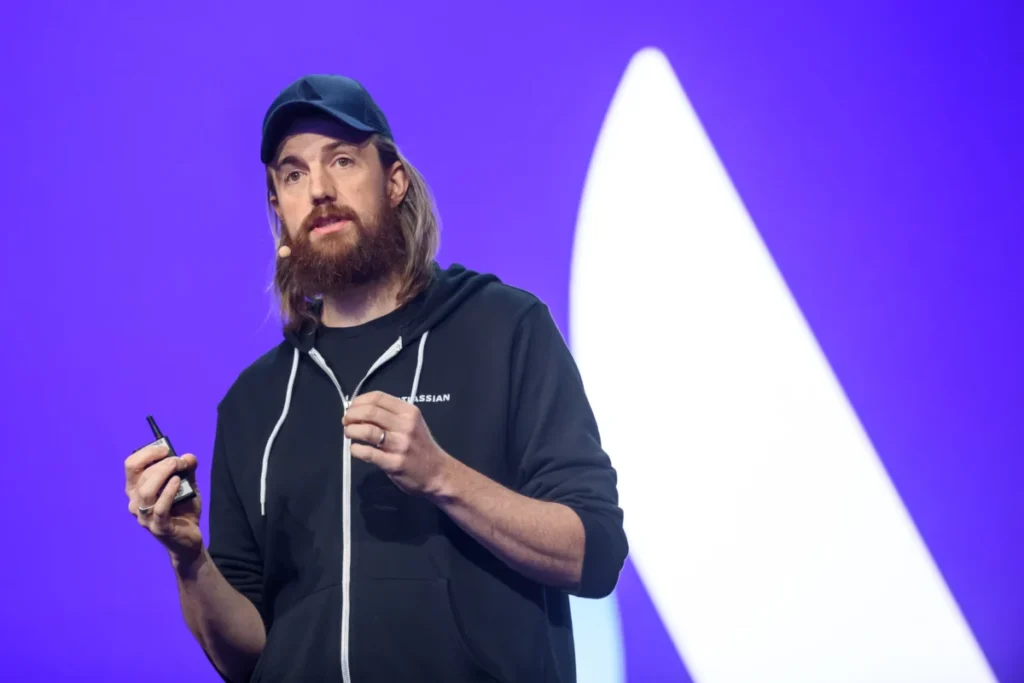
Team software provider Atlassian, a company long lauded for its progressive workplace culture and commitment to transparency, has recently found itself at the center of a significant National Labor Relations Board (NLRB) dispute. The controversy stems from the termination of engineer Denise Unterwurzacher, who was fired after posting a satirical message on an internal Slack channel criticizing CEO Mike Cannon-Brookes during a contentious company-wide re-leveling and layoff process. This incident has ignited a crucial debate about the boundaries of protected employee speech, particularly within organizations that champion an "open" and candid feedback environment, and the challenges human resources leaders face in balancing psychological safety with established civility standards.
A Critical Message During Corporate Restructuring
The core of the dispute originated during a period of considerable flux and anxiety within Atlassian. Like many tech companies navigating a challenging economic climate, Atlassian undertook a significant re-leveling and layoff process, impacting numerous employees. In this high-stakes environment, CEO Mike Cannon-Brookes reportedly addressed staff, a move that prompted engineer Denise Unterwurzacher to express her frustration through a satirical Slack message.
According to widespread reporting and documents filed with the NLRB, Unterwurzacher’s post sarcastically suggested that Cannon-Brookes, a billionaire who holds a minority stake in the NBA’s Utah Jazz, was "dialing in from his NBA team’s headquarters" to deliver a lecture to employees whose careers he had just "pummeled." The comment, while biting, was reportedly made in a channel where employees were encouraged to provide candid feedback. Atlassian, however, interpreted the remark differently, swiftly moving to terminate Unterwurzacher for what the company described as "acrimonious communications" and a "gratuitous personal attack." The firm argued that her comments violated its internal expectations for respectful conduct, thereby warranting her dismissal.
The Clash of Values: "Open Company, No Bullshit" vs. Corporate Policy
Denise Unterwurzacher’s defense hinges on Atlassian’s deeply ingrained corporate value: "Open Company, No Bullshit." This principle, prominently displayed on the company’s website and often cited as a cornerstone of its culture, encourages employees to speak directly, challenge ideas, and provide honest feedback without fear of retribution. Unterwurzacher contends that her satirical critique, though sharp, was entirely consistent with this stated value and, more critically, should be considered protected workplace criticism under federal labor law.
The legal test in such cases, as interpreted by the NLRB, is not whether the comment was polite, professional, or even "rude," but rather whether it was connected to working conditions and addressed collective employee concerns. In the context of widespread layoffs and a re-leveling process, employee morale, job security, and executive decision-making directly relate to working conditions. The dispute now before the National Labor Relations Board is poised to test the limits of what constitutes protected speech within an "open culture" before it crosses into unprotected personal abuse. This case is not merely about a single employee’s termination; it’s about defining the evolving boundaries of corporate discourse and the enforceability of aspirational company values when they clash with disciplinary actions.
A Broader Context: The Tech Industry’s Reckoning with Dissent
The Atlassian incident is not an isolated event but rather a symptom of a larger trend within the tech industry, which has grappled with internal dissent and labor issues in recent years. The past few years have seen an unprecedented wave of layoffs across major tech giants, including Google, Meta, Amazon, and Salesforce, as companies adjust to shifting economic realities and post-pandemic growth corrections. This period of corporate restructuring has often been met with significant employee pushback, ranging from internal petitions and open letters to formal complaints filed with labor authorities.
This environment has exposed a fundamental tension between the "move fast, break things" ethos and the often-idealized "open culture" promoted by many tech companies, and the realities of employment law. When companies encourage open feedback and transparency, they implicitly create an expectation that employees can speak candidly, even critically, about company decisions and leadership. However, when that criticism is directed at top executives, especially during sensitive periods like layoffs, the response can often be swift and punitive, leading to accusations of retaliation.
Legal Framework: Understanding "Concerted Activity" under the NLRA
The National Labor Relations Board (NLRB) plays a critical role in adjudicating disputes like the one at Atlassian. Established by the National Labor Relations Act (NLRA) of 1935, the NLRB is an independent federal agency tasked with protecting employees’ rights to organize and engage in "concerted activities for the purpose of collective bargaining or other mutual aid or protection." This protection extends beyond formal union organizing and covers a broad range of collective or even individual actions intended to benefit a group of employees.
"Concerted activity" can include discussions among employees about wages, hours, and working conditions; circulating petitions; staging walkouts; or, as in Unterwurzacher’s case, making critical comments about management decisions that affect the collective workforce. The key is whether the communication or action is related to employees’ shared interests as workers, rather than purely individual grievances. The NLRA aims to foster an environment where employees can collectively address workplace issues without fear of reprisal. Unlike government workers, private-sector employees have very limited workplace protections when it comes to speech and political activity unless that speech falls under the purview of protected concerted activity. This distinction is crucial, as employers generally have broad discretion to terminate "at-will" employees, but this discretion is limited when the termination is in response to protected concerted activity.
Past Precedents: Tesla, SpaceX, and Amazon’s Encounters with the NLRB
The Atlassian case echoes numerous high-profile NLRB disputes involving other prominent tech companies, demonstrating a recurring pattern where internal criticism of executives during restructurings tests the boundaries of protected "concerted activity."
-
Tesla and Elon Musk: The electric vehicle giant has repeatedly faced scrutiny from the NLRB. In 2021, the Board found that Elon Musk’s 2018 tweet suggesting that workers could lose stock options if they unionized was an unlawful threat, violating federal labor law. The NLRB also ordered Tesla to reinstate a fired union activist and to formally direct Musk to delete the offending tweet. Further complaints detailed Tesla’s alleged discipline of pro-union employees and its scrutiny of Musk’s own anti-union messaging, highlighting a pattern of attempting to suppress labor organizing. These cases underscore the NLRB’s willingness to hold even high-profile executives accountable for statements that could be perceived as interfering with employees’ rights.
-
SpaceX: In 2022, SpaceX faced charges for terminating employees who had authored and circulated an open letter critical of the company and its CEO, Elon Musk. The letter reportedly described Musk’s behavior as a "frequent source of distraction and embarrassment" and urged the company’s leadership to address what they perceived as a toxic culture. While initially a significant case, these charges were dismissed earlier this year on the grounds that the NLRB lacked jurisdiction over SpaceX. The specific reasons for this jurisdictional relinquishment were complex, likely tied to arguments about the nature of SpaceX’s work or its status as a government contractor, creating a carve-out that prevented the NLRB from fully adjudicating the dispute.
-
Amazon: The e-commerce behemoth is no stranger to NLRB action and settlements over alleged retaliation tied to worker protest activity and organizing. Amazon has faced numerous complaints regarding its treatment of warehouse workers who have attempted to unionize or collectively push back against workplace rules and conditions. These cases often involve allegations of illegal surveillance, interrogation, and termination of employees engaged in protected activities, leading to significant settlements and orders for Amazon to post notices informing employees of their rights. The consistent flow of these disputes illustrates the ongoing tension between corporate management and worker advocacy in large, rapidly growing companies.
Implications for HR Leaders: Navigating a Minefield
The Atlassian incident crystallizes three structural tensions that human resources leaders across industries, particularly in tech, are increasingly wrestling with:
-
Psychological Safety vs. Civility Standards: Atlassian’s "speak freely" culture, designed to foster psychological safety, encouraged employees to voice opinions openly. Yet, Unterwurzacher was disciplined for the tone of her message rather than its underlying substance, which clearly related to working conditions. HR leaders often find that messaging promoting psychological safety and open dialogue expands employee expectations faster than clear policy boundaries can be established. The legal question here is whether content pertaining to working conditions remains protected, even when phrased sharply or satirically. For HR, this means proactively defining and communicating what constitutes acceptable discourse, especially during times of high stress and corporate change, and ensuring that disciplinary actions are consistent and perceived as fair.
-
Values Language vs. Policy Enforceability: Atlassian’s "Open Company, No Bullshit" is a culturally expansive value statement, aiming to inspire directness. However, specific conduct policies are typically much narrower, focusing on professionalism, respect, and avoiding personal attacks, and are designed to be strictly enforceable. When these two elements are misaligned, employees may interpret broad corporate values as permission for unbridled critique, while HR, operating within the confines of established policy, relies on these policies as guardrails. This disconnect can lead to significant misunderstandings and perceptions of hypocrisy, eroding employee trust in both leadership and HR. It underscores the critical need for values to be translated into clear, actionable policies that are consistently applied.
-
Power Asymmetry and Tone Policing: The employee, as reported by the Daily Mail, argued that it is "difficult to point out the power imbalance" inherent in a layoff scenario without being accused of making a personal attack. This highlights a critical issue where HR decisions can appear inconsistent: criticism of executives often elicits a different emotional and disciplinary response than peer-to-peer comments. This "tone policing" can disproportionately affect employees attempting to voice legitimate concerns about leadership decisions, particularly those that have a direct impact on their livelihoods. HR departments must develop calibration standards that are documented and applied consistently across all levels of the organization, ensuring that feedback, even when directed upwards, is evaluated based on its content related to working conditions rather than solely on its perceived "tone."
Official Responses and Potential Outcomes
As the case progresses through the NLRB, Atlassian will likely maintain its stance that Unterwurzacher’s comments constituted a personal attack that violated its conduct expectations and that her termination was justified. Unterwurzacher, supported by the NLRB’s investigation, will argue that her criticism was protected concerted activity.
The NLRB process typically involves an investigation by a regional office, followed by the issuance of a complaint if merit is found. The case then proceeds to a hearing before an administrative law judge (ALJ), whose decision can be appealed to the full five-member NLRB in Washington, D.C. Ultimately, a federal appeals court may review the NLRB’s final decision.
If the NLRB finds in favor of Denise Unterwurzacher, potential remedies could include her reinstatement to her former position, back pay for lost wages, and a requirement for Atlassian to post notices informing employees of their rights under the NLRA. Such an outcome would not only be a significant legal victory for Unterwurzacher but would also carry substantial reputational implications for Atlassian, forcing a re-evaluation of its "Open Company, No Bullshit" culture and its internal communication policies. Conversely, if the NLRB sides with Atlassian, it could set a precedent that limits the scope of protected speech within open corporate cultures, potentially chilling employee dissent in similar circumstances.
Conclusion: Redefining Workplace Discourse
The Atlassian NLRB dispute is a microcosm of the larger societal conversation about the evolving nature of work, power dynamics, and free speech in the modern workplace. It underscores the inherent complexities for companies striving to foster transparency and psychological safety while simultaneously enforcing standards of conduct. The outcome of this case will not only have direct consequences for Atlassian and Denise Unterwurzacher but will also serve as a crucial benchmark for how the National Labor Relations Board interprets and enforces employee protection in an era where internal communication channels like Slack have become central to workplace discourse. HR leaders across the globe will be watching closely, as this case provides a critical lesson in the importance of aligning corporate values with enforceable policies, ensuring consistency in disciplinary actions, and proactively defining the nuanced boundaries of protected employee speech.