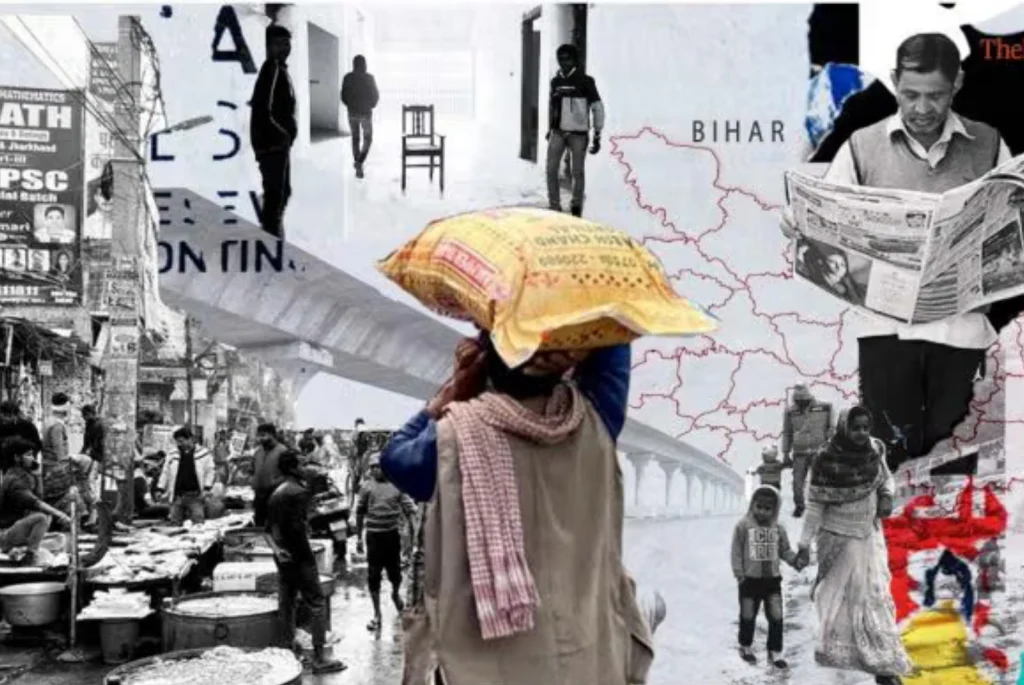
The intense competition for government jobs in Bihar is not merely a reflection of individual aspirations but highlights a much wider and more profound challenge facing the state’s burgeoning young workforce. While hundreds of thousands of candidates vie for a limited number of coveted government positions, the underlying issue is the alarmingly low participation of young people in the broader labour market, indicating structural deficiencies that extend far beyond the public sector. This disparity, characterized by an insatiable demand for secure public employment against a backdrop of scarce opportunities, poses significant socio-economic implications for one of India’s most populous and youngest states.
Deciphering the Data: Bihar’s Youth Labour Force Participation Trends
The latest available data from the Periodic Labour Force Survey (PLFS) paints a stark picture of Bihar’s youth employment landscape. In 2025, Bihar’s youth unemployment rate, for those aged 15-29, stood at 12.1 per cent. While this figure is concerning, the more critical indicator is the state’s youth labour-force participation rate (LFPR), which registered a mere 34.3 per cent for the same age group. This figure is significantly below the national average of 46 per cent, underscoring a fundamental disconnect between Bihar’s demographic profile and its economic reality. A low LFPR implies that a substantial portion of the youth population is neither employed nor actively seeking employment, raising questions about their engagement in productive economic activities or their preparedness for the workforce.
The trend in Bihar’s youth LFPR over recent years reveals a fluctuating but generally upward trajectory, albeit from a very low base. In the 2017-18 period, youth LFPR was at a modest 24.4 per cent. It saw a slight improvement to 27.6 per cent in 2018-19, before experiencing a dip to 25.7 per cent in 2020-21, likely influenced by the economic disruptions caused by the global pandemic. Post-pandemic recovery saw a more significant climb to 34.6 per cent in 2023-24, stabilizing at 34.3 per cent in 2025. While any increase is positive, the persistent gap with the national average highlights that Bihar’s recovery and growth in youth labour force engagement remain insufficient to leverage its demographic dividend fully. This persistent low participation points to deeper structural issues within the state’s economy and educational ecosystem.
The Allure of Public Service: A Cultural and Economic Phenomenon
The growing preference for government employment in Bihar is not a recent phenomenon but a deeply ingrained cultural and economic reality. For generations, public sector jobs have represented a pinnacle of career aspirations, offering a unique combination of job security, stable income, predictable career progression, comprehensive benefits (including pensions), and, crucially, social status and respect within the community. In a state where private sector growth has historically lagged, and opportunities in organized industry are limited, government jobs are perceived as a safe haven from economic uncertainties and a reliable path to upward mobility.
This societal value attached to government service is evident from the overwhelming scale of competition witnessed in recruitment examinations conducted by the Bihar Public Service Commission (BPSC). The numbers are staggering and consistently illustrate the immense pressure on the public sector to absorb a vast pool of qualified, yet underemployed, youth.
The Battlefield of Examinations: A Chronology of BPSC Competition
The BPSC Combined Competitive Examinations (CCE) serve as a vivid barometer of this intense demand. A chronological examination of recent CCEs underscores the persistent mismatch between the supply of government jobs and the fervent demand:
- 67th BPSC CCE (2021-22): Approximately 4.8 lakh (480,000) candidates competed for a mere 802 positions. This translated to an astonishing applicant-to-post ratio of nearly 600:1, making it one of the most competitive examinations in the country.
- 68th BPSC CCE (2022-23): The competition remained exceptionally high, with around 2.6 lakh (260,000) candidates vying for just 324 posts, pushing the ratio to over 800:1. This particular cycle saw a reduction in vacancies, further intensifying the scramble for positions.
- 69th BPSC CCE (2023-24): Despite a slight increase in vacancies to 475, the applicant pool remained substantial, with about 1.9 lakh (190,000) candidates appearing for the examination.
- 70th BPSC CCE (2024-25): Even when vacancies increased significantly to 2,035 posts, the demand remained immense, attracting around 3.3 lakh (330,000) candidates. This suggests that while more positions alleviate some pressure, the fundamental desire for government employment remains undiminished.
- 71st BPSC CCE (Latest Cycle, 2025): The trend continued, with approximately 3.2 lakh (320,000) candidates appearing for 1,298 vacancies, once again highlighting the sustained and overwhelming interest in public sector roles.
These figures represent more than just statistics; they embody the hopes, dreams, and anxieties of millions of young Biharis who dedicate years to rigorous preparation, often foregoing other career paths, in pursuit of this elusive security. The ongoing protests over BPSC examinations, alleged irregularities, vacancy numbers, and recruitment processes are therefore not isolated incidents of dissatisfaction with a single examination cycle. They are symptomatic of deeper concerns around access to stable employment and the limited, often perceived as unfair, opportunities available to Bihar’s growing young workforce.
Underlying Structural Challenges: Why Bihar Lags
Bihar’s persistent struggle with low youth LFPR and an overreliance on government jobs can be attributed to a confluence of deep-seated structural challenges:
- Economic Structure and Industrialization: Bihar’s economy remains predominantly agrarian, with a large portion of its workforce engaged in agriculture, often characterized by disguised unemployment and low productivity. The state has historically struggled to attract significant private sector investment and develop a robust manufacturing or services sector that can generate high-quality, formal jobs on a large scale. Factors such as inadequate infrastructure, land acquisition issues, perceived bureaucratic hurdles, and a historical lack of industrial policy focus have hindered diversification.
- Quality of Education and Skill Mismatch: While enrollment rates in primary and secondary education have improved, concerns persist regarding the quality of education imparted. Many graduates emerge from educational institutions lacking the practical skills, critical thinking, and vocational training required by modern industries. There is a significant disconnect between the academic curriculum and the evolving demands of the job market, leaving a large segment of youth unprepared for roles outside traditional sectors.
- Lack of Entrepreneurship Ecosystem: A robust economy thrives on entrepreneurship, which creates new businesses and jobs. Bihar’s ecosystem for fostering entrepreneurship – including access to finance, mentorship, incubators, and supportive government policies – is still nascent. This limits the emergence of job creators from within the state.
- Inadequate Infrastructure: While improvements have been made, critical infrastructure gaps in terms of reliable electricity, robust transportation networks, and digital connectivity continue to impede industrial growth and the establishment of businesses that could offer diverse employment opportunities.
- High Population Density and Demographic Pressure: Bihar is one of the most densely populated states in India with a very young demographic profile. This demographic dividend, if not harnessed effectively through education, skill development, and job creation, can quickly turn into a demographic burden, exacerbating unemployment and social stress.
- Migration as a Coping Mechanism: For decades, Bihar has been a source of significant out-migration, with a large number of its youth moving to other states in search of better economic opportunities. While migration provides remittances and eases some local unemployment pressure, it also represents a loss of human capital for the state, further hindering its development.
Perspectives from Stakeholders
Addressing Bihar’s complex employment challenge requires a multi-faceted approach and collaboration among various stakeholders.
- Government’s Stance: State government officials frequently acknowledge the challenge while emphasizing ongoing efforts to improve the situation. Initiatives like the ‘Saat Nishchay’ (Seven Resolves) program, which focuses on youth skill development, higher education, electricity, roads, and women’s empowerment, are often highlighted. The Bihar Skill Development Mission aims to equip youth with industry-relevant skills. Officials often point to efforts in improving the ease of doing business, attracting investment through investor summits, and promoting sectors like tourism, IT, and food processing. "We are committed to transforming Bihar into an economic powerhouse," a senior government spokesperson might state. "Our focus is not just on government jobs, but on creating a vibrant ecosystem where the private sector can flourish, and our youth have diverse opportunities. Skill development and entrepreneurship are key pillars of our strategy."
- Economists’ Analysis: Economists and policy experts often stress the need for deeper structural reforms. Dr. Alok Kumar, a Patna-based economist, might observe, "The low youth LFPR in Bihar is a critical indicator of underutilization of human capital. While the aspiration for government jobs is understandable due to perceived security, the state must aggressively promote private sector growth. This requires significant investment in education quality, vocational training aligned with industry needs, and creating a truly business-friendly environment that goes beyond mere rhetoric. Otherwise, Bihar risks missing its demographic dividend and perpetuating a cycle of underdevelopment." They also point out that the state cannot indefinitely expand government employment; a sustainable solution lies in a thriving private sector.
- Youth Voices: The youth themselves express a mix of hope, frustration, and pragmatism. Rakesh Roshan, a 24-year-old preparing for the BPSC, says, "There’s immense pressure from family and society to get a government job. The private sector offers fewer stable options, and many jobs are low-paying. We spend years studying, hoping for security. But the competition is brutal, and the recruitment process can be slow and disheartening." Another student, Priyanka Devi, aspiring for a teaching role, adds, "We want opportunities, not just promises. The government should focus on bringing more industries here, so we don’t have to leave our homes to find work." These voices underscore the deep-seated yearning for stability and the perceived lack of viable alternatives.
- Education Experts: Academics and educationists highlight the need for curriculum reform. Professor Sanjay Singh, a former university dean, might argue, "Our education system still largely focuses on rote learning and theoretical knowledge. We need to integrate practical skills, digital literacy, and vocational training right from the school level. Universities must collaborate with industries to design courses that are relevant to current and future job markets. Without this fundamental shift, we will continue to produce graduates who are academically qualified but practically unemployable in many sectors."
Broader Socio-Economic Implications
The implications of Bihar’s youth employment challenge extend far beyond individual career paths:
- Economic Stagnation: A low LFPR translates to a smaller productive workforce, lower overall productivity, and reduced per capita income for the state. This hinders economic growth and limits the state’s capacity to generate revenue for public services.
- Social Unrest and Disillusionment: The widespread frustration among educated but unemployed youth can lead to social unrest, disillusionment, and a sense of hopelessness. This demographic segment, if not constructively engaged, can become vulnerable to various forms of social disaffection.
- Brain Drain: The continued migration of skilled and educated youth to other states or abroad represents a significant loss of human capital for Bihar. This ‘brain drain’ deprives the state of its most dynamic and innovative minds, further impeding its development potential.
- Demographic Trap: If the state fails to provide meaningful employment opportunities for its large youth population, the demographic dividend—a period of economic growth spurred by a large working-age population—could turn into a demographic trap, placing immense pressure on social services and resources without commensurate economic benefits.
- Pressure on Public Finances: The relentless demand for government jobs places unsustainable pressure on public finances. Creating more public sector positions without a corresponding increase in the tax base is economically unviable in the long run.
- Delayed Marriage and Family Formation: Economic insecurity often leads to delays in marriage and family formation, impacting social structures and demographic trends.
Pathways to Progress: Policy Recommendations and Future Outlook
Addressing Bihar’s youth employment crisis requires a comprehensive, multi-pronged strategy that goes beyond merely increasing government job vacancies:
- Diversifying the Economy and Industrialization: The state must aggressively pursue policies to attract and nurture private sector investment in manufacturing, services (especially IT, tourism, and healthcare), and agro-based industries. This includes improving infrastructure, streamlining regulatory processes, and offering targeted incentives.
- Robust Skill Development and Vocational Training: A massive overhaul of the skill development ecosystem is crucial. This involves establishing more vocational training centers, aligning their curricula with industry demands, fostering public-private partnerships for training, and promoting apprenticeship programs. Focus should be on future-ready skills, including digital literacy, data analytics, and green technologies.
- Fostering an Entrepreneurship Ecosystem: Creating a supportive environment for startups and small and medium-sized enterprises (SMEs) is vital. This includes easier access to credit, mentorship, incubation centers, simplified registration processes, and procurement policies that favor local businesses. The goal should be to encourage youth to become job creators, not just job seekers.
- Improving Educational Quality and Relevance: Fundamental reforms in the education sector, from primary to higher education, are necessary. This includes improving teaching quality, focusing on critical thinking and problem-solving, and integrating practical and vocational components into the curriculum. Career counseling should be strengthened to guide students towards diverse career paths.
- Leveraging Technology and Digital Economy: Promoting digital literacy and creating opportunities in the gig economy and remote work can provide flexible employment options, especially for youth in rural areas. Investment in digital infrastructure is paramount.
- Agriculture Modernization and Value Addition: Given its agrarian base, modernizing agriculture, promoting food processing industries, and focusing on value-added agricultural products can create significant employment opportunities in rural areas.
- Gender-Inclusive Policies: Specific interventions are needed to increase female labour force participation, which often lags significantly. This includes ensuring safety, providing childcare support, and promoting women’s entrepreneurship.
In conclusion, Bihar stands at a critical juncture. The intense competition for government jobs is a visible symptom of a deeper malaise: the underutilization of its vast youth potential. While the allure of stable public sector employment remains powerful, a sustainable and prosperous future for Bihar hinges on its ability to create a dynamic, diversified economy that offers a multitude of high-quality opportunities across various sectors. This requires bold policy decisions, strategic investments, and a concerted effort to transform its demographic dividend into a true engine of growth and development, ensuring that its young people are not just aspirants for government roles, but active participants and innovators in a thriving economy.