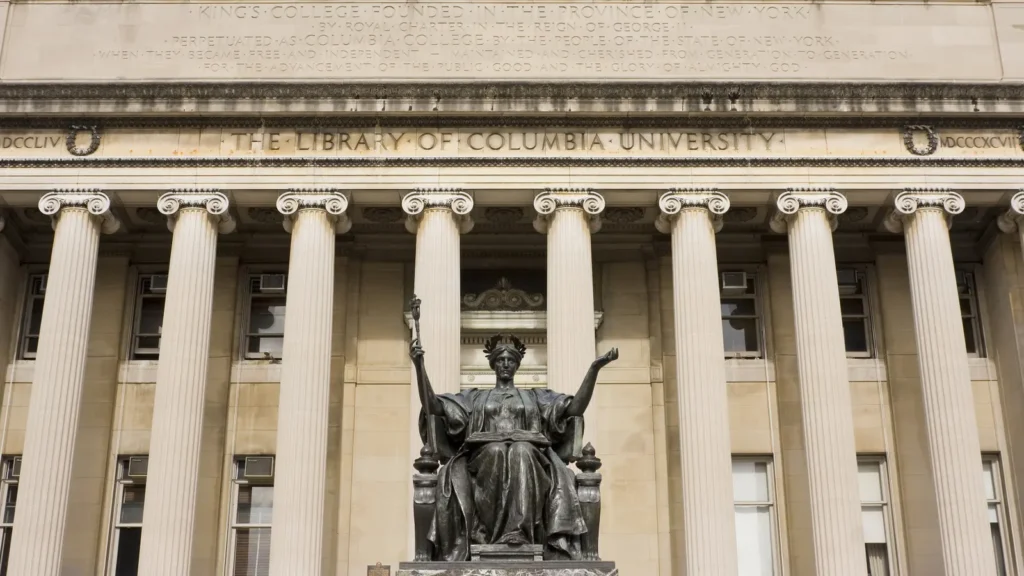
Columbia University is confronting a significant civil rights lawsuit, filed by a coalition of current and former students and employees, who accuse the venerable Ivy League institution of acting with "deliberate indifference" toward the pervasive harassment of Palestinians on its campus. The complaint, lodged in the New York County Supreme Court this past Monday, asserts that far from mitigating the issue, Columbia "actively participated in and amplified the racially, ethnically, and politically motivated targeting of Palestinian students, staff, and faculty." Plaintiffs are seeking not only judicial intervention to rectify these alleged systemic failures but also significant damages for the emotional and academic distress they claim to have endured.
This lawsuit arrives at a moment of intense scrutiny for American higher education, particularly following the eruption of the Israel-Hamas conflict in October 2023. Campuses nationwide, including Columbia, have become flashpoints for protests, counter-protests, and fervent debates surrounding free speech, antisemitism, and anti-Palestinian sentiment. Universities find themselves in an increasingly precarious position, attempting to uphold academic freedom and diversity while navigating accusations of discrimination from various student groups and facing immense political pressure from external stakeholders.
A History of Campus Tensions and Prior Legal Challenges
Columbia University’s current legal predicament is not an isolated incident but rather the latest in a series of challenges regarding its handling of discrimination and harassment allegations. The institution has previously faced accusations of failing to protect its students and staff, highlighting a persistent struggle to foster an inclusive and safe environment for all.
Just months prior to this new lawsuit, in February 2024, Columbia settled a high-profile lawsuit brought by Jewish students. These students had alleged that the university was not adequately addressing incidents of antisemitism on campus, leading to a hostile educational environment. The settlement underscored the ongoing difficulties universities face in balancing the rights and safety of diverse student populations.
Furthermore, in the summer of 2023, Columbia entered into a wide-ranging agreement with the Trump administration. This accord was designed to resolve civil rights investigations into antisemitism on its campus, enabling the university to restore its federal research funding. These previous engagements reveal a pattern of external intervention and internal policy adjustments in response to allegations of discrimination, setting a complex backdrop for the current legal action brought by Palestinian affiliates.
When approached for comment on the newly filed litigation, Columbia University, through its representatives, declined to speak on pending legal matters, maintaining its standard policy.
The Troubling Role of the Office of Institutional Equity (OIE)
A central pillar of the plaintiffs’ complaint revolves around the actions and policies of Columbia’s Office of Institutional Equity (OIE). The university established the OIE in August 2024, ostensibly to address issues of discrimination and harassment. However, according to the lawsuit, the OIE quickly became a tool for the very targeting it was meant to prevent.
Plaintiffs allege that campus members, particularly those expressing pro-Palestinian viewpoints, began receiving notifications of OIE investigations for conduct that constituted "protected speech and lawful advocacy." Examples cited include writing opinion pieces urging divestment from Israel, a common form of political expression on university campuses. This raised immediate concerns about the OIE’s impartiality and its potential to stifle legitimate discourse.
A particularly contentious policy implemented by the OIE, as detailed in the lawsuit, required students and employees facing accusations of discrimination to sign non-disclosure agreements (NDAs) simply to view the evidence against them or to communicate with the officials conducting the investigation. The plaintiffs argue that this policy had a profoundly chilling effect, operating "to suppress the speech of Palestinian community members who are disproportionately subjected to OIE investigation, and to prevent them from seeking support, legal counsel, or community assistance in connection with those proceedings." Such a requirement, it is argued, creates an unequal playing field and isolates individuals during critical investigations.
Moreover, the lawsuit claims that evidence supporting many of the disciplinary investigations opened against Palestinian students and employees was "markedly thin," suggesting that probes were initiated on flimsy pretexts or in response to protected political expression rather than genuine discriminatory conduct.
The case of Layla Saliba, a 2025 graduate of Columbia’s social work program and one of the plaintiffs, serves as a stark illustration of these alleged systemic issues. In October 2024, Saliba was informed by the OIE that she was under investigation for alleged discriminatory behavior. Crucially, the lawsuit states that "the investigation was initially premised on an opinion piece on Palestine that Saliba did not write." Despite this fundamental error, the OIE reportedly expanded its probe to encompass "her published writing, her social media, and her communications as a student leader," indicating an overreach and a fishing expedition into her protected activities. While Saliba was ultimately cleared seven months later, the OIE allegedly maintained a hold on her academic transcript, effectively preventing her from submitting it to prospective employers or applying to graduate schools. This administrative action had severe, tangible consequences for her academic and professional future, even after her exoneration.
Allegations of Unequal Treatment and Viewpoint Discrimination
Beyond the OIE’s operational practices, the lawsuit levels accusations of profound viewpoint discrimination and unequal treatment by Columbia’s administration. Plaintiffs contend that the university exhibited a clear disparity in its response to pro-Palestinian groups versus other campus organizations and in its handling of anti-Palestinian harassment compared to other forms of discrimination.
A key piece of evidence cited is Columbia’s decision to suspend two prominent pro-Palestinian campus groups – Students for Justice in Palestine (SJP) and Jewish Voice for Peace (JVP) – following campus demonstrations. The lawsuit argues that this action was discriminatory, especially given that other student organizations engaged in advocacy were permitted "to operate without comparable restriction." This selective enforcement, according to the plaintiffs, highlights a bias against pro-Palestinian activism.
Further underscoring this perceived imbalance, the complaint points to the university’s establishment of an antisemitism task force. While acknowledging the importance of addressing antisemitism, the lawsuit criticizes Columbia’s "deliberate refusal" to create a similar body specifically dedicated to addressing the concerns and experiences of Palestinian campus members. This perceived lack of parity, the plaintiffs argue, sent a clear message that Palestinian experiences of harassment and discrimination were not afforded the same institutional priority.
The antisemitism task force itself, the lawsuit alleges, inadvertently or directly "perpetuated anti-Palestinian harassment." Initially, the task force reportedly "resisted defining the term ‘anti-Semitism’ in any principled or legally coherent manner," contributing to ambiguity. However, it eventually recommended that Columbia adopt a formal definition by the International Holocaust Remembrance Alliance (IHRA). This recommendation was subsequently embraced by university leaders, who, according to the lawsuit, then utilized it to "conflate criticism of Israel and Zionism with antisemitism."
The IHRA definition itself is a subject of considerable international debate. While it states that criticism of Israel "similar to that leveled against any other country" does not constitute antisemitism, its illustrative examples include comparing "contemporary Israeli policy" to Nazi Germany. This nuance is often lost in implementation. While favored by some Jewish advocacy groups and previously endorsed by the Trump administration, a broad coalition of free speech and civil rights organizations argues that the IHRA definition, particularly in its practical application, can be misapplied to categorize protected speech critical of Israel and its policies as antisemitic.
Kenneth Stern, the lead drafter of the IHRA definition and head of Bard College’s Center for the Study of Hate, has frequently and publicly cautioned against its use to enforce anti-discrimination laws on campus. He has specifically warned that such application could be "misapplied" to restrict classroom instruction and discussion, thereby undermining academic freedom.
The lawsuit asserts that Columbia’s adoption and application of the IHRA definition subjected the plaintiffs to "false accusations of antisemitism," thereby creating "a pervasive climate of fear and self-censorship with respect to their academic work." As a direct consequence, many plaintiffs reportedly suppressed or modified their research, coursework, and collaborations with colleagues "out of a well-founded fear of being subjected to OIE investigation and institutional discipline." This alleged chilling effect on academic freedom represents a grave concern for the integrity of university life.
Allegations of Doxxing, Harassment, and Unanswered Calls for Help
The plaintiffs’ complaint vividly details the university’s alleged failure to protect students and employees from severe doxxing campaigns and relentless harassment, often orchestrated by individuals employed by or affiliated with Columbia itself. According to the lawsuit, calls for aid and intervention from administrators were frequently met with "radio silence."
Maryam Alwan, a 2025 graduate and another plaintiff, reportedly sought university support amidst repeated doxxing and harassment by Columbia affiliates. Her numerous emails to university officials allegedly went unanswered, highlighting a perceived institutional indifference. However, the lawsuit notes a peculiar shift: multiple administrators suddenly reached out with offers of support shortly after Alwan was interviewed by CBS News about her experiences on campus. Yet, when she followed up on these offers, her requests for aid were again ignored, suggesting a performative rather than substantive response to public scrutiny.
Alwan’s ordeal further extended to facing half a dozen disciplinary investigations and actions, five of which were eventually dismissed or lifted. Disturbingly, the lawsuit alleges that the final investigation, opened by the OIE after she graduated, placed her on "conditional disciplinary probation" for the very emails she had sent administrators detailing the harassment she had endured. This punitive action for seeking help paints a troubling picture of victim-blaming and institutional retaliation.
The plaintiffs also criticize Columbia’s slow and inadequate response to the broader doxxing crisis. While the university announced the formation of a doxxing task force in November 2023, it did not adopt a formal anti-doxxing policy until March 2025. Crucially, this new policy was not applied retroactively, leaving countless students who had been targeted during the intervening months without institutional protection or recourse, effectively leaving them "in the lurch."
The lawsuit identifies Shai Davidai, a former Columbia business professor, as "one of the driving forces behind the harassment they faced and the doxxing of their information." Davidai, an Israeli citizen and a vocal critic of pro-Palestinian demonstrators, frequently used social media to criticize protesters, often by name. His actions drew significant attention and controversy. Columbia initiated an investigation into Davidai’s conduct in February 2024. In October of the same year, the university temporarily revoked Davidai’s access to campus after he "repeatedly harassed and intimidated University employees," as stated by a university spokesperson at the time. However, his status and pay as an active faculty member remained unchanged. Despite the gravity of the allegations, Columbia abruptly closed the case the following summer, failing to share its findings. Davidai ultimately departed the university in July 2025.
In response to the lawsuit, Davidai issued a strong denial on Tuesday, labeling the complaint "lie-riddled" and characterizing it as part of "an anti-Jewish, anti-Israeli, and anti-American campaign" waged by the plaintiffs. He emphatically stated, "I have never doxxed anyone, and I never would. I urge the plaintiffs, who clearly harbor a personal grudge against Jewish and Israeli members of the Columbia community, to look up what that word actually means." This stark difference in narratives underscores the deep divisions and conflicting interpretations of events on campus.
The personal toll on the plaintiffs, as outlined in the lawsuit, has been severe. They report suffering from PTSD, panic attacks, chronic difficulty sleeping, recurring nightmares, significant weight loss, and even hospitalization as a direct result of the alleged doxxing and harassment campaigns. The human cost of these campus tensions is clearly immense.
Bahia Munem, a former lecturer at Columbia’s Center for the Study of Ethnicity and Race, represents another tragic example of the alleged institutional failures. The lawsuit states that Munem ultimately resigned two years before the completion of her contract, citing "institutional indifference to protracted harassment." The complaint laments, "A scholar who had been recognized, promoted, and extended by Columbia was forced to leave the institution she had served for four years because Columbia refused to protect her."
Undue Influence from Political Actors and FERPA Violations
Columbia University has faced unprecedented public scrutiny, not only as the epicenter of the pro-Palestinian student encampments that dramatically unfolded in spring 2024 but also for its broader response to the ensuing backlash. The plaintiffs in this lawsuit argue that outside political influences, including federal lawmakers and former President Donald Trump, improperly swayed how Columbia responded to pro-Palestinian protests and the harassment of Palestinian students.
This external pressure manifested concretely in August 2024 when the House Committee on Education and Workforce, then chaired by Representative Virginia Foxx, demanded that Columbia provide "troves of internal documentation" related to antisemitism on campus. In response, the university voluntarily complied, turning over sensitive information, including student disciplinary records and files on both closed and ongoing investigations.
Crucially, the lawsuit alleges that this disclosure was made "in violation of Columbia’s own policies and applicable privacy protections." Furthermore, it claims that Columbia "failed to properly redact the disciplinary files," leading directly "to the unlawful disclosure of their personally identifying information." The plaintiffs argue that these records are explicitly protected by the Family Educational Rights and Privacy Act (FERPA), a federal law that generally prohibits colleges from sharing a student’s educational records without their written consent. The alleged breach of FERPA, a cornerstone of student privacy rights, is a serious accusation that could have significant legal and reputational consequences for the university. It implies a willingness to compromise student confidentiality under political duress, further eroding trust between the administration and its students.
Broader Implications and the Path Forward
This civil rights lawsuit against Columbia University is more than just a legal dispute; it is a critical reflection of the profound challenges facing higher education in an increasingly polarized society. The allegations, if proven, could force Columbia to fundamentally re-evaluate its policies on free speech, anti-discrimination, and student privacy. The requested damages, coupled with calls for court intervention, suggest that plaintiffs believe systemic changes are necessary, not merely financial compensation.
The outcome of this case could set a significant precedent for other universities grappling with similar issues of balancing competing rights and navigating intense political pressures. It underscores the difficulty institutions face in maintaining neutrality and protecting all members of their community amidst emotionally charged global conflicts. Universities are expected to be bastions of open discourse, yet they are simultaneously tasked with ensuring safe and equitable environments free from harassment and discrimination.
As the legal proceedings unfold, the case will undoubtedly continue to draw national attention, further fueling the ongoing debate about campus governance, academic freedom, and the appropriate role of universities in addressing complex sociopolitical issues. For Columbia University, this lawsuit represents a crucial test of its commitment to its stated values and its ability to reconcile its diverse community in a deeply fractured world. The plaintiffs seek not only justice for the alleged harms they have suffered but also a mandate for institutional reform that would ensure a more equitable and protective environment for Palestinian students and employees moving forward.