
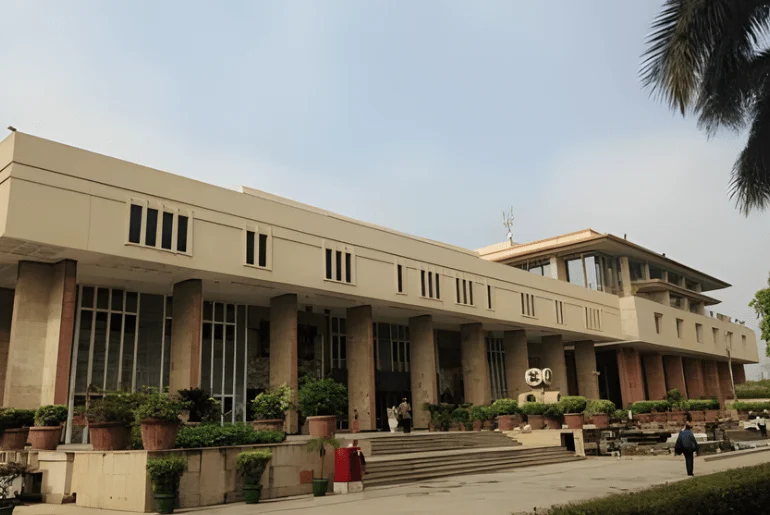
The Delhi High Court has delivered a significant ruling, asserting that an accident sustained by an employee during a lunch break at the workplace can indeed be classified as an employment-related injury under the ambit of the Employees’ Compensation Act, 1923. This landmark judgment, rendered by Justice Manoj Kumar Ohri on July 23, 2026, culminates a 16-year legal battle, directing an insurance company to disburse Rs 7.86 lakh in compensation, alongside a 12 percent annual interest, to a construction worker who tragically lost his leg in an on-site incident. The ruling underscores a progressive interpretation of social welfare legislation, broadening the scope of worker protection and clarifying crucial aspects of employer liability and employee rights.
The Genesis of the Case: A Tragic Accident on a Lunch Break
The heart of the matter revolves around Yashpal, who served as a supervisor at a construction site located in Bhalswa, Delhi. The unfortunate incident occurred on June 22, 2010. While Yashpal was observing his routine lunch break within the premises of the worksite, a critical mishap unfolded: an iron rod detached and fell upon him from a mobile crane operating nearby. The severity of the injury necessitated the immediate amputation of his left leg, forever altering his life and capacity to work. This incident initiated a prolonged legal journey, highlighting the complexities often encountered in defining "workplace injury" in the context of modern employment practices.
Following the accident, Yashpal sought redress under the Employees’ Compensation Act, 1923, a vital piece of legislation designed to provide financial protection to employees and their dependents in the event of accidents arising out of and in the course of employment. The Commissioner of Employees’ Compensation, after reviewing the evidence and circumstances, initially ruled in favor of Yashpal, ordering the insurance provider to pay the stipulated sum of Rs 7.86 lakh. Crucially, the Commissioner also mandated that the interest on this amount would accrue from July 22, 2010, signaling an early recognition of the worker’s legitimate claim.
The Insurance Company’s Challenge and Legal Arguments
The insurance company, acting as the indemnifier for the employer, subsequently challenged the Commissioner’s order before the Delhi High Court. Their primary arguments hinged on two critical points, commonly raised in such disputes. Firstly, they contended that the accident did not occur "during the course of employment" because Yashpal was explicitly on a lunch break at the time of the incident. This argument posited that a lunch break constituted a temporary cessation of work duties, thereby severing the direct link between the employee’s presence at the site and his employment responsibilities. According to this narrow interpretation, the company sought to exempt itself from liability, arguing that the accident fell outside the prescribed working hours.
Secondly, the insurer questioned whether Yashpal qualified as an "employee" under the specific provisions of the Employees’ Compensation Act, 1923, citing his designation as a supervisor. Historically, certain supervisory or managerial roles have sometimes been excluded from the definition of a "workman" or "employee" in some labor laws, depending on the nature of their duties and salary thresholds. The company attempted to leverage this distinction, suggesting that Yashpal’s supervisory status might place him outside the protective umbrella of the Act.
Furthermore, the insurer also raised objections regarding the assessment of Yashpal’s 75 percent loss of earning capacity. They challenged the medical evidence presented, seeking to undermine the basis for the compensation amount awarded. Such challenges are common in compensation cases, as the extent of disability directly influences the final payout.
The High Court’s Progressive Interpretation: Redefining "Course of Employment"
Justice Manoj Kumar Ohri meticulously examined the arguments presented by both parties. In a judgment that has significant ramifications for labor law jurisprudence, the Court firmly rejected the insurance company’s contentions.
The crux of the High Court’s decision lay in its interpretation of the phrase "during the course of employment." The Court unequivocally held that a brief interval taken for meals, such as a lunch break, does not automatically disengage an employee from their workplace or their employment relationship. The Court emphasized that Yashpal was still physically present at the construction site, and his presence there was a direct consequence of his employment. Therefore, the accident, despite occurring during a break, maintained a "sufficient connection" with his employment.
This ruling aligns with the "doctrine of notional extension," a legal principle often applied in workers’ compensation cases. This doctrine expands the traditional boundaries of the workplace and working hours to include periods and places where an employee is reasonably expected to be present, even if not actively engaged in their primary duties. This can encompass travel to and from work (in certain circumstances), waiting periods, and indeed, designated breaks like lunch, especially when taken within the employer’s premises. The rationale is that the employer still retains a degree of control over the environment, and the employee’s presence there is inextricably linked to their work.
Regarding the insurer’s argument about Yashpal’s designation as a supervisor, the Court provided further clarity. It stated that an employee’s designation alone cannot be the sole determinant of whether they fall within the purview of compensation law. Instead, the actual nature of the work performed by the individual must be considered. This aspect of the judgment is crucial, preventing employers from sidestepping their obligations by merely assigning titles that might seemingly exclude workers from protective legislation. The Court implicitly recognized that many individuals designated as "supervisors" in sectors like construction often perform substantial manual or operational tasks, or their supervisory role directly exposes them to the same workplace hazards as other workers.
Finally, the High Court upheld the Commissioner’s assessment of Yashpal’s 75 percent loss of earning capacity. It accepted the medical evidence presented, which detailed the amputation and its direct impact on his ability to earn a livelihood, thereby validating the basis for the compensation amount. The reaffirmation of the 12 percent annual interest from July 22, 2010, further underscores the court’s commitment to ensuring timely and adequate redress for injured workers.
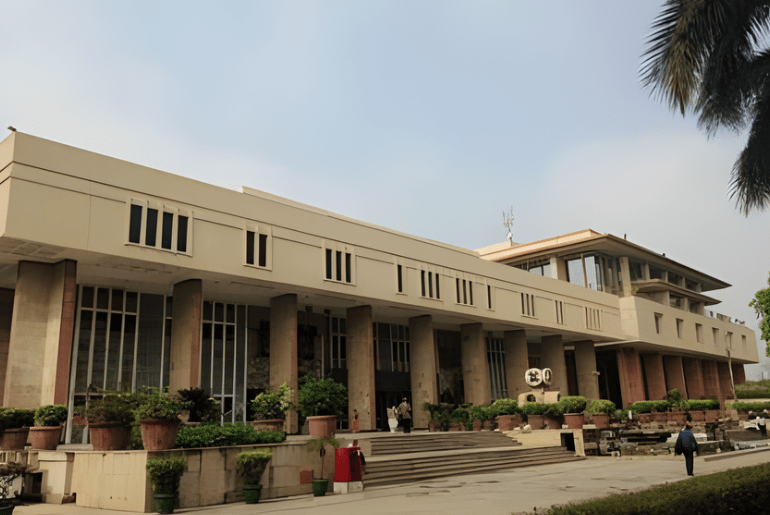
Background Context: The Employees’ Compensation Act, 1923
The Employees’ Compensation Act, 1923 (formerly the Workmen’s Compensation Act), is a cornerstone of social security legislation in India. Its primary objective is to provide financial relief to employees and their dependents in cases of injury or death arising out of and in the course of employment. The Act mandates employers to pay compensation for personal injury caused by accidents and for certain occupational diseases. It covers a wide range of employees, particularly those in hazardous occupations, and ensures that the financial burden of such unfortunate events does not fall solely on the injured worker or their family.
Over the decades, judicial interpretations of the Act have played a vital role in adapting its provisions to evolving employment landscapes and ensuring its effectiveness. Key phrases like "arising out of" and "in the course of employment" have been subject to extensive legal scrutiny, with courts generally adopting a liberal and beneficial construction to maximize worker protection. This Delhi High Court ruling is a continuation of this progressive interpretative tradition.
Supporting Data and Broader Implications for Workplace Safety
The construction sector in India is one of the largest employers, but also one of the most hazardous. Data from various sources, including the International Labour Organization (ILO) and national labor statistics, consistently highlight construction as an industry with a disproportionately high rate of accidents, injuries, and fatalities. Common causes range from falls from heights, electrocutions, machinery-related incidents, and indeed, falling objects. The lack of stringent safety protocols, inadequate training, and often, the sheer scale and complexity of operations contribute to these risks.
While precise, up-to-date national statistics on lunch break accidents are not readily available, this ruling brings attention to the fact that hazards don’t disappear during designated breaks. Workers remain vulnerable to the ambient risks of a construction site even when not actively performing a task. The economic impact of such injuries on workers and their families is profound. Loss of income, medical expenses, and the long-term struggle with disability can push families into poverty. Compensation laws are designed to mitigate this, providing a crucial safety net. However, the process of claiming and receiving compensation can often be arduous, fraught with legal challenges from employers and insurers, as evidenced by Yashpal’s 16-year ordeal.
Stakeholder Reactions and Future Outlook
The Delhi High Court’s judgment is likely to evoke varied reactions from key stakeholders:
-
For Employees and Workers’ Unions: This ruling will be hailed as a significant victory. It provides much-needed clarity and reassurance that worker protection extends beyond active duty hours, covering routine breaks taken on employer premises. Workers’ unions and advocacy groups will likely leverage this precedent to push for broader interpretations of workplace safety and compensation rights, advocating for more comprehensive safety measures that account for non-working hours on site. It reinforces the principle that an employer’s duty of care is continuous as long as the employee is legitimately present at the workplace due to their employment.
-
For Employers and Construction Companies: The judgment necessitates a review of existing safety protocols and risk management strategies. Employers, particularly in hazardous industries, will need to enhance safety measures not just during active work periods but also in common areas, rest zones, and during breaks. This includes ensuring proper maintenance of equipment, secure storage of materials, and strict adherence to safety standards throughout the entire worksite, recognizing their expanded liability. The ruling underscores the importance of a holistic approach to workplace safety that considers the entire duration an employee spends on site.
-
For Insurance Companies: This ruling will likely prompt a re-evaluation of risk assessments and policy structures for workers’ compensation insurance. Insurers may need to adjust their premiums to reflect the broader scope of coverage mandated by the court’s interpretation. It also emphasizes the need for clearer policy language and a more proactive approach to claim processing, understanding the legal precedents set by such judgments. The long duration of Yashpal’s case highlights the financial implications of delayed compensation and accrued interest for insurers.
-
For Legal Experts and the Judiciary: This judgment is a progressive step in labor jurisprudence. It reinforces the principle of beneficial construction of social welfare legislation, ensuring that the spirit of the law—to protect vulnerable workers—is upheld. It provides critical guidance on interpreting "course of employment" and defining "employee" based on the actual nature of work, reducing ambiguity and setting a clear precedent for similar cases in the future. The emphasis on the "actual nature of work" over mere designation is a crucial clarification that will impact how compensation claims are assessed.
Conclusion: A Landmark for Worker Protection
The Delhi High Court’s ruling in Yashpal’s case is more than just a verdict for an individual; it is a landmark decision that significantly reinforces the framework of worker protection in India. By affirming that accidents during on-site lunch breaks are employment-related injuries, the Court has sent a clear message: an employer’s responsibility for worker safety does not cease during routine breaks. It underscores the continuous nature of the duty of care and the progressive interpretation of social security legislation. This judgment ensures that workers, particularly those in high-risk sectors like construction, can expect comprehensive protection, promoting a safer working environment and providing a stronger safety net against the unforeseen hazards of employment. The protracted battle for compensation also highlights the imperative for faster resolution mechanisms in such critical cases, ensuring timely justice for those who suffer debilitating injuries in the line of duty.







