
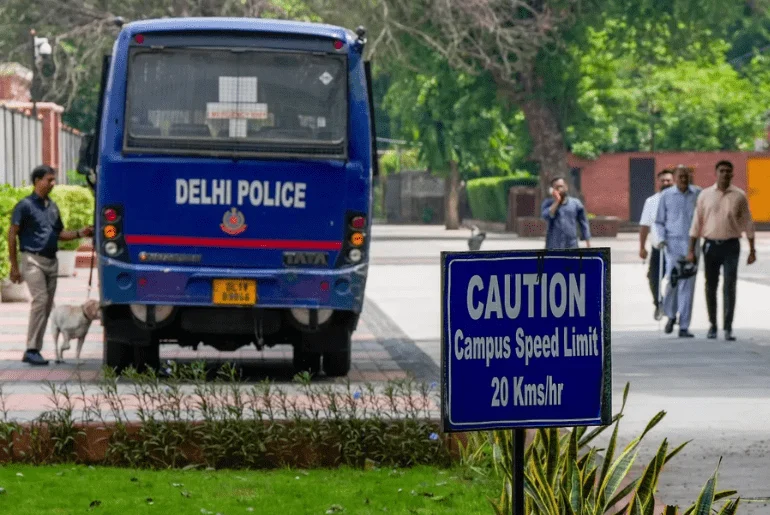
The Delhi Police has announced a temporary suspension of routine leave for its extensive personnel, a strategic decision designed to ensure optimal manpower availability and maintain robust law and order in the national capital amidst a period of heightened security requirements and persistent public demonstrations. This directive, emanating from Police Headquarters, places a comprehensive hold on various forms of regular leave, encompassing both casual and earned leave, with exceptions anticipated only in cases of genuine emergencies and contingent upon explicit approval from the competent authority. Furthermore, police personnel have reportedly been advised against attending training programmes without obtaining prior clearance, a measure intended to bolster the force’s operational flexibility and responsiveness as dynamic deployment needs continue to evolve across the city. This proactive stance by the Delhi Police underscores the complex workforce management challenges inherent to large public-sector organisations, particularly during periods of elevated operational demand where maintaining critical staffing levels assumes paramount importance over adherence to routine leave schedules. The restrictions are expected to remain in effect until a perceptible stabilisation of the security situation is achieved or until further official instructions are disseminated by the relevant authorities.
Contextualizing the Decision: The Security Imperative in the Capital
Delhi, as the seat of the Indian government and a major metropolitan hub, inherently operates under a perpetually elevated security posture. The city frequently hosts high-profile national and international dignitaries, significant political events, large-scale public gatherings, and is often the focal point for various forms of public expression, including protests and demonstrations. This unique geopolitical and social landscape necessitates a highly vigilant and adaptable police force capable of responding swiftly and effectively to a diverse array of security challenges, from counter-terrorism operations to crowd control and routine law enforcement. The temporary suspension of leave is not an unprecedented measure in Delhi Police’s operational history, often being invoked during critical periods such as major national festivals like Republic Day or Independence Day, significant international summits like the G20, or during phases of heightened civil unrest. Such directives reflect a fundamental operational principle: ensuring the safety and security of citizens and critical infrastructure outweighs the convenience of individual leave entitlements during periods of exceptional demand.
The Catalyst: Ongoing Protests and Operational Demands
The immediate impetus for the current directive appears to be the confluence of ongoing protests and the resulting enhanced security arrangements across various sensitive locations within Delhi. While the original brief mentions "ongoing protests," it is critical to contextualize this within the broader landscape of recent large-scale mobilizations that have significantly strained police resources. Prominently, the sustained "Delhi Chalo" farmers’ protest, initiated by various farmer unions primarily from Punjab and Haryana, has been a significant driver of heightened security requirements since early 2024. These protests involve large convoys attempting to march towards the capital, necessitating extensive deployment of police and paramilitary forces at Delhi’s borders, key entry points, and strategic locations within the city.
A Chronology of Recent Mobilizations and Security Responses
The current security scenario in Delhi can be traced back to several key events and protest cycles:
- February 2024: The "Delhi Chalo" march intensified, with thousands of farmers attempting to breach barricades at border points like Shambhu and Singhu. This led to massive deployments of police, extensive use of barricading, concrete blocks, barbed wire, and drones to monitor movements. Personnel were deployed round-the-clock, often in shifts exceeding standard duty hours, at multiple checkpoints and protest sites.
- March 2024: While initial attempts to enter Delhi were largely contained, farmer groups continued their agitation at border areas, maintaining a constant pressure point. This required sustained police presence and vigilance, preventing large-scale entry into the city while managing smaller, localized protests within Delhi itself.
- Ongoing Vigilance: Beyond the farmers’ protest, Delhi frequently experiences demonstrations related to political issues, labour disputes, social causes, and student movements. Each of these, even if smaller in scale, requires police deployment for crowd management, traffic control, and maintaining public order, cumulatively adding to the operational burden. The lead-up to and during general elections also typically sees an increase in political rallies and associated security demands, further stretching resources.
These sustained mobilizations translate into an unprecedented demand for personnel, requiring the deployment of thousands of officers for extended periods. This involves not only uniformed personnel for direct crowd control and patrolling but also significant numbers for intelligence gathering, traffic management, surveillance, and logistical support. The cumulative effect of these deployments is a substantial drain on the available workforce, making routine leave an untenable luxury for the department.
Details of the Directive: What It Entails
The directive from Police Headquarters is comprehensive in its scope, directly impacting the personal lives and professional development plans of the entire force. The explicit mention of "regular leave, including casual and earned leave," signifies a broad prohibition that covers most standard forms of time off. Casual leave, typically granted for short-term personal needs, and earned leave, accrued over service for longer breaks, are both suspended. This indicates the gravity of the situation, as even brief absences are deemed detrimental to maintaining required staffing levels.
The provision for "genuine emergencies" with "approval from the competent authority" offers a critical, albeit narrow, safety valve. Such emergencies typically include severe medical conditions for the personnel or immediate family, bereavements, or other unforeseen personal crises that cannot be deferred. The requirement for approval from a "competent authority" ensures a rigorous vetting process, preventing frivolous requests and ensuring that only truly unavoidable absences are permitted.
Furthermore, the advisory against attending "training programmes without prior clearance" is a shrewd operational move. While continuous professional development is vital for any police force, during periods of acute manpower shortages, deploying personnel for training takes them away from active duty. By requiring prior clearance, the department can strategically manage who attends training and when, prioritizing immediate operational needs over long-term skill enhancement, at least temporarily. This enhances the force’s "greater operational flexibility," allowing it to reallocate personnel dynamically based on evolving deployment requirements.
Manpower and Resource Allocation: The Numbers Game
The Delhi Police is one of the largest metropolitan police forces in the world, with an sanctioned strength of over 80,000 personnel, including officers and other ranks. However, the effective strength may vary due to vacancies, personnel on long-term leave, or those seconded to other departments. Even with such a substantial force, managing deployments for a city of Delhi’s scale and complexity, especially during crises, is a formidable task.
- Statistical Overview of Delhi Police Strength: As of recent publicly available data, the Delhi Police operates with a significant number of personnel, but even this large contingent can be stretched thin. For instance, a single large-scale protest requiring deployment at multiple border points and within the city can easily demand the presence of several thousand officers for extended shifts. When these demands are sustained over weeks or months, the cumulative impact on the workforce is immense.
- Deployment Challenges: Normal policing duties – patrolling, crime investigation, traffic management, maintaining peace in various districts – continue even during periods of heightened security. Diverting personnel from these routine duties to specific protest-related deployments can create vulnerabilities in other areas. The leave suspension helps mitigate this by ensuring that the existing pool of personnel is maximized for all necessary functions.
- Overtime and Fatigue: The continuous deployment of personnel for extended hours, often exceeding standard eight-hour shifts, inevitably leads to increased overtime payments and, more critically, officer fatigue. While not directly addressed by the leave suspension, the measure indirectly acknowledges this by ensuring that enough personnel are available to allow for some rotation, even if it means sacrificing personal time off.
Voices from the Force and Official Stance (Inferred)
While no specific official statement explicitly detailing the morale impact was immediately available, the Delhi Police leadership would logically frame this decision as an unavoidable operational necessity driven by their paramount duty to ensure public safety and maintain law and order. Sources within the Police Headquarters, speaking anonymously due to the sensitivity of the matter, would likely emphasize the temporary nature of the measure and its critical importance in responding to the current security landscape. They would underscore the force’s commitment to protecting the capital and its citizens, portraying the personnel’s dedication as a cornerstone of this effort.
From the perspective of police personnel, such directives, while personally inconvenient, are often understood as an inherent part of their service commitment. Many officers, having experienced similar situations during past emergencies, accept these demands as part of their professional duty. However, extended periods without leave can undoubtedly lead to increased stress, fatigue, and impact personal and family lives. The force leadership is generally aware of these challenges and often attempts to mitigate them through measures like staggered compensatory offs once the situation normalizes, or through internal welfare initiatives, though such details are typically managed internally.
Historical Precedents and Adaptive Strategies
The Delhi Police has a long history of adapting its operational strategies to meet evolving security challenges. Temporary leave suspensions are a well-established practice during major events or crises. For example:
- G20 Summit (September 2023): Ahead of and during the prestigious G20 Leaders’ Summit in Delhi, similar stringent restrictions on leave were imposed to ensure maximum deployment for security, traffic management, and VIP movement.
- Republic Day/Independence Day: Every year, leading up to and on these national holidays, security is significantly ramped up, and leave restrictions are often put in place to ensure full operational readiness.
- Major Election Periods: During state or national elections, especially when Delhi is a major focus, police resources are heavily deployed for maintaining peace during rallies, polling, and vote counting, often accompanied by similar leave directives.
These precedents highlight that the current measure is not an isolated incident but rather a standard, albeit impactful, tool in the Delhi Police’s operational playbook for managing peak demand periods.
Broader Implications: Morale, Welfare, and Public Trust
The temporary suspension of leave carries several broader implications, both for the police force itself and for the public it serves.
- Impact on Personnel Welfare and Morale: Prolonged periods without leave can lead to burnout, stress, and impact the mental and physical well-being of officers. It limits their ability to attend to personal matters, spend time with family, or simply rest and recuperate. While officers are trained for demanding situations, sustained pressure without adequate breaks can affect morale over the long term. Police welfare units typically monitor such situations, and post-crisis compensatory measures, like prioritizing leave requests once restrictions are lifted, are often considered to address these impacts.
- Reinforcing Public Security and Confidence: From a public perspective, such a visible and proactive measure by the police often instils a sense of confidence and reassurance. It signals that the authorities are taking the security situation seriously and are committing maximum resources to maintain peace and order. This perception of a strong, vigilant police presence can deter potential disturbances and contribute to overall public safety.
- Operational Efficiency and Responsiveness: By maximizing the available workforce, the Delhi Police enhances its ability to respond rapidly to unforeseen events, deploy additional personnel to emerging hotspots, and maintain a consistent presence across the city. This improved operational efficiency is crucial in managing dynamic and unpredictable security environments.
Workforce Management in Public Service: A Balancing Act
This situation exemplifies the inherent challenges of workforce management in public service organizations, particularly those tasked with critical functions like law enforcement. Unlike private sector entities that might scale operations up or down more flexibly, police forces must maintain a constant state of readiness and respond to demands regardless of typical resource allocations. The balancing act involves:
- Operational Imperatives vs. Employee Welfare: Prioritizing immediate security needs often means temporarily overriding employee welfare considerations like routine leave.
- Resource Constraints: Even large forces operate within budget and personnel constraints, making efficient allocation critical.
- Dynamic Demand: The nature of security threats and public demonstrations is often unpredictable, requiring agile responses.
Strategies to manage these challenges include robust planning for peak periods, cross-training personnel for multiple roles, leveraging technology for surveillance and intelligence, and implementing post-crisis welfare programs.
Looking Ahead: Duration and Future Considerations
The duration of these restrictions is explicitly linked to the stabilization of the security situation. This implies that the directive will be reviewed continuously based on intelligence assessments, the intensity of ongoing protests, and the overall law and order environment in Delhi. Once the immediate threats subside and the need for heightened deployment diminishes, the Police Headquarters will likely issue further instructions, gradually easing the restrictions.
In the long term, such events prompt police forces to review and refine their contingency plans, resource allocation models, and personnel management strategies. This might include exploring ways to better manage officer fatigue during prolonged operations, enhancing rapid deployment capabilities, or further integrating technology to augment human resources. The objective remains to build a resilient and responsive force capable of protecting the capital under all circumstances, while also striving to balance operational demands with the welfare of its dedicated personnel.
In conclusion, the Delhi Police’s temporary suspension of routine leave is a necessary, albeit impactful, operational decision directly driven by the current exigencies of heightened security and ongoing public protests in the national capital. It underscores the immense pressure on the force to maintain law and order, reflecting a proactive approach to ensure the safety and security of Delhi’s citizens and critical infrastructure during a challenging period.








