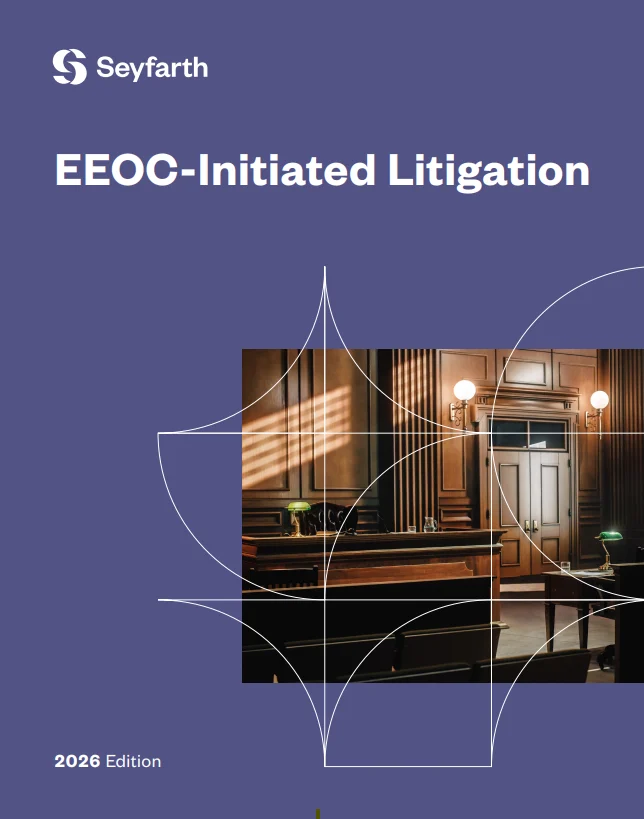
The release of the 2026 edition of the annual analysis of Equal Employment Opportunity Commission (EEOC) enforcement trends marks a pivotal moment for labor and employment law, detailing a year of unprecedented activity and transformative legal shifts. Compiled by Seyfarth Shaw LLP, the comprehensive desk reference provides an exhaustive look at the litigation landscape of 2025, a year characterized by the most dramatic fluctuations in agency behavior and policy implementation in recent memory. As the EEOC continues to pivot its focus toward systemic discrimination and the integration of emerging technologies in the workplace, the 2026 report serves as a critical guide for corporate counsel, human resources professionals, and operational leaders navigating a complex regulatory environment.
The 2025 Enforcement Landscape: A Year of Transformation
Throughout 2025, the EEOC demonstrated an aggressive approach to litigation, fueled by a fully staffed Commission and a clear mandate under its Strategic Enforcement Plan (SEP) for 2024-2028. The year was marked by a significant increase in the volume of merit lawsuits filed by the agency, particularly in the final quarter of the fiscal year—a phenomenon often referred to as the "end-of-year surge." This surge was not merely a matter of quantity but also of substance, as the agency prioritized high-impact systemic cases designed to affect entire industries rather than individual employers.
The 2026 Edition analysis reveals that the EEOC’s litigation strategy in 2025 focused heavily on three primary pillars: the protection of vulnerable workers, the regulation of artificial intelligence in hiring, and the robust enforcement of the Pregnant Workers Fairness Act (PWFA). These priorities reflect the agency’s commitment to addressing modern workplace challenges while maintaining its traditional focus on Title VII of the Civil Rights Act, the Americans with Disabilities Act (ADA), and the Age Discrimination in Employment Act (ADEA).
Chronology of EEOC Policy Shifts and Litigation Milestones
The timeline of 2025 reveals a deliberate escalation of enforcement activities. In early 2025, the EEOC focused on clearing a backlog of investigations that had been delayed by administrative transitions. By mid-year, the agency shifted its attention toward the implementation of the PWFA, filing several landmark suits against major retailers and healthcare providers for failing to provide "reasonable accommodations" to pregnant employees.
By the third quarter of 2025, the EEOC’s Artificial Intelligence and Algorithmic Fairness Initiative reached a fever pitch. The agency initiated several high-profile investigations into the use of "gamified" recruitment tools and automated resume-screening software, alleging that these technologies inadvertently screened out older workers and individuals with disabilities. This period marked the first time the agency successfully secured a multi-million-dollar settlement in a case specifically targeting algorithmic bias in a global tech firm’s hiring process.
As the fiscal year concluded in September 2025, the agency reported a record-breaking number of filings. The final months of the year saw a concentrated effort to address "retaliation"—the most frequently cited charge in EEOC filings for over a decade. The 2026 report notes that retaliation claims now appear in nearly 60% of all EEOC-initiated lawsuits, signaling that the agency is increasingly focused on how employers respond to internal complaints.
Data Analysis: Filing Trends and Success Rates
The data compiled in the 2026 Edition provides a granular view of the EEOC’s performance metrics. In fiscal year 2025, the agency filed approximately 165 new merit lawsuits, a notable increase from the 143 filings reported in 2023 and the moderate growth seen in 2024. Of these 165 filings, approximately 35 were systemic lawsuits, which represent cases that challenge a pattern or practice of discrimination affecting a large number of employees.
A breakdown of the filings by statute reveals the following:
- Title VII: Continued to be the primary vehicle for litigation, accounting for 55% of all filings, with a heavy emphasis on sexual harassment and racial discrimination.
- ADA: Comprised 30% of the docket, focusing largely on failures to accommodate mental health conditions and "no-fault" attendance policies.
- PWFA and PUMP Act: Emerged as a significant growth area, representing 10% of new filings, as the agency sought to establish legal precedents for these relatively new statutes.
- ADEA and EPA: The remaining 5% involved age discrimination and Equal Pay Act claims, with a specific focus on pay transparency and gender-based wage gaps.
Geographically, the EEOC’s litigation activity was concentrated in the Seventh, Ninth, and Eleventh Circuits. The Chicago, Los Angeles, and Atlanta district offices were identified as the most litigious, collectively accounting for nearly 40% of the total lawsuits filed in 2025.
Emerging Focus: Artificial Intelligence and DEI Backlash
One of the most significant sections of the 2026 report explores the EEOC’s response to the evolving technological and social landscape. The agency’s focus on Artificial Intelligence (AI) transitioned from theoretical guidance to active litigation in 2025. The EEOC has taken the position that employers are responsible for the discriminatory outputs of third-party AI vendors, a stance that has sent shockwaves through the HR technology industry.
Simultaneously, the EEOC found itself navigating the fallout of the 2023 Supreme Court decision in Students for Fair Admissions v. Harvard. While that case focused on higher education, its implications for corporate Diversity, Equity, and Inclusion (DEI) programs became a central theme in 2025. The EEOC has maintained that while most DEI programs are lawful, "race-conscious" decision-making in hiring or promotions remains a violation of Title VII. The 2026 report highlights several "reverse discrimination" charges that the EEOC investigated, signaling a balanced but cautious approach to the DEI debate.
Official Responses and Stakeholder Reactions
The reaction to the EEOC’s 2025 activity has been polarized. Legal experts and management-side counsel have expressed concern over what they perceive as "regulation by litigation." Industry groups have argued that the EEOC’s aggressive stance on AI and the PWFA lacks sufficient clarity, leaving employers to guess at compliance requirements until a lawsuit is filed.
Conversely, worker advocacy groups have lauded the agency’s 2025 efforts. Representatives from the National Partnership for Women & Families noted that the EEOC’s focus on the PWFA has already begun to shift corporate culture, forcing companies to modernize their leave and accommodation policies. Within the Commission itself, Chair Charlotte Burrows has emphasized that the agency’s goal is not just to punish bad actors but to provide a "level playing field" for all workers in an increasingly automated economy.
Strategic Implications for Employers in 2026
The findings of the EEOC-Initiated Litigation: 2026 Edition suggest that the coming year will be one of continued scrutiny. Employers are advised to conduct comprehensive audits of their recruitment software to ensure compliance with the EEOC’s AI guidance. Furthermore, the report emphasizes the necessity of updating accommodation policies to reflect the broad protections afforded by the PWFA and the ADA.
Another critical takeaway for 2026 is the importance of the "conciliation" process. Before the EEOC can file a lawsuit, it is legally required to attempt to resolve the charge through informal methods. However, the 2026 report indicates that the "failure to conciliate" defense is becoming harder for employers to win in court. The agency has become more adept at meeting its procedural requirements, meaning that once a "reasonable cause" determination is made, the likelihood of litigation is higher than in previous decades.
Conclusion and Outlook
As the EEOC enters 2026, it does so with a robust docket and a clear set of priorities. The 2026 Edition of the Seyfarth Shaw report serves as a stark reminder that the agency remains a formidable force in the American workplace. The dramatic changes observed in 2025—from the rise of AI-focused litigation to the aggressive enforcement of new pregnancy protections—indicate that the era of "passive" enforcement is over.
For the legal and business communities, the data and analysis provided in this reference are more than just a historical record; they are a roadmap for risk mitigation. As the EEOC continues to push the boundaries of established law, staying informed through detailed analysis of filing trends and judicial decisions remains the most effective defense for employers seeking to maintain compliance in a rapidly shifting regulatory environment. The 2026 Edition ensures that those responsible for workplace governance have the tools necessary to make informed, data-driven decisions in the face of an increasingly active Commission.