
The U.S. Equal Employment Opportunity Commission (EEOC) concluded its 2025 fiscal year on September 30, revealing a dramatic decline in enforcement activity that has reached a ten-year low. According to data analyzed by legal experts at Seyfarth Shaw, the Commission filed only 93 merit lawsuits over the past twelve months, a sharp contrast to the aggressive litigation posture many anticipated at the start of the year. This slowdown marks the culmination of a tumultuous period characterized by unprecedented leadership changes, significant budget constraints, and a fundamental redirection of the agency’s enforcement priorities following the inauguration of the second Trump administration in January 2025.
While the EEOC entered the fiscal year with a Democratic majority and a substantial pipeline of charges, the transition of power in Washington triggered a swift and decisive pivot in agency operations. The resulting 93 filings represent one of the lowest annual totals in the agency’s thirty-year history, signaling a period of restraint that has left employers and legal observers navigating a transformed regulatory landscape.
A Chronology of Transformation: From Biden to Trump
The 2025 fiscal year began on October 1, 2024, under the direction of a Biden-appointed leadership team. During the first quarter of the fiscal year, the agency appeared to be maintaining the momentum established in 2023, when it filed 144 merit lawsuits—a five-year high. This early activity was fueled by a Democratic majority of commissioners and General Counsel Karla Gilbride, who had prioritized systemic discrimination cases and LGBTQ+ protections.
However, the political landscape shifted abruptly following the November 2024 presidential election. Upon taking office in January 2025, President Donald Trump moved quickly to reshape the Commission. In a series of moves that tested the constitutional limits of presidential authority over independent agencies, the President terminated General Counsel Karla Gilbride and took the unprecedented step of firing Commissioners Charlotte Burrows and Jocelyn Samuels, despite both having years remaining on their appointed terms.
By late January, Andrea Lucas was elevated to Acting Chair of the EEOC. Under her leadership, the agency’s mission was immediately realigned with the administration’s broader policy goals. This transition period saw a flurry of activity in January as outgoing personnel sought to file cases before the change in leadership, followed by a period of relative stagnation as the new administration established its footing and implemented a hiring freeze and budget cuts.
The Quorum Crisis and Its Legal Constraints
One of the primary drivers behind the decline in litigation volume is the current lack of a quorum among EEOC commissioners. Following the removal of Burrows and Samuels, the Commission was left with only two active members: Acting Chair Andrea Lucas and Commissioner Kalpana Kotagal. Under the agency’s governing statutes, a quorum of three commissioners is generally required to approve major enforcement actions, particularly those involving systemic discrimination or "pattern or practice" lawsuits.
In the absence of a quorum, the authority to initiate litigation rests largely on a prior delegation of power to the General Counsel. However, this delegation is strictly limited to routine, individual-focused cases. The agency is currently restricted from filing lawsuits that:
- Involve allegations of systemic or widespread discrimination.
- Require major expenditures of agency resources or expert witness fees.
- Assert legal positions contrary to established precedent in a specific judicial circuit.
- Involve unsettled areas of law likely to generate significant public controversy.
This "quorum gap" has effectively handcuffed the agency’s ability to pursue the high-impact, multi-plaintiff lawsuits that were a hallmark of the previous administration. Consequently, the 93 filings in FY 2025 were predominantly smaller, individual-focused claims, contributing to the overall drop in litigation numbers.
Statistical Breakdown: A Decade of EEOC Enforcement
To understand the significance of the FY 2025 figures, it is necessary to compare them with historical data. The EEOC’s litigation activity has traditionally fluctuated based on administration priorities and funding levels.

- FY 2023: 144 merit filings (Biden administration peak)
- FY 2024: 96 merit filings (Beginning of the slowdown)
- FY 2025: 93 merit filings (Ten-year low)
For further context, during the Obama administration, the EEOC frequently filed between 250 and 300 lawsuits annually. The drop to double digits represents a fundamental shift in how the federal government approaches workplace discrimination enforcement.
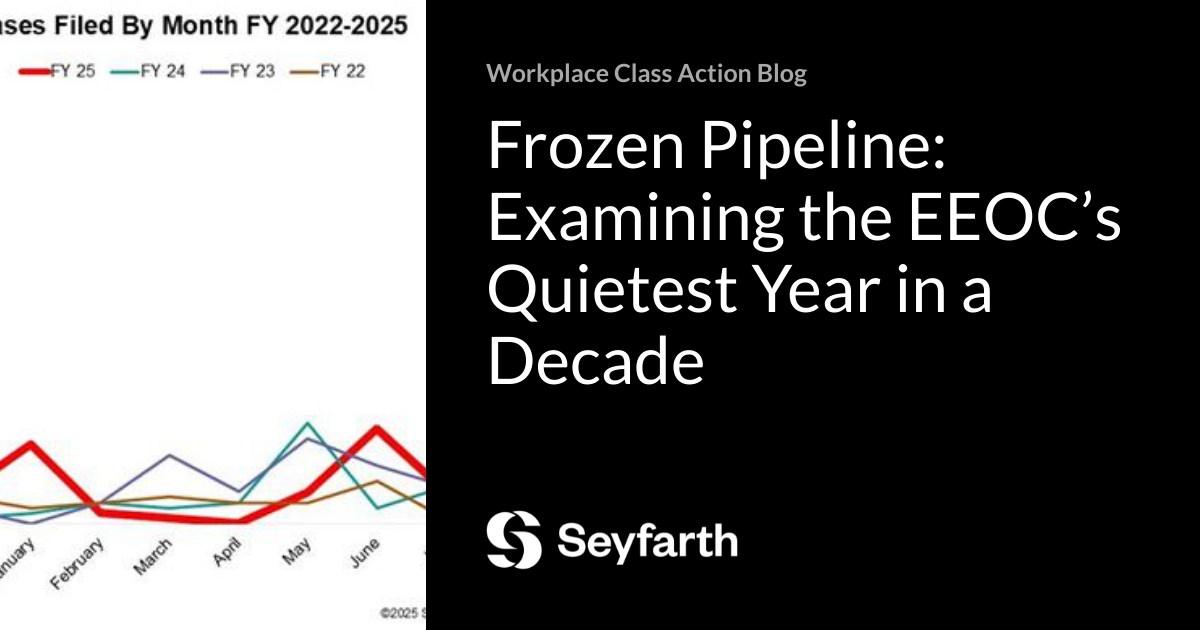
The timing of the filings in FY 2025 also tells a story of political transition. The Commission filed 15 lawsuits in January 2025 alone, a high number for a month that is usually quiet, as staff scrambled to finalize cases before the inauguration. September, which is traditionally the busiest month for the EEOC as it seeks to exhaust its annual budget, saw only 35 filings in 2025. This is a significant decrease from the 71 lawsuits filed in September 2023 and the 56 filed in September 2024.
Shifting Substantive Priorities: The New Enforcement Agenda
Beyond the raw numbers, the types of cases filed in FY 2025 reveal a stark departure from previous years. Under Acting Chair Andrea Lucas, the EEOC has distanced itself from "woke policies"—a term used by the Chair in public statements—and returned to a more traditional interpretation of Title VII of the Civil Rights Act.
The Retreat from LGBTQ+ Litigation
Perhaps the most visible change has been the agency’s reversal on gender identity and sexual orientation cases. In October 2024, the agency filed two lawsuits concerning transgender workers’ rights. However, following President Trump’s January 20, 2025, Executive Order titled "Defending Women From Gender Ideology Extremism and Restoring Biological Truth to the Federal Government," the EEOC moved to dismiss both actions. Acting Chair Lucas issued a statement emphasizing that "biological sex is real" and that the agency would no longer view the use of biological pronouns as a form of actionable harassment.
The Rise of Religious Freedom Claims
Conversely, religious discrimination has emerged as a top priority. In FY 2025, the EEOC filed 11 lawsuits asserting religious discrimination or failure to accommodate religious beliefs, a notable increase compared to previous years. This surge is partly a response to the backlog of charges related to COVID-19 vaccine mandates, but it also reflects a deliberate policy shift. In August 2025, the EEOC released a statement vowing to ensure that workers are not forced to "choose between their paycheck and their faith."

Race and National Origin: A Focus on "Anti-American Bias"
The number of race and national origin lawsuits plummeted to just three in FY 2025, the lowest number in over a decade. Notably, two of these three cases were based on theories of "reverse discrimination." For example, in EEOC v. Seward and Son Planting Co., the agency alleged that an employer gave preference to non-American workers over Black American citizens. This aligns with Acting Chair Lucas’s public commitment to protecting American workers from what she described as "anti-American bias."
Pregnancy and Disability Protections
Despite the overall decline, the agency remained active in enforcing the Americans with Disabilities Act (ADA) and pregnancy-related protections. The EEOC filed 34 disability-related lawsuits in FY 2025, focusing heavily on hearing and vision impairments, as well as mental health conditions like PTSD and anxiety. Additionally, the agency filed 10 lawsuits under the Pregnancy Discrimination Act and the newly-enacted Pregnant Workers Fairness Act (PWFA), signaling that these areas remain bipartisan priorities.
Geographic Trends: A Tale of Two Coasts
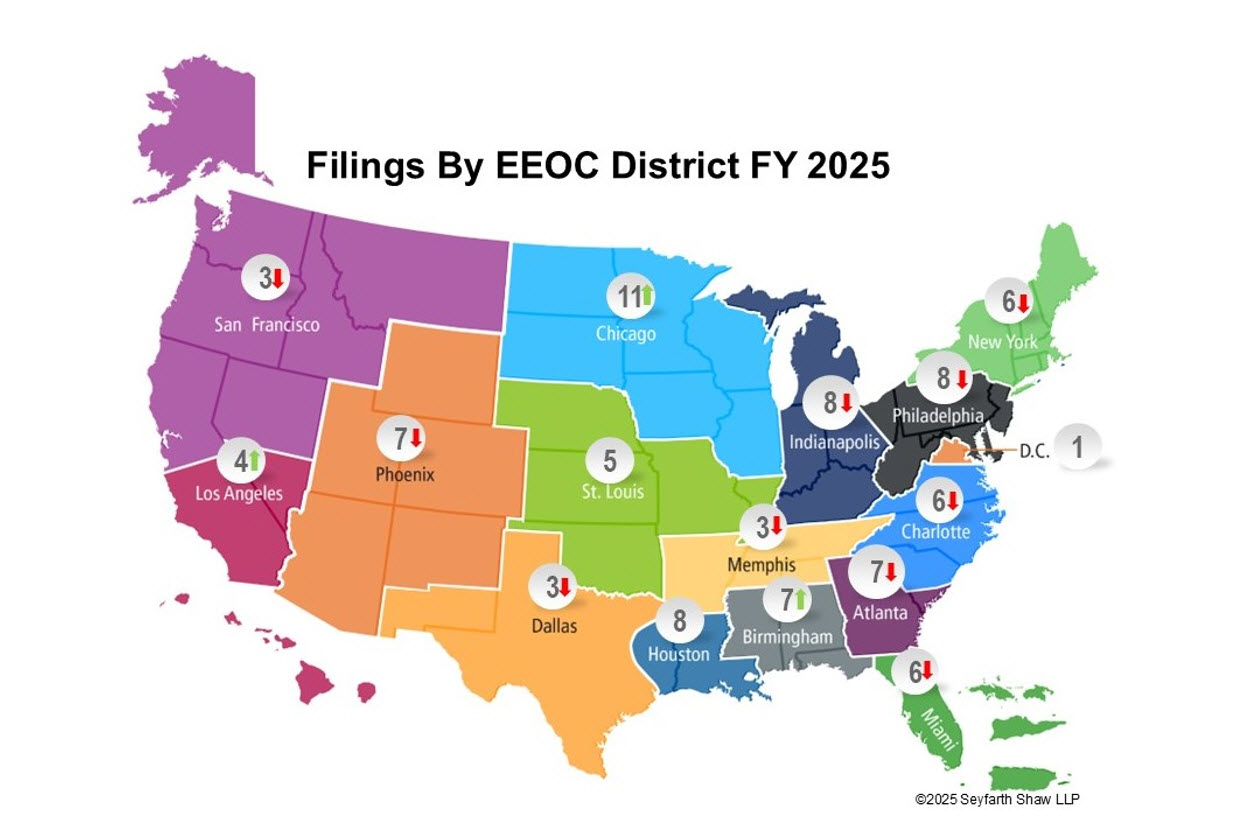
The FY 2025 data also highlights a growing geographic divide in EEOC enforcement. Historically active offices in Los Angeles, New York, and San Francisco remained uncharacteristically quiet, filing only 4, 6, and 3 lawsuits, respectively. This continues a trend observed over the last three years where West Coast offices have significantly dialed back their litigation activity.
In contrast, the Midwest and South remained the agency’s engines of enforcement. The Chicago District Office led the nation with 11 filings, followed by Philadelphia, Indianapolis, and Houston, each with 8 filings. These offices have traditionally focused on individual-level claims in manufacturing and service industries, which fit more easily within the current General Counsel’s delegated authority than the large-scale systemic cases often pursued by the coastal offices.
Reactions and Implications for Employers
The business community has reacted to these developments with cautious optimism, though legal experts warn that a quieter EEOC does not necessarily mean a less litigious environment.
"While the EEOC has eased off the gas, employers cannot afford to be complacent," noted Christopher DeGroff, a partner at Seyfarth Shaw. "The private plaintiffs’ bar often steps into the vacuum left by federal agencies. We are already seeing private litigants pick up the claims that the EEOC has abandoned, particularly in the realm of LGBTQ+ rights."
Acting Chair Andrea Lucas has defended the agency’s new direction, stating that the Commission is "restoring evenhanded enforcement" and moving away from ideological extremism. Critics, however, argue that the firing of commissioners and the dismissal of pending cases undermine the agency’s independence and leave vulnerable populations without federal protection.
For employers, the implications of the FY 2025 data are clear:
- Compliance Focus: Religious accommodation and pregnancy-related issues (PWFA) are high-risk areas. Employers should review their policies to ensure they align with the current administration’s emphasis on faith-based protections.
- Disability Management: The ADA remains a top enforcement priority. Accommodating mental health conditions and sensory impairments is a frequent target of current EEOC litigation.
- Regional Awareness: Companies operating in the Chicago, Indianapolis, and Philadelphia regions face a higher statistical likelihood of EEOC involvement than those on the West Coast.
- Reverse Discrimination: With the EEOC now scrutinizing "anti-American bias," diversity, equity, and inclusion (DEI) programs may face increased federal scrutiny if they are perceived to disadvantage certain groups.
Conclusion
The EEOC’s 2025 fiscal year will be remembered as a period of profound institutional reset. By filing just 93 lawsuits, the agency has signaled a transition from the "litigation in overdrive" era of the early Biden administration to a more restrained, policy-driven approach under President Trump. As the Commission awaits the confirmation of new members to restore a quorum, the current period of relative quiet offers employers a window to audit their internal practices and prepare for an enforcement landscape that prioritizes religious liberty and "biological truth" over the systemic diversity initiatives of the recent past. However, with the private bar remains active, the overall risk of workplace litigation continues to be a primary concern for American businesses.








