Employee empowerment is the deliberate cultivation of an environment where individuals are entrusted with the autonomy, ownership, and requisite resources to excel in their roles. When employees feel valued, capable, and adequately supported, they are demonstrably more inclined to surpass expectations, drive innovation, and remain deeply invested in their professional growth within their current organization. Recent research, including findings from the 2024 Achievers Engagement and Retention Report, indicates that a significant percentage of employees—over 30%—attribute a heightened sense of purpose to increased confidence, a psychological state directly correlated with measurable business success. This evolving paradigm represents a fundamental shift in organizational philosophy, moving beyond traditional hierarchical structures towards models that prioritize human capital as a primary driver of competitive advantage.
The Evolving Landscape of Work and the Rise of Empowerment
The concept of employee empowerment, while seemingly modern, has roots in management theories that emerged in the mid-20th century. Early industrial models often relied on rigid command-and-control structures, where decision-making was centralized at the top. However, pioneering thinkers like Douglas McGregor, with his Theory Y in the 1960s, began challenging these assumptions, positing that employees are inherently motivated and seek responsibility, given the right conditions. Abraham Maslow’s hierarchy of needs further underscored the human desire for self-actualization, a concept directly applicable to the workplace through empowerment.
The late 20th and early 21st centuries saw a rapid acceleration of this shift, driven by several macro trends. Globalization increased market complexity and the need for agile decision-making at all levels. Technological advancements democratized information, making it accessible to a wider workforce and reducing the necessity for managerial gatekeeping. Simultaneously, changing workforce demographics, particularly the rise of Millennials and Gen Z, introduced new expectations regarding work-life balance, purpose, and autonomy. These generations often prioritize meaningful work, personal development, and a voice in their organizations, pushing companies to reconsider traditional power dynamics.
The COVID-19 pandemic further cemented the importance of empowerment. As organizations rapidly transitioned to remote and hybrid work models, leaders were compelled to trust employees with greater autonomy over their schedules and work execution. This period highlighted that when employees are given the flexibility and support to manage their work, they often rise to the occasion, maintaining or even improving productivity. The current economic climate, characterized by talent shortages and the "Great Resignation" phenomenon, also underscores the strategic imperative of empowerment. Companies that foster empowered environments are better positioned to attract, retain, and develop top talent, thereby mitigating the substantial costs associated with high employee turnover.

Defining Employee Empowerment: More Than Just Delegation
At its core, employee empowerment is the systematic process of providing employees with the authority, resources, and continuous support necessary to make decisions and take ownership of their work. It transcends mere delegation, which often involves assigning tasks without granting true decision-making power or resource control. Empowerment, in contrast, combines genuine autonomy with clearly articulated expectations, consistent feedback mechanisms, and frequent, meaningful recognition. This holistic approach ensures that employees can exert significant impact within their roles while remaining intrinsically connected to the broader organizational goals and strategic priorities.
To fully operationalize employee empowerment, organizations typically focus on five critical pillars:
- Information Sharing: This involves providing employees with transparent access to relevant organizational data, performance metrics, strategic objectives, and even financial information. Informed employees are better equipped to understand the broader context of their work and make decisions that align with company goals.
- Autonomy and Decision-Making Authority: Granting employees the latitude to make choices regarding how their work is performed, within defined parameters. This can range from choosing tools and methodologies to making customer-facing decisions without needing constant managerial approval.
- Resource Provision and Support: Ensuring employees have all the necessary tools, technology, training, budget, and managerial support to successfully execute their responsibilities. Empowerment without adequate resources can lead to frustration and failure.
- Accountability and Ownership: Empowerment is inextricably linked to accountability. Employees who are empowered are expected to take full ownership of their tasks and outcomes, fostering a sense of responsibility and pride in their contributions.
- Continuous Feedback and Recognition: Establishing a culture where constructive feedback is regularly provided and received, and where achievements and efforts are consistently recognized. This reinforces positive behaviors, guides development, and validates employee contributions.
These pillars work in concert to create an environment where employees are not just performing tasks but actively contributing to the organization’s success through their ingenuity and initiative.
The Tangible Benefits: A Catalyst for Organizational Flourishing
The advantages of a truly empowered workforce extend across various facets of an organization, impacting everything from individual performance to overall profitability.
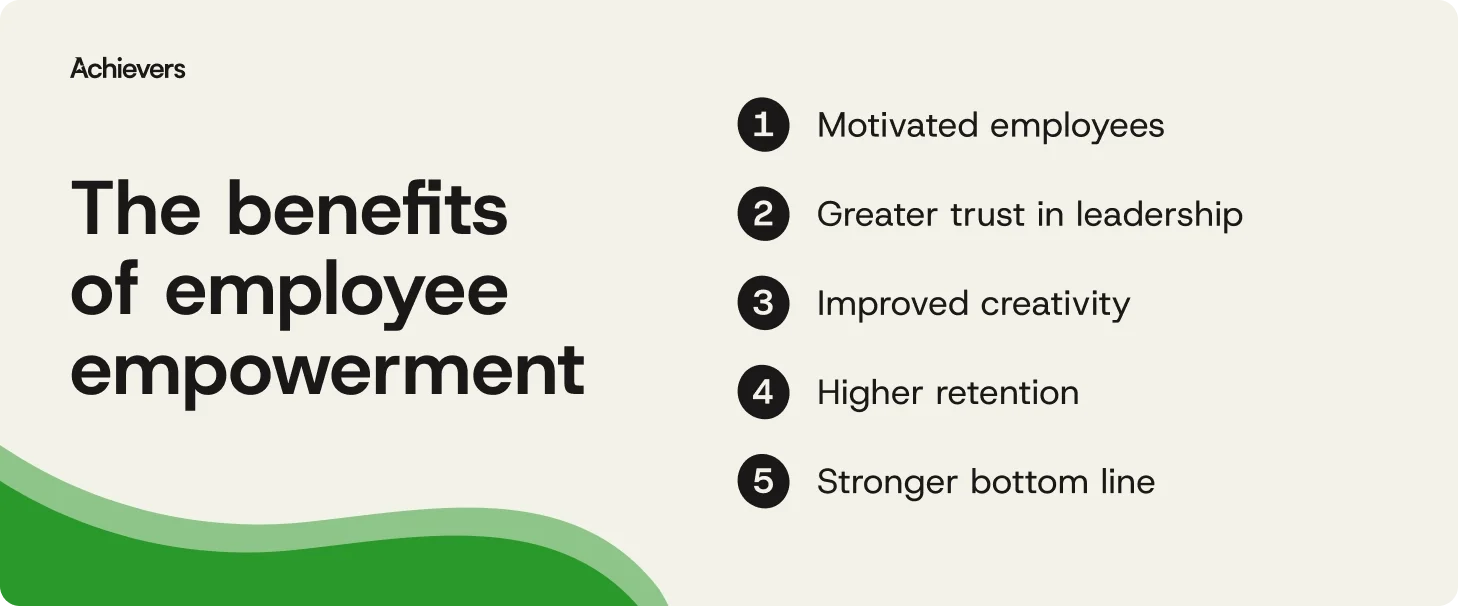
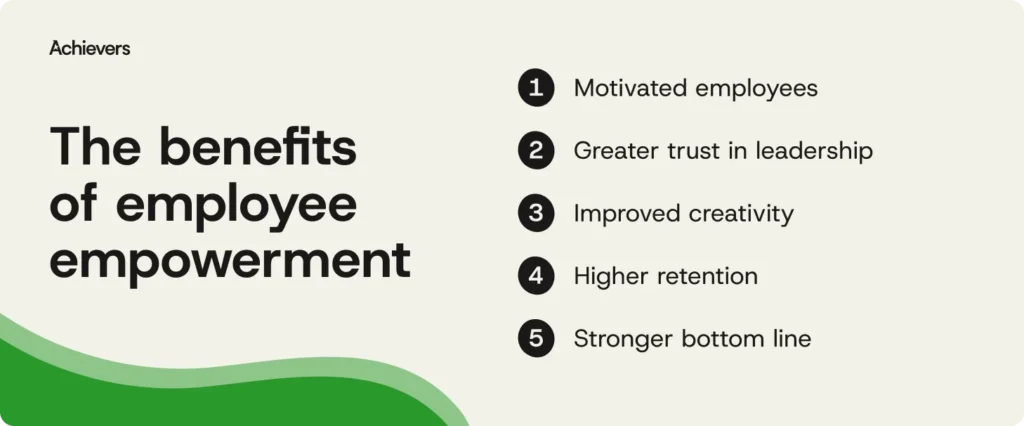
1. Motivated and Engaged Workforce: When employees are given ownership over their work, their intrinsic motivation significantly increases. Autonomy inherently builds a stronger sense of accountability, fostering pride in achieving well-executed outcomes. This ownership also acts as a crucial buffer against workplace burnout, a growing concern in modern professional environments. By allowing employees the space to manage their workloads and approaches in a way that suits them best, organizations empower individuals to maintain a healthier work-life balance and sustain engagement over the long term. Research from Gallup consistently shows that highly engaged teams are 21% more productive and experience 41% lower absenteeism.
2. Greater Trust in Leadership: Micromanagement erodes trust and stifles initiative. Empowerment, by contrast, transforms the leadership dynamic, positioning managers as supportive coaches, mentors, and facilitators rather than mere overseers. Leaders who trust their teams to make decisions and provide the necessary resources build stronger, more resilient teams. A 2023 study by Edelman found that trust in employers remains a key factor in employee loyalty and willingness to engage, with 79% of employees trusting their employer to do what is right. This foundational trust is critical for effective communication, collaboration, and overall organizational cohesion.
3. Improved Creativity and Innovation: Innovation rarely flourishes in environments characterized by rigid control. By granting employees the freedom to experiment, to fail gracefully, to learn from mistakes, and to try again, organizations unlock significant creative potential. When individuals know that their ideas are genuinely welcomed and considered, they are far more likely to contribute their best thinking and propose novel solutions to complex problems. A Deloitte study highlighted that companies with inclusive cultures, often a byproduct of empowerment, are six times more likely to be innovative and agile.
4. Higher Retention Rates: The adage "people don’t leave great jobs, they leave rigid systems that stifle them" holds significant truth. Empowered employees are more likely to envision a long-term future with their current company because they see clear pathways for growth, development, and meaningful contribution. Organizations that invest in empowering their workforce experience reduced turnover, which is a significant cost-saver. The Work Institute’s 2020 Retention Report estimated the cost of turnover at 33% of an employee’s annual salary, making retention a critical financial concern. When employees feel they have agency and opportunities for advancement, they are less likely to seek opportunities elsewhere.
5. Stronger Bottom Line: The cumulative effect of motivated, trusted, creative, and retained employees directly translates into tangible financial benefits. Disengaged employees are a substantial drain on resources, costing businesses trillions globally due to lost productivity, errors, and absenteeism. For instance, a 2024 Forbes report, citing Gallup data, indicated that low employee engagement costs the global economy an estimated $8.8 trillion. Conversely, empowered employees boost productivity, enhance customer experiences through proactive problem-solving, and significantly reduce the costly burden of high turnover. Investing in empowerment is not merely a philanthropic gesture; it is a shrewd business strategy that directly contributes to increased revenue and profitability.
Implementing Empowerment: A Strategic Roadmap
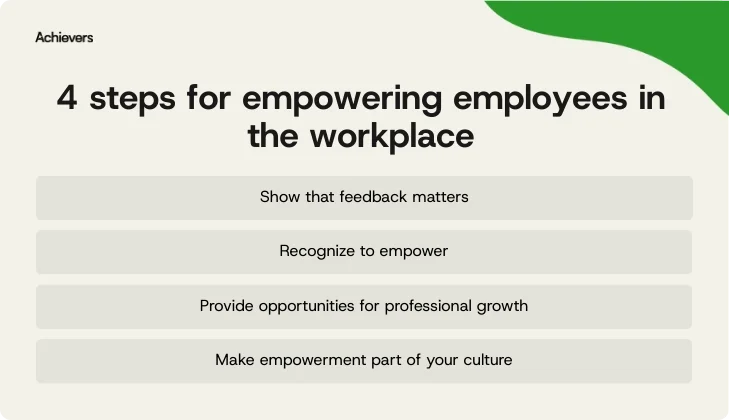
Transforming an organization into an empowered environment requires a deliberate, multi-faceted approach. It’s not a one-time initiative but an ongoing cultural commitment.
1. Foster a Culture of Feedback and Responsiveness:
Asking for feedback is merely the initial step; demonstrably acting upon it is what truly builds trust and solidifies the feeling of empowerment. Organizations must implement tools and processes that facilitate real-time insights into employee sentiment and concerns. Crucially, leadership must then follow through visibly, communicating how employee input has directly shaped workplace policies, processes, or strategic decisions. As Sarah Chen, a leading HR consultant, recently stated, "Psychological safety, where employees feel comfortable sharing honest feedback without fear of reprisal, is the bedrock of any truly empowered culture. Leaders must model active listening and visible action." Empowerment truly begins when employees feel genuinely heard, valued, and believe their voice can instigate positive change.
2. Implement Strategic Recognition Systems:
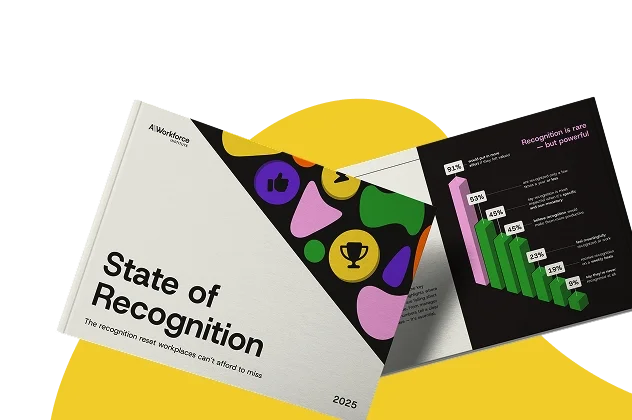
Recognition is a proven, powerful lever for building employee confidence and sustained motivation. Effective recognition programs are specific, frequent, and directly tied to the organization’s core values and strategic objectives. Whether through peer-to-peer platforms, manager-led commendations, or company-wide awards, every act of appreciation counts. A recent study by Achievers found that companies with robust recognition programs were twice as likely to have highly engaged employees. Frequent recognition makes employees feel more productive, validates their contributions, and fosters a profound sense of belonging, all of which are critical components of an empowered state.
3. Provide Opportunities for Professional Growth:
Empowerment and professional growth are intrinsically linked. When employees are given ample room to learn new skills, stretch beyond their current capabilities, and take on new challenges, they naturally build confidence and remain deeply engaged. Organizations should offer clear development paths, provide hands-on experience through challenging projects, and support growth through structured coaching or mentorship programs. This focus on advancement is particularly vital for historically underrepresented groups, including women, LGBTQ+ employees, and racial and ethnic minorities, where equitable advancement opportunities have not always been prioritized. A robust culture of continuous learning signals to employees that the organization is genuinely invested in their long-term future and career trajectory.
4. Embed Empowerment in Organizational Culture:
True empowerment is cultivated through daily actions and permeates every level of the organization. It is reflected in how teams collaborate, how leaders listen actively, how innovative ideas are welcomed, and how decisions are made. Practical initiatives can include implementing onboarding "buddies" to integrate new hires, fostering cross-functional collaboration on key projects, and establishing mentoring circles. These seemingly small, consistent shifts gradually build a pervasive culture of shared ownership, where every employee feels they have a stake in the company’s success and the agency to contribute to it. As Maria Rodriguez, CEO of a prominent tech firm, commented, "Empowerment isn’t a program; it’s the air we breathe. It’s in every conversation, every decision, every acknowledgment. It starts with leadership modeling the trust we expect our teams to embody."
Challenges and Considerations
While the benefits of employee empowerment are substantial, its implementation is not without potential challenges. Organizations must be mindful of several pitfalls to ensure successful integration. One common issue is a lack of clear boundaries, where employees are given autonomy without sufficient guidance on their scope of authority or strategic alignment. This can lead to confusion, misdirected efforts, or even unintended negative consequences. Similarly, providing empowerment without adequate training or resources can set employees up for failure, leading to frustration and disengagement rather than positive outcomes.
Resistance from middle management can also be a significant hurdle. Managers who have historically operated under a command-and-control model may feel threatened by the shift to an empowerment-focused approach, perceiving it as a diminution of their authority. Effective change management, including specific training and support for managers on how to transition into coaching and mentoring roles, is crucial to overcome this. Furthermore, empowerment is not a static state; it requires continuous evaluation, adaptation, and reinforcement. A phased approach, starting with pilot programs and gradually scaling successful initiatives, often yields better results than an abrupt, top-down mandate.
Conclusion: The Future is Empowered
In an increasingly dynamic and competitive global economy, the strategic imperative of employee empowerment is undeniable. It is no longer merely a progressive human resources trend but a foundational element of organizational resilience, innovation, and sustained profitability. By fostering environments where employees are seen, heard, trusted, and equipped with the autonomy and resources to contribute their best, businesses can unlock unparalleled levels of motivation, creativity, and loyalty.
Empowerment begins with recognizing the profound impact each individual can have. When people feel confident that their contributions matter and that their efforts are acknowledged, they are naturally inclined to take ownership, speak up with valuable insights, and drive exceptional results. Platforms designed to facilitate consistent, values-aligned, and scalable recognition, such as science-backed recognition systems, can play a vital role in turning everyday moments into powerful motivators. These tools, with their real-time feedback capabilities, personalized rewards, and data-driven insights, help organizations cultivate an empowered culture that benefits both the individual and the bottom line. The future of work is not just about technology or processes; it is fundamentally about empowering people.