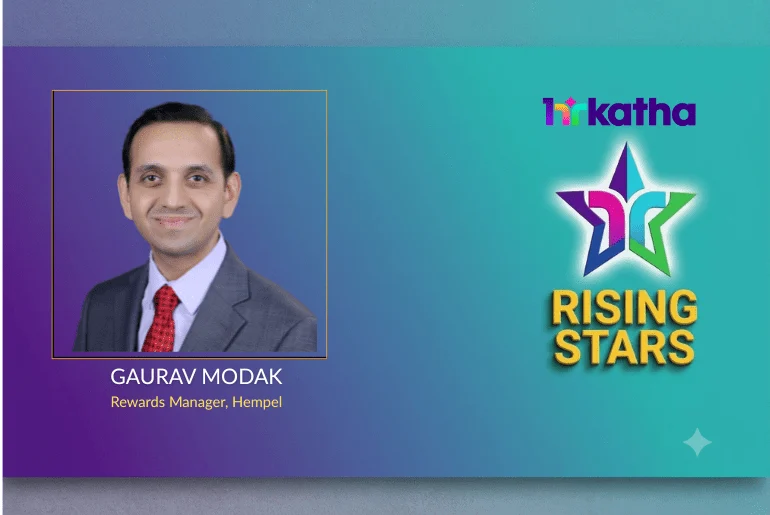
This esteemed recognition highlights Modak’s profound impact on the human resources landscape, particularly within the specialized domain of compensation, performance, and incentive design. The HRKatha Rising Star Leadership Awards, a prestigious annual event celebrating the next generation of HR leaders, identified Modak as a standout professional whose innovative approaches and leadership potential are set to shape the future of the profession. His victory in the "Rewards Guru" category underscores his unique ability to dissect complex remuneration challenges, transforming them into strategic opportunities that drive organizational success and foster employee engagement.
The HRKatha Rising Star Leadership Awards: A Beacon for Future HR Leadership
The HRKatha Rising Star Leadership Awards are more than just a celebratory event; they serve as a critical platform for identifying, acknowledging, and nurturing emerging talent within the human resources sector. Initiated by HRKatha, a leading voice in HR media and insights, these awards aim to spotlight individuals who demonstrate exceptional leadership, strategic acumen, and a forward-thinking approach to HR challenges. The "Rising Stars" series, of which Modak is now a distinguished part, profiles professionals whose work, ideas, and leadership potential are deemed deserving of wider recognition, inspiring peers and setting new benchmarks for excellence. The "Rewards Guru" category, specifically, seeks to honor those who have shown exemplary skill in designing, implementing, and managing compensation and benefits programs that are both equitable and strategically aligned with business objectives. In a rapidly evolving economic climate, where talent attraction and retention are paramount, the expertise of professionals like Modak becomes indispensable, making the HRKatha awards a vital barometer of innovation in HR.
An Unscripted Ascent: Confidence Forged in the Crucible of Responsibility
Modak’s journey to becoming a "Rewards Guru" is replete with moments that underscore his philosophy of leadership, one of the most formative occurring during an unexpected trial by fire. He found himself thrust into leading a crucial RemCo (Remuneration Committee) discussion, a high-stakes meeting typically reserved for senior executives. Initially present to provide analytical support and background material for his manager, a last-minute withdrawal left Modak to navigate the complexities of executive salary decisions and market data on his own.
Instead of faltering, Modak embraced the challenge. He meticulously revisited the prepared materials, drawing on his understanding of how similar conversations had been handled previously. This proactive preparation, combined with an astute anticipation of potential questions and concerns, allowed him to confidently step into the leadership vacuum. The meeting, to the appreciation of the HR director, concluded successfully. Yet, for Modak, the lasting takeaway was not the compliment, but the profound realization that "confidence does not always come before action." He elaborates, "Sometimes, confidence is built by stepping forward despite the fear." This experience fundamentally shaped his understanding of leadership, positing that pressure doesn’t spontaneously generate capability; rather, it unearths the foundational knowledge and resilience already cultivated. This incident serves as a powerful testament to Modak’s inherent readiness and his belief that true competence is revealed under duress, a philosophy that resonates deeply within the dynamic and often unpredictable realm of HR.
Redefining Rewards: Beyond Technical Design to Cultivating Ownership
One of the most instructive experiences in Modak’s career, and a cornerstone of his "Rewards Guru" philosophy, revolved around a variable-pay plan that, on paper, appeared flawlessly designed. It had secured senior management’s approval, its structure meticulously linked to overarching business objectives, and goal-setting followed a rigorous top-down process. Despite its apparent technical soundness, the plan failed to resonate with employees, leading to a significant disconnect.
Initial re-examination of the document offered little insight; the mechanics were coherent, and the performance measures seemed defensible. The true flaw only became apparent when Modak engaged directly with local, plant, and regional HR teams. Through these conversations, he discovered a critical oversight: many local teams had not been meaningfully involved in the plan’s design. Consequently, several performance measures against which employees were assessed felt beyond their direct control, eroding their sense of agency and motivation. This revelation crystallized a fundamental truth for Modak: the weakness was not in the technical design but in the lack of ownership.
This incident highlights a broader industry challenge. According to a 2023 Willis Towers Watson study, while 80% of companies believe their incentive plans are effective, only 40% of employees fully understand how their pay is linked to performance. This gap often stems from a lack of participation in the design phase. Modak’s response was not to introduce more complexity but to instigate a collaborative redesign. Corporate and local teams worked together, scrutinizing which measures were strategically vital and which employees could realistically influence. For Modak, the lesson extended far beyond compensation: a system, no matter how logically sound, can falter if the individuals operating within it do not comprehend its rationale or believe they can genuinely impact its outcomes. He advocates for diagnosis over rushed design improvements, emphasizing that understanding the root cause of disengagement is paramount to crafting truly effective reward strategies. This approach directly contributes to higher employee engagement, with studies showing that employees involved in goal-setting are nearly three times more engaged than those who aren’t.
Incentives as Strategic Architects: Bridging Pay and Performance
At the heart of Modak’s professional curiosity lies the intricate intersection of pay and performance. He views incentive design as one of the most potent mechanisms an organization possesses to translate overarching strategy into concrete individual behaviors. A well-crafted compensation plan, in his view, does far more than simply determine who receives what; it unequivocally signals what the organization truly values and expects its people to prioritize.
This perspective positions incentive frameworks not merely as administrative tools but as strategic instruments. In an era where corporate responsibility extends beyond financial metrics, Modak is particularly interested in incentive structures that incorporate measures beyond traditional financial performance. This includes crucial factors such as safety, sustainability, customer outcomes, and broader Environmental, Social, and Governance (ESG) priorities. A 2023 report by Mercer found that over 70% of companies are now considering or have already integrated ESG metrics into executive compensation plans, reflecting a growing recognition of their strategic importance.
However, Modak cautions that the mere inclusion of such measures is not enough. The more challenging question, he posits, is whether these metrics genuinely influence behavior or merely become another "box to tick." A strategically sophisticated metric can lose its impact if employees fail to grasp the explicit connection between the measure, their daily decisions, and the organization’s broader strategic imperatives. This requires clear communication, consistent reinforcement, and a culture that champions these non-financial goals as integral to success. His insight aligns with research suggesting that only 35% of employees fully understand their company’s strategy, indicating a critical need for reward systems to bridge this knowledge gap effectively. Modak advocates for a transparent and comprehensible link, ensuring that every employee understands how their actions contribute to the achievement of these multifaceted organizational objectives, thereby transforming incentives into powerful drivers of strategic execution.
Navigating Nuance: Trade-offs, Not Sides
In the complex landscape of organizational dynamics, situations frequently arise where leadership priorities and employee expectations appear to diverge, creating tension. Modak’s approach to these conflicts is characterized by a nuanced perspective: he does not perceive HR’s role as automatically siding with one party over the other. Instead, he champions the explicit articulation and transparent management of trade-offs.
Consider the perennial challenge of business travel. Leadership, driven by financial prudence, seeks cost discipline and efficiency. Employees, conversely, often argue that travel is indispensable for fostering robust customer relationships, driving sales, or ensuring operational effectiveness. Modak acknowledges that neither position is inherently unreasonable; both perspectives hold valid points. The true challenge, he contends, lies in distinguishing between what is genuinely necessary and what has become mere habit.
His methodology involves a critical evaluation: prioritizing travel that is directly linked to essential customer engagements or undeniable operational requirements, while simultaneously exploring and promoting online alternatives for other interactions. This strategic discernment, rather than an arbitrary cost-cutting mandate, ensures that critical business functions are maintained while optimizing resource allocation. According to a 2022 Deloitte survey, while business travel is rebounding, companies are increasingly scrutinizing its necessity, with many opting for hybrid models to balance cost and connectivity. For Modak, the ultimate test of this approach is not whether every stakeholder is completely satisfied with the outcome, which is often an unrealistic expectation in trade-off scenarios. Rather, the measure of success is whether all parties can understand the rationale and the process through which the organization arrived at its decision. This transparency fosters trust and organizational coherence, even when difficult choices are made, reinforcing HR’s role as a strategic mediator rather than an arbiter.
AI in HR: Augmenting Analysis, Preserving Human Judgment
The advent of artificial intelligence (AI) has profoundly impacted various professional domains, and HR is no exception. Gaurav Modak is an active proponent of leveraging AI’s capabilities, particularly in the areas of research, communication, presentation development, and rigorously testing his own hypotheses. Within the specific context of rewards, he foresees AI becoming an increasingly invaluable tool for sophisticated market analysis, precise pay-equity detection, and intricate compensation modeling. This technological advancement, he believes, will democratize access to high-level analytics, making it available to a far broader spectrum of decision-makers than ever before. A 2023 Gartner survey indicates that over 50% of HR leaders plan to invest in AI-driven HR solutions within the next two years, with compensation and workforce analytics being top priorities.
However, Modak draws a critical and unequivocal distinction between AI’s analytical prowess and the indispensable human faculty of judgment. While an AI system can adeptly identify anomalies in data sets or simulate myriad salary scenarios with remarkable speed and accuracy, it cannot, by its very nature, determine the optimal course of action for an organization. AI lacks the capacity for nuanced understanding of organizational culture, employee sentiment, ethical considerations, or the broader human implications of its recommendations.
Modak emphasizes that two recommendations, which might appear equally rational and mathematically sound within a model, can elicit vastly different reactions and have disparate impacts once they are communicated to employees. The human element—empathy, intuition, strategic foresight, and an understanding of organizational psychology—remains paramount in interpreting AI-generated insights and making decisions that are not just logically correct but also contextually appropriate and humanely sensitive. This philosophy positions AI as a powerful augmentative tool for HR professionals, enhancing their analytical capabilities without supplanting their critical role in strategic decision-making and empathetic leadership.
The Power of Simplicity in Strategic Design
One of Gaurav Modak’s most steadfast convictions, and arguably one of his most impactful, revolves around the principle of simplicity in incentive design. He firmly believes that an incentive plan does not need to be convoluted or labyrinthine to be strategic. In fact, he argues that excessive complexity can often create a deceptive illusion of sophistication while simultaneously rendering the plan impenetrable to the very individuals it is intended to motivate: managers and employees.
The core challenge with overly complex designs is their inherent lack of clarity. If an employee cannot readily explain what factors genuinely drive their incentive, or if a manager struggles to articulate the plan’s mechanics, then, Modak contends, the plan has fundamentally failed at its most basic and crucial objective: making organizational priorities visible and understandable. A 2021 study by WorldatWork highlighted that organizations with simple, transparent reward programs reported significantly higher employee understanding and satisfaction compared to those with complex systems.
Simplicity, in Modak’s view, is not the antithesis of strategy; rather, it is its enabler. A clear, straightforward incentive structure ensures that employees understand the link between their efforts and their rewards, thereby reinforcing desired behaviors and aligning individual contributions with strategic goals. This clarity fosters trust, reduces ambiguity, and empowers employees to focus their energies effectively. It moves beyond the superficial appeal of intricate calculations to the deeper, more impactful goal of genuine motivation and strategic alignment. By championing simplicity, Modak advocates for incentive plans that are not just technically sound but also practically effective, fostering a culture of transparency and shared understanding across the organization.
Industry Recognition and Peer Acclaim: Why He is a Rising Star
Gaurav Modak’s recognition as a "Rising Star" is firmly rooted in his exceptional ability to diagnose that challenges in rewards rarely exist in isolation. His approach acknowledges that what appears to be a purely technical compensation problem is often symptomatic of deeper organizational or human factors. The instructive experience with the variable-pay plan serves as a prime example: while technically defensible and structurally sound, it was organizationally incomplete. The critical missing element was the sense of ownership among the very people expected to operate within its framework.
Modak’s response to this challenge was characteristic of his leadership style: instead of introducing further layers of complexity or implementing quick, superficial fixes, he meticulously sought to understand what the initial design had overlooked. This instinct, prioritizing thorough diagnosis over hasty solutions and valuing clarity over perceived sophistication, permeates every aspect of his professional philosophy. It guides his perspective on the strategic integration of AI, his measured approach to resolving conflicting priorities, and his foundational principles for incentive design.
In a discipline where numerical data can easily create an illusion of unimpeachable objectivity, Modak’s discerning eye recognizes that such objectivity is not always inherently present. He understands that the human element, organizational context, and the psychological impact of decisions are as crucial as the algorithms and spreadsheets. This holistic, human-centric yet analytically rigorous approach is precisely what distinguishes him as a "Rising Star" and a true "Rewards Guru," positioning him as a leader who not only understands the mechanics of compensation but also the intricate dynamics of human motivation and organizational success.
Quick Takes: Glimpses into a Leader’s Mind
Beyond his professional accolades, Modak’s "Quick Takes" offer deeper insights into the man behind the awards, revealing his philosophy and personal preferences that subtly influence his leadership style.
When it comes to his daily fuel, coffee is his choice, "mostly milk these days," hinting at a preference for a balanced approach. He views spreadsheets as the foundational data, but emphasizes that storytelling is what gives that data meaning, highlighting his belief in connecting analytical rigor with human narrative for effective communication.
His unpopular HR opinion directly reinforces his advocacy for simplicity: "An incentive scheme doesn’t need to be complicated to be strategic. If employees and managers can’t understand it, even a sophisticated design can fail." This conviction underscores his practical, results-oriented mindset.
Asked about a dinner with any HR leader, living or dead, he chooses Dr. Santrupt Misra, whom he considers a career mentor. He would seek advice on a profound career question: "how you know when it’s time to leave a role you’re succeeding in for something entirely new." This reveals a leader who is not complacent, constantly seeking growth and new challenges.
His reading list includes "Breakpoint: The Crisis of the Middle Class and the Future of Work" by Saurabh Mukherjea. This choice indicates a keen awareness of broader socio-economic trends and their implications for the workforce, reflecting a leader who thinks beyond immediate HR concerns. The book explores the economic pressures on the middle class and the evolving nature of work, offering a lens through which Modak likely views talent strategies and compensation fairness.
Finally, his surprising skill that makes him better at HR is patience. He explains, "The first explanation is rarely the real one." This speaks volumes about his diagnostic approach, his commitment to deep understanding, and his ability to navigate complex human dynamics, ensuring that solutions are built on genuine insight rather than superficial assumptions. These "Quick Takes" collectively paint a picture of a thoughtful, strategic, and deeply empathetic leader whose impact extends far beyond the numbers.
Broader Implications for HR Leadership
Gaurav Modak’s recognition as a "Rewards Guru" at the HRKatha Rising Star Leadership Awards 2025 carries significant implications for the broader HR profession. His journey and philosophy underscore a paradigm shift in HR leadership—moving beyond transactional functions to a more strategic, empathetic, and diagnostic approach.
His emphasis on building confidence through action rather than waiting for it to arrive offers a powerful lesson for aspiring leaders across all disciplines. It promotes a culture of proactive engagement and resilience, crucial in today’s volatile business environment. Furthermore, his insistence on "ownership" in reward system design highlights the critical need for co-creation and inclusivity in HR initiatives. In an era where employee engagement is a top priority for 85% of HR leaders, according to a 2023 Gartner survey, Modak’s approach provides a clear roadmap for fostering genuine buy-in and effectiveness in HR programs.
The strategic integration of non-financial metrics like ESG into incentive plans, as advocated by Modak, signifies the evolving role of HR in driving corporate responsibility and sustainability. This is not just about compliance but about shaping organizational culture and values through tangible reward mechanisms. His nuanced handling of trade-offs, promoting transparency and understanding over unilateral decision-making, serves as a model for navigating complex stakeholder demands, enhancing trust and organizational coherence.
Finally, Modak’s perspective on AI in HR—embracing its analytical power while steadfastly guarding the irreplaceable role of human judgment—is particularly pertinent. As technology continues to advance, HR leaders must learn to harness its capabilities without losing sight of the human element that defines their profession. His advocacy for simplicity in strategic design reminds us that true effectiveness often lies in clarity and accessibility, ensuring that even the most sophisticated strategies resonate with every employee. Gaurav Modak is not just a "Rewards Guru"; he is a visionary leader whose insights are shaping the very essence of future-ready HR.