
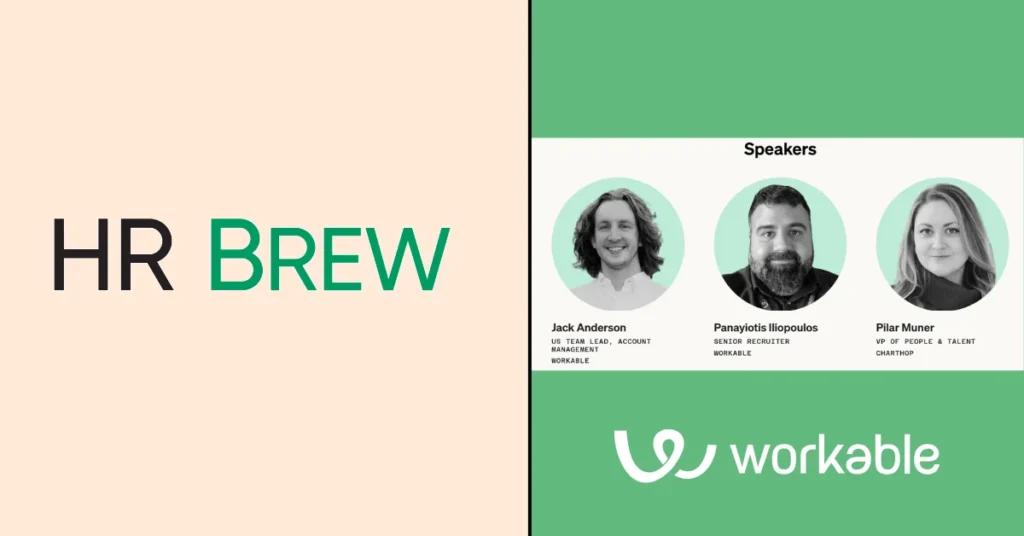
The accelerating integration of artificial intelligence into the modern workplace has profound implications for every sector, with human resources and talent acquisition standing at a critical juncture. Recently, HR Brew, a prominent voice in the HR community, convened a pivotal discussion with experts from Workable, a leading applicant tracking system and hiring platform, to dissect one of the most pressing questions facing talent teams today: "How should HR leaders approach AI in the hiring process in a way that is ethical, practical, and still human-centered?" The virtual event featured Panayotis Eliopoulos, Senior Recruiter at Workable, and Jack Anderson, US Team Lead of Account Management at Workable, who offered invaluable insights derived from their extensive experience and Workable’s deep expertise in recruitment technology. The discussion spanned crucial topics including the imperative of transparency in AI applications, the role and limitations of Large Language Models (LLMs), and the fundamental differences between consumer-grade AI tools and specialized recruiter-specific AI built directly into Applicant Tracking Systems (ATS). The dialogue underscored a consensus: while AI offers transformative potential for efficiency and scalability in hiring, its successful and responsible adoption necessitates a deliberate, thoughtful, and human-first strategy.
The Evolving Landscape of Talent Acquisition and the AI Imperative
The past decade has witnessed an unprecedented technological revolution, with AI emerging as a dominant force reshaping industries globally. For human resources, this shift is particularly resonant. Traditionally, HR functions have been labor-intensive, often bogged down by administrative tasks, leading to inefficiencies in sourcing, screening, and managing candidates. The rise of digital platforms and the sheer volume of applications for open positions have further exacerbated these challenges, placing immense pressure on talent acquisition teams to find innovative solutions.
Enter AI. From early forms of automation in resume parsing and candidate matching to sophisticated machine learning algorithms capable of predictive analytics and natural language processing, AI has steadily permeated the HR tech stack. Its promise is compelling: reduce time-to-hire, enhance candidate quality, mitigate unconscious bias, and free up recruiters to focus on strategic, human-centric interactions. However, this promise is intertwined with a complex web of ethical considerations, practical implementation hurdles, and the overarching need to maintain the human touch that defines effective recruitment. The HR Brew and Workable discussion arrived at a crucial moment, as organizations worldwide grapple with these opportunities and challenges, seeking clear guidance on navigating this rapidly evolving terrain.
Seamless Integration: AI as a Core Component, Not an Afterthought
One of the foundational takeaways from the discussion was the principle that "AI works best when it is built directly into the recruiting process, not added later." This seemingly straightforward assertion carries profound implications for how organizations should approach AI adoption. The experts emphasized that simply layering standalone AI tools onto existing, often disparate, recruitment workflows can lead to fragmentation, data silos, and a diminished return on investment. Instead, AI should be conceived as an intrinsic component, seamlessly woven into the fabric of an Applicant Tracking System (ATS) or other core HR platforms.
When AI is integrated natively, it can leverage a holistic view of the recruitment lifecycle, from initial job posting creation to candidate onboarding. For instance, an ATS with integrated AI can automatically parse resumes, extracting relevant skills and experience, and then intelligently match them against specific job requirements. This eliminates manual data entry errors, ensures data consistency across the platform, and provides recruiters with real-time, actionable insights within their familiar workflow. Contrast this with a scenario where recruiters might use a separate AI tool for resume screening, then manually transfer selected candidate data into their ATS, only to use another tool for scheduling, and so forth. Such fragmented processes introduce inefficiencies, create potential for data loss or inconsistencies, and often lead to recruiter frustration and low adoption rates.
The implications of deep integration extend beyond mere convenience. It allows AI to learn and adapt more effectively from an organization’s unique hiring data, improving its accuracy and relevance over time. For example, an AI deeply embedded within an ATS can analyze past successful hires, identifying patterns in qualifications, experience, and even interview performance, to better predict future successful candidates. This context-aware learning is critical for ensuring that AI truly augments the recruitment process rather than merely adding another layer of complexity. Furthermore, integrated AI facilitates a more consistent and equitable candidate experience, as all interactions and assessments are managed within a unified system, reducing the likelihood of disparate processes introducing bias or inefficiency.
The Indispensable Human Element: Judgment Remains Paramount
Despite the advancements in AI, the discussion unequivocally affirmed that "Human judgment remains central to hiring." While AI excels at processing vast amounts of data, identifying patterns, and automating repetitive tasks, it fundamentally lacks the capacity for nuanced understanding, emotional intelligence, and complex ethical reasoning that are hallmarks of human decision-making. The experts stressed that AI should serve as a powerful assistant, augmenting the recruiter’s capabilities, rather than attempting to replace the human element entirely.
Recruiting is inherently a human-centric endeavor. Assessing cultural fit, evaluating soft skills like communication and teamwork, discerning genuine motivation, and conducting empathetic interviews require a level of intuition and emotional intelligence that current AI technologies cannot replicate. A hiring manager’s ability to "read the room" during an interview, to pick up on subtle cues, and to understand the unstated needs of a team or organization remains irreplaceable. AI can, for example, analyze sentiment in written communication or identify keywords in video interviews, but it cannot fully grasp the qualitative aspects of human interaction that are vital for building a cohesive and productive team.
Moreover, human judgment is crucial for navigating the ethical complexities of hiring. While AI can be designed to mitigate certain biases, it can also inadvertently perpetuate or even amplify existing biases if not carefully monitored and regularly audited by humans. Recruiters provide the essential oversight, challenging AI-generated recommendations, interpreting ambiguous data, and ensuring that decisions align with the company’s values and legal obligations. According to a 2023 survey by SHRM, only 14% of HR professionals believe AI should make hiring decisions independently, with the vast majority favoring AI as a supportive tool for human decision-makers. This highlights a clear industry consensus that the strategic, empathetic, and ethical dimensions of hiring firmly rest with human professionals. By offloading administrative burdens, AI empowers recruiters to dedicate more time to these high-value, human-intensive activities, fostering stronger candidate relationships and making more informed, holistic hiring decisions.
Fostering Trust Through Transparency
The Workable and HR Brew experts strongly emphasized that "Trust depends on transparency" when deploying AI in hiring. The rapid evolution of AI technology has, for many, created a "black box" perception, where decisions are made by algorithms without clear explanations. This lack of clarity can erode trust among candidates, employees, and even internal stakeholders. To counteract this, organizations must commit to radical transparency regarding their use of AI in recruitment.
Transparency in AI hiring means clearly communicating to candidates when and how AI is being used in the application process. This could involve disclosing that an AI tool is used for initial resume screening, for scheduling interviews, or for providing preliminary assessments. Beyond mere disclosure, true transparency requires explaining how the AI makes its decisions. What criteria are being used? How are candidates being evaluated or ranked? While proprietary algorithms cannot always be fully divulged, organizations can provide general principles and methodologies. For instance, explaining that an AI prioritizes candidates with specific keywords from the job description or a demonstrated track record in relevant projects can help demystify the process.
The importance of transparency is not merely an ethical nicety; it is increasingly a regulatory imperative. Laws such as New York City’s Local Law 144, which mandates bias audits for automated employment decision tools, and the forthcoming European Union AI Act, which classifies AI systems in employment as "high-risk" and imposes stringent transparency and oversight requirements, signal a global trend towards greater accountability. Organizations that proactively embrace transparency will not only build stronger trust with candidates but also position themselves favorably in a tightening regulatory landscape. A transparent approach helps to mitigate perceptions of unfairness or discrimination, allows for human intervention and appeal mechanisms, and ultimately fosters a more equitable and credible hiring experience for all parties involved. This commitment to openness can transform a potentially intimidating technological shift into an opportunity to build a more fair and trusted talent acquisition process.
Specialized AI: The Edge of Recruiter-Focused Tools
A critical distinction highlighted in the discussion was that "Recruiter-focused AI outperforms general-purpose tools." In the current landscape, the proliferation of large language models (LLMs) like ChatGPT has made AI accessible to the masses, leading many to experiment with these general-purpose tools for various business applications, including recruitment. While these tools can be useful for generating basic text or brainstorming, their utility in the specialized context of talent acquisition is often limited and can even be counterproductive.
Recruiter-focused AI, such as that developed by Workable and integrated into its ATS, is fundamentally different. It is not designed to be a general conversational agent but rather a highly specialized engine trained on vast datasets specific to recruitment: millions of job descriptions, candidate profiles, historical hiring outcomes, industry-specific terminology, and compliance requirements. This specialized training allows recruiter-focused AI to understand the nuances of job roles, accurately interpret diverse candidate experiences, and generate highly relevant and precise outputs.
For example, a general LLM might struggle to differentiate between similar-sounding technical skills or understand the context of niche industry jargon, potentially leading to inaccurate candidate matching or poorly phrased job descriptions. In contrast, a recruiter-specific AI, having been trained on countless successful hiring instances for specific roles, can accurately identify precise skill sets, suggest optimal keyword strategies for job postings to attract diverse talent, and even predict potential cultural fit based on a candidate’s profile and past work environments. Furthermore, specialized AI is often built with compliance in mind, incorporating mechanisms to identify and mitigate bias, ensuring that the hiring process remains fair and equitable. This level of precision, relevance, and built-in compliance is simply beyond the scope of general-purpose AI tools, which lack the deep domain knowledge and contextual understanding necessary for effective and ethical talent acquisition. Investing in and leveraging specialized AI tools thus provides a significant competitive advantage for organizations seeking to optimize their hiring process.
Workable’s Commitment: Compliance, Context, and People-First Principles
The discussion culminated with an articulation of Workable’s own philosophy and approach to AI, emphasizing that "Workable’s approach is compliant, context-driven, and people-first." This statement encapsulates a strategic framework designed to harness the power of AI while upholding ethical standards and prioritizing the human experience in hiring.
Workable’s commitment to compliance is paramount in an era of increasing scrutiny over AI’s role in employment decisions. This involves not only adhering to existing data privacy regulations like GDPR and CCPA but also proactively designing AI features to comply with emerging anti-discrimination and bias audit laws, such as NYC’s Local Law 144. Workable’s AI tools are engineered with fairness by design, incorporating mechanisms for bias detection and mitigation, ensuring that algorithms are regularly audited, and providing transparent reporting capabilities. This proactive stance helps organizations navigate complex legal landscapes with confidence, minimizing risks associated with algorithmic bias or non-compliance.
The context-driven aspect of Workable’s AI ensures that the technology is not a one-size-fits-all solution but rather adapts to the unique needs of each hiring scenario. This means understanding the specific requirements of a job role, the cultural nuances of a company, and the dynamics of the local job market. For instance, Workable’s AI can tailor its recommendations for candidate outreach or job description optimization based on the industry, company size, and specific skills required, rather than applying generic templates. This intelligent adaptation leads to more relevant candidate matches, more effective communication, and ultimately, better hiring outcomes that truly align with an organization’s strategic goals.
Finally, Workable’s unwavering dedication to a people-first approach underscores its belief that AI should enhance, not diminish, the human element of recruitment. The AI is designed to empower recruiters, freeing them from repetitive administrative tasks so they can focus on what they do best: building relationships, conducting insightful interviews, and making strategic decisions. This includes automating initial candidate screening, scheduling interviews, and generating personalized communication, allowing recruiters to dedicate more time to engaging with top talent, understanding their motivations, and ensuring a positive candidate experience. By prioritizing the human experience for both recruiters and candidates, Workable aims to create a more efficient, equitable, and ultimately more human hiring process. This integrated, ethical, and human-centric approach serves as a blueprint for organizations seeking to responsibly leverage AI in their talent acquisition strategies.
Broader Impact and Implications for the Future of Hiring
The insights shared by Workable and HR Brew carry significant implications for the future trajectory of talent acquisition and the broader HR profession. The responsible integration of AI is not merely an operational upgrade; it represents a fundamental shift in how organizations attract, assess, and retain talent.
Firstly, the evolving role of HR professionals is undeniable. Recruiters are transitioning from administrators to strategic partners. With AI handling much of the grunt work, HR professionals will increasingly need to cultivate skills in data interpretation, ethical AI governance, change management, and advanced relationship building. Their focus will shift to understanding the strategic talent needs of the business, interpreting AI-generated insights, and ensuring the human-centric aspects of hiring are amplified. This necessitates ongoing professional development and a proactive embrace of new technologies.
Secondly, the candidate experience stands to be profoundly transformed. When implemented thoughtfully, AI can personalize the application process, provide quicker feedback, and streamline scheduling, leading to a more positive and engaging journey for candidates. However, if transparency is lacking or AI is poorly implemented, it risks dehumanizing the process, leading to frustration and disengagement. Organizations that prioritize ethical, transparent AI will gain a significant competitive advantage in attracting top talent, who increasingly value respectful and efficient interactions.
Thirdly, the impact on Diversity, Equity, and Inclusion (DEI) is a double-edged sword. AI holds immense potential to mitigate unconscious human biases in resume screening and candidate selection, thereby fostering more diverse candidate pools. Algorithms, if trained on diverse and unbiased data, can focus purely on qualifications and skills. However, if AI systems are trained on historical data reflecting past biases or if their design is not rigorously audited, they can inadvertently perpetuate or even amplify existing inequalities. The ethical imperative for continuous monitoring, bias audits, and explainable AI becomes paramount in achieving true DEI goals.
Finally, the regulatory landscape will continue to evolve rapidly. As more jurisdictions introduce laws governing AI’s use in employment, organizations must remain agile and proactive in their compliance efforts. This will necessitate robust internal governance frameworks, regular AI system audits, and a commitment to transparency that goes beyond mere legal obligation. Those companies that embrace these changes early will not only avoid penalties but also build a reputation as ethical and forward-thinking employers.
In conclusion, the discussion hosted by HR Brew and Workable served as a vital guidepost for HR leaders navigating the complex, yet promising, world of AI in recruitment. The overarching message is clear: AI is not a magic bullet, nor is it a threat to human judgment. Instead, it is a powerful tool that, when integrated seamlessly, used transparently, and guided by a people-first ethos, can profoundly enhance the efficiency, fairness, and strategic impact of talent acquisition. The future of hiring is undoubtedly a hybrid one, where human intelligence and artificial intelligence collaborate to build stronger, more diverse, and more innovative workforces. Organizations are encouraged to watch the full discussion to delve deeper into these crucial insights and equip themselves for this transformative journey.






