The corporate learning landscape is undergoing a seismic shift, driven by the advent of artificial intelligence and the emergence of a new paradigm termed "Dynamic Enablement." This evolution, detailed in Josh Bersin’s recent publication, "The Definitive Guide to Corporate Learning," signals a move beyond traditional education and credentialing towards a more integrated approach where Learning and Development (L&D) teams leverage internal expertise and AI to provide employees with timely, contextual support directly within their workflow. This transformation is not just theoretical; the market is already responding with a surge of vendors "lurching" to meet this burgeoning demand.
The Genesis of Dynamic Enablement
Historically, corporate learning focused on structured courses, certifications, and the development of foundational knowledge. However, the modern workplace demands agility and immediate problem-solving. The concept of "learning in the flow of work" has been a recognized aspiration for years, but it is now being redefined and expanded. Dynamic Enablement encompasses a broader spectrum of support, ranging from answering specific questions and deep-diving into complex topics to facilitating connections with subject matter experts and providing just-in-time learning opportunities. This continuous, on-demand support is facilitated by peers, managers, and internal experts, creating a pervasive learning ecosystem.
The recent publication of "The Definitive Guide to Corporate Learning" by Josh Bersin has amplified this discussion. Bersin’s research highlights that within weeks of its release, numerous technology vendors have begun pivoting their strategies and product offerings to align with the principles of dynamic enablement. This rapid market response underscores the significant unmet need for solutions that can effectively deliver this integrated support. The driving force behind this acceleration is the increasing accessibility and sophistication of AI technologies, which are making it more feasible and cost-effective to implement dynamic enablement strategies at scale.
Defining the Enablement Experience
The core of dynamic enablement lies in understanding and addressing the diverse needs of employees. When an individual requires assistance, the approach to providing that support can vary significantly. Whether it’s a frontline worker needing quick procedural guidance, a sales representative requiring up-to-the-minute product information, a software engineer troubleshooting a complex coding issue, or a middle manager seeking to understand a new policy, the "enablement platform" must be adaptable.

The "all of the above" approach is crucial here. An Uber driver’s need for enablement will differ vastly from that of a senior executive. Therefore, HR and L&D departments are tasked with integrating enablement platforms that are flexible enough to cater to a multitude of use cases, roles, and scenarios within an organization. This necessitates a move away from one-size-fits-all learning solutions towards more personalized and context-aware support systems.
A Market in Flux: Vendors Embracing Dynamic Enablement
The rapid evolution of the dynamic enablement space has led to a frenzied pace among technology providers. This "lurching" moment, as described by Bersin, signifies a period of intense innovation and market adaptation. While exciting, it also means that organizations must approach vendor selection with a critical eye, thoroughly evaluating solutions before becoming overly committed.
Several key players are emerging and adapting their offerings to this new landscape:
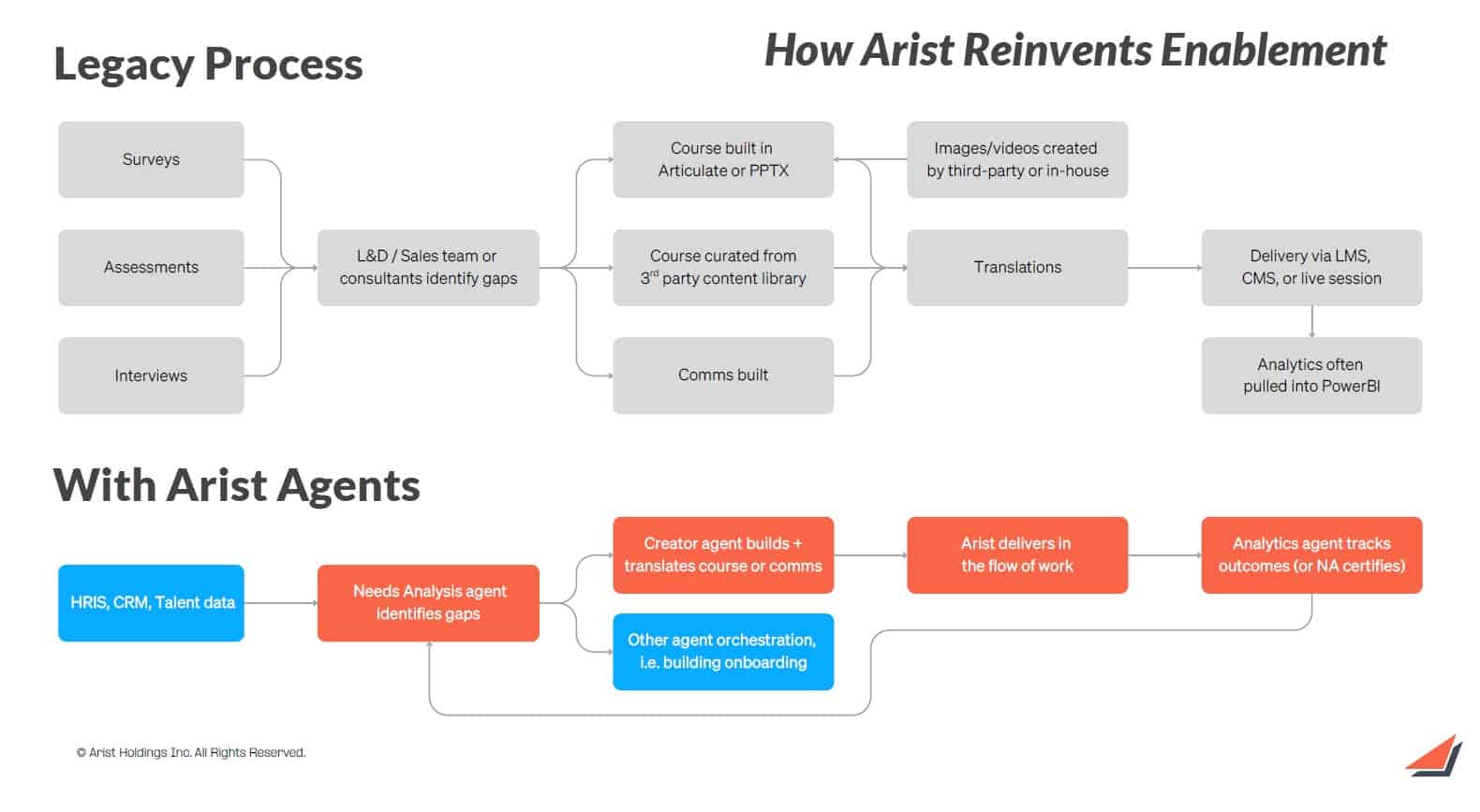
Arist: Mobile-First Enablement and AI Performance Consulting
Arist, a company that partners with Bersin on HR training initiatives, has rapidly expanded from its roots as a mobile-first enablement platform. It excels at dynamically generating content and breaking down complex training modules into digestible pieces, ideal for delivery on mobile devices. Their offerings have evolved to include an "AI Performance Consultant." This innovative tool can interview operational staff, identify performance bottlenecks, and then autonomously develop content to address these issues. This represents a significant step towards "autonomous corporate learning," where AI agents proactively identify and resolve performance challenges, akin to self-driving vehicles in the automotive industry.
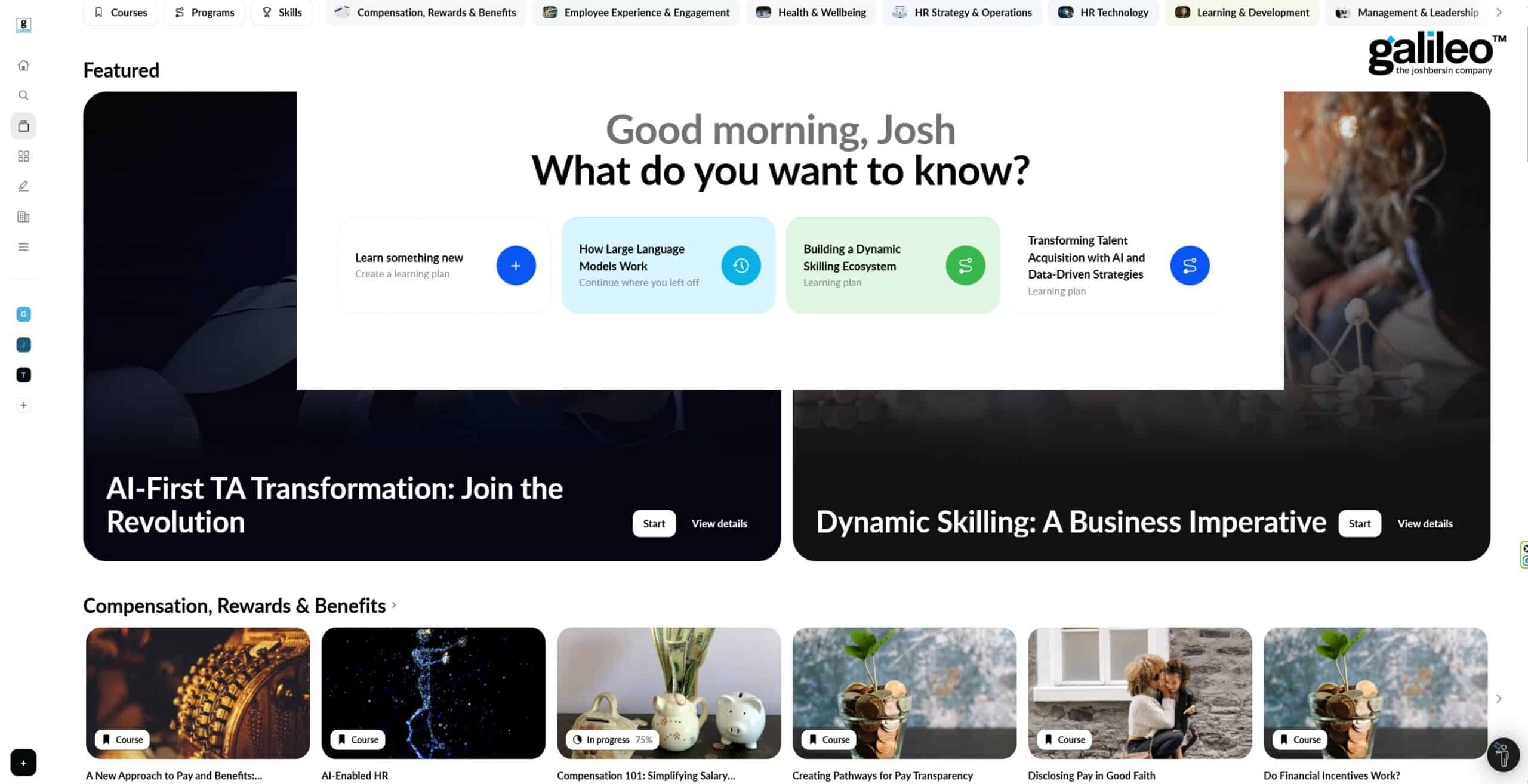
Sana (Galileo Learn): AI-Native Powerhouse
Sana, now part of Workday, is recognized as one of the most advanced AI-native learning platforms available. Founded in 2016 by Joel Hellermark, Sana has consistently leveraged AI, utilizing OpenAI technology long before ChatGPT’s public launch. Its deep AI core has enabled the development of an end-to-end learning platform, accessible through Galileo on a per-user basis. The introduction of the Sana Agent platform, which works in tandem with the learning system, transforms it into a dynamic hub for learning, knowledge management, and AI agent development. The forthcoming Sana Enterprise will integrate directly with Workday data and transactions, solidifying its position as a potent dynamic enablement solution.

Seismic: Leading the Sales Enablement Charge
Seismic operates in the substantial sales enablement market, a sector valued at $4-6 billion and experiencing robust double-digit growth. This market focuses on equipping sales teams with the necessary content, tools, and information—such as pricing guides, product launch materials, and competitive intelligence—to perform effectively. While Seismic is a market leader, it competes with other significant players like Allego, Mindtickle, Highspot, and Showpad. The integration of dynamic enablement principles is crucial for these platforms to provide sales professionals with real-time insights and support directly at the point of need.
Docebo: Next-Generation LMS with AI Integration
Docebo, a publicly traded LMS provider, has aggressively pursued AI-native learning and enablement. Their platform now features AI tutors, AI-native content authoring, and templated AI assessments, all designed to enhance both revenue-generating training and internal corporate L&D. The recent acquisition of 365 Talents has further bolstered Docebo’s capabilities, enabling a comprehensive AI-driven skills intelligence system. This allows organizations to identify skills within content, build a corporate-wide skills taxonomy, and align learning initiatives with identified needs. This development positions Docebo as a key player in a sub-market of enablement focused on skills development and career pathing.
LinkedIn Learning: AI Coaching for Skill Development
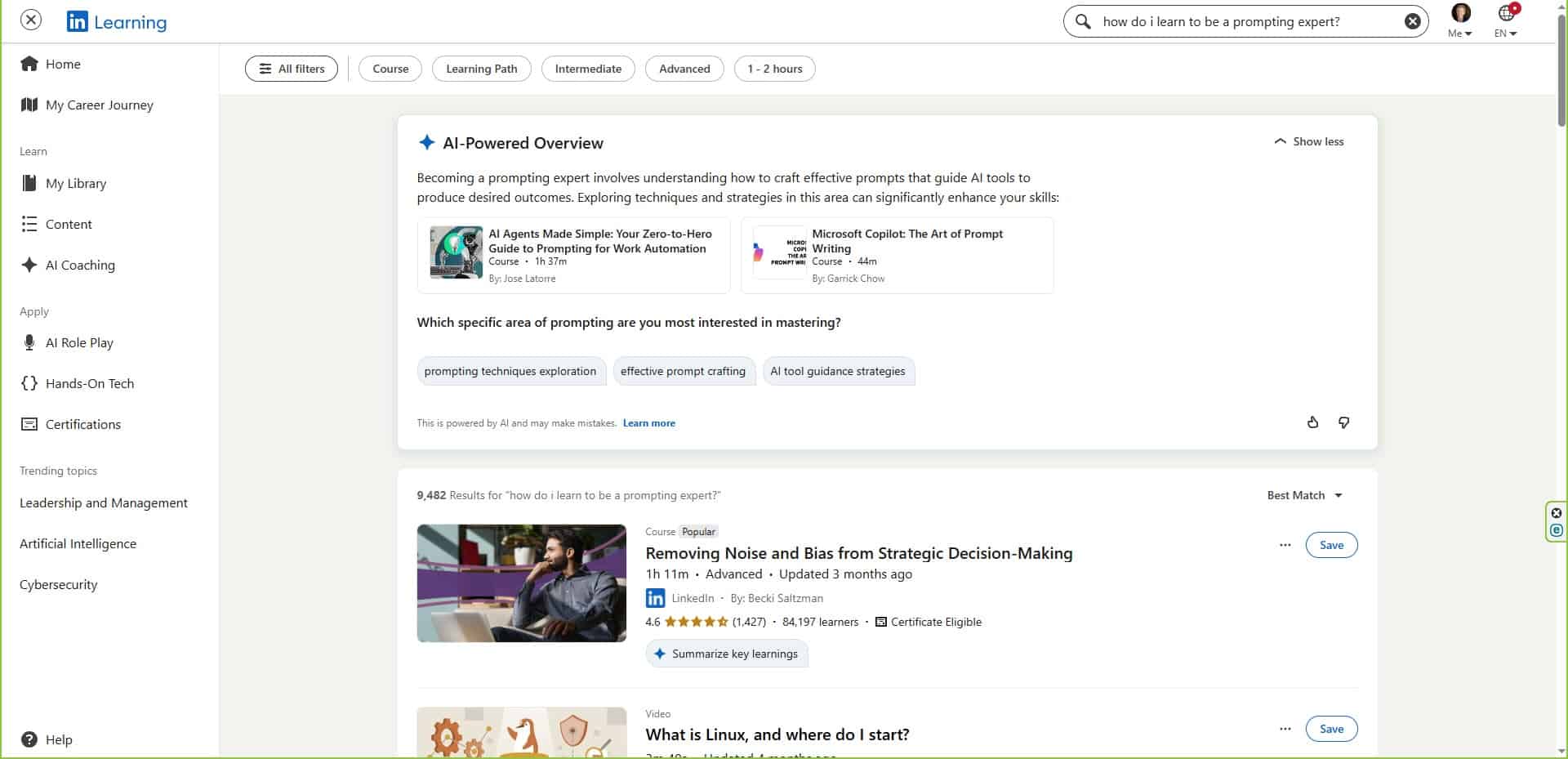
LinkedIn Learning has become a staple for L&D leaders, establishing itself as a major corporate content provider. The recent launch of its LinkedIn Learning AI Coaching feature marks a significant entry into the dynamic enablement space. This system provides users with an AI "coach" to assist in their learning journeys. The AI Coaching feature allows users to find relevant content and then engage in AI-powered role-play scenarios to practice, interact, and build confidence. While perhaps not as customizable as some other solutions, this "heavy touch" approach to enablement offers a valuable use case for professionals in leadership, sales, and those new to specific domains.
Uplimit: Performance Support Through Practice
Uplimit focuses on providing performance support through an AI-driven approach that emphasizes learning by doing and practicing, rather than passive content consumption. This philosophy aligns with research indicating that active engagement and iterative feedback are more effective for skill acquisition than traditional learning styles. Uplimit specializes in technical and sales training, guiding learners through real-world projects and AI-powered role-plays with personalized, scalable feedback. This approach allows instructors and experts to support thousands of learners efficiently, fostering skill development through practical application and continuous improvement.
Degreed: AI-Enhanced Experience Platforms
Degreed, a pioneer in the Learning Experience Platform (LXP) space, has long advocated for performance enablement. The platform has now integrated extensive AI-native content generation capabilities. Its next-generation Maestro Studio empowers L&D and sales enablement teams to create custom AI-driven experiences, such as coaches and simulations, without the need for constant course updates. Maestro Studio acts as a contextual coach and tutor, leveraging a learner’s skill profile, past learning history, and pathway progress to offer targeted suggestions and feedback. The addition of adaptive assessments and real-time coaching further enhances the dynamic enablement experience within existing learning pathways.
Perceptyx: Integrating Engagement Data with Enablement
Perceptyx, a leader in employee engagement surveys, has acquired Lyceum, a company specializing in AI tutors built from existing content. This integration aims to transform employee engagement data into actionable enablement insights. For instance, if an engagement survey reveals a manager is micromanaging, the system could use this data to inform coaching needs. The manager could then query the AI agent for guidance, which would draw upon the company’s leadership content to provide personalized coaching and development recommendations. This marks a significant convergence of employee feedback mechanisms and proactive learning support.
Disprz: AI-Native Platform for Business Outcomes
Disprz offers an AI-native learning platform designed to support a range of organizational needs, including onboarding, performance enablement, upskilling, and compliance training. The platform’s "impact-first" approach ensures that all learning initiatives are directly tied to measurable business outcomes, moving beyond simple completion rates. Disprz differentiates itself by combining dynamic content development with advanced analytics and automated performance coaching. With strong traction in Asia and expanding reach in North America and Europe, Disprz is a vendor to watch in the dynamic enablement market.
Cornerstone: Evolving Skills-Based Talent Solutions
Cornerstone provides a suite of skills-based learning and talent management products aimed at enhancing workforce agility and sustaining performance amidst evolving work designs and roles. The platform personalizes learning, development, and performance management, aligning individual growth with business objectives. The upcoming rollout of Cornerstone Galaxy, its new skills-based talent and learning system, is expected to introduce AI-native learning capabilities. For years, Cornerstone has supported dynamic enablement through microlearning content, job aids, and a vast partner network that integrates learning into daily workflows.
360 Learning: Collaborative Learning and Democratized Content Creation
360Learning champions a collaborative learning model where "everyone is a teacher." Its platform empowers subject matter experts across various departments—sales, IT, subject matter experts—to easily create and share courses without requiring extensive instructional design expertise. This democratization of content creation has proven highly effective in boosting organizational agility and performance. The rapid expansion of knowledge sharing platforms, including specialized solutions like Syllog for manufacturing and banking sectors, highlights the growing demand for accessible and agile content development tools within the enablement ecosystem.
The Frontline Enablement Frontier
A specialized segment within the broader enablement market is dedicated to frontline workers. These solutions often leverage principles of brain science and AI to deliver highly tailored training and reinforcement.
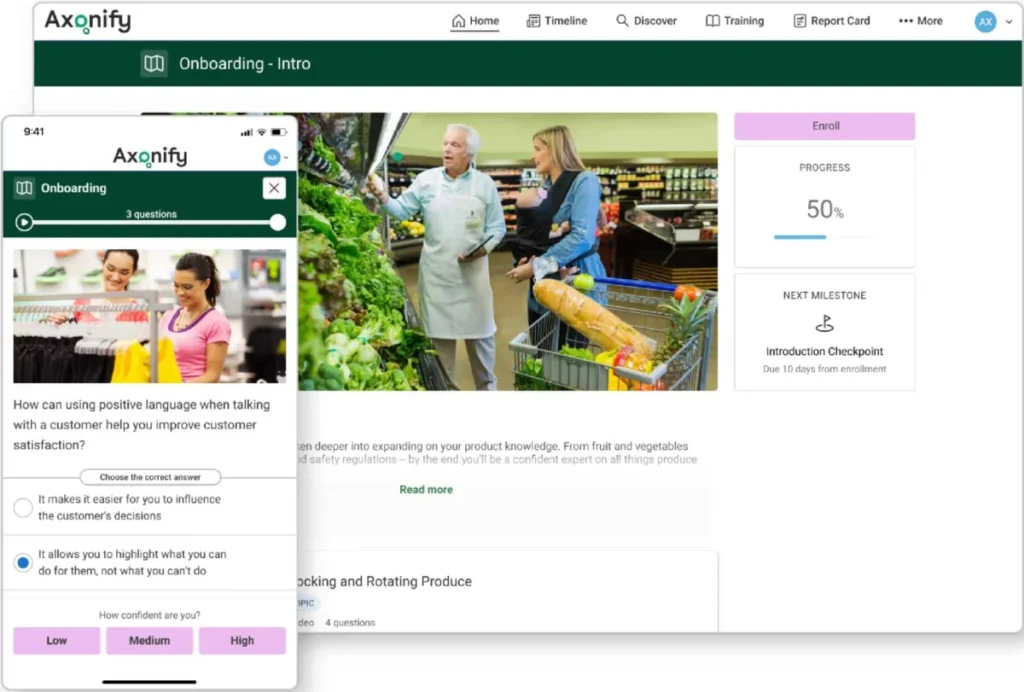
Axonify: Brain Science and AI for Frontline Workers
Axonify, a pioneer in this space, uses brain science and AI to deliver training that adapts to individual employee roles and knowledge levels. The platform reinforces critical behaviors through spaced repetition, ensuring that learning is retained and applied effectively. Its adaptive approach ensures that frontline workers receive the most relevant and impactful training to perform their duties efficiently and safely.
Kahuna: Operational Training and Skills Validation
Kahuna focuses on operational training and in-depth skills validation, particularly within industries such as oil and gas, energy, manufacturing, and distribution. The company’s recent recognition as a Workday Gold Innovation Partner highlights its ability to enable workers to recertify and up-certify their skills, a critical component of frontline enablement in regulated and dynamic operational environments.
Unique Enablement Providers Addressing Specific Needs
Beyond broader enablement platforms, niche AI-powered solutions are emerging to address highly specific needs.
IMMERSE: Language Fluency Performance
IMMERSE is an AI-powered platform focused on enhancing language fluency and communication confidence. It moves beyond traditional language course completion certificates to provide live enablement experiences that boost an individual’s ability to communicate effectively in different languages, addressing a critical need in globalized workforces.
Feedly: Contextual Learning from External Signals
Feedly, integrated into AI-enabled L&D stacks, helps organizations translate external market signals into continuous, role-relevant learning moments. For example, luxury retail group Chalhoub uses Feedly to curate industry insights, enabling employees to stay current and make better real-time decisions by providing them with bite-sized, relevant information.
Glean: AI-Powered Enterprise Search and Discovery
Glean, initially an AI-powered search engine, now provides real-time content discovery and access through platforms like Microsoft Teams and Slack. While positioning itself as a "work platform," Glean’s ability to surface relevant information and content on demand makes it a powerful, albeit indirect, enablement tool, potentially serving as the ultimate repository for dynamic enablement resources.
The Future of Enterprise Learning: A Convergence of Markets
The term "lurching" aptly describes the current state of the enterprise learning technology market, as nearly every HR-related platform is exploring its "dynamic enablement" opportunity. The increasing ease of building AI-native content generation systems has spurred the development of highly use-case-specific solutions. The enablement needs of an Uber driver, for instance, are distinctly different from those of a software engineer, who might benefit more from integrations with tools like GitHub or Atlassian.
This trend signifies a collapse of traditional market categories. Learning Management Systems (LMS), Learning Experience Platforms (LXP), Microlearning solutions, and Employee Experience Platforms (EXP) are converging. Platforms like Microsoft Viva, which consolidate HR portals, are now being seen as foundational, with users increasingly expecting seamless integration with tools like Microsoft Copilot for dynamic enablement.
Dynamic Enablement represents a synthesis of expert and validated internal content, external knowledge resources, and meticulously crafted experience design tailored to specific employee roles. In this evolving enterprise AI landscape, where organizations are increasingly becoming "builders" rather than just "buyers" of technology, a careful examination and experimentation with these dynamic enablement solutions are paramount. The future of corporate learning is not just about acquiring knowledge, but about seamlessly accessing the right information and support precisely when and where it’s needed to drive performance and innovation.
The integration of AI into L&D is not merely an upgrade; it is a fundamental reinvention of how organizations empower their workforce. As these technologies mature and market offerings continue to evolve, companies that embrace dynamic enablement will be best positioned to foster a culture of continuous learning, agility, and sustained high performance in the years to come.