
The landscape of enterprise Artificial Intelligence (AI) is undergoing a fundamental transformation, moving beyond static systems and applications to dynamic agents that learn, evolve, and essentially embody a company’s unique operational DNA. This paradigm shift, championed by recent advancements from Microsoft, promises to unlock unprecedented levels of productivity and competitive advantage by enabling AI to deeply integrate with and reflect an organization’s specific knowledge, policies, and practices.
At the core of this evolution are AI Agents and Superagents, which are not merely tools but rather extensions of a company’s operational framework. Unlike traditional software, these intelligent entities are designed to continuously absorb and process an organization’s implicit knowledge – its accumulated historical experiences, unwritten rules, cultural nuances, risk management protocols, and the very essence of "how we do business." This deep integration allows AI to become an indispensable partner, augmenting human capabilities and driving more informed decision-making.
The implications for enterprises are profound. The tacit knowledge that forms a company’s competitive edge, often residing in the minds of its employees or scattered across disparate documents, can now be systematically captured and operationalized by AI. This not only preserves institutional memory but also democratizes access to expertise, making it available to a wider range of employees and streamlining critical business functions like recruitment, training, and employee service delivery.
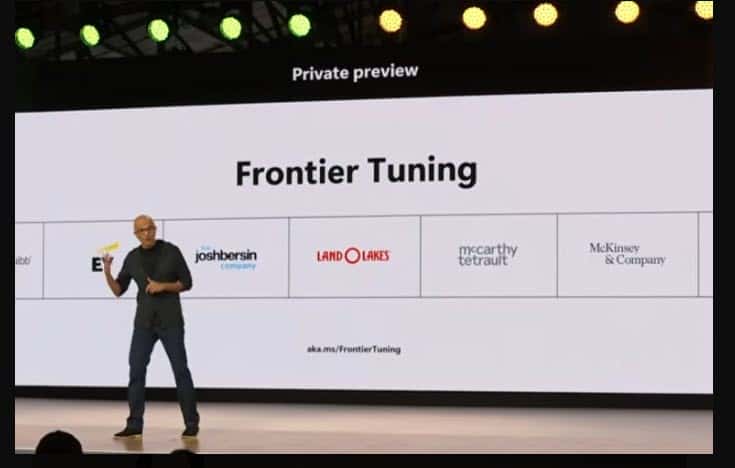
Microsoft’s recent efforts, particularly with MS Copilot, exemplify this new direction. By embedding its proprietary "Galileo" intelligence into Copilot, Microsoft demonstrated a powerful capability: the system could ingest and retrain itself on the company’s intellectual property. This means that an AI agent, trained on a specific organization’s data, becomes an expert in that organization’s unique context.
Frontier Tuning: Empowering Customization and Learning
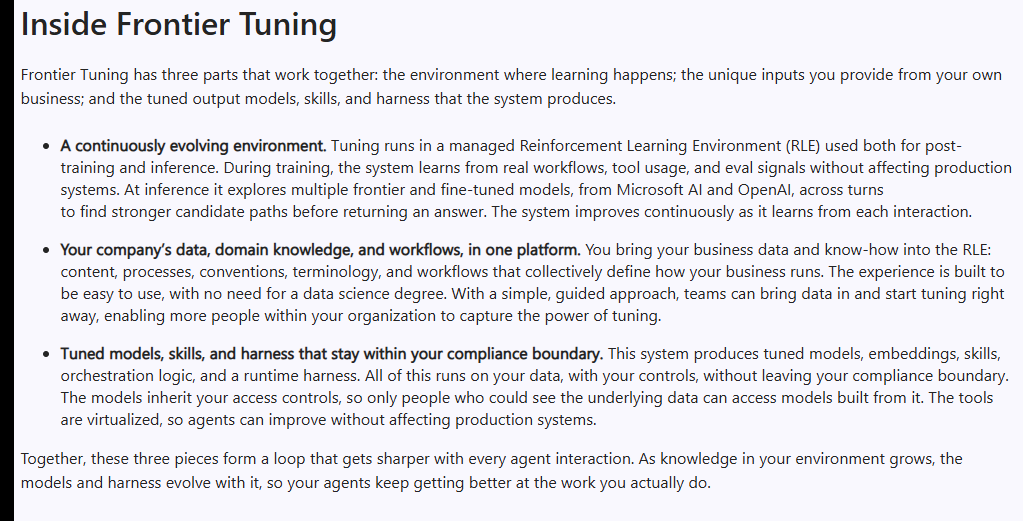
The true game-changer, however, is Microsoft’s initiative to productize this capability through what it terms "Frontier Tuning." This allows organizations to fine-tune their Copilot instances themselves, essentially teaching the AI to work the way they do. IT and HR departments can now directly input company policies, hiring guides, compensation practices, onboarding procedures, and any other critical operational data. This information is then "institutionalized" and embedded within the AI system, creating a highly personalized and contextually aware assistant.
This approach dramatically differs from traditional Retrieval-Augmented Generation (RAG) implementations, which primarily provide context to a base model without fundamentally altering its core learning. Frontier Tuning, conversely, enables the AI to learn and adapt autonomously. Microsoft refers to this as a "Reinforcement Learning Environment," where the agent can continuously improve based on real-world feedback from users.
This self-improvement mechanism is crucial for enterprise AI. It means that as employees interact with the AI, providing feedback or correcting its outputs, the agent learns and refines its responses. This creates a virtuous cycle of improvement, ensuring that the AI remains relevant, accurate, and increasingly valuable over time.
Reinforcement Learning: The Key to Autonomous Improvement
The autonomous nature of reinforcement learning is a critical differentiator. This technology allows AI agents to train themselves, becoming smarter and more effective with each interaction. Microsoft’s "Agent Lightning" initiative is a prime example of this, offering a framework for incorporating reinforcement learning into AI agents without extensive code rewrites.
By enabling this feature, organizations can empower their AI models to learn from the utility of their actions. This mimics human learning processes, where experience and feedback lead to skill development and adaptation.
A compelling use case highlighted by Microsoft involves an internal crisis management agent. While effective for many scenarios, the agent’s utility was challenged by unforeseen global events like the war in Ukraine and subsequent conflicts. These situations introduced new complexities, such as employees facing communication blackouts or needing urgent relocation. By leveraging the reinforcement learning capabilities, the agent could autonomously update itself with new policies and protocols required to address these evolving crisis scenarios. This demonstrates the AI’s ability to adapt to unforeseen circumstances and continuously enhance its operational readiness.
While other methods exist for "training" MS Copilot, such as the Microsoft Graph Connector, which allows access to data across SharePoint, PowerPoint, Word, Outlook, and Work IQ, these integrations are typically less tightly coupled with the agent’s core learning process. The reinforcement learning aspect of Frontier Tuning offers a more profound level of adaptation and self-improvement, integrating feedback directly into the agent’s evolving intelligence.
Microsoft’s Strategic Expansion into Proprietary AI Models
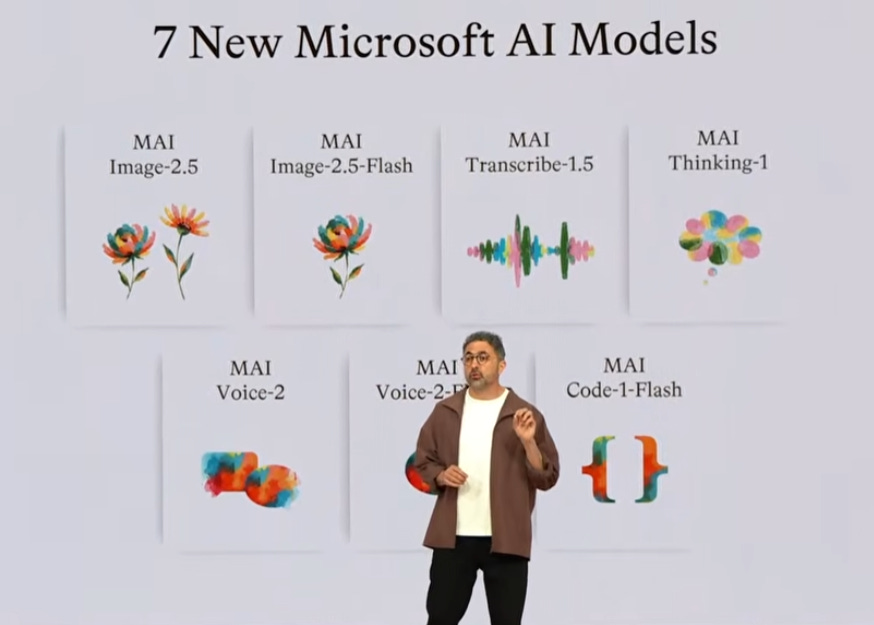
Beyond the customization of existing AI, Microsoft is making significant strides in developing its own suite of AI models. During a recent announcement, Mustafa Suleyman unveiled plans to release seven new AI models optimized for specific business use cases. This move marks a strategic pivot for Microsoft, driven by a desire to offer more cost-effective and specialized AI solutions.
Historically, Microsoft’s partnership with OpenAI presented certain constraints on its ability to develop cutting-edge proprietary models. However, with the launch of these new models, Microsoft is positioning itself to compete directly with leading offerings from companies like Anthropic and OpenAI. This allows Microsoft to provide a cleaner, more cost-efficient set of AI models, thereby enhancing the value proposition of Copilot as an "open harness" capable of hosting a variety of AI engines.
The economic implications of this strategy are significant. As Suleyman noted, the substantial costs associated with licensing models from third parties, such as Anthropic, are driving Microsoft’s ambition to reduce and ultimately eliminate these expenses. This internal development not only offers financial benefits but also provides greater control over the AI models’ development and licensing.
Frontier Models for Healthcare and Industry
These new proprietary models, often referred to as "Frontier Models," are engineered for high efficiency and are developed with clean, licensed data. This contrasts with some prevailing models that may rely on internet content scraped without explicit licensing. For business leaders, the appeal of models built on a foundation of intellectual property rights and transparent data sourcing is substantial, offering a more secure and trustworthy AI ecosystem.
A key differentiator highlighted by Microsoft is the assurance that these proprietary models do not share intellectual property (IP) with other customers, a concern often associated with models from Anthropic and OpenAI. If a user opts out of data sharing for learning purposes, their interactions remain private. This is particularly crucial for organizations dealing with sensitive data, such as intellectual property or confidential business strategies, providing a safeguard against inadvertent data leakage.
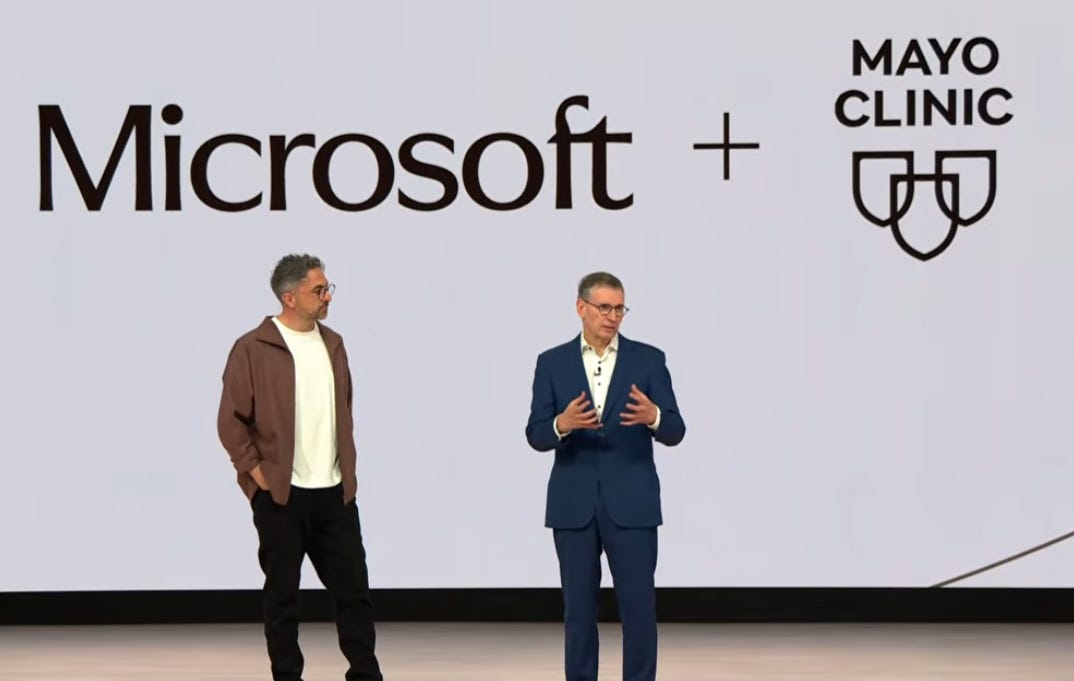
The potential applications of these Frontier Models are vast. Mayo Clinic, for instance, is collaborating with Microsoft to develop a "New Frontier Model for Healthcare." This specialized model aims to provide clinicians with deep insights into effective clinical practices, mirroring the way external consultants analyze and document best practices in human capital management.
In another industrial application, Land-O-Lakes has been testing Microsoft’s MAI-Thinking-1 reasoning model. By fine-tuning a copy of the model with thousands of internal documents, Teams messages, and Outlook emails, the company successfully automated tasks within its butter formulation process. According to Microsoft senior product manager Tanaya Yadav, this customized version of MAI-Thinking-1 demonstrated superior accuracy and was ten times more cost-efficient than OpenAI’s GPT-5.5. This example underscores the tangible business benefits derived from fine-tuning AI models with proprietary data.
The technical intricacies of these advancements were showcased at Microsoft Build 2026 in San Francisco, offering attendees a glimpse into the power and potential of these new AI capabilities. The event highlighted how organizations can embed not only established intelligence platforms like Galileo but also their own unique company practices into these systems.
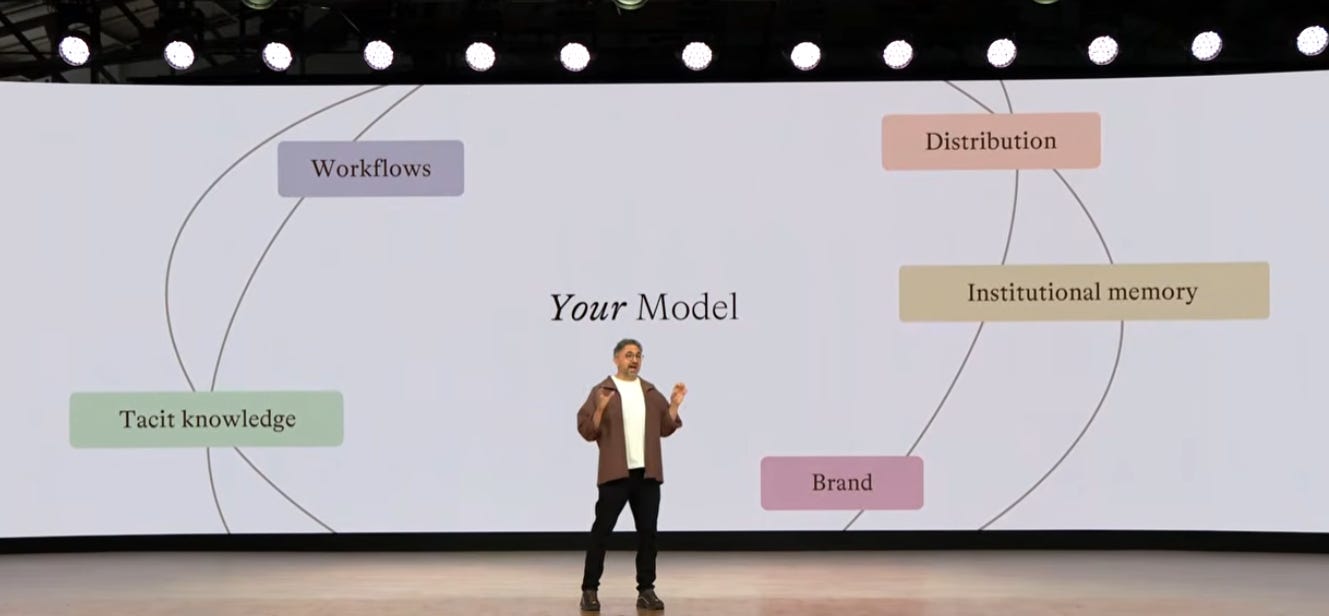
Microsoft CEO Satya Nadella has emphasized the strategic importance of customizing AI models to individual companies, rather than relying on generic, widely shared models. This focus on personalization is seen as the key to deriving genuine value from AI in the enterprise. The concept of a "harness," a flexible layer within Copilot that can host various AI models—including those from OpenAI, Anthropic, Microsoft’s own developments, and custom fine-tuned models—further solidifies this strategy. This allows R&D teams, for example, to utilize bespoke models trained on confidential internal data, ensuring both innovation and data security.
Broader Implications for the Enterprise AI Landscape
Microsoft’s aggressive push into enterprise AI, characterized by its Frontier Tuning capabilities and the development of proprietary models, signals a significant shift in the industry. The ability for companies to create AI agents that are not only intelligent but also deeply reflective of their unique operational context and continuously self-improving presents a compelling proposition.
The implications extend beyond mere efficiency gains. By democratizing access to specialized knowledge and automating complex tasks, these AI advancements have the potential to reshape workflows, enhance employee development, and foster a more agile and responsive organizational culture. The emphasis on data security and IP protection further addresses critical concerns for businesses operating in a competitive and data-sensitive global market.
As businesses navigate the evolving AI landscape, the strategic choices made by industry leaders like Microsoft will undoubtedly shape the future of work. The move towards deeply customized, self-improving AI agents signifies a move from generic tools to intelligent partners, poised to drive significant transformation across industries. The continued evolution of these technologies, coupled with the increasing accessibility of advanced AI capabilities, suggests that enterprise AI is poised to become an even more integral component of business strategy and operational success. The sustained investment and focus from a technology giant like Microsoft, combined with its strategic partnerships and innovative development, positions it as a key player in shaping the future of enterprise AI.