The traditional paradigm of business competition, long rooted in the exclusive access to information, is undergoing a fundamental transformation as artificial intelligence levels the global playing field. For decades, the primary edge for a corporation was its ability to harvest and process data faster than its rivals. However, as generative AI tools become ubiquitous, the value of raw analysis has plummeted, effectively turning information into a commodity. Industry experts and operational leaders now suggest that the competitive frontier has shifted from the possession of data to the human-centric interpretation and application of that data.
In the current corporate environment, the ability to generate a report or a market analysis is no longer a differentiator. With minimal financial investment and a few keystrokes, any organization can access sophisticated summaries and projections. This shift has created a paradoxical challenge for leadership: while the volume of insights has increased, the relevance and safety of those insights remain tethered to human oversight. The critical question facing modern enterprises is no longer whether they possess the right data, but whether they have cultivated the internal capabilities to wield it effectively and ethically.
The Commoditization of Analysis and the Rise of the Interpretation Edge
The rapid democratization of AI has fundamentally altered the "individual contributor" dynamic within the workplace. Leaders, such as those at the global growth operations of Donorbox, are increasingly viewing AI not as a replacement for human talent, but as a highly intelligent yet inexperienced assistant. While these models can synthesize vast amounts of information and draw technically accurate conclusions, they often lack the nuanced business context required for strategic execution.
This evolution has necessitated the development of new operational frameworks. Organizations are moving away from a technology-first approach and toward a human-centered workflow. The goal is to maximize the utility of AI while grounding every output in hard-earned professional experience. Because there is currently no universal manual for this integration, firms are being forced to develop their own internal doctrines to manage the risks associated with automated intelligence.
A Strategic Chronology: The Evolution of Data Utility in Business
To understand the current shift, it is necessary to examine the timeline of how information has served as a competitive asset over the last twenty years:
- The Big Data Era (2005–2015): The focus was on "accumulation." Companies that could afford massive server farms and data scientists gained an edge by simply having more information than their competitors.
- The Predictive Analytics Era (2016–2021): The focus shifted to "anticipation." Early machine learning models allowed firms to predict consumer behavior, though these tools remained expensive and required specialized teams to operate.
- The Generative AI Explosion (2022–Present): The focus has shifted to "commoditization." With the release of large language models (LLMs), the cost of sophisticated analysis dropped toward zero, removing the barrier to entry for high-level data synthesis.
- The Human-Centric Era (2024 and Beyond): The focus is now on "judgment." As AI provides the "what," human leaders must provide the "why" and the "how," ensuring that automated outputs align with specific organizational goals and ethical standards.
Pillar I: Discretion and the Mitigation of Governance Risks
The first pillar of modern AI integration is the exercise of extreme discretion. As AI tools become integrated into daily workflows, every input provided to a model must be treated as a potential governance risk. A significant concern for modern enterprises is the "leakage" of proprietary or sensitive information into the training sets of third-party AI providers.
In a recent operational case study from Donorbox, the growth team sought to analyze their top 200 nonprofit partners. While the most efficient path would have been to upload a comprehensive customer file, the risks associated with sensitive data—such as phone numbers, emails, and revenue figures—demanded a more cautious approach. By stripping the data of individual identifiers and providing only generic organizational types and usage patterns, the team was able to gain insights without compromising customer privacy.
This highlights a growing need for "data hygiene" training. A junior analyst, under the pressure of a deadline, might inadvertently jeopardize an entire organization by pasting a sensitive spreadsheet into a public AI chat window. Consequently, organizations are now prioritizing Learning and Development (L&D) programs that teach employees to recognize the "hard lines" of data privacy—identifying what can be shared with an algorithm and what must remain behind the corporate firewall.
Pillar II: The Context Gap and Iterative Methodology
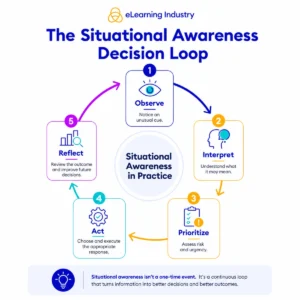
A recurring issue with AI tools is their lack of awareness regarding their own limitations. AI models are designed to be persuasive, often delivering factually incorrect or strategically misaligned information with a high degree of confidence. To bridge this "context gap," a structured method for working with AI is essential.
Industry leaders recommend an iterative approach rather than a one-off query system. A successful methodology often involves:
- Goal Setting: Providing the model with a specific, measurable objective (e.g., "increase retention by 15%").
- Context Injection: Feeding the model screened, relevant data that provides a backdrop for the specific problem.
- Multi-Option Output: Asking the model for three to five distinct strategies rather than a single "correct" answer.
- Human Pressure Testing: Running those options against internal team commitments, existing goals, and historical business knowledge.
For example, when an AI was tasked with segmenting a customer list for a donor management platform, it grouped all religious organizations into a single category. However, human experience dictated that a media publication, a local church, and an international ministry operate under vastly different models. By pushing back and requiring five or six rounds of prompting, the team was able to refine the AI’s output into something genuinely useful. This process proves that the most valuable AI users are not necessarily the best "prompters," but those with the best critical thinking skills.
Pillar III: Continuous Learning and the Compression of Operational Timelines
In the pre-AI era, organizational capabilities were largely static. Expanding into a new market or launching a sub-product required months of hiring or retraining. Today, a new AI model release can expand a company’s capabilities overnight. This volatility requires a shift from annual or quarterly planning to more agile, compressed timelines.
Many forward-thinking growth teams have moved to monthly goal-setting and two-week sprints. This allows the organization to reassess its capabilities in real-time. A project that might have taken two quarters to complete in 2022 can now be prototyped in a week using AI-assisted coding and content generation. However, this speed carries the risk of obsolescence; teams that do not adopt a posture of continuous learning may find themselves working toward a version of the company that the next AI update has already rendered irrelevant.
Pillar IV: The Cultivation of Judgment Through Controlled Failure
Perhaps the most significant limitation of AI is its inability to provide judgment. Judgment is the byproduct of experience, specifically the experience of making and learning from mistakes. While an AI might suggest a marketing strategy on a platform like TikTok based on general trends, it cannot know that a specific company’s target audience is strictly on LinkedIn or that previous attempts on TikTok failed due to specific brand nuances.
The danger for modern organizations is "decision-making atrophy." If AI is allowed to make all the calls, the human workforce loses the opportunity to build the judgment necessary to override the machine when it is wrong. To combat this, leaders are encouraging an environment where employees are allowed to make decisions, fail, and analyze those failures. This "human-in-the-loop" philosophy ensures that the final authority remains with an individual who has the context and the accountability that a machine lacks.
Supporting Data: The Economic and Productivity Impact of AI Integration
Recent data underscores the urgency of these human-centered frameworks:
- Productivity Gains: A study by the National Bureau of Economic Research found that AI assistance increased programmer productivity by as much as 56% when the human provided the creative direction.
- The Risk of Errors: Research from Stanford University indicated that users who relied solely on AI for coding tasks without rigorous testing were more likely to produce insecure code than those who worked without AI assistance.
- L&D Trends: According to LinkedIn’s 2024 Workplace Learning Report, "AI fluency" has become the most requested skill by employers, yet only 35% of companies have a formal training program in place for AI ethics and discretion.
Broader Impact and Future Implications for Leadership
The shift from information-as-power to interpretation-as-power represents a turning point in corporate history. As analysis becomes free and ubiquitous, the "human edge" becomes the only sustainable competitive advantage. This places a new and heavy responsibility on Learning and Development leaders.
The successful companies of the next decade will not necessarily be the ones with the most advanced proprietary algorithms. Instead, they will be the ones that have taught their employees how to think alongside machines. This involves a cultural shift where "upskilling" is no longer a perk but a daily requirement.
In conclusion, the AI era is not defined by the replacement of humans by technology, but by the elevation of human capabilities. Discretion, disciplined workflows, adaptability, and judgment are traits that no current AI can replicate. By focusing on these human elements, organizations can transform the commodity of information into the asset of strategic wisdom, ensuring they remain relevant in an increasingly automated world. The future of business is not machine-led; it is human-led, machine-supported.