October is widely recognized as Diversity Awareness Month, a pivotal period dedicated to highlighting the profound significance of the myriad cultures, identities, and experiences that collectively shape human existence. This annual observance transcends mere acknowledgment, serving as a powerful reminder that our differences are not merely superficial variations but rather the fundamental catalysts for innovation, deeper human connection, and ultimately, superior organizational outcomes. When the principles of inclusion are seamlessly integrated into the daily operational fabric of an organization, it fosters an environment of trust, significantly enhances performance metrics, and cultivates an authentic sense of belonging among all employees. The month-long concentrated focus on workplace diversity initiates crucial dialogues and introduces fresh perspectives, thereby strengthening interpersonal relationships and laying a robust foundation for enduring positive impact.
The Genesis and Enduring Importance of Diversity Awareness Month
Diversity Awareness Month, celebrated throughout October, emerged from a broader global movement advocating for the recognition and celebration of the full spectrum of human experience, ensuring that every individual feels seen, valued, and respected. While the month often includes various festive and celebratory events, its deeper purpose is to underscore that inclusion is not a fleeting, singular event or a temporary initiative, but rather an ongoing, dynamic process that requires continuous nurturing and strategic investment throughout the entire year.
The concept of diversity, in its most comprehensive form, extends far beyond readily visible attributes such to encompass a rich tapestry of distinct ways of thinking, unique life experiences, and often-overlooked identities. This includes, but is not limited to, neurodiversity, veteran status, varying socio-economic backgrounds, and diverse educational paths. Each of these elements contributes invaluable depth, unique perspectives, and enhanced value to any team or organizational structure. The historical trajectory of diversity initiatives has evolved from initial compliance-driven efforts, primarily focused on preventing discrimination, to a more holistic, strategic approach that recognizes diversity, equity, and inclusion (DEI) as core drivers of business success and societal progress. Milestones such as the Civil Rights Act of 1964 in the United States, and similar anti-discrimination legislations globally, laid the groundwork for workplace diversity, pushing organizations to move beyond mere legal obligations towards embracing the tangible benefits of a diverse workforce.
The Undeniable Business Case for Diversity and Inclusion
Organizations that genuinely commit to and strategically invest in diversity consistently report compelling results that speak volumes about its tangible benefits. Extensive research and numerous industry reports consistently demonstrate a strong correlation between diversity and enhanced organizational performance. For instance, studies by leading consulting firms like McKinsey & Company have repeatedly shown that companies in the top quartile for racial and ethnic diversity are 35% more likely to have financial returns above their respective national industry medians. Similarly, those in the top quartile for gender diversity are 15% more likely to achieve such superior financial performance. These statistics underscore that diversity is not merely a moral imperative but a significant competitive advantage.
Beyond financial metrics, diverse teams are consistently linked to better ideas, more robust decision-making processes, and higher levels of employee engagement. A diverse group of individuals, bringing varied experiences and viewpoints, is better equipped to understand and serve a diverse customer base, anticipate market shifts, and innovate more effectively. Furthermore, inclusion directly impacts talent retention. Employees thrive in environments where they feel a genuine sense of belonging and appreciation. According to insights from the 2026 Engagement and Retention Report, a pivotal industry benchmark, employees who feel truly appreciated at work are an astounding 17 times more likely to report strong connections with their colleagues and 47 times more likely to feel supported in their overall well-being. This data unequivocally illustrates that a diverse and inclusive workplace is a critical factor in attracting, retaining, and developing top talent.

This year, organizations are presented with a unique opportunity to unequivocally demonstrate that diversity is not simply a transient buzzword or a superficial talking point. Instead, it must be reaffirmed as a foundational core value that profoundly guides every aspect of an organization’s operations, leadership philosophy, and strategic growth trajectory.
A Structured Approach: The 5-Week Agenda for October
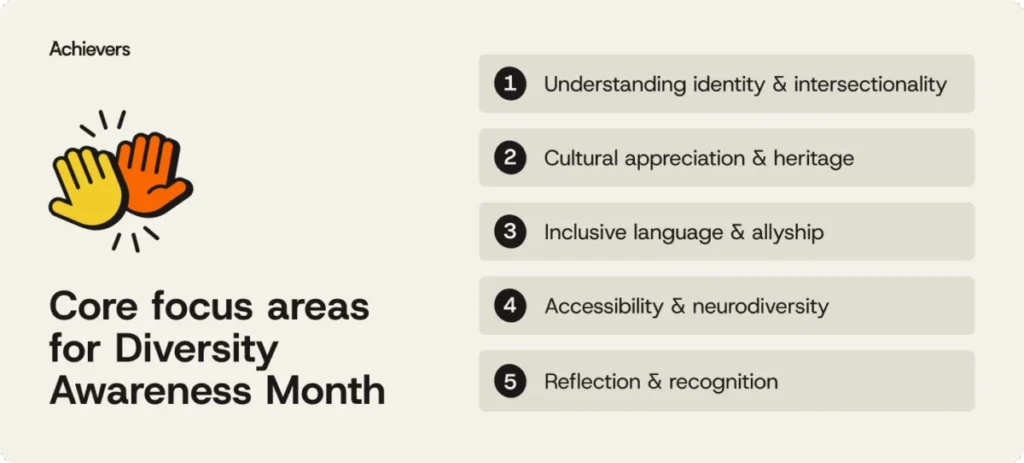
To maximize the impact of Diversity Awareness Month and ensure sustained engagement, a structured, intentional approach is highly recommended. A thoughtfully designed 5-week agenda can build momentum throughout October, fostering engagement that extends far beyond the month itself. This provides a practical and impactful framework for initiating meaningful conversations, fostering genuine connections, and embedding inclusion at the very heart of how teams interact, collaborate, and evolve.
-
Week 1: Understanding Identity & Intersectionality
The month commences with a foundational focus on identity and intersectionality, exploring how various facets of an individual’s identity — such as race, gender, sexual orientation, disability, class, and more — overlap and interact to shape their unique experiences, challenges, and perspectives.- Activities: Kick off with an interactive Diversity, Equity, and Inclusion (DEI) 101 workshop, providing a common language and understanding of core concepts. Invite internal champions or employee resource group (ERG) leaders to share their personal stories through "TED Talk"-style presentations, offering authentic insights into their lived experiences. Facilitate discussion topics or panel discussions specifically addressing the experiences of women in the workplace, particularly those navigating leadership roles or operating within male-dominated industries. Disseminate bite-sized daily content—infographics, short articles, or video clips—that delve into overlapping identities and real-life scenarios.
- Engagement Idea: Launch a digital "identity wall" where employees can voluntarily share aspects of themselves beyond their professional titles, such as languages spoken, cultural traditions, unique hobbies, or passions outside of work, fostering a sense of shared humanity and mutual discovery.
-
Week 2: Cultural Appreciation & Heritage
The second week is dedicated to the vibrant celebration of cultural heritage and the immense richness derived from our global traditions. This focus helps to broaden perspectives and deepen understanding across diverse backgrounds.- Activities: Spotlight different cultures through engaging storytelling sessions, interactive recipe boards featuring international cuisines, or the collaborative creation of a global music playlist where employees contribute songs from their heritage. Actively involve Employee Resource Groups (ERGs) by inviting them to co-host cultural lunches, organize Q&A sessions with cultural experts, or facilitate informal "coffee chats" that provide a relaxed space for connection and cross-cultural learning.
- Engagement Idea: Introduce a "My Name, My Story" campaign, encouraging employees to share the origins, meanings, and personal significance of their names. This simple yet profound exercise often sparks curiosity, builds cultural awareness, and powerfully reminds everyone that diversity is not just something to be observed; it is to be heard, tasted, and celebrated collectively.
-
Week 3: Inclusive Language & Allyship
This critical week shifts focus to the profound power of language and the indispensable role of allyship in constructing a more genuinely inclusive workplace. Language, both verbal and non-verbal, shapes perceptions and experiences.- Activities: Begin by circulating a comprehensive inclusive language guide, offering practical advice on respectful communication. Inject an element of fun with a quiz or a "lunch-and-learn" session exploring how everyday words, tone, and habitual phrases can either intentionally or unintentionally welcome or exclude others. Host a dedicated allyship workshop where teams can collaboratively analyze real-world scenarios, practice giving and receiving feedback, and rehearse inclusive responses within a psychologically safe and supportive environment.
- Engagement Idea: Conclude the week by inviting employees to reflect personally on what being an ally truly means to them. These introspective conversations are crucial for translating good intentions into tangible, meaningful actions, thereby making workplace inclusion a more natural and integral part of daily interactions for everyone.
-
Week 4: Accessibility & Neurodiversity
Week four shines a crucial spotlight on accessibility and neurodiversity, two vital yet frequently overlooked components of a truly diverse and equitable workplace. Ensuring an accessible environment benefits everyone.- Activities: Initiate a comprehensive digital accessibility check across all organizational tools and resources to verify that they are genuinely functional and usable for individuals with diverse needs. Organize a fireside chat featuring speakers who can share their lived experiences and offer practical tips concerning neurodiversity and broader disability inclusion. These personal narratives often resonate deeply and foster empathy.
- Engagement Idea: Engage employees through a "design thinking" challenge, inviting them to collaboratively brainstorm innovative ideas for improving physical and digital accessibility within the workplace. This hands-on approach not only raises awareness but also empowers every employee to actively contribute to building a more welcoming, barrier-free, and inclusive environment.
-
Week 5: Reflection & Recognition
The final week of Diversity Awareness Month is thoughtfully dedicated to reflection, synthesis, and recognition, ensuring that the insights gained are internalized and celebrated.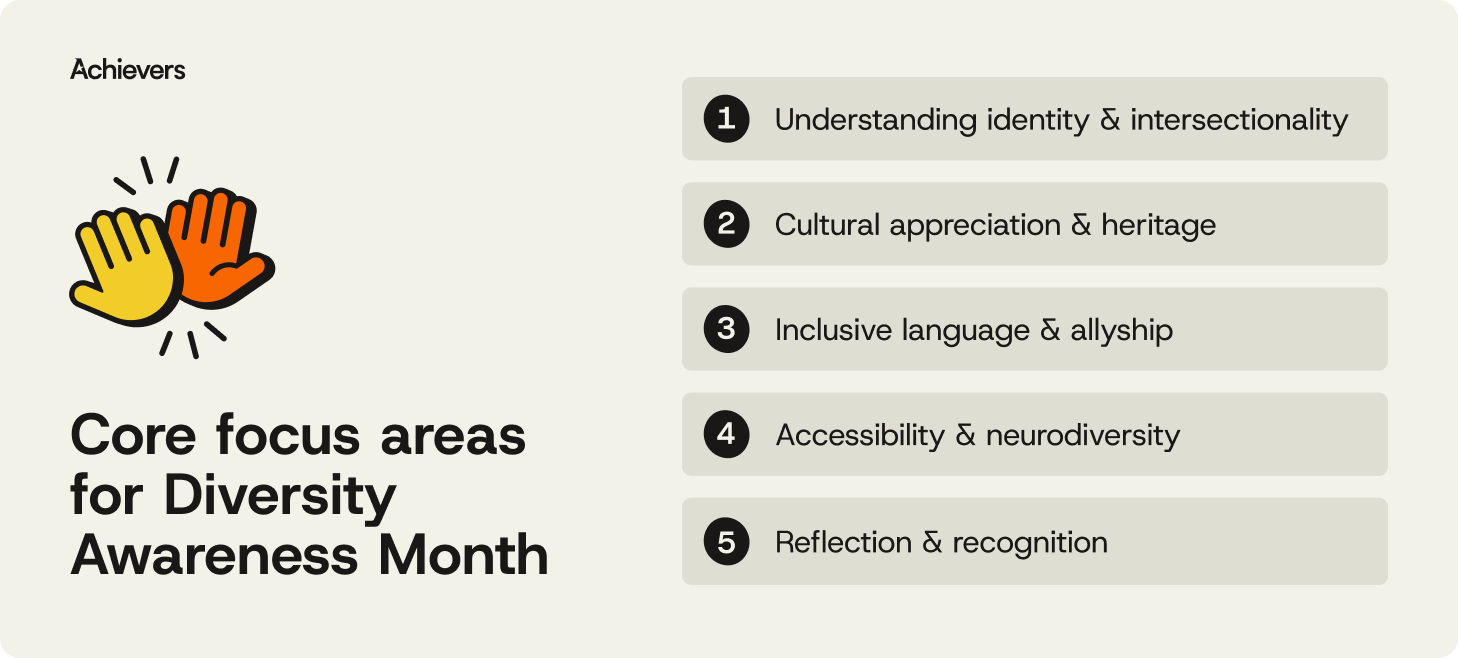
- Activities: Encourage all participants to share their personal takeaways, moments of significant growth, or how their perspectives and understanding have evolved throughout the month’s journey. Bring these narratives to life by curating a virtual gallery showcasing key insights, short video testimonials, or even artwork created during the month, placing every employee’s voice and contribution front and center.
- Engagement Idea: Conclude the month on a strong, positive note by recognizing active participation and unwavering commitment with a digital diversity recognition wall or a lighthearted team award ceremony. Celebrating these collective efforts powerfully highlights the transformative power of inclusion and serves as a vital inspiration for everyone to sustain that spirit and commitment long beyond the official Diversity Awareness Month.
Planning and Promotion: Ensuring Campaign Success
For any inclusion campaign to truly resonate and achieve lasting impact, diligent planning and effective promotion are paramount. Before the official launch day, a strategic approach to building momentum and driving broad participation can significantly enhance the message’s reach and effectiveness.
- Early Communication: Announce Diversity Awareness Month well in advance, detailing the themes and activities. Use multiple channels: internal newsletters, company-wide emails, intranet portals, and team meetings.
- Leadership Buy-in and Sponsorship: Secure visible support from senior leadership. Their active participation and endorsement signal the organization’s commitment and encourage broader engagement.
- Cross-functional Collaboration: Partner with various departments—HR, Marketing, Communications, ERGs—to co-create content and activities, ensuring diverse representation in planning and execution.
- Clear Call to Action: For each activity, clearly state what employees are expected to do and how they can participate. Provide easy access to resources and sign-up links.
- Leverage Technology: Utilize internal communication platforms, social media (for external visibility), and virtual event tools to maximize reach, especially for remote or hybrid workforces.
- Feedback Mechanisms: Establish channels for employees to provide feedback on the initiatives, allowing for real-time adjustments and demonstrating that their voices are heard and valued.
- Visual Branding: Create consistent visual branding for the campaign, including logos, color schemes, and templates, to make communications easily recognizable and reinforce the month’s theme.
- Highlight Success Stories: Plan to capture and share stories of positive impact or personal growth resulting from the month’s activities, inspiring others and reinforcing the value of DEI.
Beyond October: Sustaining the Momentum of Inclusion
The true measure of a successful Diversity Awareness Month lies not merely in the events held during October but in its capacity to spark and sustain a year-round commitment to inclusion. Weaving inclusion into the very fabric of an organization’s culture is essential for enduring impact.
- Integrate DEI into Core Values: Ensure that diversity, equity, and inclusion are explicitly articulated within the company’s core values and mission statement, making them integral to every business decision and employee interaction.
- Ongoing Education and Training: Implement continuous DEI training programs beyond basic awareness. Focus on advanced topics like unconscious bias mitigation, cultural competence, inclusive leadership, and anti-racism education throughout the year.
- Empower Employee Resource Groups (ERGs): Provide robust support, resources, and leadership opportunities for ERGs, recognizing their critical role in fostering community, driving initiatives, and advocating for diverse perspectives.
- Inclusive Policies and Practices: Regularly review and update HR policies, hiring practices, promotion criteria, and compensation structures to identify and eliminate biases and ensure equitable opportunities for all employees. This includes flexible work arrangements, accessible infrastructure, and equitable benefits.
- Leadership Accountability: Hold leaders at all levels accountable for fostering inclusive environments within their teams. Incorporate DEI metrics into performance reviews and leadership development programs.
- Regular Communication and Dialogue: Maintain open channels for dialogue about diversity and inclusion. Host town halls, Q&A sessions, and forums where employees feel safe to share their experiences and concerns.
- Measure and Track Progress: Establish clear DEI metrics and regularly track progress. This could include diversity in hiring, promotion rates, employee sentiment surveys regarding inclusion, and retention rates across different demographic groups. Publicly sharing progress (or challenges) demonstrates transparency and commitment.
- Celebrate Diversity Year-Round: Recognize and celebrate diverse holidays, heritage months, and cultural events throughout the entire year, not just in October. This reinforces the message that diversity is a constant, valued aspect of the organization.
- Support Mental Health and Well-being: Acknowledge the unique mental health challenges faced by diverse groups and provide accessible, culturally competent mental health resources and support systems.
- Strategic Philanthropy and Community Engagement: Extend DEI efforts beyond the workplace by engaging in community initiatives, partnerships, and philanthropic activities that support diverse populations and promote social equity.
From Awareness to Action: What Comes Next?
Diversity Awareness Month serves as an indispensable starting point, a powerful annual catalyst for introspection and action. However, genuine, transformative progress is realized only when inclusion evolves from a scheduled event into an intrinsic, everyday component of the company culture. Cultivating a workplace where every individual feels genuinely included, respected, and appreciated demands sustained effort, thoughtful and deliberate actions, and an unwavering, transparent commitment to continuous improvement, day by day.
As October draws to a close, it offers an opportune moment for profound reflection: How will you and your team ensure that the momentum generated this month continues to thrive? Whether through seemingly small yet impactful gestures, courageous and honest conversations, or bold, transformative company-wide changes, the potential to forge a lasting, positive impact is perpetually within reach. The ultimate question remains: What concrete steps will your organization take to embed diversity and inclusion as a central, guiding principle, ensuring its vitality and relevance long after October has passed? The journey towards a truly inclusive workplace is ongoing, requiring vigilance, empathy, and a collective will to build a better future for all.