
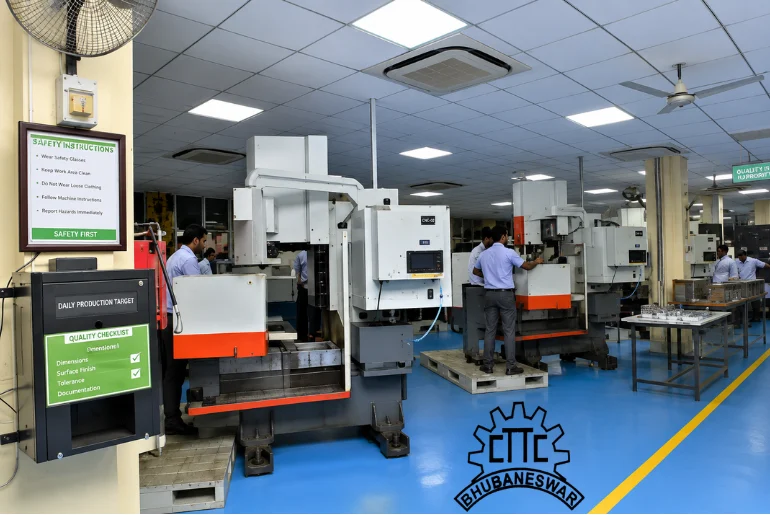
The Central Tool Room & Training Centre (CTTC), Bhubaneswar, an esteemed institution operating under the Ministry of Micro, Small & Medium Enterprises (MSME), Government of India, has successfully concluded its comprehensive four-week Summer Internship Programme, held throughout May and June 2026. This significant initiative served as a pivotal platform for skill enhancement, providing intensive, hands-on training to an impressive cohort of 8,083 engineering students. The programme’s expansive reach included participants from 22 states and union territories across India, alongside 26 international students hailing from Sudan and Yemen, underscoring CTTC Bhubaneswar’s growing reputation as a global hub for technical skill development.
A Deep Dive into the Programme’s Structure and Scope
The meticulously designed internship programme was strategically structured to cater to a broad spectrum of engineering students, from those in their foundational first year to those on the cusp of graduation in their final year. This inclusive approach ensured that students at various stages of their academic journey could benefit from practical exposure and industry-relevant insights. The curriculum spanned a wide array of conventional and cutting-edge engineering disciplines, encompassing Mechanical, Electrical, Electronics, Civil, and Computer Science. Recognizing the rapid evolution of the global technological landscape, a substantial portion of the training was dedicated to emerging technologies that are reshaping industries worldwide. These included Artificial Intelligence (AI), Machine Learning (ML), Cloud Computing, the Internet of Things (IoT), and Additive Manufacturing, also known as 3D printing. The overarching objective of the programme was to effectively bridge the persistent gap between theoretical classroom learning and the practical demands of industry, thereby equipping participants with the tangible skills and confidence required for successful careers.
The four-week duration was carefully planned to offer an immersive experience, allowing students to delve deep into specific modules and gain proficiency through direct application. Unlike purely academic exercises, the emphasis was consistently placed on intensive hands-on training, facilitated by CTTC’s state-of-the-art laboratories, workshops, and experienced faculty. This practical orientation is crucial in an era where employers increasingly seek graduates who possess not just theoretical knowledge but also demonstrable practical competence and problem-solving abilities. The programme’s modular design enabled flexibility, allowing students to choose areas aligned with their academic specializations and career aspirations, thereby maximizing the relevance and impact of their learning experience.
Participation Demographics and Emerging Skill Trends
The statistical breakdown of participation vividly illustrates the current demands and popular inclinations within the engineering student community. Mechanical engineering continued to attract the highest number of participants, with 3,193 students opting for training in this foundational discipline. This consistent demand reflects the enduring importance of mechanical principles across various industries, from manufacturing and automotive to aerospace and energy. Following closely were Electronics with 2,209 students and IT & Software with 1,948 participants, highlighting the burgeoning growth and pervasive influence of these sectors in the modern economy. Civil engineering attracted 388 students, while 345 students engaged in other emerging domains, signaling a growing interest in interdisciplinary and niche technological areas.
The programme’s offerings were diverse, covering 39 distinct training areas. An analysis of the most popular courses provides critical insights into the skills currently most sought after by students, driven by perceived industry demand and future career prospects. Artificial Intelligence emerged as the clear frontrunner, attracting 1,748 students. This overwhelming interest underscores the global recognition of AI as a transformative technology, with applications spanning every conceivable sector. PLC (Programmable Logic Controller) Programming, essential for industrial automation, saw significant uptake with 1,000 students, reflecting the continuous need for skilled professionals in manufacturing and process control. AutoCAD, a fundamental tool for design and drafting, remained highly popular with 991 students, demonstrating its indispensable role in engineering design. Python Programming, a versatile language crucial for data science, web development, and AI, attracted 413 students, while Data Analytics, a critical skill for extracting insights from vast datasets, drew 392 participants. These figures collectively indicate a clear trend towards digital, automation, and data-driven skills as paramount for the next generation of engineers.
The programme’s impressive reach extended beyond mere numbers, encompassing a diverse institutional representation. Students hailed from some of India’s most prestigious educational establishments, including the Indian Institutes of Technology (IITs), National Institutes of Technology (NITs), various deemed universities, established engineering colleges, and polytechnics. This broad participation from institutions of varying profiles underscores the universal appeal and recognized value of CTTC Bhubaneswar’s industry-oriented training model. Furthermore, the inclusion of 26 international students from Sudan and Yemen highlights CTTC’s role in fostering international collaboration and capacity building, potentially under broader initiatives like the Indian Technical and Economic Cooperation (ITEC) programme, which aims to share India’s developmental experience with other developing countries. This international dimension enriches the learning environment, fostering cross-cultural exchange and broadening perspectives for all participants.
CTTC Bhubaneswar: A Legacy of Skill Development and Industrial Support
The Central Tool Room & Training Centre, Bhubaneswar, was originally established with a foundational mandate to address the critical tooling and training needs of the Micro, Small, and Medium Enterprises (MSME) sector. The MSME sector is often referred to as the backbone of the Indian economy, contributing significantly to GDP, employment generation, and exports. However, these enterprises frequently face challenges related to access to advanced technology, skilled manpower, and modern manufacturing processes. CTTC was conceived to mitigate these challenges by providing state-of-the-art tooling solutions, precision manufacturing, and, crucially, high-quality technical training to upgrade the skills of the workforce within this vital sector. Over the decades, CTTC has evolved significantly, adapting its curriculum and infrastructure to meet the changing demands of industry and technology. While its core mission to support MSMEs remains steadfast, its scope has expanded to encompass a broader ecosystem of skill development, reaching out to engineering students and professionals across various sectors.
This expansion is particularly evident in its recent programmes, such as the summer internship, which demonstrates a forward-looking approach. By offering structured internships that cover both traditional core engineering disciplines and cutting-edge emerging technologies, CTTC Bhubaneswar continues to play an indispensable role in preparing the next generation of engineers. It equips them not only with foundational knowledge but also with the adaptive skills necessary to thrive in an increasingly dynamic and technologically driven industrial landscape. This dual focus ensures that while traditional industries continue to benefit from a skilled workforce, India is also fostering talent capable of driving innovation in future-oriented sectors.
Addressing India’s Skill Gap: A National Imperative
The successful completion of CTTC’s internship programme comes at a crucial time for India, as the nation grapples with the persistent challenge of bridging the skill gap in its vast engineering talent pool. Despite producing millions of engineering graduates annually, a significant percentage often lack the industry-specific skills and practical experience demanded by employers. Reports from various industry bodies and academic institutions consistently highlight this disparity, emphasizing the need for greater industry-academia collaboration and hands-on training. The government of India has actively championed initiatives like "Skill India" and incorporated skill development as a key pillar of the National Education Policy (NEP) 2020, aiming to transform vocational and technical education to make it more relevant and outcome-oriented.
Programmes like the one offered by CTTC Bhubaneswar are instrumental in realizing these national objectives. They serve as vital conduits for translating policy aspirations into tangible outcomes, directly impacting the employability and technical competence of India’s youth. By offering exposure to real-world engineering challenges and the latest technologies, these internships empower students to transition seamlessly from academic environments to professional roles, thereby reducing the time and resources companies need to invest in training new hires. Furthermore, by addressing the needs of students from diverse geographical regions (22 states and union territories), CTTC contributes to a more equitable distribution of high-quality skill development opportunities, helping to mitigate regional disparities in talent access and industrial growth.
Inferred Statements and Perspectives
Reflecting on the program’s success, a senior official from CTTC Bhubaneswar, perhaps the Managing Director, could be quoted as stating, "The overwhelming response to our Summer Internship Programme for 2026 reaffirms our commitment to nurturing India’s engineering talent. We are immensely proud to have empowered over 8,000 students with critical hands-on experience in both traditional and futuristic technologies. Our mission is to bridge the industry-academia gap, ensuring that our young engineers are not just theoretically sound but are also job-ready and capable of innovating from day one. The inclusion of international students further solidifies our role as a centre of excellence on a global stage."
A representative from the Ministry of MSME might add, "Initiatives like the CTTC’s internship programme are vital for strengthening the backbone of India’s economy, particularly the MSME sector. By fostering a highly skilled workforce, we are not only enhancing individual employability but also driving national productivity, technological adoption, and global competitiveness. The focus on emerging technologies aligns perfectly with the government’s vision for a ‘Digital India’ and ‘Make in India,’ ensuring a robust pipeline of talent for future industrial growth."
From a student’s perspective, a participant might share, "The four weeks at CTTC Bhubaneswar were transformative. Learning about AI and IoT wasn’t just theoretical; we got to build prototypes and work on real-world problems. This practical exposure is invaluable and has given me a clearer direction for my career. It’s a stark contrast to just classroom lectures and truly prepares us for the challenges of the industry."
An industry expert from a leading manufacturing or tech firm might offer, "The demand for graduates proficient in areas like AI, data analytics, and automation is skyrocketing. Programs that provide intensive practical training, such as CTTC’s, are crucial for producing the kind of talent that can immediately contribute to innovation and operational efficiency. Such initiatives are essential for feeding the talent pipeline that our rapidly evolving industries desperately need."
Broader Implications and Future Outlook
The successful execution of CTTC Bhubaneswar’s Summer Internship Programme in 2026 carries significant implications for India’s engineering education landscape and its broader economic aspirations. Firstly, it substantially enhances the employability quotient of the participating students, providing them with a distinct competitive edge in the job market. The acquisition of practical skills in high-demand areas makes them more attractive to potential employers, reducing the time from graduation to meaningful employment. This directly contributes to the reduction of youth unemployment and underemployment, a persistent challenge in developing economies.
Secondly, the programme acts as a catalyst for technological adoption and innovation within the Indian industrial ecosystem. By training a large cohort of future engineers in emerging technologies, CTTC is essentially seeding the workforce with individuals capable of driving digital transformation, automation, and advanced manufacturing practices. This not only benefits large corporations but also empowers smaller MSMEs to integrate modern technologies, thereby improving their efficiency, competitiveness, and overall contribution to the national economy.
Thirdly, the programme reinforces CTTC Bhubaneswar’s standing as a premier national institution for industry-oriented training. Its ability to attract a large and diverse group of students, including international participants, positions it as a model for other technical training centres across the country. This success can inspire similar initiatives, fostering a nationwide ecosystem of practical skill development that is aligned with industry needs. The international participation further strengthens India’s soft power and its reputation as a provider of high-quality technical education and expertise, potentially leading to increased collaborations and knowledge exchange with other nations.
Looking ahead, the success of the 2026 programme could pave the way for its expansion, both in terms of the number of participants and the diversity of courses offered. There could be potential for longer-duration internships, specialized bootcamps, or even year-round training modules to cater to different segments of students and professionals. The emphasis on emerging technologies is likely to intensify, with new areas like cybersecurity, quantum computing, and biotechnology potentially being integrated into future curricula. Ultimately, CTTC Bhubaneswar’s commitment to equipping India’s youth with relevant and cutting-edge skills is a critical investment in the nation’s future, ensuring a robust, adaptable, and innovative workforce capable of driving India’s progress on the global stage.








