
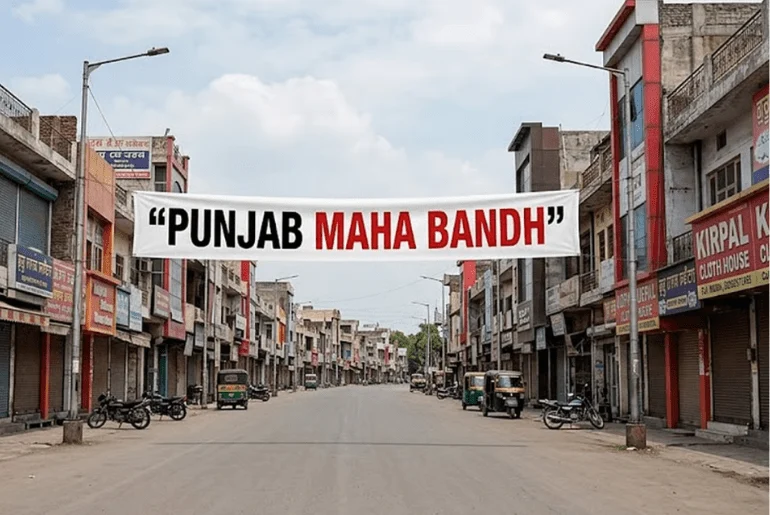
Government employees across the state of Punjab have initiated a comprehensive statewide strike, leading to significant disruptions in essential public services, most notably impacting outpatient departments (OPDs) at numerous government hospitals and general operation theatres. The industrial action, which commenced on August 27, is a culmination of years of unaddressed grievances and is primarily centered on several long-pending demands, including the crucial issue of regularisation for contractual staff and the immediate payment of outstanding dearness allowance (DA) instalments. This widespread protest underscores a deepening chasm between the state government and its workforce, highlighting persistent issues that affect a substantial portion of the public sector.
Escalating Discontent: The Core Demands Fueling the Strike
The current strike represents a unified front of workers from a diverse array of government departments, including but not limited to healthcare, education, electricity, agriculture, and animal husbandry. This broad participation signifies the systemic nature of the grievances. Protests are being staged strategically at block, district, and state headquarters levels, ensuring maximum visibility and impact across the state. The core demands articulated by employee representatives are multifaceted, yet interconnected, revolving around the fundamental principles of job security, fair remuneration, and equitable benefits.
Foremost among these demands is the regularisation of contractual employees. Punjab, like many other states in India, has increasingly relied on contractual employment to manage its workforce and contain costs. While offering immediate flexibility to the administration, this practice often leaves a significant segment of the workforce in a precarious state, devoid of the benefits, job security, and long-term prospects afforded to regular employees. These contractual workers, often performing duties identical to their permanent counterparts, face lower pay, no pension benefits, and constant uncertainty regarding their future. Unions contend that many of these employees have served for years, even decades, under temporary arrangements, making their demand for regularisation a matter of both justice and stability.
Another critical demand is the payment of pending dearness allowance (DA) instalments. DA is a cost-of-living adjustment paid by the government to its employees and pensioners to offset the impact of inflation. The non-payment of these instalments for an extended period has severely eroded the purchasing power of government employees, particularly in an environment of rising living costs. Employee representatives claim that the accumulated arrears represent a significant financial burden on the state but an even greater financial hardship for individual workers and their families. The delay in DA payments is perceived not merely as an administrative oversight but as a direct affront to the financial well-being of the workforce.
Beyond these primary concerns, the unions are also advocating for pension benefits for employees appointed under different categories, seeking to address disparities in retirement security. Furthermore, the regularisation of other critical, yet often marginalized, categories of government staff, such as Anganwadi workers, helpers, and mid-day meal workers, forms an integral part of their demands. These frontline workers, who play an indispensable role in child development, nutrition, and education, often operate under extremely challenging conditions with minimal compensation and benefits, making their call for regularisation a poignant reflection of broader labor issues within the state.
Immediate Impact on Public Services: A Glimpse into Disruption
The immediate repercussions of the strike have been most acutely felt in the healthcare sector. At major facilities such as Guru Nanak Dev Hospital and Government Medical College in Amritsar, the strike has led to a significant curtailment of essential services. Outpatient Department (OPD) services, which are the first point of contact for countless patients seeking medical consultations, diagnoses, and routine treatments, have been severely affected. This disruption means that patients with chronic conditions, those requiring follow-up appointments, or individuals seeking non-emergency medical advice are left without access to care, potentially exacerbating their health issues.
Furthermore, general operation theatres have also seen a reduction in activity, leading to the postponement of elective surgeries and other non-critical procedures. While emergency services have reportedly continued to operate, albeit potentially under increased strain, the overall capacity of government hospitals to cater to the public’s health needs has been drastically diminished. Hospitals had reportedly issued advisories in advance, urging patients to visit facilities only for emergencies, a testament to the anticipated scale of disruption. This situation forces patients to either defer necessary medical attention or seek costly alternatives in the private sector, placing an additional financial burden on already struggling families. The ripple effect extends beyond immediate patient care, impacting routine diagnostic tests, pharmacy services, and administrative functions within these critical institutions.
The disruption is not confined to healthcare. While the full extent of the impact across all participating departments is still being assessed, it is clear that services ranging from administrative tasks in educational institutions to public interface points in electricity and agriculture departments are facing significant slowdowns or complete halts. This affects citizens seeking permits, accessing welfare schemes, or resolving utility-related issues, creating a widespread sense of inconvenience and frustration.
A History of Unresolved Grievances: The Chronology of Discontent
The current strike is not an impulsive act but the culmination of a protracted struggle, indicative of a deep-seated trust deficit between the government and its employees. According to employee representatives, unions have been actively raising their concerns with successive Punjab governments for approximately four and a half years. This extended period of advocacy, marked by numerous representations, memorandums, and smaller-scale protests, underscores the persistence of these issues and the perceived inaction from the state administration.
A significant milestone in this chronology of discontent was a massive rally held in Chandigarh on August 7, just weeks prior to the current strike. This demonstration saw an unprecedented participation of more than three lakh (300,000) employees, signaling the widespread nature of the grievances and the unified resolve of the workforce. Such a large-scale mobilization indicates a high degree of organization and coordination among various employee federations and unions, which claim that over 250 organizations and federations are actively backing the current protest.
The unions have repeatedly alleged that promised meetings with government officials, crucial for constructive dialogue and resolution, have been repeatedly postponed or canceled without adequate explanation. This perceived lack of engagement and commitment from the government has fueled frustration and a sense of being ignored, ultimately pushing the employees towards more drastic measures. The demand for direct engagement with the state leadership, specifically the Chief Minister, reflects a belief that only high-level intervention can break the current stalemate and lead to meaningful negotiations. This history of deferred promises and stalled negotiations has hardened the stance of the unions, making them less amenable to piecemeal solutions and more determined to achieve comprehensive redressal of their demands.
Supporting Data and Context: The Scale of the Challenge
The demands articulated by the striking employees are not isolated incidents but reflect broader structural issues within Punjab’s public administration and fiscal management. The issue of contractual employment, for instance, affects tens of thousands of individuals across various departments. These employees, often hired through outsourcing agencies or on fixed-term contracts, constitute a substantial portion of the state’s functional workforce, yet they operate without the security and benefits associated with permanent government service. The financial implications of regularizing such a large contingent of workers, including extending full benefits and pension schemes, represent a significant fiscal challenge for the state government, which often cites budgetary constraints. However, unions argue that the long-term cost of a demoralized and precarious workforce, coupled with the social inequity it creates, far outweighs the immediate financial outlay.
Similarly, the pending dearness allowance instalments amount to a considerable sum. While precise figures are often subject to internal government calculations, estimates suggest that the accumulated arrears could run into hundreds of crores of rupees. The delay in disbursing these funds exacerbates the financial strain on employees, especially those in lower pay scales, making it difficult for them to cope with inflationary pressures. The state’s fiscal health, influenced by factors such as debt burdens, revenue generation, and expenditure priorities, often dictates the government’s ability to meet such financial commitments. However, employees maintain that DA is a statutory right and its delay is a direct violation of their service conditions.
The broader context also includes the ongoing debate around the Old Pension Scheme (OPS) versus the National Pension System (NPS). Many employee unions across India, including in Punjab, have been demanding a return to the OPS, which offered guaranteed pension benefits, viewing NPS as less secure. This demand for robust pension benefits is a critical component of ensuring post-retirement financial security for government employees, a benefit often absent for contractual staff. The resolution of these issues requires not just immediate financial outlays but also long-term policy reforms and sustainable fiscal planning.
Official Responses and Political Undercurrents
While specific official statements from the Punjab government regarding the current strike are awaited, past interactions and the general political landscape allow for logical inferences regarding their likely stance. The government is expected to acknowledge the demands of the employees, perhaps reiterating its commitment to addressing their concerns while simultaneously appealing for an end to the strike, citing the inconvenience caused to the public and the essential nature of the disrupted services. It is highly probable that the government will emphasize its own financial constraints, pointing to the state’s fiscal health as a limiting factor in immediately acceding to all demands. Statements might also underscore ongoing efforts to regularize some categories of employees or to clear DA arrears incrementally, attempting to show goodwill without making immediate, sweeping concessions.
The political implications are significant. Employee representatives have issued a stark warning of an electoral backlash if their concerns remain unresolved. This threat holds substantial weight, particularly in a state where government employees constitute a powerful voting bloc and can significantly influence public opinion. The ruling party will be acutely aware of the political ramifications, especially with local body elections or even state elections on the horizon. Opposition parties are likely to seize upon the opportunity to criticize the government for its perceived failure to manage employee relations and address long-standing grievances, further politicizing the issue and amplifying the employees’ demands. This pressure from both the workforce and political rivals will undoubtedly shape the government’s strategy for resolving the impasse. The ongoing dispute highlights the delicate balance between fiscal responsibility and social welfare, a challenge faced by many state governments.
Broader Impact and Long-Term Implications
The strike, if prolonged, carries significant broader implications that extend beyond the immediate disruption of services.
Economic Implications: The direct economic cost includes lost productivity from the striking workforce, and the indirect costs passed onto citizens who must seek private alternatives or defer essential services. Furthermore, if the government eventually concedes to the demands, the financial burden of regularizing staff and clearing DA arrears will place additional strain on the state exchequer, potentially necessitating difficult choices regarding other developmental projects or public spending. This could impact the state’s overall economic growth and fiscal stability in the long run.
Social Implications: The erosion of trust between the government and its employees is a serious social concern. A demoralized and discontented workforce can lead to reduced efficiency, increased absenteeism, and a general decline in the quality of public service delivery even after the strike ends. The plight of contractual workers also brings into sharp focus the wider issue of labor rights and social security in an increasingly contract-based economy. It sparks a broader societal debate about equitable treatment for those who form the backbone of public services. The inconvenience faced by the public, particularly vulnerable sections relying on government services, can also lead to public anger and a breakdown of social order if the situation escalates.
Political Implications: The warning of an electoral backlash is not to be taken lightly. A disgruntled government workforce can actively campaign against the ruling party, influencing a large number of voters directly and indirectly through their networks. This situation tests the political acumen of the state leadership, demanding a delicate balance between fiscal prudence and appeasing a crucial segment of the electorate. The outcome of this strike could set a precedent for future labor relations in Punjab and potentially influence industrial actions in other states facing similar challenges. The manner in which the government handles this crisis will be a defining moment for its administrative capabilities and its commitment to social justice.
The Path Forward: Dialogue and Sustainable Solutions
The current standoff necessitates urgent and constructive dialogue. Employee representatives are clearly seeking direct engagement with the state’s highest leadership, believing that only such high-level intervention can break the deadlock. For any resolution to be sustainable, it must address the core demands comprehensively, not merely offer temporary palliatives. This will require the government to not only find immediate solutions for pending DA and initiate a transparent process for regularizing contractual staff but also to develop a long-term strategy for workforce management that ensures fairness, security, and adequate compensation for all its employees.
The strike has brought renewed and intense attention to long-standing issues surrounding contractual employment, pension coverage, and delayed DA payments within the state government workforce. Its resolution will require a pragmatic approach from both sides, balancing the legitimate demands of the employees with the fiscal realities of the state. The future of public service delivery in Punjab, and indeed the political landscape, hinges significantly on how effectively this complex and deeply entrenched dispute is resolved. The coming days will be critical in determining whether a mutually acceptable solution can be forged, or if the chasm between the government and its employees will continue to widen, further jeopardizing public welfare and stability in the state.








