
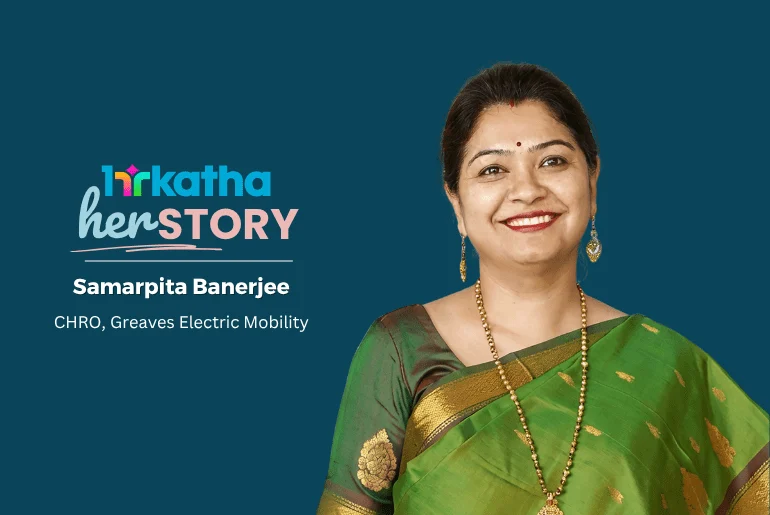
Samarpita Banerjee, a prominent figure in human resources leadership, has navigated the intricate landscape of corporate dynamics, carrying the weight of sensitive information ranging from terminations and performance issues to salary inequities, leadership failures, and personal crises. Her journey illuminates the profound yet often isolating nature of confidentiality, a cornerstone of HR that fosters trust but can also create unique burdens for those who uphold it. This deep dive into Banerjee’s philosophy and career trajectory reveals a vision for HR that transcends traditional administrative functions, positioning it as a strategic imperative for organizational resilience and competitive advantage.
The Evolving Mandate of Human Resources
Banerjee’s initial foray into HR, like many of her peers, was rooted in the tangible aspects of procedures, policies, and talent management. While these foundational elements remain crucial, her career progression unveiled a far richer dimension to the profession. She observed that HR’s true impact lay in its capacity to foster genuine relationships, demonstrate rapid responsiveness, and intricately understand the symbiotic connection between individual well-being and business performance. This realization aligns with a global shift in HR, moving from a back-office support function to a central strategic partner. According to Deloitte’s Global Human Capital Trends reports, organizations increasingly recognize that people-centric strategies are critical drivers of innovation, market leadership, and financial success, especially in an era marked by unprecedented disruption and change.
Organizations that consistently outperform their competitors, Banerjee contends, are those that cultivate environments where employees feel empowered to express themselves authentically, pursue continuous development, and engage in lifelong learning. This emphasis on psychological safety and growth opportunities resonates with contemporary research, which indicates that companies with strong learning cultures demonstrate higher employee retention rates and superior financial performance. For instance, a 2023 study by Gartner revealed that organizations with effective learning strategies are 2.5 times more likely to report higher employee performance.
The Unspoken Virtue: Courage in HR Leadership
Perhaps the most enduring lesson Banerjee gleaned is the indispensable role of courage in HR. This isn’t the courage of grand gestures, but rather the quiet fortitude required to navigate complex ethical dilemmas. It demands the courage to deliver unwelcome truths to powerful leaders, to stand as a vital buffer between pragmatic business decisions and their profound human consequences, and, crucially, to voice dissent when accepting an expedient but morally questionable path would be far easier.
The challenges faced by HR professionals often involve navigating highly sensitive situations such as workforce reductions, investigations into misconduct, or implementing diversity and inclusion initiatives that challenge deeply entrenched norms. Each scenario requires not only empathy and strategic thinking but also an unwavering ethical compass. A 2022 survey by the Society for Human Resource Management (SHRM) highlighted that HR leaders frequently encounter situations requiring them to balance employee advocacy with organizational objectives, underscoring the constant need for moral courage. Banerjee’s experience reinforces the notion that while many enter HR with a genuine desire to help people, doing so effectively often demands a formidable backbone — a quality rarely enumerated in job descriptions but essential for meaningful impact. This conviction reshaped her perception of the profession, transforming HR from a mere people management function into a pivotal force capable of determining an organization’s resilience, cultural vibrancy, and competitive edge in the marketplace.
Championing Personal Growth Amidst Organizational Development
A significant paradox Banerjee encountered in her career was the tendency for HR professionals, despite being custodians of talent development across an organization, to find their own leadership growth relegated to the periphery. This observation reflects a broader industry challenge where investment in HR’s own capabilities can sometimes lag behind other functions. Recognizing this, Banerjee adopted a proactive stance, understanding that waiting for opportunities was not a viable strategy for advancement.
She actively sought out mentors, seized every available opportunity, and, in essence, became her own sponsor. This self-driven approach is increasingly advocated for women in leadership, as echoed by her emphatic statement: "As women, we should know nobody is coming to rescue our career. But with the right people beside and enough belief in ourselves, we will not need rescuing." This sentiment aligns with studies on women’s career advancement, which consistently show that proactive networking, mentorship, and self-advocacy are critical for breaking through traditional barriers. Research by the Pew Research Center indicates that women often face unique challenges in leadership pipelines, making self-advocacy and strategic relationship-building even more imperative.
Another hurdle she addressed was the perception of HR leaders primarily as "the people person." While empathy and strong interpersonal instincts are undeniable strengths, Banerjee realized that these attributes, if singularly emphasized, could inadvertently box an HR leader into a limited role. To counter this, she intentionally broadened her understanding of core business functions, delving into finance, operations, strategic transformation agendas, and future business growth models. Her objective was not to diminish her people-centric approach but to ensure that her profound understanding of human capital could be strategically applied to solve the fundamental questions and challenges facing the business itself. This strategic pivot enabled her to contribute not merely to the growth of the organization’s people but directly to the holistic growth of the business, reinforcing her belief that leadership often necessitates expanding both others’ perceptions of oneself and one’s own self-perception. "Listening, collaborating and empathy have always been thought of as soft skills," she observes, "In reality, they are strategic competencies that play a crucial role in leading organisations through challenges." This perspective is gaining traction in leadership development, where emotional intelligence and interpersonal skills are increasingly recognized as critical for navigating complex, volatile business environments.
The Bedrock of Leadership: Earning Trust
"Leadership does not mean picking between whether you are liked or being respected, but rather being someone who is trusted," Banerjee firmly believes. For her, trust is not an elusive quality but a construct built meticulously through consistent actions, unwavering fairness, and authentic engagement, particularly when confronted with difficult decisions. She has faced numerous such moments: spearheading significant organizational change, maintaining composure and conviction in uncomfortable conversations, and meticulously balancing critical business imperatives against genuine human needs.
These experiences have honed her ability to transcend the immediate emotional landscape of a situation, compelling her to consider the long-term implications for both the organization and its people. This strategic foresight is crucial in modern leadership, where short-term gains can often compromise long-term sustainability and employee morale. Her approach to decision-making is collaborative, emphasizing the value of diverse perspectives: "It pays to gain different perspectives from trusted mentors, business leaders, and people within the organisation," she points out. This practice not only enriches decision-making but also fosters a sense of shared ownership and transparency, crucial for building trust.
Her understanding of respect has also evolved. It is not derived from possessing all the answers or from ensuring universal comfort. Instead, it emanates from maintaining an open mind throughout the decision-making process, treating every individual with inherent dignity, and steadfastly adhering to core values, especially when such adherence becomes challenging. While disagreement with a decision is inevitable, Banerjee posits that it need not erode trust if individuals perceive the process as thoughtful, unbiased, and transparent. This principle is a harder discipline of leadership: making difficult choices while remaining open to the possibility of continuous learning and improvement.
Cultivating a Culture of Belonging and Performance
For Banerjee, one principle remains non-negotiable: every individual must feel respected, valued, and empowered to contribute, irrespective of their role or organizational level. She fundamentally believes that people perform at their best when they feel heard, trusted, and connected to a purpose larger than themselves. This holistic view of employee engagement aligns with a growing body of research demonstrating the link between psychological safety, inclusion, and innovation. A study by Google, for example, found psychological safety to be the single most important factor for high-performing teams.
At Greaves Electric Mobility (GEML), where Banerjee holds a pivotal HR leadership role, this philosophy manifests tangibly on the factory floor. A striking example is the composition of their EV manufacturing facility, where women constitute nearly 70% of the shopfloor workforce. This statistic is more than just a diversity metric; it represents a deliberate challenge to historical assumptions within the manufacturing sector, an industry traditionally dominated by men. By actively creating opportunities for women in roles historically inaccessible to them, GEML champions a meritocratic environment where ability and commitment, rather than gender, determine opportunity. This initiative not only enhances gender diversity but also taps into a broader talent pool, contributing to innovation and productivity. It also aligns with global sustainability goals, promoting equitable employment practices in emerging industries like electric mobility, which is critical for future economic development in countries like India. Greaves Electric Mobility, a leader in the Indian electric vehicle segment, positions itself not just as an innovator in green technology but also as a progressive employer, reflecting its commitment to societal impact.
Banerjee’s definition of culture extends beyond codified policies and formal programs. She sees culture embedded in an organization’s unwritten rules: what behaviors are genuinely rewarded, what is tolerated, and what is subtly penalized, irrespective of official pronouncements. Culture, she argues, reveals itself in the minutiae of daily interactions: how leaders genuinely listen, how teams collaborate, and crucially, how individuals are treated when errors occur, not merely when successes abound. For Banerjee, this underscores why inclusion, trust, and belonging are not peripheral HR concerns but fundamental drivers of performance. When employees feel respected and supported, engagement flourishes, and innovation finds fertile ground to take root and thrive.
Redefining Employee Motivation and Experience
A pervasive HR assumption Banerjee advocates for discarding is the notion that employees primarily leave organizations for financial reasons. While compensation undeniably plays a role, she asserts that loyalty is forged through a much broader tapestry of work experiences: whether the work feels inherently meaningful, the effectiveness of managerial leadership, opportunities for personal and professional development, and the genuine acknowledgment of individual contributions. Reducing employee motivation solely to compensation, she argues, can lead organizations to overlook the deeper, more nuanced factors truly driving attrition. Data from various employee engagement surveys, such as those by Gallup, consistently show that factors like career development, manager quality, and meaningful work often outweigh salary as primary drivers of job satisfaction and retention.
Furthermore, Banerjee challenges the traditional practice of treating employees as a monolithic group. Workplaces have historically relied heavily on standardized policies designed for a uniform workforce. However, the contemporary workforce is remarkably diverse in its motivations, career stages, personal circumstances, and aspirations. The priorities of a new entrant to the workforce, for instance, may bear little resemblance to those of an experienced employee navigating different family responsibilities and career milestones.
For Banerjee, the future of people management demands a paradigm shift: organizations must evolve into adept listeners and thoughtful architects of individualized employee experiences. This necessitates moving beyond broad assumptions and actively engaging in empathetic listening to understand the unique needs and aspirations of each employee. This personalized approach is becoming increasingly feasible with advancements in HR technology and data analytics, allowing organizations to tailor development paths, benefits, and work arrangements to individual profiles, thereby enhancing engagement and productivity.
Quick Fire Round: Insights from a Leader
- One thing you wish people understood about being a woman in HR leadership? Gender does not determine leadership. What defines a leader is the capacity to engender trust, cope with complexity, and unite people towards a common goal. This highlights the importance of merit and capability over gender stereotypes.
- If not HR, what career path would you have pursued? A data scientist, someone who turns raw data into decisions, using statistics, machine learning and analytical models to find patterns that help organizations predict, optimise and act more intelligently. This reveals her analytical inclination and foresight regarding the growing importance of data in business.
- What energises you most about your work? Shaping cultures where people flourish. This reiterates her core philosophy about the human element in organizational success.
- Best investment you’ve made in yourself? My network of mentors and a lifelong learner mindset. This underscores the importance of continuous growth and external guidance.
- One skill you’re currently working on developing? I am learning to become fluent in people analytics. I want to walk into any business conversation and translate human challenges into metrics that leaders act on: attrition costs, productivity loss, time-to-hire impact, engagement-to-revenue correlation. The HR professionals who will matter most in the next five years are the ones who can make the invisible cost of people decisions visible. This demonstrates her commitment to making HR a data-driven strategic function, a crucial skill for future HR leaders.
Building Capability for What Comes Next
At Greaves Electric Mobility, Banerjee views preparing for the future as an integrated business and people challenge. "To take GEML to new heights, our brilliant minds have an important role to play, and therefore, upskilling is one of our top priorities in this rapidly changing environment," she shares. As the electric vehicle industry undergoes rapid transformation, characterized by technological advancements, evolving consumer demands, and intense competition, the organization is strategically expanding its learning and development efforts across all job profiles. Capability building and leadership development form an integral part of this proactive strategy.
For Banerjee, future readiness is less about precisely predicting the specific skills that will be paramount several years from now and more about cultivating a workforce inherently capable of continuous learning and adaptation as requirements inevitably shift. The objective is clear and pragmatic: to equip employees with the necessary skills, adaptable mindsets, and robust support systems to grow synergistically with the business, rather than discovering, post-transformation, that they have been left behind. This approach is vital in dynamic sectors like EV manufacturing, where technological obsolescence is a constant threat and continuous innovation is key to market leadership.
Sage Advice for Emerging HR Professionals
Banerjee offers straightforward yet profound advice for young HR professionals: actively cultivate relationships and conversations beyond the confines of the HR function. Engaging with colleagues in finance, operations, sales, technology, and other departments, she argues, deepens an HR professional’s understanding of the intricate mechanics of the business. This holistic comprehension, she firmly believes, ultimately elevates the quality and strategic relevance of HR decisions.
She also advises newcomers to resist the immediate pressure to provide instant solutions to every problem. The most effective HR professionals she has encountered, she notes, are not necessarily the most verbose; rather, they are exceptional listeners. The ability to pose incisive questions, maintain an open and curious mindset, and thoroughly comprehend a situation before attempting to resolve it can be far more valuable than a ready-made response. This emphasis on active listening and critical inquiry aligns with modern problem-solving methodologies and leadership traits.
Reliability is another cornerstone of professional success. Talent and inherent capability, Banerjee cautions, will only take a professional so far if colleagues cannot depend on them to consistently follow through on commitments. Careers, she believes, are ultimately built on a foundation of credibility, which often outweighs the allure of titles.
Finally, for those who hesitate to seize opportunities, waiting to feel entirely "ready," Banerjee offers a powerful truth: "Confidence always comes after the experience, not vice versa." The experiences that are instrumental in building genuine confidence, she concludes, are invariably those that demand a courageous "yes" even before absolute certainty arrives, propelling individuals forward into growth and mastery. This message serves as an empowering call to action for aspiring leaders to embrace challenges and trust in the process of learning by doing.








