

SAP Connect 2025, a premier gathering for the enterprise software giant and its vast ecosystem, has concluded, leaving a significant imprint on the future of business operations. This year’s event, held amidst a rapidly evolving technological landscape, showcased SAP’s ambitious stride towards an "Intelligent Enterprise," underscored by a series of groundbreaking AI announcements. The demonstrations and discussions, particularly those involving Dan Beck, President of SuccessFactors, and a broad spectrum of SAP customers, revealed a sophisticated integration of artificial intelligence across SAP’s core business suites, promising unprecedented levels of automation, optimization, and insight generation.
The Genesis of the Intelligent Enterprise: SAP’s Foundational Approach
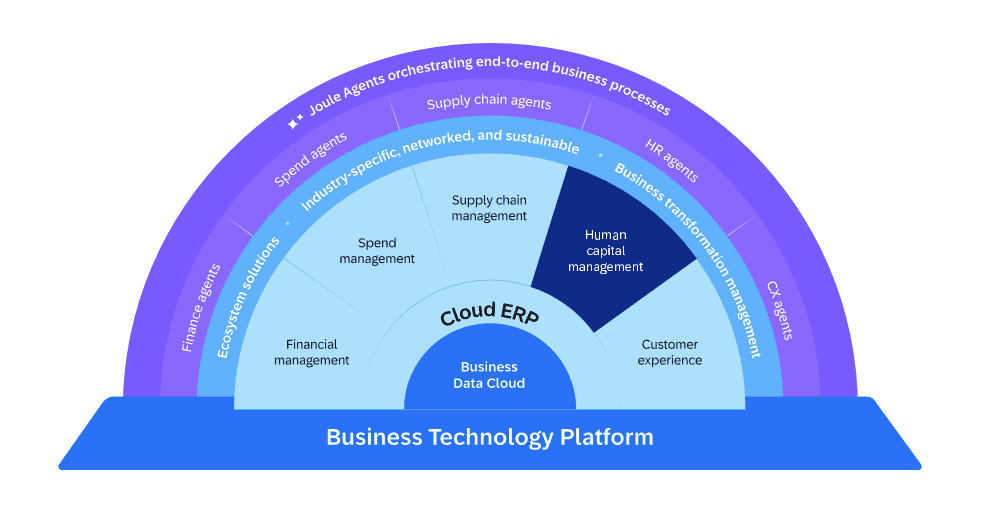
SAP has long positioned itself as a pioneer in creating interconnected business processes, a vision it terms the "Intelligent Enterprise." This concept centers on the seamless integration of disparate business functions – from finance and supply chain to customer relations and human capital management – into a unified operational framework. Historically, deriving actionable insights from such complex, interconnected systems required extensive data analysis by dedicated teams of experts. However, SAP’s latest advancements, spearheaded by its Business AI and the conversational AI agent Joule, aim to democratize this intelligence, making it readily accessible to all business users.
At its heart, SAP’s offering comprises a comprehensive suite of industry-specific applications, often referred to as the SAP Business Suite. These applications are meticulously designed to fit into end-to-end industry workflows, such as "hire to retire," "lead to cash," and "source to pay," effectively mapping to the critical value chains that define modern businesses. The sheer depth and breadth of these integrated workflows have often been likened to earning an MBA in business operations simply by understanding the SAP ecosystem.
Within this intricate architecture, SAP has embedded a vast array of AI applications. These AI-powered components are engineered to automate, integrate, and optimize processes in real-time. For instance, in a manufacturing scenario, if a large customer order is placed, SAP’s AI can proactively assess its potential impact on profit margins. It can then intelligently suggest modifications to the order, such as utilizing more standardized components, to enhance profitability. Similarly, in the face of external disruptions like natural disasters or geopolitical trade actions that affect component costs, SAP can alert businesses and provide recommendations for repricing products or exploring alternative sourcing options.

The power of this AI-driven infrastructure lies in its ability to continuously monitor and optimize hundreds of potential scenarios in real-time. Consider the cost of contingent labor; if overtime expenses begin to exceed predefined thresholds, SAP’s AI can automatically identify the issue and provide detailed recommendations, such as adjusting staffing levels or modifying shift schedules to mitigate cost overruns. This interconnected and highly intelligent AI-based application infrastructure represents a significant leap forward in operational efficiency.
To enable this level of data synthesis and accessibility, SAP has developed its Business Data Cloud. This system serves as a central repository, aggregating data from all its applications and exposing it through SAP Datasphere, a comprehensive SAP dictionary. Datasphere facilitates efficient data discovery and access across the entire application landscape. The Business Data Cloud leverages SAP’s proprietary technology while also integrating with leading data platforms like Databricks and, through new partnerships, Google Cloud. This strategic integration underscores SAP’s commitment to providing a flexible and robust data foundation for its AI initiatives.
SAP Joule: The Unified AI Agent Interface
The most compelling innovation unveiled at SAP Connect 2025 is SAP Joule, an overarching AI agent platform designed to serve as the primary interface for users interacting with SAP’s extensive application suite and data. Joule aims to replicate the ease of use found in consumer-grade AI tools like ChatGPT, offering a conversational and intuitive way for employees to access and leverage enterprise intelligence.
Joule’s capabilities are powered by an impressive array of approximately 40 different AI engines, providing a versatile foundation for a wide range of tasks. Furthermore, the platform is entirely programmable through Joule Studio, enabling organizations and individual users to develop custom AI agents tailored to specific business needs. This allows for the creation of personalized "employee apps" that can automate routine tasks, provide instant information, and offer intelligent guidance.
This year’s SAP Connect saw the launch of dozens of pre-built Joule agents, with a particular emphasis on Human Capital Management (HCM). Five new HR-focused agents were introduced, including:
- Performance and Goals Agent: Assists employees in developing and reviewing performance goals.
- Career and Talent Development Agent: Guides employees in building personalized career paths and identifying development opportunities.
- HR Service Agent: Provides instant answers to common HR queries and facilitates access to HR services.
- Payroll Agent: Streamlines payroll processes, manages discrepancies, and ensures accurate compensation.
- People Intelligence Agent: Offers insights into workforce data, enabling better talent management and strategic decision-making.
SAP asserts that Joule now provides access to approximately 80% of its core HCM functionality, positioning it as the primary gateway for employees to engage with their business systems. This transforms Joule into the "front door" to the enterprise, empowering any employee, regardless of their technical expertise, to effortlessly find information, analyze data, monitor processes, and receive actionable advice.
A significant development highlighted at the event was the integration of Galileo, a sophisticated AI platform, into Joule. This integration is set to elevate Joule’s capabilities, particularly in the HR domain. Starting in 2026, Joule will evolve into an expert HR and leadership assistant, powered by Galileo’s advanced AI. This enhancement will further solidify Joule’s role as an indispensable AI tool for employees across the organization. SAP is offering early access to Galileo for its customers, with plans to seamlessly upgrade them to the integrated Joule service in 2026, underscoring a strategic roadmap for AI-driven HR transformation.
Expanding SuccessFactors’ AI Frontier
Beyond the overarching Joule platform, SAP also unveiled substantial advancements within its SuccessFactors suite, reinforcing its position in the HCM market.
Workforce Scheduling: A major new system, Workforce Scheduling, has been introduced to address the complexities of labor management. This intelligent solution offers smart shift and time scheduling capabilities, enabling businesses to dynamically align staffing with demand, match employee skills to job requirements, facilitate shift swapping, and manage other intricate scheduling needs. This move directly positions SAP as a formidable competitor to established leaders in complex shift and time management, such as UKG.
People Intelligence: The long-awaited People Intelligence product has finally been launched, aiming to revolutionize how organizations understand and manage their workforce. This new offering consolidates years of previous People Analytics tools into a single, cohesive platform. Crucially, it features a Joule interface, allowing users to not only monitor key HR metrics like skills, engagement, and turnover but also receive intelligent, data-driven recommendations for proactive intervention. This addresses a significant market demand for integrated analytics and actionable insights, competing directly with specialized tools like Visier.

Enterprise Service Management (ESM): In a strategic move to challenge market leaders like ServiceNow and Salesforce, SAP has released Enterprise Service Management. This integrated application suite is designed to streamline service delivery functions, encompassing call center operations, case management, and incident management. Dan Beck expressed confidence that this new ESM system extends SAP’s capabilities into HR and customer service with a world-class platform. Initial demonstrations of the ESM system, which is also seamlessly connected to Joule, reportedly showcased impressive functionality and integration potential.
Strategic Implications and Market Positioning
The suite of announcements at SAP Connect 2025 collectively signals SAP’s aggressive push to dominate the HCM and intelligent enterprise landscape. The company appears to have ascended to a leadership position in HCM functionality, AI architecture, and advanced features for both HR and integrated financial management. While acknowledging that SuccessFactors may not cover every niche – for example, SAP’s acquisition of SmartRecruiters with its AI agents strengthens its hiring capabilities, but specialized tools may still lead in high-volume recruitment – the overall competitiveness of the SuccessFactors suite has demonstrably increased.
Several existing SAP enterprise clients, including major corporations like IBM and Disney, have reportedly transitioned from other HCM providers, such as Workday, to SuccessFactors. This trend underscores SAP’s strategic advantage in leveraging its existing enterprise customer base. The compelling AI architecture, coupled with the comprehensive suite of integrated applications, positions SAP favorably to secure new deals and deepen its relationships with current clients.
Initially, the strategic direction of Joule was somewhat ambiguous. However, the recent announcements at SAP Connect have clarified its role as a standardized front-end for business users. Joule’s interoperability with other leading AI agents, including Microsoft Copilot, through protocols like a2a and MCP, further enhances its value proposition by enabling seamless integration into existing enterprise workflows and IT ecosystems.
New Research on AI in HR: Quantifying the Impact
Complementing these technological advancements, SAP has also released a significant body of research detailing the financial impact of AI in HR. This research, a culmination of a year-long study led by Kathi Enderes, provides in-depth case studies of SAP clients and their successful AI implementations. The series comprises five reports focusing on AI in payroll and time management, talent management, employee experience, HR service delivery, and the broader HR operating model. These reports offer practical, real-world use cases and ROI models that organizations can leverage to build business cases for AI adoption.
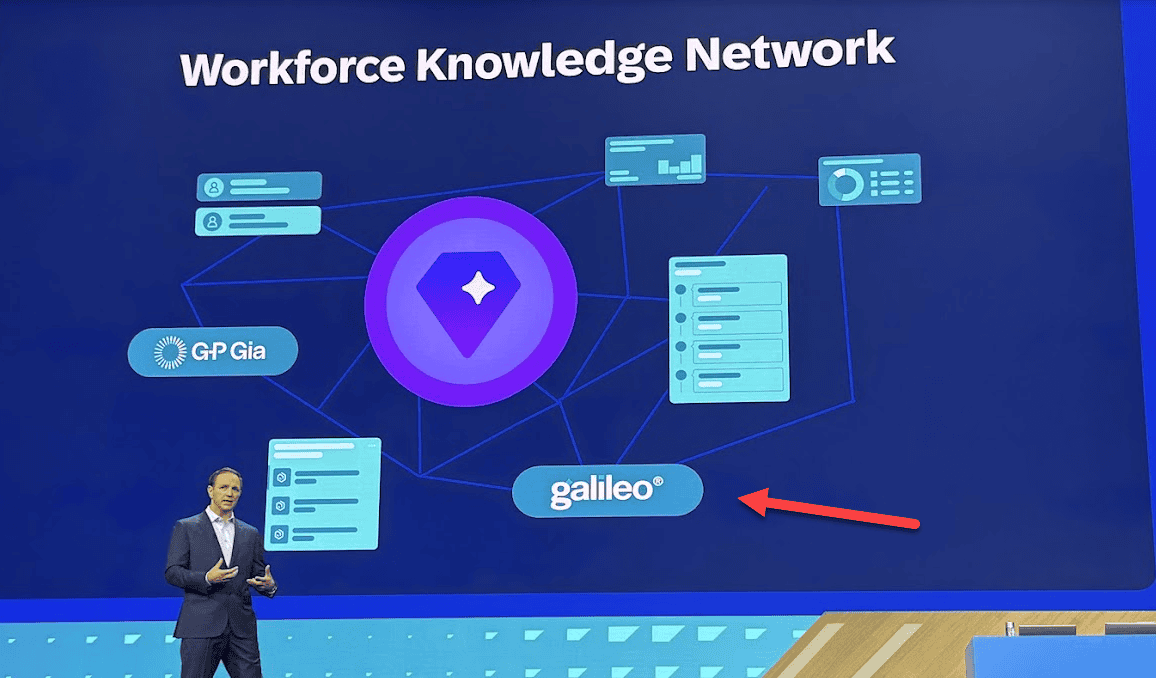
Infographics summarizing this research are available for download, and deeper insights can be accessed through Galileo. Users can interact with Galileo to explore specific use cases, identify ROI models, find examples within their respective industries, and assess their organization’s readiness for AI transformation based on the documented successes. A prompt example illustrates Galileo’s utility: "Galileo, will you give me five examples of AI implementations in recruitment in my industry and what the return on investment was for these companies? Now give me details on the implementation plan and change process they each used?"
The release of this research alongside the new product announcements underscores SAP’s commitment to not only developing cutting-edge AI solutions but also to providing its customers with the knowledge and tools necessary to effectively implement and derive maximum value from these innovations.
Broader Implications and Future Outlook
SAP’s strategic focus on an "Intelligent Enterprise" powered by integrated AI is reshaping the competitive landscape for enterprise software. By unifying business processes and democratizing access to intelligence through intuitive interfaces like Joule, SAP is empowering organizations to operate with greater agility, efficiency, and foresight. The company’s commitment to continuous innovation, evidenced by the rapid pace of new product launches and strategic partnerships, suggests a sustained trajectory of growth and market leadership.
The integration of advanced AI into core business functions, from HR and finance to supply chain and customer service, represents a paradigm shift. Businesses that effectively harness these capabilities will be better equipped to navigate market volatility, optimize resource allocation, and deliver superior employee and customer experiences. SAP Connect 2025 has clearly articulated SAP’s vision for this future, and the industry will be closely watching its execution.
For further exploration, listeners can tune into the latest podcast episode discussing SAP’s AI advancements in detail. Additionally, SAP offers extensive resources, including research on AI’s financial impact on HR, insights into AI transformation success factors, and educational materials through Galileo and Galileo Learn, positioning itself as a comprehensive partner for businesses embarking on their AI journey.







