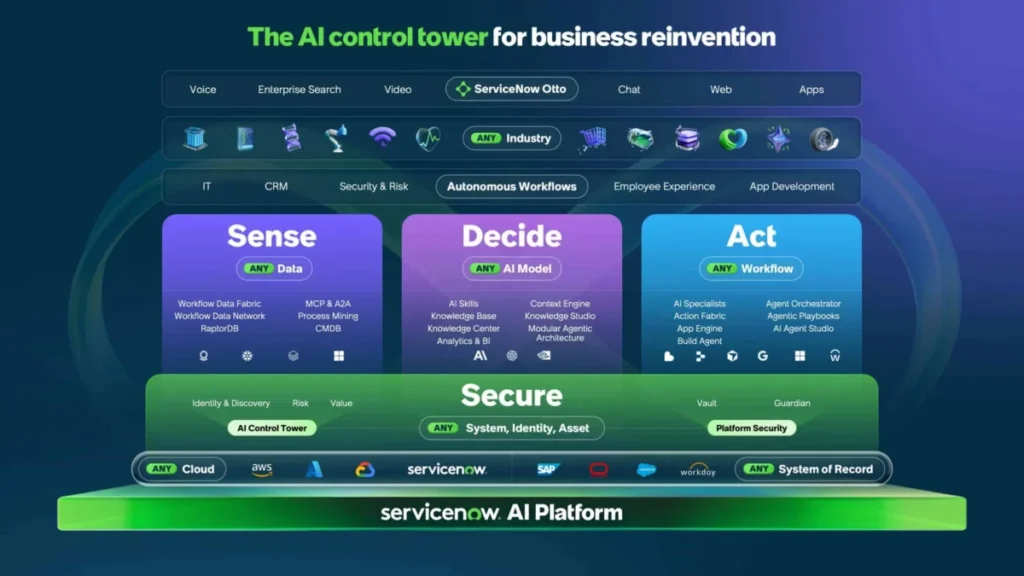
ServiceNow has unveiled a sweeping suite of announcements, signaling its aggressive ambition to double its revenue to $30 billion within the next four years. At the core of this strategy is a concerted effort to become the central hub for managing, securing, and providing access to every artificial intelligence agent within an enterprise. This move positions ServiceNow as a critical intermediary, effectively creating a "tollgate" for AI agent interactions, a model that is likely to introduce new revenue streams for the company, potentially marking the end of a perceived "SaaS apocalypse" with a renewed focus on value-driven enterprise solutions.
The company’s strategy directly challenges and aligns with similar bets being placed by industry giants like Microsoft and Workday. ServiceNow’s vision, articulated as "turning enterprise AI chaos into control," resonates with CIOs seeking order amidst the rapidly expanding landscape of AI tools. Similarly, Workday emphasizes "AI agents without enterprise governance are lawless by design," highlighting the critical need for oversight. While the immediate concern for many businesses may not be "chaos" but rather "building scalable ROI use cases," these governance-focused announcements aim to provide the framework necessary to achieve that.
Action Fabric: ServiceNow’s Oversight and Monetization Engine
A cornerstone of ServiceNow’s new strategy is the "Action Fabric," a sophisticated monitoring and management layer designed to oversee all AI agent activity. This concept mirrors Microsoft’s "Agent 365" and Workday’s "Agent System of Record," all aiming to provide a unified control plane for diverse AI agents.
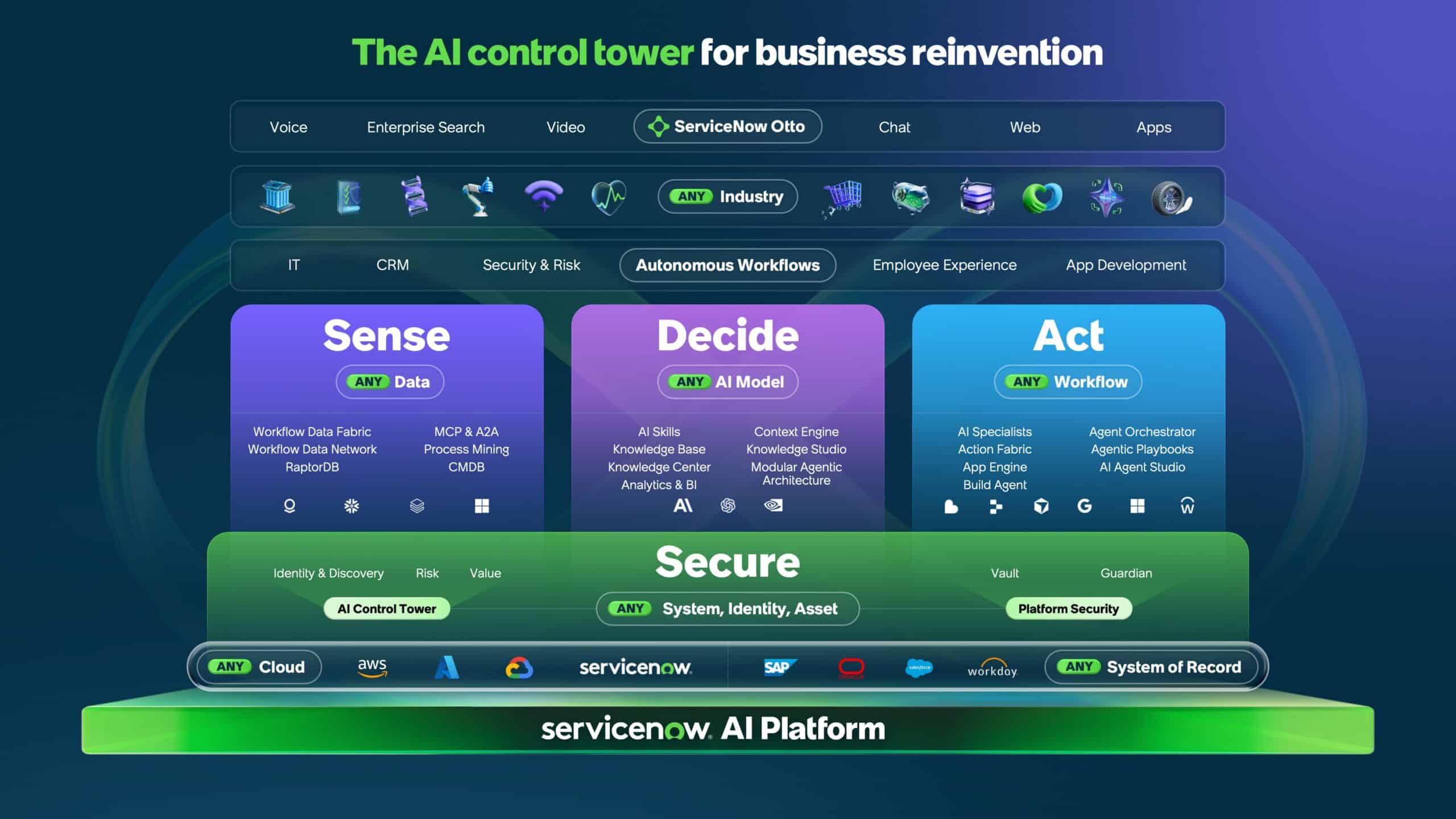
ServiceNow’s Action Fabric, powered by its MCP server, promises an open ecosystem:
- Universal Agent and Model Compatibility: Any AI agent, regardless of its origin or the underlying model it uses, can connect to the ServiceNow Fabric via MCP. This "any agent, any model" approach ensures broad integration capabilities.
- Openness to External AI: The management tools are designed to be callable by agents, enabling the automation of management scenarios and the integration of third-party management frameworks.
- Comprehensive Control and Trust: All agents operating within the Fabric are authenticated, have their permissions scoped, are audited, and are continuously monitored by ServiceNow. While the specifics of how Workday, SAP, or other business rules are enforced remain a point of clarification, the emphasis is on robust security and compliance.
This initiative leverages ServiceNow’s two decades of investment in its platform, including its Configuration Management Database (CMDB), Workflow Data Network, configured business rules, Security Center, and identity and access controls. This existing infrastructure positions ServiceNow as a comprehensive IT management system ready for the "reinvention" demanded by the AI era.
Parallel efforts are underway from other major enterprise software providers. Workday’s "Agent System of Record" and "Agent Gateway" are opening its platform to external agents on a per-call basis. SAP is also mandating that agents utilize its Business Accelerator Hub to access business rules, with usage-based metering. The choice between these platforms will likely hinge on a company’s existing investment in Workday or SAP business rules and their preferred development environments.
Otto: The "Front Door" to Enterprise AI Agents
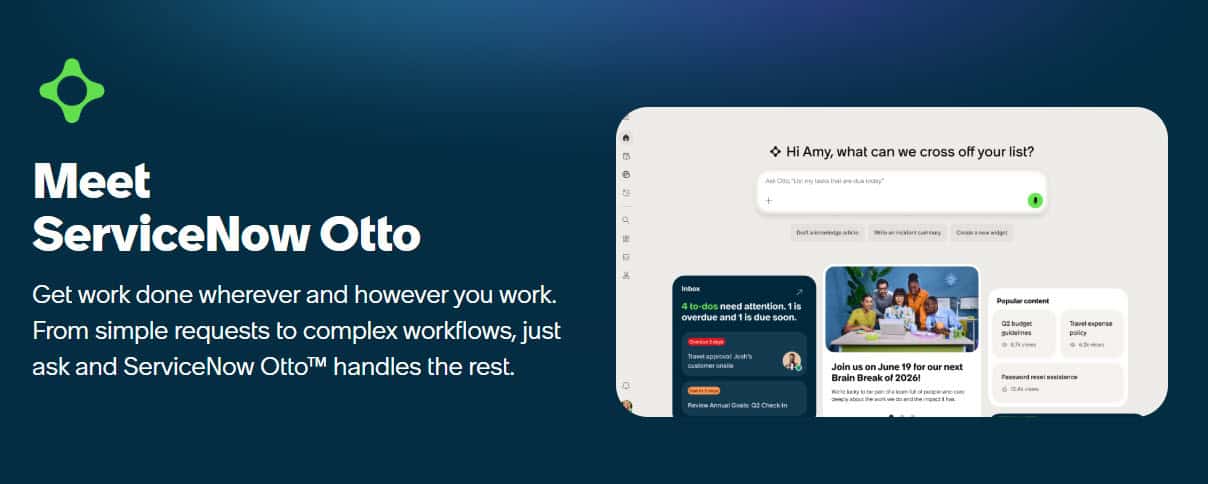
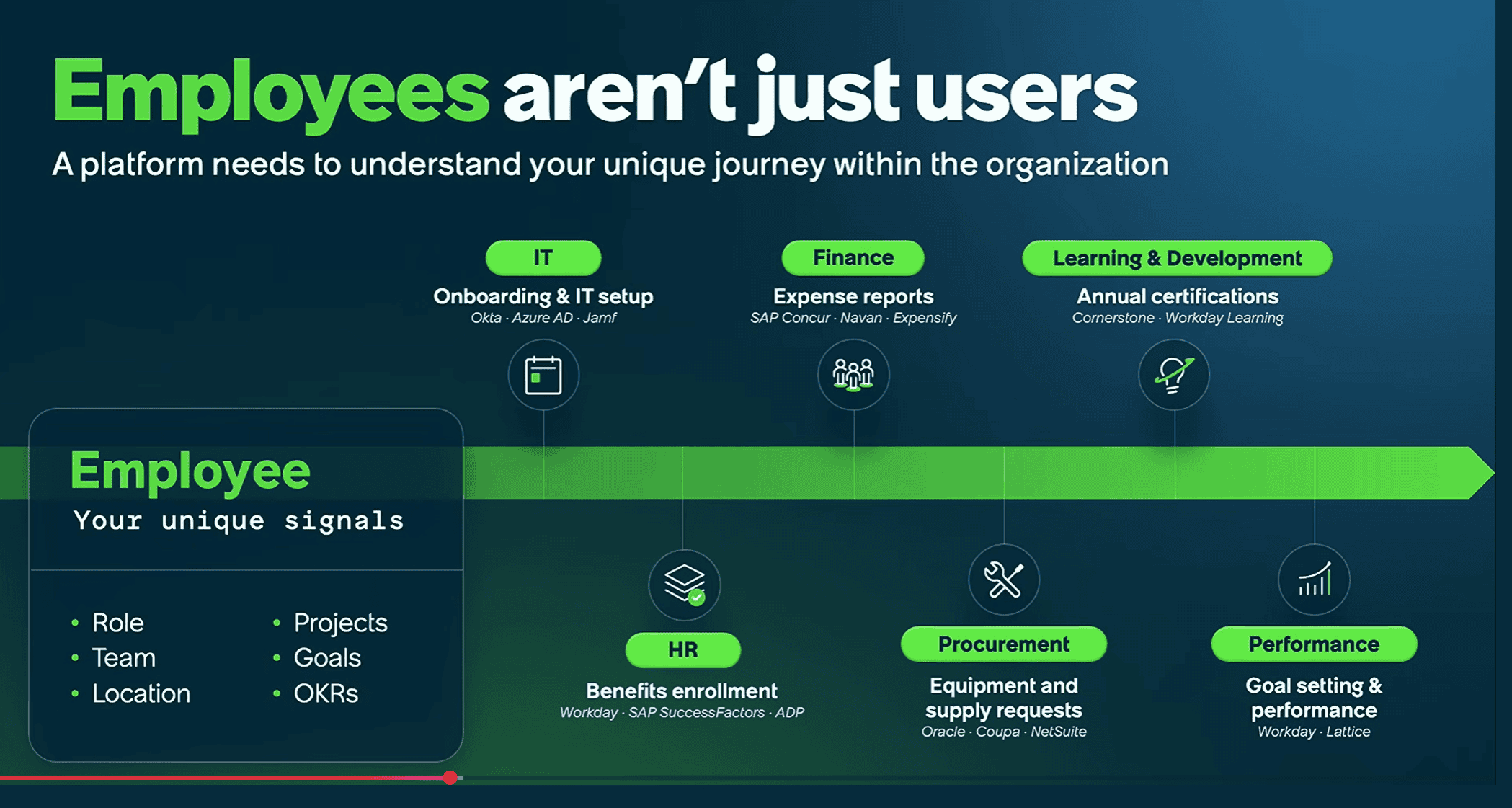
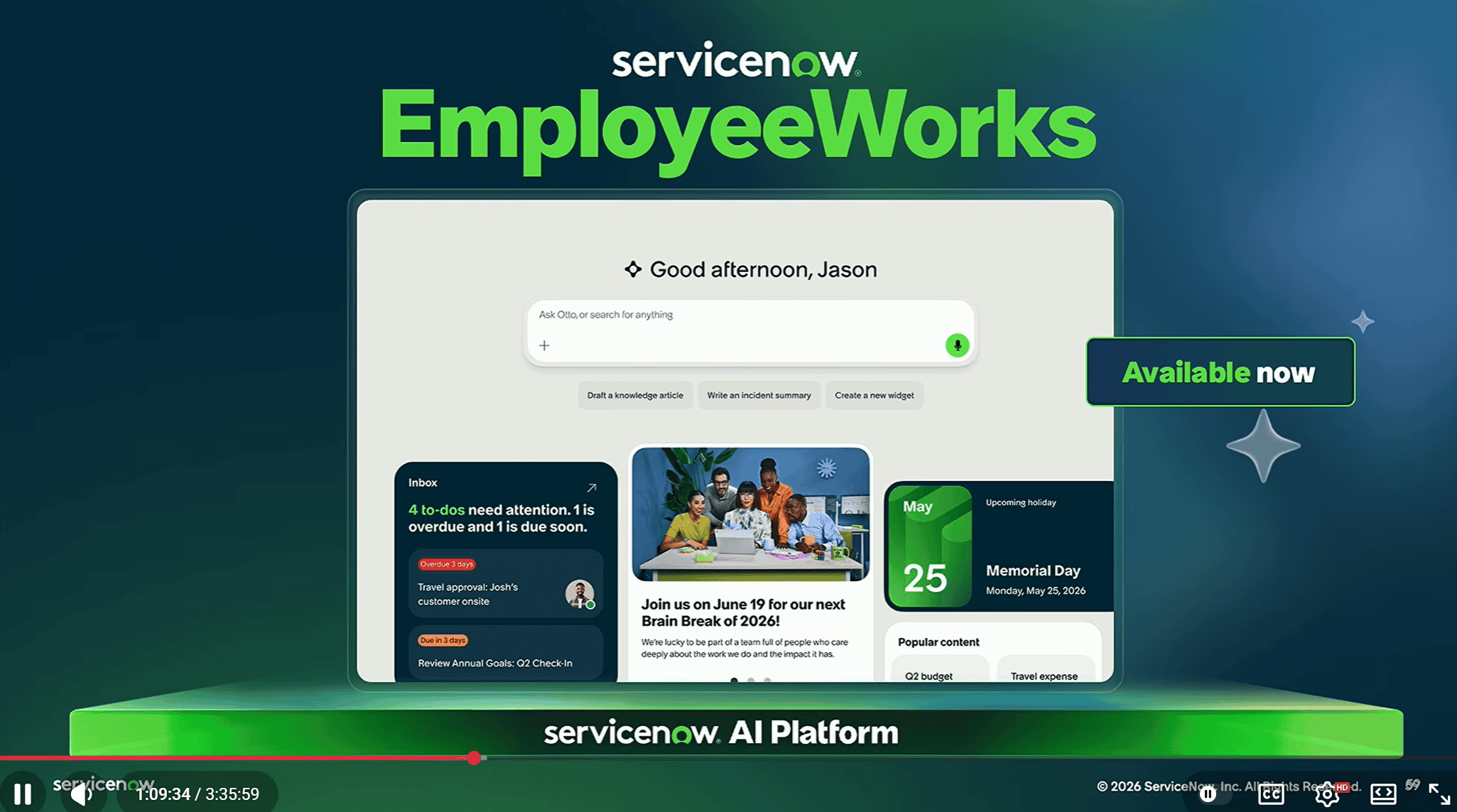
ServiceNow is reinventing its Now Assist capabilities, rebranding and integrating them as "Otto," designed to serve as the primary interface—the "Front Door"—for employees interacting with any enterprise AI agent. This strategic move parallels Workday’s introduction of "Sana" as its enterprise front door.
Otto, leveraging the capabilities of Moveworks (which ServiceNow acquired), aims to provide a user-friendly persona for employees seeking information, knowledge, or assistance. While branding Otto as a friendly employee tool, it also positions it as the new Employee Experience (EX) platform, moving beyond traditional "Employee Self Service" models. Bhavin Shah, founder of Moveworks, now leads the Otto initiative, and the broader platform is branded as "EmployeeWorks" to emphasize its open nature.
The evolution of the Employee Experience Platform (EXP) market is significant. While Otto may appear as a simple chatbot for inquiries about policies or benefits, its true power lies in its ability to integrate with a vast array of enterprise systems and address complex, multi-faceted employee needs. For instance, in crisis management scenarios, an employee agent might need to address family trauma, power outages, and other emergencies, requiring sophisticated integrations with communication, HR, and IT systems. This competitive space includes major players like Microsoft and Zoom, as well as numerous Human Capital Management (HCM) vendors.
The AI Control Tower: Governance and ROI for Enterprise AI
The AI Control Tower is ServiceNow’s ambitious vision for managing the entire lifecycle of enterprise AI. Beyond merely monitoring and provisioning agents, it aims to actively compute their Return on Investment (ROI), identify misbehaving agents, and detect cost overruns due to excessive token consumption.
This concept bears resemblance to IBM’s historical "SystemView," which sought to manage all computing resources within its proprietary SNA network. ServiceNow’s vision, as articulated by CEO Bill McDermott, is to manage every facet of the enterprise: agents, workflows, and people, addressing what he describes as a "sprawl of conflicting workflows and business rules."
While the drive for comprehensive monitoring and management appeals to IT departments, particularly in addressing fears of data breaches or rogue AI agents, it raises questions about the balance between control and employee autonomy. The Ritz Carlton’s service model, which empowers employees to "use their own best judgment," offers a counterpoint to the idea of monitoring every decision, suggesting that a nuanced approach is crucial.
The ServiceNow Autonomous Workforce: Defining AI Roles
ServiceNow is introducing "The ServiceNow Autonomous Workforce," a set of predefined "AI Specialists" designed for autonomous work. This initiative mirrors research into agentic HR, categorizing agents into those that "take action," "set rules," and "observe and monitor."
Examples of these AI Specialists include:
- IT Operations: Site Reliability AI Specialist, AI Operations Specialist, Level 1 Service Desk Specialist.
- HR Services: HR Service Delivery AI Specialist, Case Management Specialist, Third-party Screening Specialist.
- Security & Architecture: Enterprise Architecture Specialist, Vulnerability Exposure Specialist.
This framework provides a starting point for companies to define and deploy AI agents for specific job functions, potentially centralizing tasks previously handled by multiple individuals. The integration of "Galileo," ServiceNow’s "digital HR consultant," as an add-on feature of Otto further solidifies this approach.
Context Engine: Unifying Enterprise Operations
The introduction of the ServiceNow Context Engine aims to create a unified operational view of the enterprise. This context layer identifies and locates existing system business rules and metadata, theoretically encompassing organizational structures, privacy regulations, and business workflows, many of which originate from ERP and other core systems.
This "graph of graphs" approach integrates ServiceNow’s workflow data network with knowledge, action, asset, and decision graphs, aiming for a self-improving system. The introduction of an "AI Analyst Specialist" for autonomous data analytics further supports this goal.
This area is highly competitive, with Microsoft’s WorkIQ and its integration with the Microsoft Graph, and Gloat’s Loomra for human capital applications, offering similar contextualization capabilities. The success of these platforms will depend on their ability to seamlessly connect and interpret data across disparate enterprise systems.
A New Revenue Model for Enterprise Software
ServiceNow’s comprehensive strategy positions enterprise AI not just as a technological advancement but as a significant new revenue opportunity, estimated to be a trillion-dollar market. The monetization model is shifting from per-seat licenses to usage-based fees, particularly through agent interactions. This aligns with the broader trend of "software as a service" evolving into "fee-driven services" that aim to displace human labor costs.
The recent collaborations between AI leaders like Anthropic and Blackstone, and OpenAI’s joint venture with private equity firms, underscore this shift towards service-oriented AI deployment.
The Business Case for AI Governance and Transformation
The core question for businesses is the economic viability of investing heavily in AI governance infrastructure before widespread application deployment. While the need for enterprise tools to manage AI agents is clear, the timing and scale of this investment are critical.
The economic argument for AI adoption hinges on replacing labor costs with token fees. However, if AI agents do not demonstrably increase productivity or transform work, this new expenditure may not yield a positive ROI. Companies like Uber have reportedly scaled back on software agents due to the comparative cost-effectiveness of human workers.
ServiceNow’s approach, which emphasizes control and security, is appealing to IT departments concerned about risks. The demonstration of the AI Control Tower detecting and neutralizing a prompt injection attack, for instance, highlights a tangible benefit that justifies investment. However, the broader goal should be "transforming work," not merely "automating it." Companies are advised to focus on redesigning workflows and processes first, before layering on extensive governance tools, as many have licensed software they have yet to fully utilize.
Furthermore, the ease of development and integration within competing platforms like Microsoft Copilot or Workday could influence vendor choice for management tools. The "total cost of AI transformation" must encompass not only development and maintenance but also business rules and governance.
The Future of Work: Agents as Liberators, Not Replacements
The ultimate vision presented by ServiceNow, and echoed by industry analysts, is that AI agents will not replace humans but liberate them to focus on higher-level thinking and innovation. As enterprises navigate the complexities of AI integration, the emphasis on "using best judgment" and empowering human decision-making remains paramount. The success of AI will ultimately be measured by its ability to augment human capabilities, fostering a future where technology enables greater creativity and strategic foresight.
ServiceNow’s ambitious strategy, backed by significant investment and a clear vision for AI governance and management, sets the stage for a new era of enterprise software. The coming years will reveal how effectively businesses adopt these tools and how this new model of AI monetization reshapes the economic landscape of the digital workplace.