
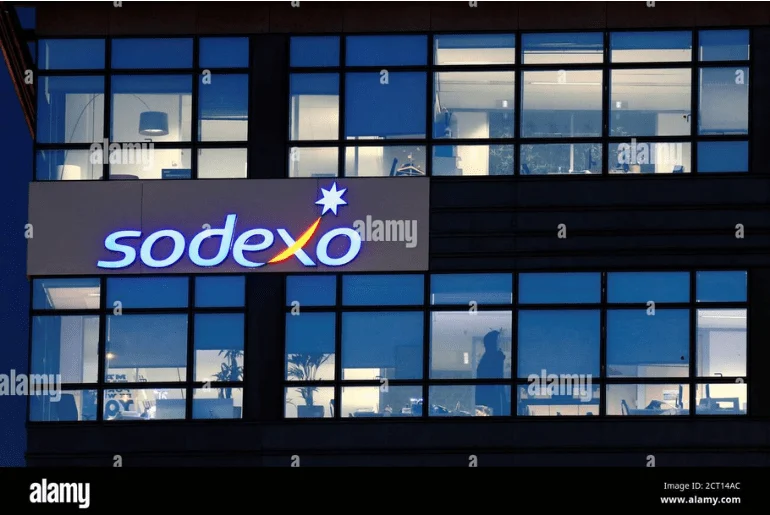
French food services and catering giant Sodexo has announced a significant organisational restructuring set to impact its domestic workforce, with plans to eliminate more than 1,000 positions in its home market. The strategic move, officially disclosed on August 26, 2026, signals a comprehensive effort by the multinational corporation to enhance its operational agility, accelerate growth, and bolster competitiveness amidst an increasingly challenging global economic landscape.
Sodexo Announces Major Restructuring in France
The core of the announced restructuring involves the elimination of 963 positions within Sodexo’s French operations. This figure represents approximately 4% of the company’s total workforce in France, underscoring the scale of the internal transformation. In addition to this primary reduction, a distinct but related restructuring initiative targeting the group’s head office functions could lead to a further 134 job losses. Combined, these two projects push the total number of anticipated redundancies beyond the 1,000 mark, making it one of the more substantial workforce adjustments seen in the French corporate sector recently.
Sodexo leadership has framed these drastic measures as an essential component of a broader strategic transformation. The stated objective is multi-faceted: to streamline operations, simplify the organisational structure, and ultimately strengthen its market position both domestically and internationally. The company, a dominant force in food services and facilities management globally, has acknowledged facing considerable pressure to improve efficiency and adapt to evolving client demands and market dynamics. This restructuring is presented as a proactive step to navigate these pressures and secure long-term sustainability and growth.
Contextualizing Sodexo’s Global Footprint and Market Position
Founded in Marseille, France, in 1966 by Pierre Bellon, Sodexo has grown into a world leader in Quality of Life Services. Its vast portfolio spans a wide array of offerings, including corporate catering, facilities management, benefits and rewards services, and specialized services for sectors like healthcare, education, and remote sites. Operating in 53 countries, Sodexo serves millions of consumers daily, employing over 422,000 people worldwide as of its last reporting. Its extensive reach and diversified services make it a bellwether for trends in corporate and institutional services.
The company’s history is marked by continuous expansion, both organically and through strategic acquisitions, establishing a formidable presence across continents. In France, Sodexo is not merely a major employer but also a significant contributor to the service economy, managing countless cafeterias, canteens, and facility services for public and private entities. This deep integration into the French economic fabric means that any significant internal changes, particularly those involving substantial job reductions, carry considerable weight and garner close scrutiny from labor unions, government bodies, and the public.
The Rationale Behind the Strategic Overhaul
Sodexo’s decision to embark on such a significant restructuring is attributed to a "challenging operating environment." This phrase encapsulates a multitude of pressures that have been converging on the food services and facilities management sectors globally. Post-pandemic shifts, for instance, have fundamentally altered workplace dynamics, with hybrid work models impacting demand for on-site catering and office-based facilities services. The company also faces persistent inflationary pressures on food costs, energy prices, and labor expenses, eroding profit margins. Supply chain disruptions, exacerbated by geopolitical events, further complicate operational planning and cost control.
Beyond these external factors, the company also aims to address internal efficiencies. Large, long-established corporations often accumulate layers of bureaucracy and fragmented processes over decades of growth and expansion. A strategic transformation of this magnitude typically seeks to identify and eliminate redundancies, optimize resource allocation, and foster a more agile and responsive organizational culture. By simplifying its structure, Sodexo aims to reduce overhead costs, improve decision-making processes, and accelerate the implementation of new strategies, particularly in areas like digital transformation and sustainability. The goal is to create a leaner, more competitive entity capable of responding swiftly to market shifts and client needs.
Navigating French Labor Law: The Restructuring Process
The execution of such a large-scale redundancy plan in France is governed by stringent labor regulations, designed to protect employee rights and ensure a fair and transparent process. Sodexo has explicitly stated that the restructuring will be carried out in full compliance with French labor laws, which typically mandate extensive consultation with employee representatives. This involves engaging with the Comité Social et Économique (CSE), a mandatory body representing employees, which must be informed and consulted on major strategic decisions impacting employment, working conditions, and economic performance.
For large-scale redundancies, companies in France are often required to implement a Plan de Sauvegarde de l’Emploi (PSE), or "Employment Safeguard Plan." A PSE outlines measures to avoid or reduce job losses, such as internal redeployment, training for new roles, or early retirement schemes. When dismissals are unavoidable, the PSE must detail support measures for affected employees, including severance packages, outplacement services, and retraining opportunities. The consultation period can be lengthy, often spanning several weeks or even months, allowing for negotiations between management and employee representatives to mitigate the social impact of the job cuts. Sodexo’s commitment to these regulations indicates a structured, legally compliant approach, though the human impact remains significant. Further details regarding the specific functions or locations affected, as well as the timeline for implementation and the support measures for impacted employees, are expected to be communicated in the coming weeks and months following the initial consultation phase.
Broader Economic Headwinds and Industry Pressures
Sodexo’s restructuring announcement is not an isolated event but rather reflects a broader trend observed across various European firms. Businesses across the continent are currently grappling with a confluence of economic challenges, including slowing economic growth, persistent inflation, and elevated interest rates. The eurozone, for example, has experienced periods of sluggish growth, with forecasts often revised downwards, impacting consumer and corporate spending alike. Inflation, while showing signs of moderation, has remained above central bank targets for an extended period, squeezing household budgets and increasing operational costs for businesses.
Within the food services and facilities management industry specifically, several trends are compelling companies to re-evaluate their strategies. There’s a growing demand for more sustainable and ethically sourced food, requiring investments in new supply chains and practices. Technological advancements, such as AI-powered facility management systems and app-based food ordering, necessitate digital transformation and upskilling of the workforce. Moreover, the increasing focus on employee well-being and flexible working arrangements means that service providers must innovate to offer more personalized and adaptable solutions. Companies that fail to adapt risk losing market share to more agile and technologically advanced competitors. Sodexo’s move can be seen as an aggressive attempt to position itself favorably in this rapidly evolving landscape.
Reactions and Stakeholder Perspectives
While Sodexo has presented the restructuring as a necessary step for future growth, the announcement is likely to elicit varied reactions from different stakeholders.
- Sodexo Management: Top executives will likely reiterate the difficulty of such decisions, emphasizing that the measures are vital for the long-term health and competitiveness of the company. Statements will stress commitment to supporting affected employees through the transition, highlighting the investment in future capabilities and sustainable growth.
- Employee Representatives and Unions: Unions, such as the CFDT or CGT, which are prominent in France, are expected to express deep concern for the impacted employees. Their primary focus will be on negotiating the most favorable terms possible within the PSE, including generous severance packages, robust outplacement support, and comprehensive retraining programs. They will scrutinize the company’s justification for the cuts and push for alternatives where feasible.
- Financial Analysts and Investors: Analysts are likely to view the restructuring as a positive signal of management’s commitment to cost control and efficiency. While initial market reaction might be mixed due to the immediate costs associated with redundancies, the long-term outlook for improved profitability and agility could be favorable. Investors often reward companies that take decisive action to streamline operations in challenging environments.
- Government Officials: French government officials, particularly those concerned with employment and economic development, will monitor the process closely. While respecting corporate autonomy, they will ensure adherence to labor laws and may offer support programs for displaced workers. The scale of the job cuts will draw attention to the broader employment situation in France.
Implications for Sodexo’s Future Trajectory
The success of this restructuring hinges on its ability to deliver on the stated objectives of accelerating growth and improving competitiveness. If executed effectively, the overhaul could lead to a more streamlined, efficient, and profitable Sodexo. A simplified organizational structure could foster faster decision-making, better resource allocation, and a more unified strategic direction across its diverse business lines. This could, in turn, enable the company to invest more effectively in innovation, digital transformation, and sustainable practices, which are critical for future growth in its sectors.
However, such large-scale changes also carry inherent risks. There is the potential for a decline in employee morale, even among those not directly affected, if the process is perceived as handled poorly or if the remaining workforce feels insecure. A loss of institutional knowledge from departing employees could also temporarily impact operational efficiency. Moreover, the public perception of the company could be affected, particularly in a country like France where social welfare and employee rights are highly valued. Sodexo will need to manage its internal and external communications meticulously to mitigate these potential negative impacts and reinforce its commitment to its employees and stakeholders.
The Wider Landscape of European Corporate Restructuring
Sodexo’s announcement fits into a broader pattern of corporate restructuring observed across Europe in the mid-2020s. Following a period of economic volatility, many large enterprises are re-evaluating their cost structures and operational models. Sectors ranging from technology and finance to manufacturing and services have seen significant layoff announcements as companies aim to adapt to post-pandemic realities, inflationary pressures, and geopolitical uncertainties.
Data from organizations like Eurostat and various labor market analyses consistently show that while overall employment may remain stable or grow modestly, specific sectors and companies are undergoing profound transformations. This often involves reducing headcount in legacy roles or less profitable segments while simultaneously investing in new areas such as AI, green technologies, or specialized digital services. The trend highlights a shift towards more agile, digitally-enabled business models, requiring companies to constantly re-evaluate their workforce needs and skill sets. Sodexo’s actions, therefore, reflect a strategic imperative shared by many of its European counterparts to ensure long-term viability and competitive edge in a dynamic global economy.
Conclusion
Sodexo’s decision to cut over 1,000 jobs in France marks a pivotal moment in its ongoing strategic evolution. While undoubtedly a difficult announcement for the affected employees, the company positions it as a critical step towards building a more resilient, agile, and competitive organization. The coming months will be crucial as Sodexo navigates the intricate process of consultation and implementation, striving to balance its business imperatives with its social responsibilities. The success of this ambitious overhaul will serve as a significant indicator of its ability to adapt and thrive in an increasingly complex and demanding global marketplace, ultimately shaping its trajectory for the remainder of the decade and beyond.








