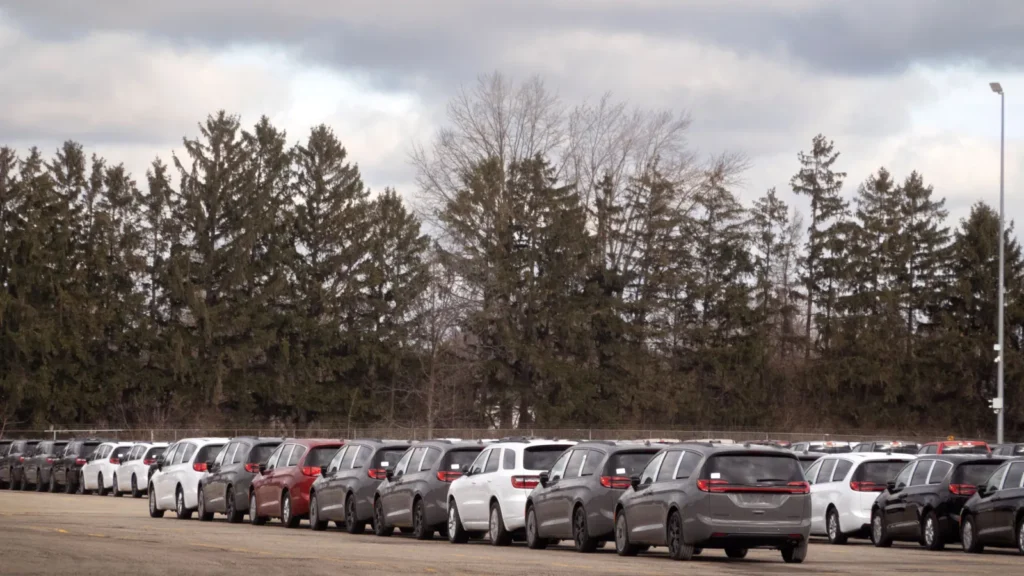
The recent strategic alliance between automotive giant Stellantis and technology titan Microsoft, aimed at accelerating Stellantis’s digital transformation through artificial intelligence, highlights a crucial underlying challenge: the paramount importance of comprehensive staff training to effectively leverage these advanced technologies and maintain productivity levels. This partnership, announced on April 16, 2026, and further explored in an article published on April 30, 2026, by Paul Myles for HR Dive (originally WardsAuto), marks a significant step for Stellantis in an increasingly competitive global automotive landscape, particularly against rapidly emerging players. However, industry analysts are quick to point out that the success of such initiatives hinges not just on the deployment of cutting-edge tech but, critically, on the readiness and capability of the human workforce to adapt and utilize it.
The Strategic Imperative: Bridging the Competitiveness Gap
Stellantis’s decision to forge a five-year strategic partnership with Microsoft is deeply rooted in the current dynamics of the automotive industry, which is undergoing a profound shift driven by electrification, connectivity, and digitalization. The company, a multinational automotive manufacturing corporation formed from the merger of Fiat Chrysler Automobiles and PSA Group, faces intense competition, especially from Chinese original equipment manufacturers (OEMs) that have rapidly advanced in software and cost efficiency.
Orwa Mohamad, a senior analyst at Third Bridge, articulated this competitive disparity starkly in an emailed response to a WardsAuto inquiry. Mohamad stated that Stellantis currently grapples with a "significant competitiveness gap against Chinese OEMs," estimating a "20-25% disadvantage in total landed costs and a notable lag in software and infotainment capabilities." This substantial gap cannot be closed through internal engineering efforts alone, according to industry experts. The partnership with Microsoft is therefore designed as a catalyst to accelerate Stellantis’s pivot towards a "software-defined vehicle model," a paradigm shift where a vehicle’s functionality and user experience are increasingly dictated by its software rather than solely its hardware. This strategic move aims to imbue Stellantis with the agility and technological prowess needed to not only compete but thrive in an environment where digital capabilities are becoming as vital as mechanical engineering.
The scope of the partnership extends across multiple critical domains. Microsoft’s expertise in artificial intelligence, cloud computing (specifically Azure), and cybersecurity will be instrumental in transforming Stellantis’s production processes, enhancing customer experience solutions, and bolstering engineering capabilities. This comprehensive approach suggests a deep integration of AI at every level of Stellantis’s operations, from optimizing manufacturing efficiency and supply chains to personalizing in-car experiences and developing new mobility services. For example, AI could be used to predict maintenance needs in factories, optimize logistics routes, analyze vast amounts of vehicle data for performance improvements, and power intelligent voice assistants or personalized infotainment systems within vehicles. The collaboration is not merely about adopting AI tools but about fundamentally rethinking how Stellantis designs, produces, and interacts with its customers.
The Solow Paradox Revisited: Lessons from Past Technological Revolutions
While the enthusiasm for AI’s transformative potential is high, a crucial historical precedent cautions against expecting immediate, dramatic productivity surges. Adam Ragozzino, Omdia’s principal analyst for batteries and electric powertrains, draws a parallel to the "Solow Paradox." Named after Nobel laureate economist Robert Solow, this paradox describes the observation that the introduction of microprocessors and information technology in the 1960s and 70s did not immediately translate into significant productivity gains. Instead, Solow famously quipped, "You can see the computer age everywhere but in the productivity statistics."
Ragozzino explained that "Solow found that instead of the immediate boost in productivity that was heralded in the 1960s, what he found was a lag where productivity actually slowed down while people learned how to deal with the overflow of information produced." This historical insight is highly pertinent to the current AI revolution. The deployment of advanced AI systems, while promising immense long-term benefits, can initially lead to a period of adjustment, confusion, and even decreased efficiency as employees grapple with new tools, workflows, and decision-making processes. Without adequate training, the sheer volume of data, the complexity of AI interfaces, and the altered nature of tasks can overwhelm the workforce, temporarily hindering rather than enhancing productivity. The Solow Paradox serves as a stark reminder that technological adoption is a human endeavor, requiring significant investment in human capital alongside technological capital.
Stellantis’s Proactive Approach to Human Capital Development

Recognizing this critical human element, Stellantis is emphasizing a proactive and integrated approach to staff training for AI adoption. When queried about their strategy, a Stellantis spokesperson indicated that their potential programs are in early stages, with more details to be unveiled as the partnership with Microsoft progresses. However, the spokesperson outlined a foundational philosophy: "Our training approach is embedded into everyday work rather than structured as a separate academy."
This "embedded" approach signifies a commitment to integrating learning directly into the workflow, making skill development a continuous and practical aspect of an employee’s daily responsibilities rather than an isolated, periodic event. The company has developed a dedicated internal upskilling and reskilling program designed with multiple levels of progression. This tiered structure caters to varying levels of existing digital literacy and AI familiarity within the diverse global workforce of Stellantis.
The program begins with foundational knowledge, introducing employees to "the basics of Copilot and AI tools." Microsoft Copilot, an AI-powered assistant, serves as an entry point for many, helping them understand how AI can assist with everyday tasks, from drafting emails to summarizing documents. As employees gain proficiency, the training progresses to "more advanced skills such as effective prompting and the use of enterprise AI capabilities in real business scenarios." Effective prompting, a crucial skill in interacting with generative AI models, enables users to formulate clear, precise, and contextualized queries to elicit the most useful responses. Applying enterprise AI capabilities in real business scenarios means moving beyond theoretical understanding to practical application, where employees learn to integrate AI tools to solve specific challenges in their respective roles, whether in design, engineering, manufacturing, sales, or customer service.
This comprehensive training program is slated for a global rollout across the entire auto group. Its primary objective is to equip employees with the necessary skills to "apply AI to their roles within a secure enterprise framework." The emphasis on a "secure enterprise framework" is paramount, especially when dealing with proprietary data, intellectual property, and sensitive customer information. It ensures that employees utilize AI tools responsibly, adhering to data privacy regulations and internal security protocols, thereby mitigating risks associated with new technologies.
Beyond formal training modules, Stellantis also champions a culture of "strong peer learning." The spokesperson elaborated on this, stating it is "complemented by strong peer learning, with internal collaboration spaces and informal knowledge-sharing moments that encourage the exchange of best practices and continuous learning across teams." This peer-to-peer learning environment fosters a collaborative ecosystem where employees can learn from each other’s experiences, share tips and tricks, and collectively troubleshoot challenges. It creates a dynamic learning loop that accelerates collective intelligence and ensures that best practices are disseminated quickly across the organization. This informal learning also helps build a sense of community and shared purpose around the adoption of new technologies.

Broader Implications and Industry Trends
The Stellantis-Microsoft partnership and its focus on workforce training reflect a broader, undeniable trend in the global automotive industry: the inexorable march towards software-defined vehicles (SDVs) and intelligent mobility solutions. The industry is no longer just about manufacturing cars; it’s about integrating complex software systems, connectivity, and artificial intelligence to deliver enhanced performance, safety, and user experiences. From autonomous driving capabilities and predictive maintenance to over-the-air updates and personalized in-car services, software and AI are becoming the core differentiators.
This shift has created a significant "AI skills gap" across industries, including automotive. Reports from organizations like the World Economic Forum consistently highlight the growing demand for AI and machine learning specialists, data scientists, and professionals capable of interacting with AI systems. Companies that fail to address this gap through robust training and reskilling initiatives risk falling behind their competitors, regardless of the advanced technology they procure. The investment in training, therefore, is not merely an operational cost but a strategic investment in future competitiveness and sustainability.
The success of Stellantis’s digital transformation will ultimately be measured not just by the speed of AI deployment but by the measurable impact on productivity, innovation, and customer satisfaction. While the initial phase might indeed see a temporary dip in productivity, as Ragozzino cautioned, a well-executed, continuous, and embedded training program can significantly shorten this lag period. By proactively addressing the human element, Stellantis aims to accelerate the learning curve and swiftly transition from an adoption phase to a value-realization phase.
Challenges and Future Outlook
Despite the clear strategic advantages and the thoughtful approach to training, Stellantis will undoubtedly face challenges. The pace of AI development is incredibly rapid, meaning training programs must be agile and continuously updated to remain relevant. Employee resistance to change, varying levels of digital literacy across a global workforce, and the sheer scale of the reskilling effort present significant logistical and cultural hurdles. Measuring the return on investment (ROI) of such extensive training programs will also be crucial for demonstrating their value and securing continued executive support.
However, if successful, Stellantis’s integrated approach to AI training could serve as a blueprint for other industrial giants navigating similar digital transformations. By empowering its workforce with the skills to harness AI effectively, Stellantis can not only bridge its competitive gap against emerging players but also unlock new avenues for innovation, operational efficiency, and customer engagement. The partnership with Microsoft, buttressed by a robust human capital strategy, positions Stellantis to not just survive but thrive in the intelligent mobility era, proving that the future of automotive leadership lies as much in human intelligence as in artificial intelligence. The effective fusion of these two forces will ultimately define the productivity and success of the Stellantis-Microsoft alliance in the years to come.