Onboarding represents a pivotal moment in an employee’s journey, serving as the critical juncture where initial impressions solidify and a company begins to sculpt its future workforce. Far from being a mere administrative formality, a well-executed onboarding process is a strategic imperative that lays the groundwork for sustained employee engagement, accelerated productivity, and ultimately, robust organizational success. It transcends the traditional "warm welcome" by providing new hires with essential clarity, instilling confidence, and fostering a genuine sense of belonging from their very first interaction. Companies that prioritize and implement effective onboarding practices report significantly higher new hire retention rates, with some studies indicating up to an 82% increase. This impressive figure underscores the direct correlation between a structured, supportive initial experience and an employee’s long-term commitment and success within the organization.
The Evolving Landscape: Why Onboarding Matters More Than Ever
The contemporary talent landscape, characterized by fierce competition, evolving employee expectations, and the widespread adoption of remote and hybrid work models, has elevated onboarding from a perfunctory HR task to a critical business function. In an era often dubbed "The Great Resignation" or "The Great Re-evaluation," employees are increasingly seeking not just jobs, but meaningful careers within supportive and purpose-driven cultures. Traditional, disjointed onboarding approaches—often limited to a stack of paperwork, a brief office tour, and a deluge of information—are proving woefully inadequate. Such experiences frequently lead to early disengagement, confusion, and a higher propensity for new hires to seek opportunities elsewhere.
The financial implications of poor onboarding are substantial. Industry analyses consistently estimate that the cost of replacing an employee can range from one to three times their annual salary, encompassing recruitment fees, training expenses, lost productivity, and the intangible impact on team morale. Conversely, a strategic onboarding program can significantly reduce these costs by improving retention, shortening the time-to-proficiency for new hires, and enhancing overall workforce stability. It directly contributes to a stronger employer brand, making the organization more attractive to future talent and fostering a positive cycle of growth and success.
Beyond Day One: Onboarding as a Continuous Journey
The notion that onboarding concludes once the initial paperwork is signed and a company badge is issued is an outdated misconception. Modern, effective onboarding is not a singular event but a comprehensive, phased experience that extends well beyond the first week, ideally spanning the entirety of an employee’s first year. This extended approach ensures that new hires receive continuous guidance, constructive feedback, and the necessary support to not just survive, but truly thrive in their new roles.
This journey can be delineated into several critical phases:
- Pre-boarding (Weeks Before Day One): This phase is crucial for setting a positive tone and reducing first-day anxiety. It involves proactively engaging new hires even before their official start date. Activities include sending welcome messages from the team and manager, sharing essential HR documents for digital completion, providing access to pre-training materials or company culture snippets, arranging for equipment setup (especially for remote roles), and sending a welcome kit with company swag. Data suggests that employees are significantly more likely to feel engaged and stay with a company if they experience a robust pre-boarding process. Early communication builds anticipation and a sense of belonging, making the first day feel less daunting and more like a continuation of an already established relationship.
- The First Week: Immersion and Orientation: The initial week focuses on practical integration. This includes completing essential administrative tasks, providing comprehensive IT setup and access, introducing the new hire to their immediate team and key stakeholders, outlining initial responsibilities, and immersing them in the company’s daily routines. A dedicated "buddy" or mentor can be invaluable during this period, offering a peer-level point of contact for informal questions and guidance.
- The First 30-90 Days: Role Clarity and Initial Impact: This phase is dedicated to solidifying role understanding, setting clear performance expectations, and facilitating initial contributions. Regular one-on-one meetings with managers are vital for providing feedback, addressing challenges, and adjusting goals as needed. New hires should be assigned initial projects that allow them to apply their skills, learn about team processes, and start building internal networks. This period is also critical for deeper cultural integration, understanding team dynamics, and navigating informal communication channels.
- The First Year: Sustained Development and Engagement: Onboarding should continue throughout the first year, focusing on ongoing professional development, performance reviews, and reinforcing cultural values. This includes opportunities for skill enhancement, career path discussions, and continued mentorship. Celebrating milestones, such as 90-day or 6-month anniversaries, with recognition and feedback, helps maintain engagement and reaffirms the company’s investment in the employee’s long-term success. This sustained support is directly linked to lower turnover rates, higher individual performance, and a workforce that feels genuinely valued and committed.
The Pillars of an Impactful Onboarding Program
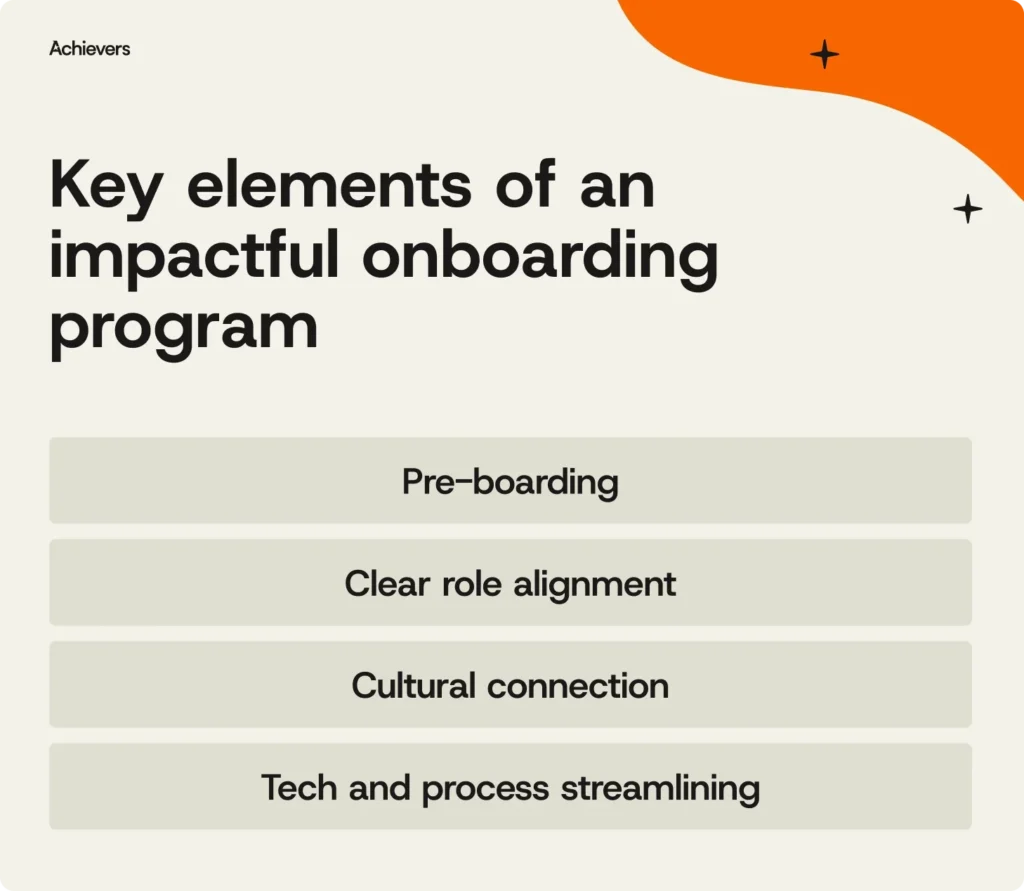
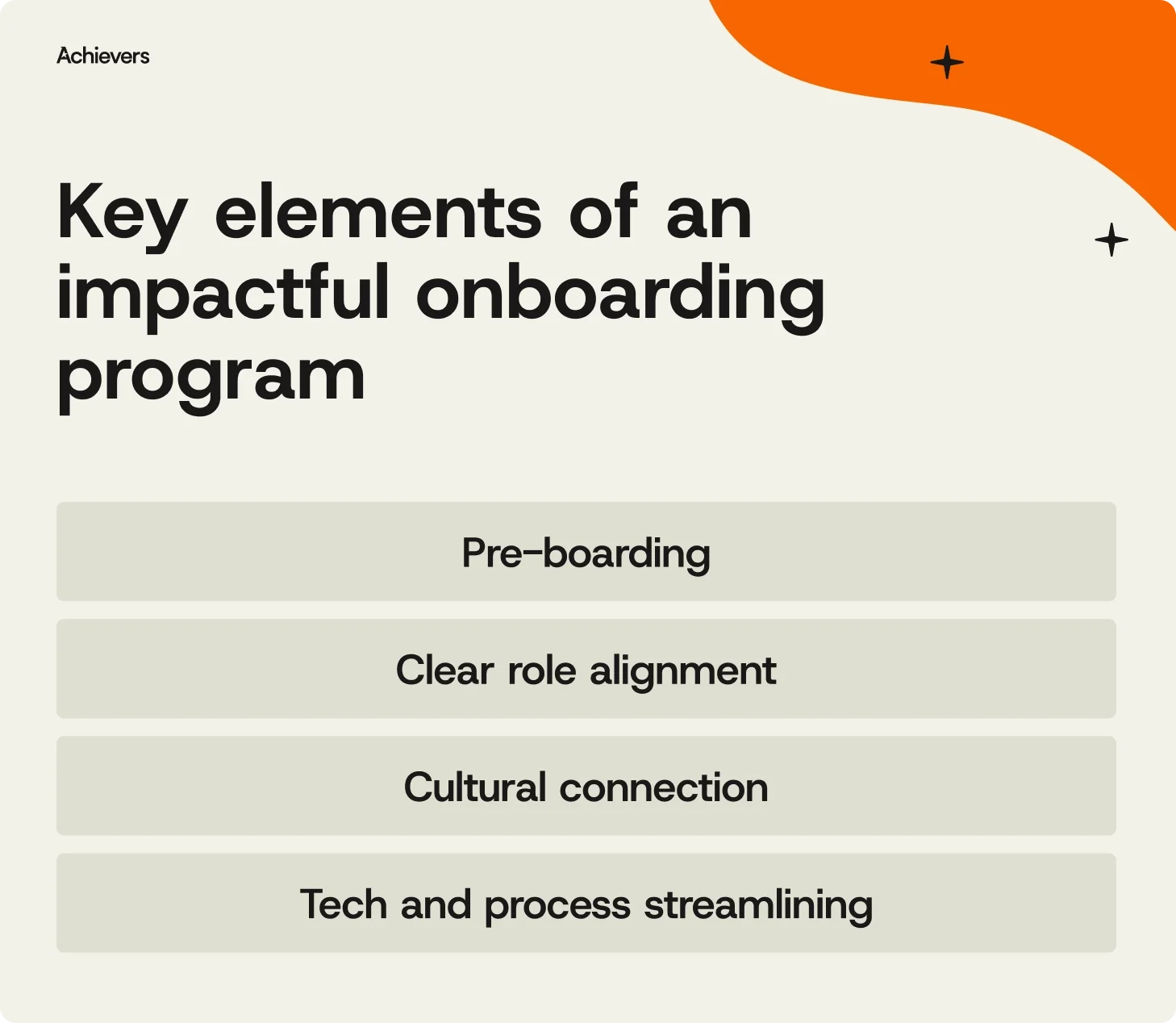
A truly effective onboarding program is built upon several foundational elements designed to create a seamless, supportive, and engaging experience:
-
Clear Role Alignment and Expectations: Ambiguity is the enemy of new hire success. A standout onboarding program provides unambiguous clarity regarding job responsibilities, performance metrics, and the employee’s contribution to broader organizational goals. This includes detailed job descriptions, initial project roadmaps, and consistent feedback loops. The assignment of a mentor or buddy further enhances guidance, reducing uncertainty and accelerating the new hire’s ability to contribute meaningfully. This clarity empowers employees to understand what success looks like and how to achieve it, fostering confidence and reducing early frustration.

-
Robust Cultural Connection and Belonging: Beyond job functions, onboarding is about integrating new hires into the company’s unique culture, values, and purpose. This involves sharing the company’s story, highlighting core values through examples, and facilitating interactions that build personal connections. Peer recognition programs, team-building activities, and opportunities for informal social gatherings are crucial for making new employees feel like genuine members of the team, not just temporary additions. When employees connect with the company’s mission and feel a sense of belonging, their engagement and loyalty naturally follow.
-
Seamless Technology and Process Streamlining: In today’s digital workplace, efficient access to necessary tools, systems, and information is non-negotiable. A frustrating or convoluted technical setup can severely hinder a new hire’s initial productivity and morale. Onboarding platforms that centralize resources, automate administrative tasks, and provide intuitive training modules are invaluable. This technological efficiency ensures that new employees can focus on learning their roles and contributing, rather than troubleshooting IT issues or navigating complex, fragmented systems.
-
Personalization and Adaptability: A "one-size-fits-all" onboarding approach is rarely effective. Programs should be adaptable to different roles, departments, and working arrangements (e.g., remote, hybrid, in-office). While core company information remains consistent, specific training, access to tools, and team introductions should be tailored. For instance, an engineer will require different technical access and training than a marketing specialist. This personalization demonstrates that the company values the individual and understands their unique needs, making the experience more relevant and impactful.
Measuring Success: Proving Onboarding’s Value with Data
To truly understand and continuously improve an onboarding program, organizations must embrace a data-driven approach. Measuring key metrics allows HR and leadership to identify what’s working, pinpoint areas for improvement, and quantify the return on investment.
Essential onboarding metrics include:
- New Hire Retention Rate: This is perhaps the most critical metric, tracking the percentage of new employees who remain with the company after a specific period (e.g., 90 days, 6 months, 1 year). A higher retention rate directly reflects the success of the onboarding program in integrating and engaging new talent.
- Time-to-Productivity: This measures how long it takes for a new hire to reach full productivity in their role. A well-structured onboarding process should significantly shorten this timeframe, leading to faster contributions and improved organizational efficiency.
- Employee Engagement Scores (for new hires): Administering pulse surveys or specific onboarding satisfaction surveys within the first few months can gauge how connected, supported, and motivated new employees feel. Metrics like an Onboarding Net Promoter Score (NPS) can provide valuable qualitative and quantitative feedback.
- New Hire Feedback and Satisfaction: Regular check-ins, surveys, and exit interviews (for those who do leave) can provide direct insights into the onboarding experience, highlighting pain points and successful elements.
- Internal Mobility Rates: A successful onboarding program can foster a deeper understanding of internal opportunities, potentially leading to higher rates of internal transfers and promotions, indicating a healthy talent pipeline and employee growth.
By consistently tracking and analyzing these metrics, organizations can transform onboarding from an intuitive process into a strategic habit, continuously refining it to build a more connected, confident, and committed workforce.
Overcoming Common Onboarding Hurdles
Even the most well-intentioned onboarding programs can encounter challenges. Recognizing these common obstacles and proactively implementing solutions is key to ensuring a smooth and effective experience.
-
Information Overload: The tendency to "firehose" new hires with an overwhelming volume of policies, procedures, and organizational charts on day one can lead to stress and disengagement.
- Fix: Implement a phased, drip-feed approach. Prioritize essential information for the first week (tools, team intros, culture basics) and gradually introduce more detailed information over subsequent weeks and months. Utilize microlearning modules and accessible knowledge bases.
-
One-Size-Fits-None Approach: A generic onboarding experience often fails to resonate with the diverse needs of different roles and departments, leaving new hires feeling misunderstood or ill-equipped.
- Fix: Personalize by role and function. Develop core onboarding content applicable to all, but create tailored pathways for specific departments (e.g., engineers need coding environment setup, sales needs CRM training, finance needs specific compliance modules).
-
Disconnection for Remote and Hybrid Hires: For employees not physically present in the office, the risk of feeling isolated or disconnected is high.
- Fix: Prioritize digital connection. Utilize collaboration platforms for team introductions, virtual coffee chats, and online social events. Ensure remote hires receive all necessary equipment and support for their home offices. Implement digital recognition programs to make their contributions visible to the wider team.
-
Fuzzy Expectations and Ambiguity: When new hires lack clear understanding of their responsibilities, goals, and how their performance will be measured, it creates anxiety and hinders progress.
- Fix: Establish clear goals and expectations early. Managers should outline key responsibilities, short-term objectives (e.g., 30-60-90 day plans), and key performance indicators (KPIs) upfront. Regular check-ins provide opportunities to clarify, adjust, and provide constructive feedback.
-
Inconsistent Onboarding Across Teams: If each department devises its own onboarding process, it can lead to fragmented experiences, inefficiencies, and a lack of standardized quality.
- Fix: Standardize the core elements while allowing for departmental customization. Develop an overarching company-wide onboarding framework that covers essential HR, IT, and cultural integration. Then, empower individual teams to customize role-specific training and team introductions within that framework, ensuring a consistent baseline experience.
The Indispensable Role of Recognition in Onboarding
Employee recognition is not merely a morale booster; it is a powerful tool that significantly amplifies the effectiveness of onboarding. By integrating recognition throughout the new hire journey, organizations can accelerate connection, build confidence, and deepen engagement.
- Start Recognition Before Day One: A simple welcome message from the manager or team, an acknowledgment of their upcoming arrival, or a shout-out on an internal social platform during pre-boarding can make a new hire feel valued and excited even before they officially start.
- Connect Recognition to Company Values: When recognition is tied to demonstrating company values (e.g., a new hire showing initiative, collaborating effectively, or embodying integrity), it reinforces those values from the outset. This helps new employees understand and internalize the organizational culture more quickly.
- Make Recognition Visible and Social: Public acknowledgment of a new hire’s contributions, milestones, or positive attributes helps them integrate faster into the team. Visible recognition, especially through social platforms, allows colleagues to see and celebrate success, fostering a sense of community and making new hires feel seen and appreciated by a wider audience.
- Keep Recognition Continuous Beyond Onboarding: The impact of recognition diminishes if it stops after the initial few weeks. Consistently celebrating achievements, learning milestones, and contributions throughout the first year ensures that new employees continue to feel supported, motivated, and connected as they grow into their roles. This ongoing affirmation reinforces their value to the organization and strengthens their long-term commitment.
Expert Perspectives and Broader Implications
Human Resources leaders universally affirm that a strategically designed and executed onboarding program is no longer a "nice-to-have" but a fundamental driver of business success. As one inferred HR director from a leading tech firm might state, "In today’s competitive talent market, our onboarding process is our first and most impactful statement about who we are as a company. It’s where we demonstrate our commitment to employee growth and well-being, directly influencing our ability to attract and retain top talent."
Business executives are increasingly recognizing the direct link between effective onboarding and bottom-line results. Reduced recruitment costs due to higher retention, accelerated productivity, and a more engaged workforce all contribute to improved financial performance. Furthermore, a reputation for excellent onboarding significantly bolsters an organization’s employer brand, making it a more desirable place to work. This enhances recruitment efforts, reduces time-to-hire, and positions the company favorably in the market. Ultimately, strategic onboarding is a critical investment in human capital that yields substantial returns across all facets of an organization, fostering a culture of sustained growth and mutual success.
Great onboarding is not a fleeting event; it is a year-long experience designed to equip, engage, and excite new hires, encouraging them to not just show up, but to lean in and truly contribute. By moving beyond basic administrative tasks and embracing a holistic, strategic approach, organizations can cultivate a more connected, confident, and committed workforce, one recognition, one reward, and one new hire at a time.