
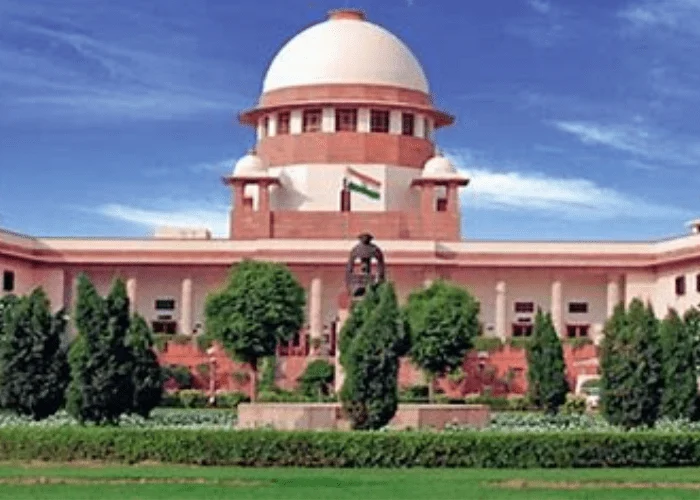
The Supreme Court of India has delivered a landmark judgment, unequivocally ruling that employees of Indian Railways are equivalent to Central Government staff, thereby granting them identical rights to approach the Central Administrative Tribunal (CAT) for the redressal of service-related disputes. This pivotal decision, rendered by a bench comprising Justices Dipankar Datta and Satish Chandra Sharma, effectively clarifies and solidifies the status of a vast segment of India’s civilian workforce, affirming that railway-specific service rules do not diminish their standing as civil servants under the Union government. The ruling is poised to have far-reaching implications, ensuring parity in employment practices and grievance mechanisms across various arms of the central administration.
The genesis of this significant legal battle traces back to an appeal filed by Bency John, whose service history underscored the ambiguity that previously surrounded the status of railway employees. John joined the Railways in 1990, embarking on a career within one of the world’s largest public sector employers. Subsequently, he transitioned to the Kerala State Electricity Board (KSEB). Initially, his prior service with the Railways was duly acknowledged and counted towards benefits such as pay fixation and pensionable service, a standard practice for employees moving between central government entities. However, in 2012, the Railway Board introduced a contentious directive, cancelling this recognition and asserting that service under the Railways could not be equated with "Central government service" in its broader definition. This administrative action sparked a legal challenge that would eventually culminate in the Supreme Court’s definitive pronouncement.
Understanding the Central Administrative Tribunal (CAT)
To fully appreciate the significance of this judgment, it is crucial to understand the role and mandate of the Central Administrative Tribunal (CAT). Established under the Administrative Tribunals Act, 1985, CAT serves as a specialized judicial body designed to adjudicate disputes and complaints concerning recruitment and conditions of service of persons appointed to public services and posts in connection with the affairs of the Union, or of any State or of any local or other authority within the territory of India or under the control of the Government of India or of any corporation owned or controlled by the Government. Its primary objective is to provide speedy and inexpensive justice to central government employees in service matters, thereby reducing the burden on high courts and the Supreme Court. Prior to this ruling, the access of railway employees to CAT was often a point of contention, with various interpretations leading to disparate outcomes across different High Courts. The Supreme Court’s decision removes this ambiguity, firmly placing railway personnel under CAT’s protective umbrella, on par with employees of other central ministries and departments.
The Historical Context of Indian Railways and its Workforce
Indian Railways, often described as the lifeline of the nation, boasts a rich history dating back to the British colonial era. From its humble beginnings in 1853, it has grown into an colossal enterprise, employing over 1.2 million individuals as of recent estimates, making it one of the largest employers globally. While functionally an integral department of the Government of India, operating under the Ministry of Railways, its sheer scale, operational autonomy, and distinct administrative rules have historically fostered a perception of it being a somewhat separate entity. This perception, while largely administrative, occasionally led to legal ambiguities concerning the exact status of its employees vis-à-vis other central government staff.
The unique administrative structure of the Railways, with its own board, recruitment processes, and specific service rules (such as the Indian Railway Establishment Code), often created a grey area when it came to universal application of central government service norms. While the Department of Personnel and Training (DoPT) sets general service rules for central government employees, the Railways often operated under its own adapted versions or specific directives. This historical context provides the backdrop against which the dispute over access to CAT and the classification of railway service as "Central government service" gained prominence.
Chronology of Bency John’s Case
The legal journey of Bency John illustrates the precise trajectory that led to the Supreme Court’s intervention:
- 1990: Bency John commences his service with Indian Railways, becoming part of its vast workforce.
- Post-1990: John transitions from Indian Railways to the Kerala State Electricity Board (KSEB). During this period, his prior service with the Railways is initially recognized and counted for various service benefits, consistent with inter-departmental transfers within government service.
- 2012: The Railway Board issues a directive cancelling the recognition of John’s prior railway service for the purpose of pay and other benefits. The core argument put forth by the Railway Board was that railway service, despite being under the Union government, could not be treated identically to "Central government service" for such purposes.
- Initial Legal Challenge: John challenges the Railway Board’s decision.
- Single Judge Order (High Court): A single judge of the Kerala High Court rules in favour of Bency John, upholding the principle that railway service is indeed Central government service and that his prior service should be counted.
- Division Bench Decision (High Court): The Railway Board appeals the single judge’s order. A division bench of the Kerala High Court overturns the single judge’s decision, denying railway staff the same status as other Central Government employees and thereby ruling against John. This decision reintroduced the legal uncertainty and created a distinction that the Supreme Court ultimately sought to rectify.
- Appeal to Supreme Court: Aggrieved by the division bench’s ruling, Bency John files an appeal with the Supreme Court of India.
- Supreme Court Judgment: Justices Dipankar Datta and Satish Chandra Sharma deliver the judgment, rejecting the Railway Board’s view and overturning the Kerala High Court division bench’s decision. They restore the earlier single judge’s order in favour of John.
- Directive for Compliance: The Supreme Court directs that all benefits be extended to Bency John within a period of three months from the date of the judgment.
The Supreme Court’s Legal Rationale
The Supreme Court meticulously dissected the arguments presented, stressing that the Railway Board functions as an integral part of the Government of India. The bench emphatically stated that service under the Railway Board is, in its essence, "Central government service." The judgment underscored that the defining characteristic of civil posts involves a clear employer-employee relationship where the State, in this case, the Union government, exercises comprehensive control over appointments, terms of service, pay scales, and crucially, disciplinary actions. The Court’s reasoning was rooted in fundamental principles of administrative law and the constitutional framework governing public employment in India.
The bench highlighted that denying railway employees access to CAT would create an anomalous situation, forcing them to approach High Courts directly, thus defeating the very purpose of establishing specialized tribunals for service matters. This would not only burden the already stretched High Courts but also lead to inconsistencies in adjudications, as different High Courts might adopt varying interpretations. The Court’s decision therefore reinforces the principle of a unified and streamlined grievance redressal mechanism for all Union government employees.
Inferred Reactions and Official Responses
The Supreme Court’s judgment is expected to elicit a range of reactions from various stakeholders:
- Railway Employee Unions: This ruling is likely to be widely welcomed by various railway employee unions across the country. They have long advocated for parity in service conditions and grievance mechanisms with other central government employees. The judgment will be seen as a significant victory, empowering their members with enhanced legal recourse. Statements from union leaders are anticipated to express strong approval, emphasizing the restoration of fairness and equality.
- Legal Experts: Legal commentators and administrative law specialists are expected to laud the judgment for bringing much-needed clarity and consistency to an often-contested area of service law. They might emphasize how the ruling reinforces the foundational principle that all entities operating under the Union government, regardless of their specific departmental structure, are ultimately bound by common principles governing civil service. The decision will likely be cited as a significant precedent in future cases involving the status of employees in quasi-governmental or distinct departmental undertakings.
- Ministry of Railways/Railway Board: The Railway Board will need to meticulously review its existing policies, administrative procedures, and service rules to ensure full compliance with the Supreme Court’s directive. This may involve revisiting past decisions where similar benefits were denied and potentially issuing fresh circulars or guidelines to all railway zones and divisions. While the financial implications of extending benefits and recognizing prior service uniformly might require careful assessment, the legal mandate is clear. The Ministry of Railways may also need to coordinate with the Department of Personnel and Training (DoPT) to align its practices with the broader framework for central government employees.
- Department of Personnel and Training (DoPT): As the nodal agency for personnel management in the Central Government, DoPT might issue clarificatory orders or advisories to all ministries and departments, including the Ministry of Railways, to ensure a uniform understanding and implementation of the Supreme Court’s judgment regarding the status of railway employees and their access to CAT.
Broader Impact and Implications
This judgment carries profound implications for India’s administrative landscape:
- Enhanced Rights and Protections: Railway employees will now unequivocally enjoy the same protections, rights, and access to grievance mechanisms as other Central government staff. This includes matters related to recruitment, promotion, disciplinary actions, pay fixation, pension, and other service conditions.
- Streamlined Grievance Redressal: By providing direct access to CAT, the ruling ensures a more efficient, specialized, and accessible forum for resolving service disputes, potentially reducing the time and cost associated with legal battles. It also promotes uniformity in legal interpretations across the country.
- Reinforcement of Fairness: The decision reinforces the principle of fairness and equal treatment in employment practices across one of India’s largest civilian workforces. It eliminates an artificial distinction that had previously existed, promoting a sense of equity among Union government employees.
- Precedent for Other Entities: While specifically pertaining to Indian Railways, the underlying legal reasoning of the Supreme Court could potentially set a precedent or influence future adjudications concerning the status of employees in other autonomous bodies or public sector undertakings that are substantially controlled and funded by the Union government. It underscores that functional autonomy does not necessarily negate the fundamental character of "Central government service."
- Administrative Adjustments: The Railway Board and its various departments will need to make necessary administrative adjustments to fully integrate their service rules and practices with the broader central government framework, particularly concerning the procedures for approaching CAT and implementing its orders.
- Potential Increase in CAT Caseload: There might be an initial surge in cases filed before CAT by railway employees seeking resolution for long-pending disputes or challenging past decisions, now that their access is firmly established. CAT benches may need to prepare for this increased workload.
- Financial Implications: Extending benefits, recognizing prior service, and ensuring parity in pensionary liabilities could have financial implications for the Railway Ministry. While the exact quantum is difficult to estimate without detailed data, the principle of equity often comes with a financial cost that the government must now bear.
In conclusion, the Supreme Court’s ruling is a monumental step towards establishing a unified and equitable framework for public service in India. By unequivocally declaring railway employees as Central government staff and granting them access to the Central Administrative Tribunal, the apex court has not only rectified a long-standing ambiguity but has also reinforced the constitutional mandate for equal protection and access to justice for all citizens serving the Union. This judgment will undoubtedly bolster morale, enhance accountability, and ensure a more transparent and just administrative system for millions of railway personnel who are the backbone of India’s connectivity.








