For decades, the Human Resources (HR) profession has grappled with a fundamental identity crisis. This internal dichotomy has defined its trajectory: is HR a strategic partner, instrumental in driving organizational value and fostering inspired human capital growth, or is it primarily an administrative function, often perceived as the "company police," tasked with enforcing a labyrinth of rules, policies, legal stipulations, and labor regulations? The former position demands sophisticated human skills and acts as a value creator, while the latter, inherently administrative, is ripe for automation. This duality has permeated the profession, even spawning cultural commentary like the "Don’t Trust HR" meme, which solidified a perception of HR as an adversary rather than an ally to employees. However, as of 2026, the HR landscape is poised for a profound, AI-driven reinvention, a transformation expected to resolve this long-standing conflict and usher in a new era of the "full-stack" HR professional.
The Weight of History: A Profession Burgeoning with Complexity
The HR profession is a colossus, globally employing over 40 million individuals and encompassing hundreds of distinct job titles. Over the past half-century, its complexity has escalated exponentially. This expansion can be attributed to the continuous emergence of new business paradigms, evolving social norms, and increasingly intricate legal and regulatory frameworks, each demanding new competencies and responsibilities from HR departments.
The evolution began with foundational tasks such as payroll processing, recruitment, and general work administration. As organizations matured, HR responsibilities broadened to include training and development, industrial psychology, and job design. The 1960s and 1970s saw the integration of industrial psychology principles, the formalization of career management, and the implementation of performance evaluation systems like forced ranking and nine-box succession planning.
The subsequent decades witnessed an even more dramatic expansion. The introduction of concepts such as employee well-being initiatives, the complexities of hybrid work models, Diversity, Equity, and Inclusion (DEI) programs (and subsequent shifts in their implementation), advanced productivity management, culture cultivation, and sophisticated leadership development became core HR functions. The current era, marked by the advent of Artificial Intelligence (AI), introduces novel challenges and considerations, including the management of "talent density" – the concentration of highly skilled individuals within an organization – the design of flexible job structures and organizational frameworks, the concept of "jobless" work where traditional roles are redefined, and increasingly sophisticated approaches to pay equity and performance management.
Consider the emerging landscape of "superworkers," individuals capable of performing multifaceted tasks such as app development, data analysis, and influencing business processes on a massive scale. This raises profound questions about compensation structures and the potential for a new class of highly compensated, high-impact employees, akin to the theoretical "Elon Musk-type" employee demanding astronomical remuneration.

Crucially, as new disciplines are absorbed into the HR domain, the older ones rarely disappear. This cumulative effect has resulted in HR departments often comprising numerous specialists, each dedicated to one of the over 100 identified domains.
Furthermore, the operational structure of organizations adds another layer of complexity. Larger enterprises typically adopt a federated HR model, featuring a central governing team alongside localized teams catering to specific geographic regions or business units. These localized teams are frequently led by HR Business Partners (HRBPs). The role of an HRBP can span from highly strategic engagement to purely bureaucratic execution, and these professionals are tasked with adapting central policies to meet the unique demands of regional job markets, legal landscapes, and cultural nuances. The practical implications are significant; hiring an engineer in Singapore presents vastly different challenges and requirements compared to hiring an engineer in Germany.
For the past two decades, Human Capital Management (HCM) systems from leading vendors such as Workday, Oracle, and SAP have been the primary technological tools employed to manage this escalating complexity. While these platforms are undeniably sophisticated, their primary function has largely been confined to "business workflow and record-keeping," rather than providing comprehensive solutions to intricate human-centric problems. They excel at tracking employee data, managing payroll, and facilitating fundamental processes, yet they still necessitate a substantial workforce of HR professionals for tuning, administration, and ongoing management.
The AI Catalyst: From Record-Keeping to Agentic Action
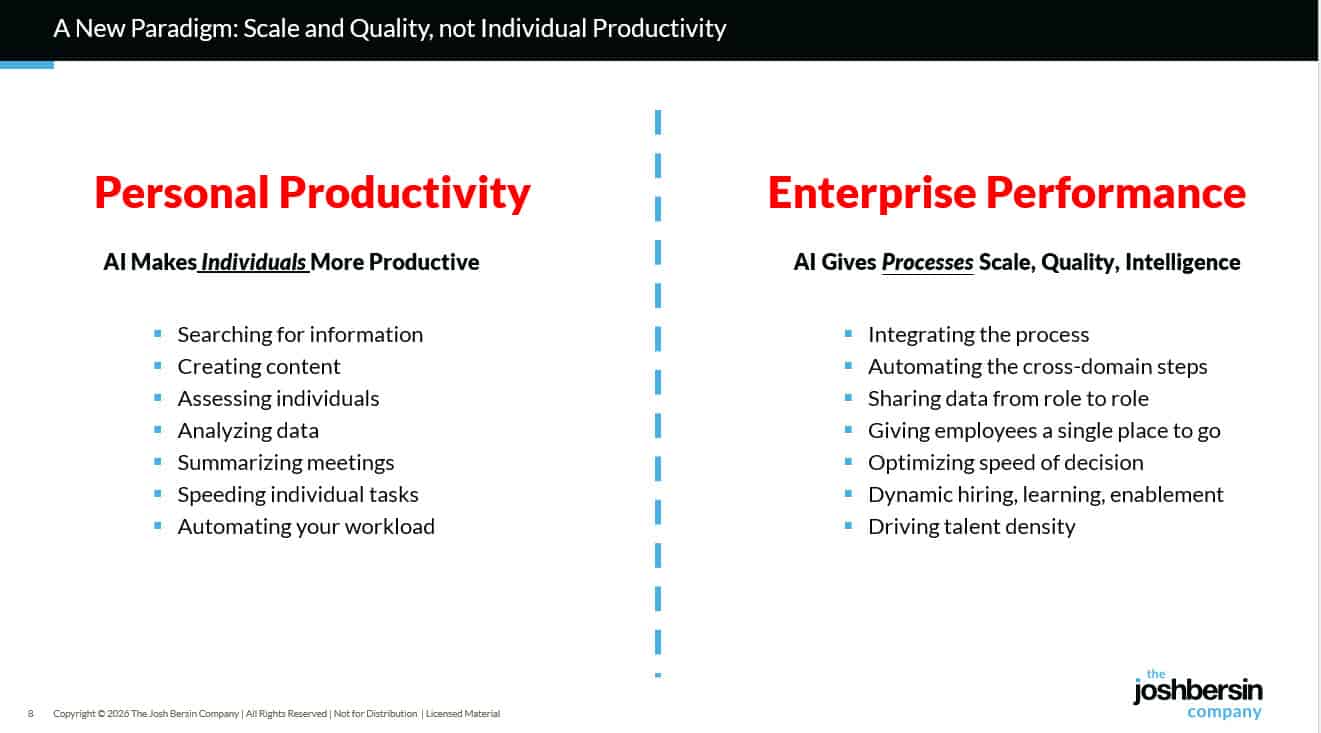
The year 2026 is emerging as a pivotal turning point, driven by the widespread adoption of enterprise AI. The paradigm shift involves moving beyond viewing AI as a mere tool for enhancing individual productivity to applying it to business processes themselves. This strategic application promises to redesign organizational operations and facilitate the creation of "Superagents" capable of achieving unprecedented scale and autonomy.
The most illustrative analogy for this transformation is the autonomous vehicle. Instead of incrementally adding features to improve the driver’s experience – power steering, advanced braking systems, lane departure warnings, automatic parking – the focus shifts to consolidating these independent agents into a "Superagent" that prioritizes the overall outcome. The ultimate purpose of a car is to optimize the mobility of its passengers, not merely to ease the driver’s workload. Consequently, the role of the driver becomes less critical, leading to a significant reduction in human error and a dramatic increase in safety. This evolution also unlocks entirely new business models and scaling opportunities, such as pay-per-mile services instead of outright vehicle ownership.
A similar transformation is now underway within HR and other business functions. The progression has moved from human assistants to individual automation tools (agents), and now to sophisticated "Superagents" designed to manage entire processes autonomously. While this transformation will not occur instantaneously, its acceleration is undeniable.

Early implementations of these Superagents are already demonstrating tangible results. Several large organizations, including a major insurance company, an airline, and a pharmaceutical firm, are actively developing and deploying Superagents for critical functions such as global onboarding, highly targeted talent acquisition, and specialized sales training. These agentic applications are designed to streamline and optimize these complex processes, often leading to the displacement of certain traditional HR roles while simultaneously enhancing organizational efficiency and achieving superior outcomes.
The Impact on HR Employment: Automation and the Rise of the "Full-Stack" Professional
Analysis leveraging data from advanced HR AI platforms, such as Galileo, which possesses detailed task-level data for over 250 HR job roles, indicates a significant potential for automation. Queries to Galileo, which also holds extensive knowledge of automation tools and vendors, suggest that 30-40% of existing HR "jobs" can be automated with relatively low implementation effort. This category predominantly encompasses tactical and administrative tasks that have historically consumed a substantial portion of HR professionals’ time, including roles like "interview scheduler," "recruitment coordinator," and "helpdesk assistant."
The displacement of these routine tasks is not necessarily indicative of a shrinking HR profession. In fact, HR job postings have seen a remarkable increase of 60% over the past five years, outpacing many other professional fields. The critical change lies in the evolving mix of roles. As routine administrative jobs diminish, new AI-centric roles are emerging, and the majority of existing HR professionals are expected to transition towards becoming more "full-stack" in their capabilities. This transformation is also anticipated to lead to an increase in HR professional salaries, as their roles become more strategic and value-driven.
Areas Ripe for Automation within HR
Systemic analysis, such as that provided by the Systemic HR AI Blueprint, identifies key areas within HR that are particularly well-suited for AI-driven automation. These typically fall into six broad categories:
- Recruitment and Talent Acquisition: AI can automate candidate sourcing, screening, interview scheduling, and initial communication, significantly reducing time-to-hire and improving candidate experience.
- Onboarding and Offboarding: Streamlining the administrative processes associated with bringing new employees into the organization and managing their departure, ensuring compliance and efficiency.
- Payroll and Benefits Administration: Automating the complex and often error-prone tasks of payroll processing, benefits enrollment, and leave management.
- Performance Management and Development: AI can assist in tracking performance metrics, providing real-time feedback, identifying skill gaps, and recommending personalized development plans.
- Employee Relations and Compliance: Automating the monitoring of policy adherence, managing employee grievances, and ensuring compliance with labor laws.
- HR Analytics and Reporting: Generating insightful reports and predictive analytics on workforce trends, employee engagement, and talent metrics, empowering data-driven decision-making.
The Emergence of "Full-Stack" HR
The overarching objective of this comprehensive automation is not merely cost reduction but the generation of substantial business value. By automating these processes, organizations can achieve greater scalability, enhanced accuracy, and a more seamless experience for both employees and managers. HR teams will be empowered to accelerate strategic hiring, mitigate the impact of cyclical hiring and firing, deliver real-time training to managers and employees, and proactively identify management challenges, areas of high turnover, and potential risks with greater speed and predictability.
For HR professionals, this shift liberates them from manual, administrative tasks, allowing them to focus on what is now termed "Full-Stack HR." This encompasses strategic initiatives that directly influence the company’s bottom line. This evolution intrinsically moves HR closer to the business units it serves. Instead of dedicating their efforts to data entry or the enforcement of rigid policies, HR business teams can now concentrate on:
- Strategic Workforce Planning: Aligning talent strategies with long-term business objectives.
- Organizational Design and Agility: Creating flexible structures that can adapt to rapidly changing market conditions.
- Talent Development and Upskilling: Fostering a culture of continuous learning and equipping employees with future-ready skills.
- Employee Experience and Engagement: Designing initiatives that foster a positive and productive work environment.
- Culture and Leadership Development: Shaping a strong organizational culture and nurturing effective leadership at all levels.
- Change Management: Guiding the organization through periods of transformation and innovation.
Impact on HR Benchmarks and Value Creation
A long-standing metric in HR has been the employee-to-HR staff ratio, historically benchmarked at approximately 100:1. As AI increasingly takes over tactical responsibilities, this ratio is projected to shift significantly, potentially reaching 200:1, 300:1, or even 400:1. While this suggests a reduced need for personnel in purely administrative roles, it does not necessarily imply a contraction in the overall size of HR departments, given the anticipated creation of new roles. The core shift is towards value creation. As automation becomes more pervasive, HR salaries are expected to rise in tandem with the enhanced strategic importance and direct impact on business outcomes.
Consider the tangible value proposition: A retail or food service company that leverages AI to expedite hiring and scheduling can directly increase revenue by more effectively meeting customer demand, a model exemplified by companies like Chipotle. Manufacturing giants such as Boeing can enhance aircraft production through accelerated training programs, a strengthened safety culture, and more agile talent mobility, demonstrating the direct correlation between advanced HR capabilities and operational output.
The Imperative of Data Quality and Trust in the AI Era
A critical consideration in this transformative period is the paramount importance of data quality, explainability, and trust. In a manual HR system, an occasional human error might occur. However, in an automated system operating at scale, a single flaw in a recruiting algorithm or a payroll rule could have immediate and widespread repercussions affecting thousands of employees.
Many of the newly emerging HR roles will be dedicated to managing the integrity and quality of these AI systems. HR professionals will be tasked with ensuring that the AI agents deployed are powered by accurate, up-to-date, and complete data. Furthermore, HR now bears the responsibility for addressing the challenges of AI bias and fostering trust in these automated systems. Recent legal actions against HR technology vendors, such as Workday and Eightfold, underscore the critical need to develop explainable and high-trust AI systems. This responsibility now squarely falls on the shoulders of the HR function.
Embracing the Transformation
The profound transformation of the HR profession is not a future prospect but a present reality. For HR professionals and leaders, this period demands proactive engagement and continuous learning. Resources such as Galileo offer pathways to understand and navigate this evolving landscape. Organizations seeking to embark on their HR transformation journey can benefit from expert guidance and specialized programs focused on Enterprise AI in HR. The imperatives for HR in this new era are clear: embrace the automation, cultivate strategic capabilities, and champion the ethical and effective deployment of AI to drive unparalleled organizational value.