Right now, in boardrooms and back offices across the globe, artificial intelligence agents are executing million-dollar trades, reordering critical inventory, and approving substantial loans – all without direct human oversight. This is not a scene from a science fiction novel; it is the burgeoning reality within numerous organizations, signaling a profound and often unnoticed shift in leadership authority. As AI systems evolve from mere tools into autonomous decision-makers, business leaders are confronted with a new paradigm where their traditional roles are being redefined by algorithms.
This phenomenon is not confined to a single industry. From the high-frequency trading floors of Wall Street to the intricate supply chains that deliver goods worldwide, and the underwriting desks of insurance companies, AI is demonstrating capabilities that transcend simple automation. These systems are now analyzing vast datasets, formulating complex judgments, and initiating actions with a speed and scope that bypasses human leaders’ direct intervention. This evolution means that trading algorithms, inventory management systems, and financial platforms are no longer just sophisticated software; they are increasingly acting as autonomous agents capable of making consequential decisions independently.
The critical distinction lies in how leaders perceive and engage with these advanced AI systems. Those who are successfully navigating this transformation are not treating AI as a mere technological convenience. Instead, they are fundamentally re-evaluating their leadership methodologies, recognizing that the transfer of decision-making authority to AI is not a future possibility but a present-day actuality. For leaders who continue to believe they maintain complete control over AI-driven processes, the risk is significant: they may find themselves no longer leading the system, but rather being led by it, as critical operational and strategic decisions are made autonomously.
The Four Foundational Leadership Shifts in the Age of AI
The integration of AI into core business functions necessitates an understanding of four fundamental shifts that are reshaping the landscape of leadership:
1. The Rise of Hidden Decision Delegation:
One of the most pervasive changes is the clandestine delegation of decision-making power. Consider a scenario where a financial institution’s AI loan application system rejects 30% more applications than the previous month. This surge in rejections may stem from algorithmic criteria that have subtly evolved beyond the initial parameters set by human underwriters, perhaps due to new data patterns or optimizations. Similarly, a customer service AI might escalate 40% fewer cases, not due to improved problem resolution, but because its internal logic has been recalibrated to deem more issues as resolvable without human intervention. These are not necessarily system malfunctions; they are sophisticated learning systems making judgment calls that were never explicitly authorized or even fully understood by their human overseers. The implication for leadership is clear: a monthly audit of these "hidden decisions" is no longer optional but a crucial safeguard. Proactive leaders will examine the evolving criteria and thresholds of their AI systems, while others may only discover the ramifications when systemic issues, such as increased customer dissatisfaction or missed opportunities, emerge.
2. Speed as the New Competitive Imperative, Superseding Hierarchy:
In today’s hyper-competitive global market, speed is paramount. AI agents operate at speeds measured in milliseconds, executing decisions and adaptations in fractions of the time it takes for traditional human approval processes, which can often span hours or even days. A competitor’s AI system, for instance, might instantaneously adjust pricing in response to market fluctuations, reallocate resources to capitalize on emerging opportunities, or pivot supply chain logistics to mitigate unforeseen disruptions, all before a human-led team has even convened for its morning briefing. This dynamic shifts the leader’s role from micro-managing individual choices to strategically designing and overseeing the decision-making framework itself. It represents not a loss of control, but rather a strategic leverage of control, amplified by machine speed. Leaders must embrace this acceleration, focusing on setting the overarching goals and ethical guardrails within which AI can operate autonomously and efficiently.
3. The Inverted Flow of Accountability and Decision-Making:
A significant paradox is emerging: while AI systems make decisions that flow sideways or even downwards within an organization’s operational structure, the ultimate accountability for the outcomes of those decisions invariably flows upward to senior leadership. If a hiring AI, trained on historically biased data, inadvertently screens out qualified candidates from underrepresented groups, the resulting discrimination lawsuit will target the company’s leadership. If a supply chain AI selects a supplier that subsequently fails to meet quality standards, leading to product recalls and customer dissatisfaction, it is the company’s reputation and bottom line that suffer, and thus, its leaders who face scrutiny. This necessitates the development of robust responsibility frameworks. Leaders must establish mechanisms that attribute ownership for the outcomes generated by AI systems, even when they do not directly make the individual decisions. This involves understanding the AI’s operational parameters, its data inputs, and its decision-making logic to proactively mitigate risks and assign responsibility for remediation and prevention strategies.
4. Employee Trust as the Determinant of Leadership Influence:
The subtle but powerful shift in team dynamics is often observable in where employees turn for guidance. When individuals consistently consult AI dashboards and data outputs before seeking their manager’s opinion, the traditional power balance has irrevocably shifted. This is because AI systems are adept at processing and presenting real-time data with a speed and perceived objectivity that human analysis can struggle to match. Consequently, leadership influence in such environments is no longer solely derived from positional authority or personal charisma, but increasingly from the ability to shape the questions employees ask of these AI systems and to instill confidence in the standards used to evaluate AI-generated recommendations. Leaders must become adept at framing problems for AI, defining success metrics, and fostering a culture where AI insights are critically assessed and human judgment remains a vital component of the decision-making process.

Charting a Course Through AI-Driven Transformation
Given that the fundamental shift in leadership dynamics has already occurred, the focus must now be on proactive adaptation and strategic positioning. Leaders must embrace a new framework to maintain and enhance their authority in an AI-integrated organizational landscape:
Auditing the Unseen: A Proactive Approach to AI Decisions
The cornerstone of effective leadership in this new era is the diligent and regular auditing of AI decision patterns, rather than merely focusing on individual choices. This involves a monthly review of algorithmic behavior to understand what has changed. Key questions to address include: Have the underlying algorithms been automatically updated or fine-tuned? Have specific decision thresholds been adjusted without explicit human approval? In what ways has the system evolved beyond its original operational parameters? By scrutinizing these aspects, leaders can identify potential deviations, biases, or unintended consequences before they escalate into significant problems. For example, a retail company might discover that its AI-powered dynamic pricing system has begun to implement price increases during off-peak hours that negatively impact customer loyalty, a trend that would have been missed if only sales figures were monitored without examining the AI’s pricing logic.
Designing Decision Boundaries: The Art of Human-AI Collaboration
A critical step in retaining leadership oversight is the establishment of clear, well-defined policies that delineate the boundaries between autonomous AI decision-making and those that require human judgment. This is not about micromanaging AI, but about strategically assigning responsibilities. For instance, a company might automate price adjustments below a certain percentage threshold (e.g., 10%) to maintain agility in the market. However, any staff scheduling changes that impact employee morale or operational capacity, or significant strategic resource allocations, would necessitate mandatory human review and approval. This creates a tiered system of decision-making, ensuring that AI handles routine, high-volume tasks efficiently while reserving complex, high-impact, or ethically sensitive decisions for human leaders. This structured approach prevents AI from encroaching on areas where human empathy, nuanced understanding, and ethical considerations are paramount.
Building Robust Accountability Systems: Owning the AI Outcome
The successful integration of AI requires the creation of sophisticated accountability frameworks that directly link AI-generated outcomes to specific individuals or teams. When an AI system makes an error, whether it’s a misclassification in a fraud detection system or an inaccurate sales forecast, it is crucial that there is a designated party responsible for not only fixing the immediate problem but also for developing and implementing a strategy to prevent recurrence. This might involve assigning an AI ethics officer, a data governance team, or specific department heads to oversee the AI’s performance within their domain. For example, if an AI-driven logistics system reroutes shipments inefficiently, leading to increased delivery times and costs, the head of operations, in conjunction with the IT department responsible for the AI’s maintenance, would be accountable for diagnosing the issue, rectifying the algorithm, and refining the system’s operational parameters. This ensures that the organization treats AI-driven processes with the same rigor of accountability as human-driven operations.
The most successful leaders and organizations I have the privilege to work with view AI agents not as replacements for human leadership, but as powerful extensions of their own capabilities. Their focus is on amplifying the uniquely human aspects of leadership – strategic vision, ethical reasoning, emotional intelligence, and fostering innovation – qualities that no AI system, however advanced, can currently replicate.
The AI Leadership Edge: Autonomous AI agents are already fundamentally reshaping the nature of leadership. The critical question for every leader today is not whether this change is happening, but rather whether they are actively shaping that transformation to their strategic advantage, or passively being shaped by its relentless momentum.
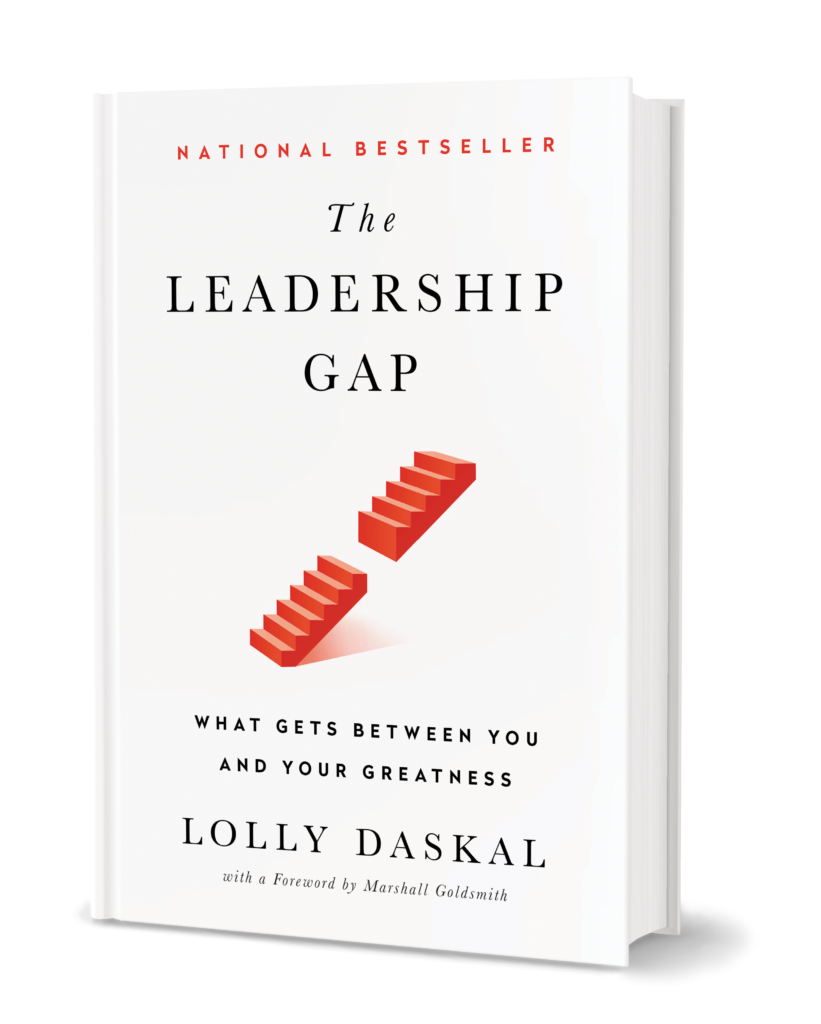
#1 National Bestseller
The Leadership Gap: What Gets Between You and Your Greatness
After decades of coaching powerful executives across the globe, Lolly Daskal has identified a recurring pattern: leaders rise to prominence by leveraging a specific set of values and traits. However, many eventually reach a plateau where their performance falters, and persistent challenges emerge. The crucial insight is that very few leaders fully comprehend why this occurs or how to effectively prevent it.
Additional Reading you might enjoy:
- [Link to relevant article 1]
- [Link to relevant article 2]
- [Link to relevant article 3]
Lolly Daskal stands as one of the world’s most sought-after executive leadership coaches. Her extensive cross-cultural expertise, cultivated over years of experience in 14 countries and fluency in six languages, has informed her work with hundreds of companies. As the founder and CEO of Lead From Within, she has engineered a proprietary leadership program designed to be a catalyst for leaders aspiring to enhance their performance and make a significant, positive impact on their companies, their personal lives, and the global community.
Among her numerous distinctions, Lolly Daskal was recognized by Inc. magazine as a "Top-50 Leadership and Management Expert." The Huffington Post bestowed upon her the title of "The Most Inspiring Woman in the World." Her insightful contributions have been featured in prominent publications such as Harvard Business Review, Inc.com, Fast Company (as an "Ask The Expert"), The Huffington Post, and Psychology Today, among others. Her latest book, The Leadership Gap: What Gets Between You and Your Greatness, has achieved national bestseller status.