The landscape of corporate learning and development (L&D) is undergoing a seismic shift, moving beyond traditional education and credentialing to a more agile and integrated approach termed "Dynamic Enablement." This evolution, detailed in the recently released "Definitive Guide to Corporate Learning," heralds a new era where L&D professionals leverage organizational expertise and AI to deliver timely, context-specific support directly within the flow of an employee’s work. This paradigm shift, driven by the accelerating capabilities of artificial intelligence, is rapidly reshaping the tools and strategies available to businesses seeking to enhance employee performance and adaptability.
The Dawn of Dynamic Enablement
The concept of "learning in the flow of work" has been a growing trend, but the latest research suggests it’s a more encompassing strategy. Dynamic Enablement, as defined by industry analysts, encompasses not just formal learning, but also the immediate provision of answers, in-depth topic exploration, expert connections, and skill development, all delivered precisely when and where an employee needs them. This continuous support system relies on leveraging internal knowledge bases, peer networks, managerial guidance, and increasingly, sophisticated AI-powered tools. The urgency for such a transition is palpable, with numerous technology vendors already adapting their offerings to meet this burgeoning market demand.

Understanding the Mechanics of Enablement
Delivering an effective enablement experience requires a nuanced understanding of employee needs. The traditional models of learning—including structured courses, on-demand resources, and on-the-job coaching—while still relevant, are no longer sufficient on their own. Dynamic Enablement recognizes that the optimal approach is often a hybrid, combining these methods to suit diverse roles and situations. For instance, enabling an Uber driver with real-time navigation assistance and customer interaction tips differs significantly from equipping a middle manager with conflict resolution strategies or a software engineer with immediate access to code documentation and best practices. L&D departments are now tasked with architecting "enablement platforms" that can seamlessly integrate into these varied use cases.
The rapid pace of innovation in this sector has led to what some observers describe as a "lurching" market. Vendors are scrambling to pivot and integrate AI capabilities, creating a dynamic and sometimes overwhelming array of solutions. This rapid evolution underscores the importance of careful evaluation, urging organizations to thoroughly assess offerings before committing to a specific platform.
Key Players in the Evolving Enablement Ecosystem

The market for dynamic enablement is rapidly populating with innovative companies, each bringing unique strengths to the table. These solutions leverage AI and advanced technologies to provide a more integrated and responsive learning and support experience.
Arist: Mobile-First Enablement and Autonomous Learning
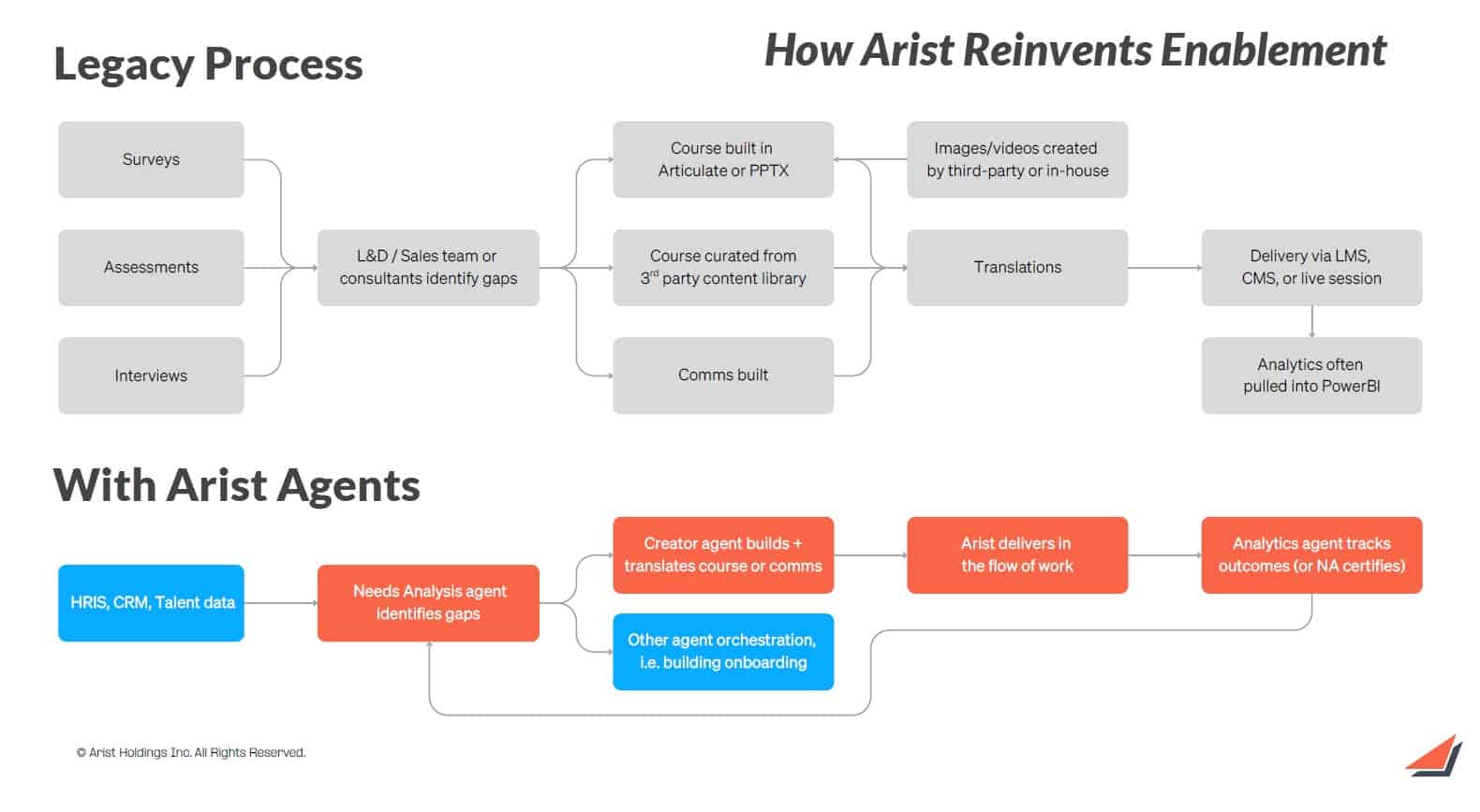
Arist, a company that partners with Josh Bersin on various HR training initiatives, has emerged as a significant player in mobile-first enablement. Initially focused on delivering bite-sized content to mobile devices, Arist has expanded its capabilities to encompass end-to-end enablement. A standout feature is its "AI Performance Consultant," which can analyze operational staff interactions, identify performance gaps, and autonomously generate targeted content to address these issues. This represents a significant stride towards "autonomous corporate learning," where AI agents proactively identify and resolve learning and performance challenges, akin to self-driving vehicles in the automotive industry. Arist’s rapid development and comprehensive approach make it a noteworthy option for organizations seeking dynamic content generation and delivery.
Sana (Galileo Learn): AI-Native Powerhouse
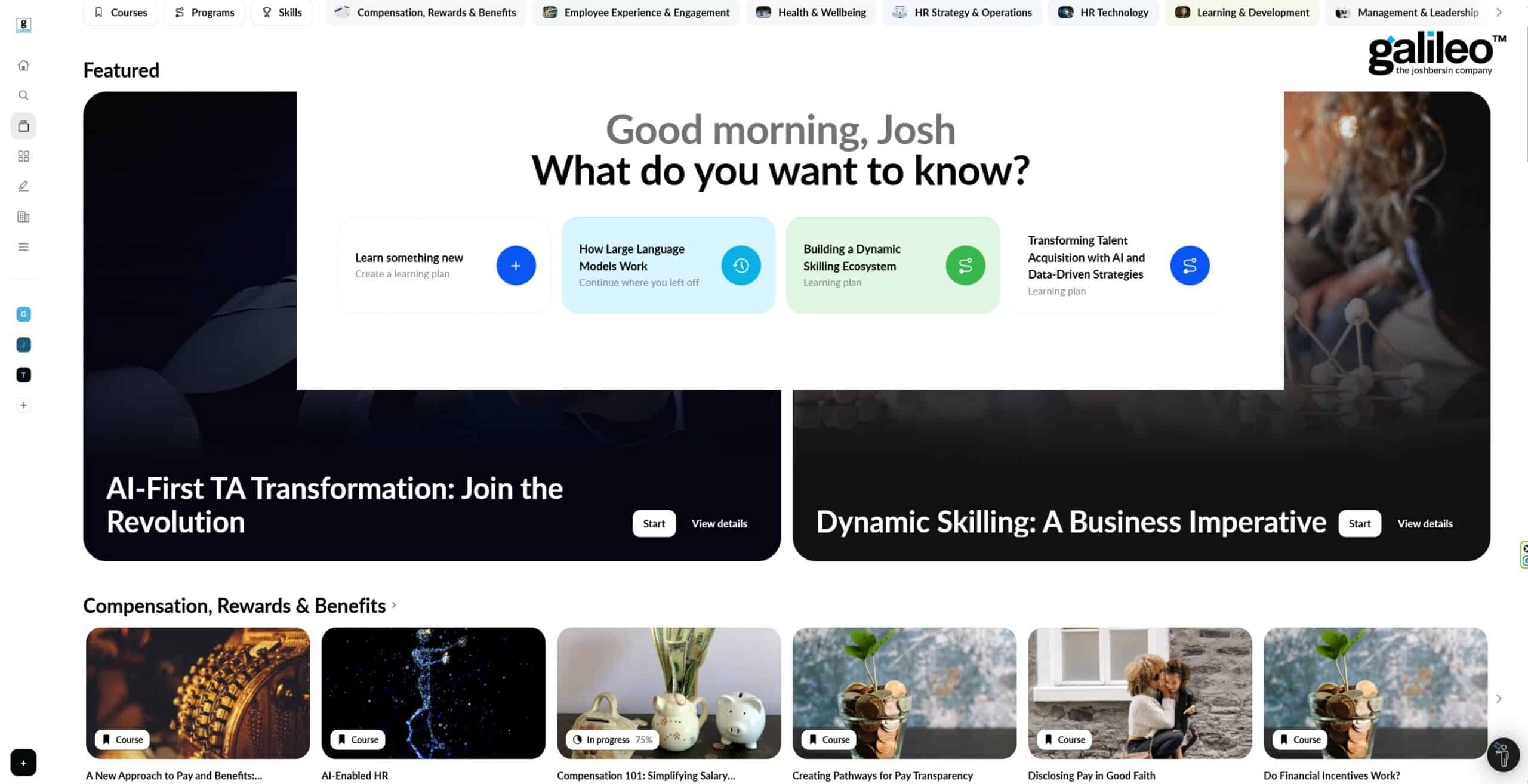
Sana, now part of Workday, is recognized as one of the most advanced AI-native learning platforms available. Founded in 2016 by Joel Hellermark, Sana’s core mission was to revolutionize learning through AI, utilizing OpenAI technologies even before the widespread adoption of ChatGPT. The platform has evolved into a comprehensive learning ecosystem, with its Galileo offering providing per-user access to its capabilities. Sana’s "Sana Agent" platform acts as a dynamic hub for learning, knowledge management, and AI agent development. The impending launch of Sana Enterprise, which will integrate Sana Agent with Workday data and transactions, further solidifies its position as a powerful dynamic enablement solution.
Seismic: Leading the Sales Enablement Charge
In the multi-billion dollar sales enablement market, Seismic stands as a prominent leader. This sector is crucial for equipping sales teams with the necessary collateral, product information, and competitive intelligence to succeed. Seismic, along with other players like Allego, Mindtickle, and Highspot, provides tools that streamline the creation and distribution of sales-focused content. The integration of AI is further enhancing these platforms, allowing for more personalized and responsive enablement experiences for sales professionals.
Docebo: Next-Generation LMS with AI Integration
Docebo, a publicly traded company in the Learning Management System (LMS) space, has made substantial investments in AI-native learning and enablement. Their offerings now include AI tutors, AI-native content authoring tools, and AI-driven assessment templates. These features complement their established business in revenue-generating training and corporate L&D. The recent acquisition of 365 Talents has bolstered Docebo’s capabilities with an AI-driven skills intelligence system, enabling organizations to map skills within content, build comprehensive taxonomies, and deploy targeted learning aligned with identified needs. This functionality addresses the critical question of "What do I need to know?" for specific tasks or knowledge gaps.
LinkedIn Learning: AI Coaching for Skill Development
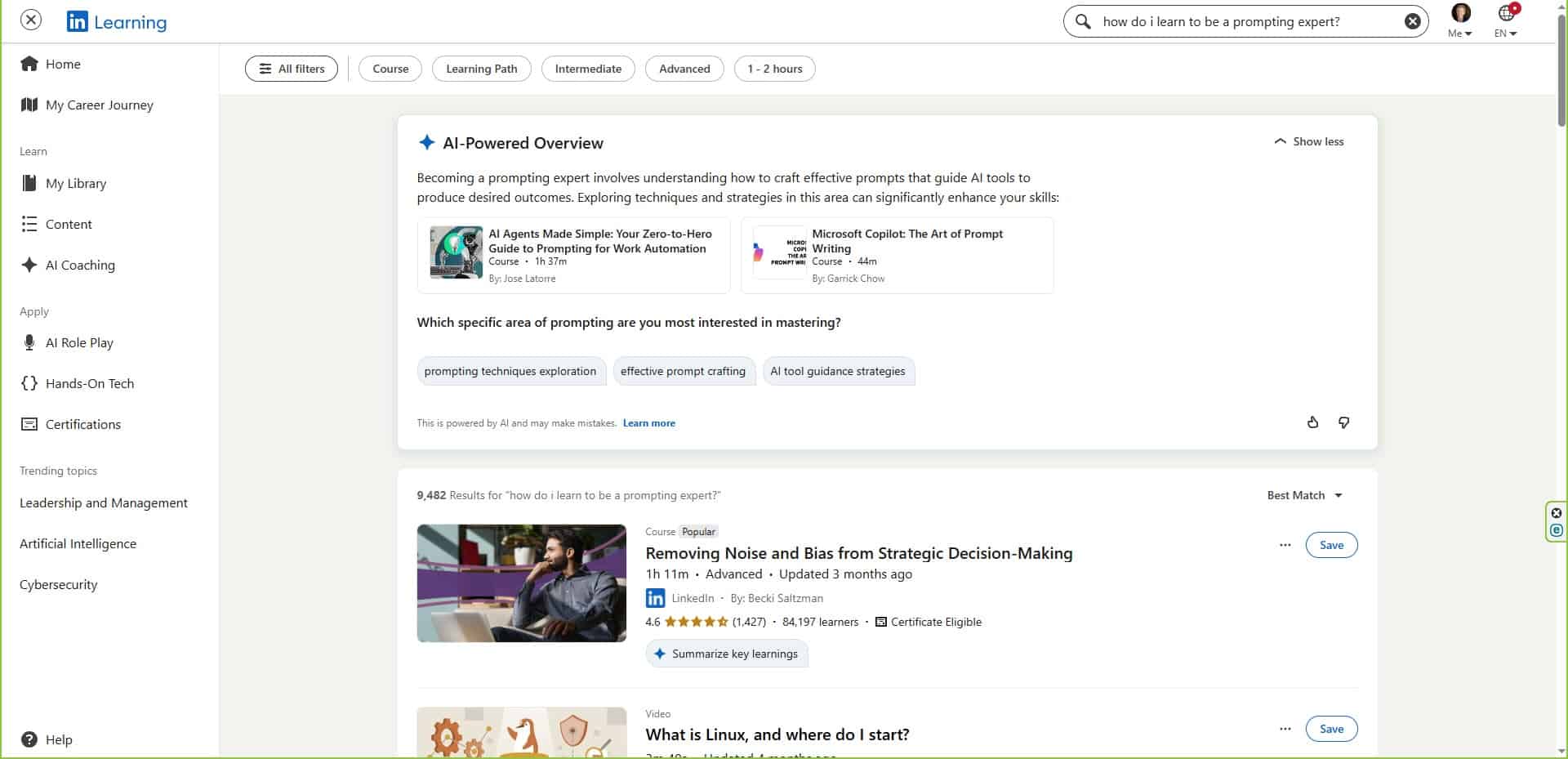
LinkedIn Learning, a widely adopted platform for L&D leaders, has introduced "LinkedIn Learning AI Coaching." This feature acts as a personal learning coach, assisting users in discovering relevant content and engaging in AI-powered role-play scenarios to practice skills and build confidence. While perhaps less customizable than some other solutions, this "heavy-touch" enablement approach offers significant value for leaders, new managers, sales personnel, and individuals entering new domains, marking a gradual but impactful entry into the dynamic enablement space.
Uplimit: Performance Support Through Practice
Uplimit focuses on performance support by emphasizing practical application over passive content consumption, challenging the long-held notion of fixed learning styles. The platform is particularly effective for technical and sales training, where skill development is intrinsically linked to hands-on practice and iterative feedback. Uplimit guides learners through real-world projects and AI-powered role-plays, offering personalized feedback at scale. Its ability to support thousands of learners through AI-driven coaching and expert-graded exercises makes it a valuable tool for cohort-based programs, enabling scalable personalized support without proportional headcount increases, as demonstrated by its adoption by companies like Databricks.
Degreed: AI-Powered Experiences within LXPs
Degreed, a pioneer in the Learning Experience Platform (LXP) space, has long advocated for performance enablement. Their new Maestro Studio platform integrates AI-native content generation, allowing L&D and sales enablement teams to create custom AI-driven experiences—including coaches, simulations, and role-plays—without the need for constant course updates. Maestro acts as a contextual coach and tutor, leveraging learner profiles and pathway progress to offer targeted suggestions and feedback, with adaptive assessments and coaching capabilities enhancing the real-time support provided to employees.
Perceptyx: Integrating Engagement Data with Enablement
Perceptyx, a leader in employee engagement surveys, has acquired Lyceum, a company specializing in AI tutors derived from existing content. This integration aims to transform survey data into actionable enablement. For instance, if an engagement survey reveals micro-management tendencies in a manager, the Perceptyx platform, enhanced by Lyceum’s AI, can immediately identify coaching needs. Managers can then query the AI agent for improvement strategies, accessing company leadership content to receive personalized coaching and develop new leadership skills. This development signals a broader trend where traditional employee feedback and engagement platforms are evolving into front-doors for enablement initiatives.
Disprz: AI-Native Platform with Business Outcome Focus
Disprz offers an AI-native learning platform designed for a range of applications including onboarding, performance enablement, and upskilling. Its impact-first approach ensures that all learning initiatives are tied to tangible business outcomes. Disprz distinguishes itself by combining dynamic content development with robust analytics and automated performance coaching. With significant traction in Asia and growing presence in North America and Europe, Disprz is a platform to watch for its comprehensive, outcome-driven enablement solutions.
Cornerstone: Skills-Based Talent and Learning Evolution
Cornerstone provides a suite of skills-based learning and talent management products aimed at enhancing workforce agility. The platform focuses on personalized, multidimensional experiences aligned with business and individual performance goals. The upcoming release of Cornerstone Galaxy, its new skills-based talent and learning system, is expected to further integrate AI-native learning capabilities. For years, Cornerstone has supported microlearning, dynamic content development, and the integration of learning into the workflow, preparing for a significant AI-driven content rollout.
360 Learning: Collaborative Learning and Democratized Content Creation
360Learning champions a collaborative learning model where subject matter experts across departments can easily create and share content. This democratized approach to content authoring has proven highly effective in increasing organizational agility and performance, often exceeding initial expectations for quality. The platform’s focus on peer-to-peer knowledge sharing is rapidly expanding, with specialized solutions like Syllog emerging to cater to specific industries such as manufacturing, engineering, and finance with rapid content authoring and personalized training programs.
Frontline Enablement Market: Specialized Solutions for Essential Workers
A distinct segment of the enablement market is emerging, specifically targeting frontline workers.
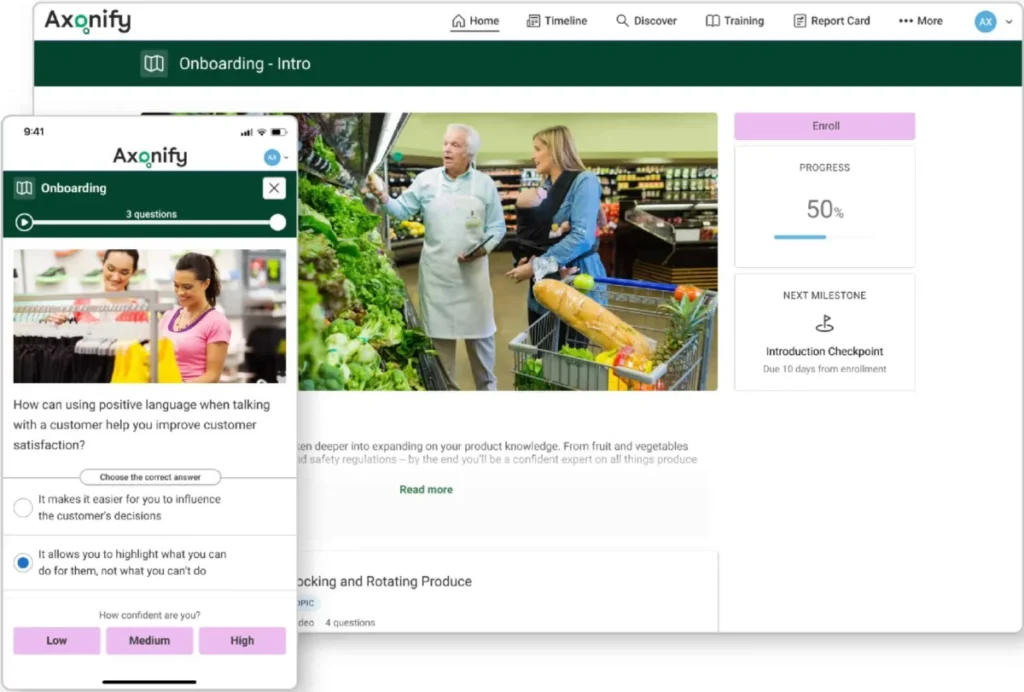
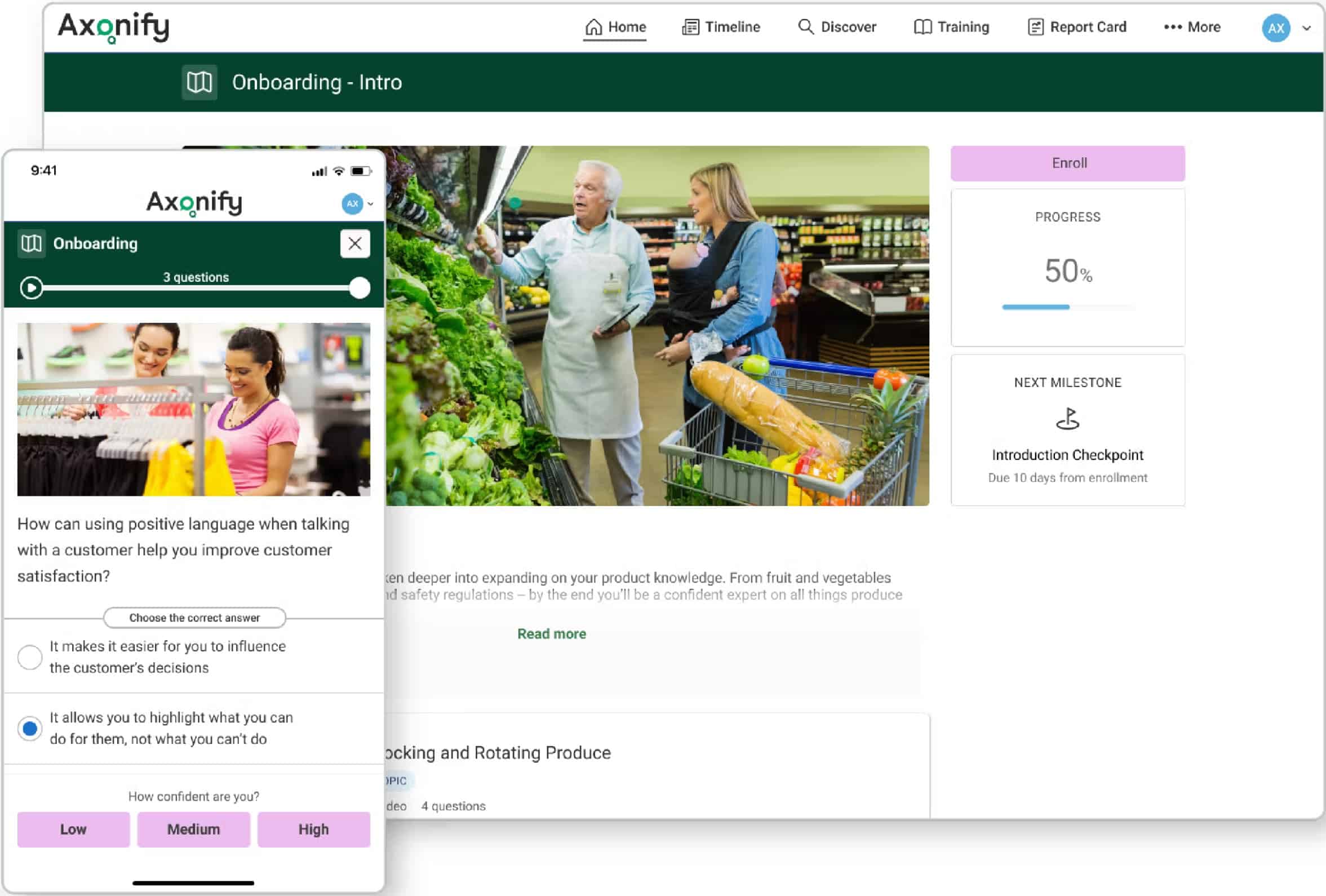
- Axonify: A pioneer in this space, Axonify utilizes brain science and AI to deliver adaptive training tailored to individual roles and knowledge levels. It reinforces critical behaviors through spaced repetition, ensuring that essential knowledge is retained and applied effectively by frontline staff.
- Kahuna: This platform focuses on operational training and in-depth skills validation, particularly within industries like oil and gas, energy, and manufacturing. Kahuna’s integration as a Workday Gold Innovation Partner highlights its role in enabling workers to recertify and upskill their competencies.
Unique Enablement Providers: Niche AI-Powered Solutions
Beyond these broader categories, specialized AI-powered enablement solutions are addressing highly specific needs.
- IMMERSE: This platform focuses on language fluency performance, using AI and live enablement experiences to enhance communication confidence across languages. It aims to move beyond traditional proficiency certificates to measurable communication skills.
- Feedly: In conjunction with AI-enabled L&D stacks, Feedly helps organizations translate external market signals into continuous, role-relevant learning moments. This aids employees in staying current and making informed real-time decisions, as exemplified by Chalhoub Group’s implementation in luxury retail.
- Glean: Initially an AI-powered search engine, Glean now provides real-time content discovery and access through platforms like Microsoft Teams and Slack. It positions itself as a comprehensive "work platform" with the potential to be the ultimate enablement tool by unifying access to information and resources.
The Collapsing Market Categories and the Future of Enterprise AI
The proliferation of these specialized and integrated solutions is leading to a convergence of traditional market categories. The distinctions between Learning Management Systems (LMS), Learning Experience Platforms (LXP), microlearning solutions, and Employee Experience Platforms (EXP) are blurring. As companies like Microsoft integrate AI assistants like Copilot into their existing suites, the expectation is that all HR-related platforms will offer robust "dynamic enablement" functionalities.
The core of Dynamic Enablement lies in its ability to synthesize expert and validated content (including proprietary company intellectual property), leverage external knowledge sources, and design experiences that are precisely tailored to the needs of specific employee roles. This shift transforms organizations from passive buyers of learning solutions to active "builders" of their enablement ecosystems.
In this new era of enterprise AI, where customization and integration are paramount, organizations are encouraged to explore these evolving solutions and experiment with their potential. The ability to provide employees with immediate, relevant support directly within their workflow is no longer a futuristic concept but a present-day imperative, driving a fundamental reinvention of how businesses foster continuous growth and performance.