Employee recognition, once considered a peripheral perk, has demonstrably evolved into a core strategic imperative for organizations aiming to thrive in a dynamic global economy. Its pervasive influence is evident across all facets of an enterprise, from individual performance to overarching business objectives. For Human Resources (HR) departments and C-suite executives, it represents a remarkably cost-effective mechanism to bolster engagement, cultivate a resilient organizational culture, and, crucially, retain top talent in an increasingly competitive labor market. However, modern enterprises are now viewing recognition as far more than a mere employee experience initiative; it is a fundamental driver of business performance.
A comprehensive 2026 report from Harvard Business Review Analytic Services, compiling insights from 566 members of the Harvard Business Review audience, underscores this evolving perspective. The report revealed that a significant 66% of leaders acknowledge reward and recognition as "very important" to business performance. Yet, a stark contrast emerges with only 33% of these same leaders reporting that their current recognition programs are "very effective" at influencing performance. This critical disparity highlights both the immense opportunity inherent in well-executed recognition strategies and the substantial "execution gap" that organizations worldwide are still striving to close.
The Strategic Imperative of Employee Recognition in the Modern Workplace
The landscape of work has undergone profound shifts in recent years, accelerated by global events and technological advancements. The "Great Resignation" phenomenon, the widespread adoption of hybrid and remote work models, and an intensified battle for skilled talent have compelled organizations to re-evaluate traditional employment contracts. In this environment, employee recognition has transitioned from a "nice-to-have" to a strategic "must-have." It is no longer sufficient to offer competitive salaries and benefits; employees increasingly seek a sense of belonging, purpose, and appreciation. Recognition programs, when implemented thoughtfully, serve as a powerful tool to address these evolving employee expectations, fostering an environment where individuals feel valued, understood, and motivated to contribute their best. This shift marks a significant evolution from ad-hoc, informal acknowledgments to structured, data-driven recognition frameworks that are deeply integrated into the organizational culture and strategy.
The Transformative Power on Employees: A Foundation of Engagement and Retention
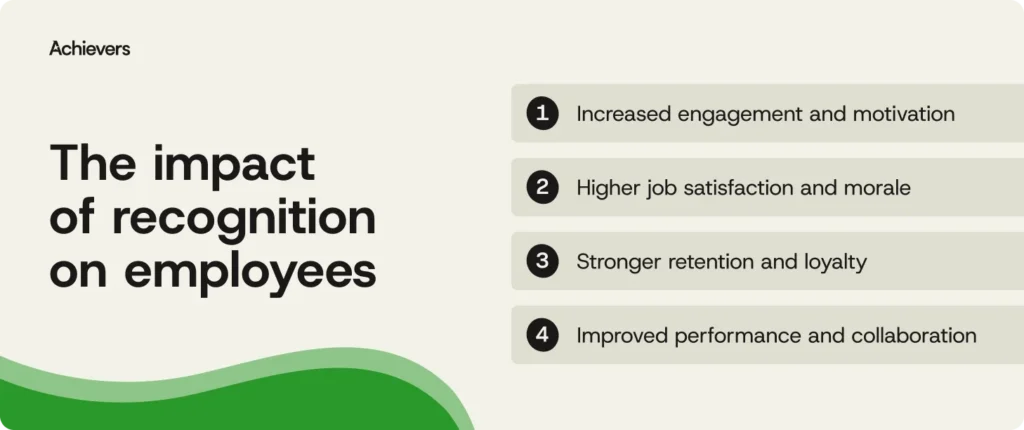
The impact of consistent and meaningful recognition on individual employees is profound and multi-faceted, serving as a bedrock for a productive and satisfied workforce.
Increased Engagement and Motivation
Engaged employees are the lifeblood of any successful organization. They exhibit greater resilience in the face of challenges, demonstrate enhanced collaboration with colleagues, and are deeply invested in achieving positive outcomes. Recognition stands out as one of the fastest and most effective methods to significantly boost this engagement. Beyond simply making employees feel good, recognition serves a crucial pedagogical function: it clarifies what truly matters to the organization. As Harvard Business School professor Amy Edmondson eloquently states, "Nothing is more important than appreciation in shaping organizational culture and delivering on strategy." Frequent, concrete acts of appreciation provide employees with direct feedback, reinforcing desirable behaviors and helping them reconnect with the fundamental importance of their daily contributions. This clarity not only motivates individuals but also aligns their efforts with broader strategic objectives.
Furthermore, in an era marked by significant talent mobility, recognition plays a critical role in retention. According to PwC’s Global Workforce Hopes and Fears Survey, a concerning 26% of employees are actively planning to leave their current organization within the next year. Meaningful recognition emerges as one of the most effective strategies to re-engage these at-risk employees and cultivate their loyalty, thereby mitigating costly turnover. This translates into employees who are more likely to:
- Proactively seek solutions to problems.
- Volunteer for additional responsibilities.
- Exhibit higher levels of creativity and innovation.
- Act as advocates for the company both internally and externally.
Higher Job Satisfaction and Morale
A strong sense of belonging is a powerful predictor of employee tenure. When individuals feel genuinely connected to their workplace community, they are far more likely to remain with the organization. This makes recognition one of the most cost-effective tools in the retention arsenal. It is unsurprising, therefore, that Forbes reports 38% of HR leaders are increasingly leveraging recognition and rewards to complement traditional compensation discussions. Recognition helps to forge this crucial sense of belonging by acknowledging not only headline-grabbing achievements but also the consistent, everyday efforts that are essential for operational continuity and success. This inclusive approach ensures that all contributions, big or small, are seen and valued, leading to:
- Reduced workplace stress and burnout.
- A more positive and supportive work environment.
- Enhanced team cohesion and camaraderie.
- Greater psychological safety, encouraging risk-taking and learning.
Stronger Retention and Loyalty
The cultivation of long-term loyalty often begins with immediate, meaningful acknowledgment. When employees feel genuinely seen, supported, and perceived as more than just a "cog in the machine," their propensity to remain with the company significantly increases. Forbes research indicates that a robust sense of belonging can boost retention by an impressive 43% and increase estimated tenure by 84%. These compelling statistics highlight the profound impact of something as seemingly simple as a sincere "Hey, great job." Recognition fosters an environment where employees feel invested in their future with the company, leading to:
- Reduced recruitment and onboarding costs.
- Preservation of institutional knowledge and expertise.
- A stable and experienced workforce capable of driving continuous improvement.
- Increased commitment to organizational goals and values.
Improved Performance and Collaboration
Recognition acts as a powerful feedback mechanism, clarifying expectations and illustrating what constitutes excellent work. This not only motivates the recognized individual but also inspires others to strive for similar levels of achievement. With Gallup reporting that only 23% of employees currently feel engaged, there exists a significant opportunity for organizations to bridge this engagement gap through more frequent, real-time recognition. Such timely feedback ensures that desired behaviors are reinforced promptly, fostering a culture of continuous improvement and high performance. When recognition is consistently applied, it paves the way for:
- Enhanced individual productivity and efficiency.
- More effective cross-functional teamwork and knowledge sharing.
- A culture of mutual support and constructive feedback.
- Greater innovation as employees feel secure enough to experiment and share ideas.
Furthermore, when recognition data is systematically captured and analyzed, it transcends its immediate motivational purpose. It transforms into a rich source of actionable intelligence, revealing meaningful patterns in collaboration, values alignment, and performance trends that can inform strategic decision-making.
Empowering Managers: Architects of Team Success
The role of a manager is inherently challenging, demanding a delicate balance of juggling priorities, coaching individual performance, and maintaining team morale. While recognition is not a panacea for all managerial complexities, it provides leaders with one of the most effective, yet often underrated, tools to lead their teams successfully.
Better Team Performance
The correlation between managerial recognition and team output is direct and undeniable. When managers consistently recognize their team members, the collective performance of those teams significantly improves. According to the State of Recognition Report (SOR), employees who receive weekly recognition are 2.6 times more likely to report peak productivity compared to those who never receive it. This multiplier effect is also observed with monthly recognition, which makes employees 1.8 times more likely to achieve peak productivity. With a striking 91% of employees indicating that recognition motivates them to exert greater effort, the return on investment (ROI) for such programs is difficult to overlook. This heightened recognition fuels:
- Faster project completion rates and adherence to deadlines.
- Higher quality of work and reduced errors.
- Increased capacity for problem-solving within the team.
- A proactive approach to challenges rather than reactive firefighting.
Higher Trust and Stronger Relationships
Exceptional managers are not merely taskmasters; they are foundational trust builders. Trust, a cornerstone of effective leadership, is cultivated through a series of small, consistent, and meaningful actions, such as recognizing effort and achievement when it truly counts. Research from the State of Recognition Report found that employees who are recognized by their manager are an astonishing 19 times more likely to trust them. This elevated level of trust forms a robust foundation that enhances every aspect of the manager-employee relationship, from the delivery of candid feedback to seamless collaboration on complex projects. This environment of trust fosters:
- Open and honest communication channels.
- Reduced conflict and enhanced conflict resolution.
- Greater willingness to seek and accept feedback.
- A stronger sense of loyalty and commitment to the manager.
Improved Leadership Effectiveness
Distinguishing between a "good" manager and a "great" one often comes down to their ability to inspire, build trust, and lead with clarity. Recognition plays a pivotal role in this transformation. Data from the Achievers Workforce Institute (AWI) reveals that employees who would recommend their manager are four times more likely to be engaged. This statistic underscores that recognition is not just appreciated in the moment; it is remembered and contributes significantly to a manager’s long-term reputation and effectiveness. Managers who skillfully leverage recognition are perceived as:

- More inspiring and motivating.
- Clearer in their expectations and guidance.
- More empathetic and supportive.
- More capable of fostering a positive team culture.
Easier Performance Management
Performance discussions often carry a negative connotation, frequently focusing on deficiencies. Recognition offers a powerful paradigm shift, redirecting the conversation from "what’s broken" to "what’s working well." This simple yet profound change can transform performance management into a more positive and constructive process. When employees consistently know that their efforts are noticed and valued, they are inherently more motivated to maintain high standards, proactively self-correct when necessary, and take genuine ownership of their professional development and growth. This proactive approach leads to:
- More constructive and less confrontational performance reviews.
- Increased employee receptiveness to developmental feedback.
- A culture of continuous learning and improvement.
- Reduced need for disciplinary actions due to early course correction.
HR’s Strategic Advantage: Cultivating Culture and Driving Insights
Human Resources teams wear a multitude of hats, serving as culture builders, retention strategists, data analysts, and brand stewards. Employee recognition acts as a powerful accelerant, making each of these critical functions more efficient and significantly more effective. It brings organizational values to life in everyday interactions, provides real-time insights into employee engagement, and transforms appreciation into a measurable, strategic asset. This translates to less guesswork and more impactful outcomes, ultimately creating a workplace where people genuinely want to belong.
Stronger Company Culture
Organizational culture is not defined by mission statements on a wall but by the lived experiences of employees in their day-to-day interactions. Recognition serves as a vital mechanism for bringing this culture to life, translating abstract values into tangible, visible actions. It acts as a continuous reinforcement loop, clearly signaling to employees what behaviors and contributions are most valued within the organization, and critically, why their work matters. This active reinforcement leads to:
- Deeper alignment of individual actions with organizational mission.
- A more cohesive and unified workforce.
- A positive and reinforcing cycle of behavior.
- A clearly articulated and consistently demonstrated set of organizational values.
Improved Employee Retention Metrics
A fundamental truth in talent management is that individuals are less likely to leave companies where they feel genuinely seen, supported, and appreciated. Recognition plays an indispensable role in cultivating this environment. By consistently acknowledging employees’ contributions, it reinforces their sense of belonging and provides them with compelling reasons to commit to their organization long-term. This direct correlation to employee sentiment significantly impacts critical HR metrics, resulting in:
- Lower voluntary turnover rates, especially among high-performing individuals.
- Reduced costs associated with recruitment, hiring, and training new employees.
- Higher employee satisfaction scores on internal surveys.
- Enhanced stability and continuity within teams and departments.
Data-Driven Insights on Engagement
One of the most powerful, yet often underutilized, aspects of modern recognition platforms is their ability to generate robust data. This recognition data can illuminate patterns and trends that traditional performance management systems frequently miss. The HBR report, for instance, highlights how organizations like Workday leverage recognition data to identify critical collaboration networks, track performance trends, and pinpoint strategically important behaviors across their workforce. By establishing a two-way integration between its recognition platform and its Workday HR system, Workday achieved a remarkable 70% year-on-year increase in employee feedback available to managers. This integration provided executives with what they described as a "richer picture of performance across the organization." Beyond these examples, recognition data can reveal:
- Emerging skill gaps or areas of excellence.
- Hidden high-performers and potential leaders.
- Dynamics of cross-functional collaboration.
- Early warning signs of disengagement or dissatisfaction.
Enhanced Employer Brand
An organization’s employer brand is fundamentally shaped by the authentic experiences and perceptions of its current employees. Recognition provides employees with tangible, positive experiences to share, strengthening the employer brand both internally and externally. It serves as concrete evidence that individuals are valued, and that appreciation is not a reserved privilege for senior leadership or confined to annual performance reviews. This consistent demonstration of appreciation translates into:
- Positive reviews on platforms like Glassdoor and LinkedIn.
- Increased social media engagement from employees sharing their positive experiences.
- A more attractive proposition for prospective candidates, reducing recruitment friction.
- Enhanced public perception of the company as an employer of choice.
Executive Leadership: Driving Performance and Shaping Vision
Executives are not merely architects of strategy; they are the primary tone-setters for the entire organization. When recognition is intentionally woven into their leadership philosophy and daily practices, its impact reverberates across every level of the enterprise, yielding measurable improvements in performance, alignment, trust, and retention. Recognition empowers leadership to genuinely "walk the talk," clearly demonstrating what truly matters, what is valued, and the strategic direction of the company.
Higher Organizational Performance
The direct link between robust recognition programs and superior organizational performance is well-documented. Companies that excel in employee recognition are demonstrably more profitable. According to the Incentive Research Foundation, organizations with strong recognition programs are 44% more profitable than those without. Furthermore, when employees feel genuinely recognized by their leadership, their productivity can increase by an impressive 17 to 26 percent. This enhanced productivity and profitability are a direct result of:
- Increased innovation and competitive advantage.
- Improved market share and customer satisfaction.
- More efficient resource utilization and reduced waste.
- A more agile and responsive organizational structure.
Better Alignment with Business Goals
While a clear vision is essential, its efficacy is contingent upon employees understanding how their daily tasks contribute to its realization. This is precisely where recognition makes a pivotal difference. It serves as a bridge, transforming abstract, big-picture objectives into concrete, actionable behaviors. By consistently highlighting and celebrating the actions that directly advance business goals, recognition ensures that individual efforts are precisely aligned with strategic imperatives. This alignment fosters:
- A unified sense of purpose across departments and teams.
- More efficient allocation of effort and resources towards strategic priorities.
- Reduced redundancy and conflicting objectives.
- A clearer understanding of individual impact on overall success.
Improved Employee Experience and Culture
A thriving organizational culture requires sustained attention, intentional effort, and, crucially, consistent recognition. When this recognition originates from leadership, its impact is amplified exponentially throughout the organization. In fact, 77% of employees report that they work harder when they feel recognized not only by their leaders and managers but also by their peers. This collective commitment to appreciation cultivates a vibrant culture where:
- Employee Net Promoter Scores (eNPS) are consistently high.
- Internal advocacy for the company flourishes.
- A positive and supportive work environment is organically sustained.
- Employees feel deeply connected to the company’s mission and values.
Stronger Leadership Reputation
Employees vividly remember how leaders make them feel. When leaders consistently make their team members feel genuinely valued, that trust becomes deeply ingrained and enduring. Research from Deloitte reveals that companies led by trusted leaders outperform their peers by a staggering 400 percent. Furthermore, employees who trust their leadership are 1.5 times more likely to publicly defend their company and 33 percent less likely to seek employment elsewhere. Recognition, in this context, becomes a powerful signal of empathy, transparency, and confidence – all qualities that are highly sought after and respected in leadership. This consistent practice builds:
- Increased credibility and respect for executive leadership.
- Greater employee willingness to follow and support strategic decisions.
- A perception of authentic and ethical leadership.
- Enhanced loyalty and reduced resistance to change.
Bridging the Gap: Implementing Effective Recognition Programs
The Harvard Business Review Analytic Services report clearly identified a significant "execution gap" between the perceived importance of employee recognition and the actual effectiveness of current programs. Bridging this gap requires a strategic, holistic approach to implementation. "Recognition done right" transcends mere gestures; it becomes an ingrained habit, consistently practiced across all levels of the organization.
Effective recognition programs are characterized by several key elements:
- Consistency and Timeliness: Recognition should be frequent and delivered as close to the recognized action as possible to maximize its impact.
- Authenticity and Specificity: Generic praise is far less impactful than specific, genuine acknowledgment that details what was done well and why it mattered.
- Personalization: Understanding individual preferences for recognition ensures that the appreciation resonates deeply with the recipient.
- Inclusivity: Programs must ensure that all employees, regardless of role, tenure, or department, have equal opportunities to be recognized and to recognize others.
- Alignment with Values: Tying recognition directly to organizational values reinforces desired cultural behaviors and strategic priorities.
- Accessibility: Modern recognition platforms, such as those offered by Achievers, provide flexible, points-based systems and personalized rewards that seamlessly integrate across diverse teams, regions, and roles. These platforms make recognition easy, intuitive, and widely accessible.
Furthermore, leveraging technology allows organizations to move beyond anecdotal evidence and gain quantifiable insights into the impact of their recognition efforts. Tools like the Achievers ROI calculator enable companies to track precisely how recognition is contributing to key business metrics, justifying investment and refining strategies.
Conclusion
The journey of employee recognition from a discretionary act to a strategic imperative reflects a deeper understanding of human motivation and organizational dynamics. Its effects are far-reaching and profoundly positive: employees become more engaged and motivated, managers lead with greater effectiveness, HR teams gain invaluable data-driven insights, and executives witness stronger organizational alignment and superior business results. When recognition is embedded into the fabric of an organization’s culture through thoughtful design and consistent execution, it transcends being merely a program; it becomes a powerful, self-sustaining habit. This habit fosters connection, cultivates a high-performance culture, and ultimately shapes a workplace where individuals are not only productive but also deeply fulfilled. Experiencing how effective recognition can elevate performance at every level is no longer an aspiration but a strategic necessity for sustained success in the contemporary business landscape.