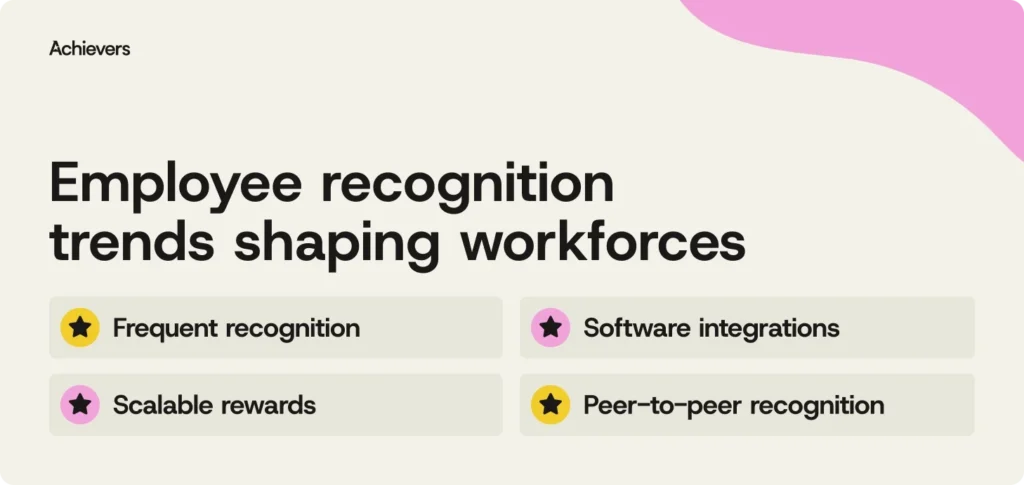
Today’s workforce is signaling a clear departure from traditional notions of employee appreciation. Beyond a competitive salary and infrequent acknowledgments, employees are now actively seeking recognition that is consistent, specific, and directly tied to their demonstrable impact. This paradigm shift, highlighted by recent industry research, underscores a fundamental change in employee expectations and organizational priorities. The implications for engagement, retention, and overall business performance are profound, prompting leading organizations to re-evaluate and modernize their recognition strategies.
The landscape of employee recognition is undergoing a significant transformation, driven by evolving employee expectations and technological advancements. As organizations navigate the complexities of the modern workplace, the emphasis is shifting from perfunctory gestures to a more integrated, personalized, and impactful approach to acknowledging employee contributions. This evolution is not merely about boosting morale; it is a strategic imperative for fostering a culture of engagement, driving productivity, and ultimately, achieving sustainable business success.
The Urgent Need for More Meaningful Recognition
The core of this transformation lies in the growing disconnect between employee desires and current recognition practices. Data from the 2026 State of Employee Recognition Report reveals a stark reality: a mere 17% of employees report receiving recognition on a weekly basis. This deficit has tangible consequences. When recognition falters, so too do crucial elements of the employee experience, including engagement, trust, and an employee’s inclination to remain with the company.
Conversely, the research offers compelling evidence of the positive impact of consistent appreciation. Employees who experience meaningful weekly recognition are an astounding nine times more likely to feel a strong sense of belonging within their organization. Furthermore, they exhibit over double the likelihood of performing at their peak capacity. This data unequivocally positions recognition, when executed effectively, as a powerful lever for leading organizations to cultivate a robust company culture, reinforce core values, and drive internal performance that translates into external results.
Key Trends Redefining Employee Recognition in 2026
The contemporary approach to employee recognition is characterized by several key trends that are reshaping workplace dynamics. Understanding and implementing these trends is crucial for organizations aiming to stay ahead in the competitive talent market.
1. The Rise of Frequent and Micro-Recognition
The era of the annual performance review as the primary moment for praise is rapidly receding. Employees are no longer content to wait for a once-a-year acknowledgment; they expect and demand regular feedback and appreciation. In 2026, frequent recognition has transitioned from an exceptional occurrence to a standard expectation.
This trend extends beyond celebrating major milestones or significant achievements. A growing number of companies are embracing "micro-recognition," a strategy that focuses on acknowledging everyday contributions, small wins, and incremental progress in real-time. These seemingly minor moments, when aggregated, create a powerful cumulative effect, fostering a visible and pervasive culture of appreciation.
The Achievers Workforce Institute’s (AWI) State of Recognition Report substantiates this shift, indicating that employees who receive recognition weekly are 2.6 times more likely to be operating at their most productive levels. The beauty of frequent recognition lies in its scalability and simplicity. Organizations are increasingly adopting strategies such as:
- Instant digital shout-outs: Leveraging internal communication platforms for immediate public praise.
- Team huddles for shout-outs: Incorporating brief moments in team meetings for peer and manager acknowledgments.
- Automated reminders for managers: Utilizing technology to prompt managers to provide regular feedback.
- Integration with project management tools: Triggering recognition upon task completion or milestone achievement.
2. Personalization and Purpose in Recognition
A generic "great job" is losing its efficacy. Employees today desire specificity and clarity regarding what they did well and why their contribution was valuable. Thoughtful and tailored recognition not only reinforces desired behaviors but also significantly increases the probability of those behaviors being repeated.

To cultivate a consistent habit of meaningful recognition, organizations are focusing on:
- Linking recognition to company values: Explicitly connecting an employee’s actions to the organization’s core principles.
- Highlighting specific achievements: Detailing the precise impact of the employee’s contribution.
- Encouraging peer-to-peer specific feedback: Facilitating a culture where colleagues can offer targeted praise.
- Providing context for impact: Explaining how the employee’s work contributed to team or organizational goals.
- Tailoring recognition to individual preferences: Understanding what motivates each employee, whether it’s public acknowledgment, private thanks, or a specific reward.
3. Seamless Integration into Existing Tech Stacks
A significant shift in recognition strategies involves its integration into the digital tools employees already use daily. Recognition is no longer an isolated function residing on a separate platform requiring additional logins or navigation. By embedding recognition into everyday workflows and commonly used applications, it becomes an organic part of the work experience, fostering greater adoption and consistency.
Leading organizations are achieving this by:
- Integrating recognition tools with collaboration platforms: Such as Slack, Microsoft Teams, or Google Workspace.
- Embedding recognition features within HRIS systems: Making it accessible during performance discussions or employee check-ins.
- Utilizing project management software for task-based recognition: Appreciating contributions directly within project workflows.
- Developing mobile-first recognition solutions: Ensuring accessibility and ease of use for employees on the go.
4. Scalable and Personalized Rewards
While a branded coffee mug might suffice for some, it often ends up forgotten. In 2026, the emphasis is on rewards that resonate personally with the individual recipient. This approach ensures that appreciation feels genuine and impactful.
Organizations are increasingly offering scalable, personalized rewards by:
- Providing a catalog of reward options: Allowing employees to choose from a diverse range of items, experiences, or charitable donations.
- Offering points-based systems: Enabling employees to accumulate points redeemable for their preferred rewards.
- Leveraging gift cards for flexibility: Empowering employees to select goods or services that meet their specific needs.
- Enabling experiential rewards: Offering opportunities like team outings, professional development courses, or wellness activities.
- Allowing for personalized messages with rewards: Adding a human touch and reinforcing the specific reason for the recognition.
This personalization is particularly vital for supporting dispersed and global teams, granting employees the autonomy to select rewards that hold personal meaning, irrespective of their geographical location or work setting.
5. Accessible Employee Recognition Platforms
A recognition program that is exclusive to office-based employees is inherently limited. Modern recognition initiatives must be inclusive, catering to the diverse needs of all employees, regardless of their work environment, device, or language.
This necessitates adopting platforms with the following characteristics:
- Multi-device compatibility: Ensuring seamless access via desktops, laptops, tablets, and smartphones.
- Multilingual support: Accommodating a global workforce with diverse linguistic backgrounds.
- Offline capabilities: Allowing recognition to be logged even when internet connectivity is intermittent.
- User-friendly interface: Designing intuitive platforms that are easy for all employees to navigate.
- Integration with frontline worker tools: Connecting with systems used by deskless employees.
When recognition is truly accessible, it extends its benefits to all segments of the workforce, including frontline and deskless workers who are often overlooked by traditional recognition programs.
6. The Power of Peer-to-Peer Recognition
Peer recognition plays a pivotal role in fostering connection, elevating morale, and reinforcing shared organizational values across teams. Research indicates that employees who are regularly acknowledged by their peers are 33% more likely to experience a sense of belonging compared to those who are not.
To cultivate a culture of peer-powered appreciation, organizations are implementing:
- Easy-to-use peer recognition tools: Simple mechanisms for sending thanks and praise.
- Public recognition feeds: Showcasing peer acknowledgments to amplify their impact.
- Managerial encouragement of peer-to-peer feedback: Leading by example and promoting its importance.
- Gamification of peer recognition: Introducing elements of friendly competition or rewards for active participants.
- Integration with team-building activities: Encouraging peer appreciation as part of collaborative efforts.
7. Strategic Promotion of Recognition Programs
Even the most sophisticated recognition program will falter if employees are unaware of its existence or its value. Effective promotion is paramount to driving engagement and ensuring the program achieves its intended objectives.
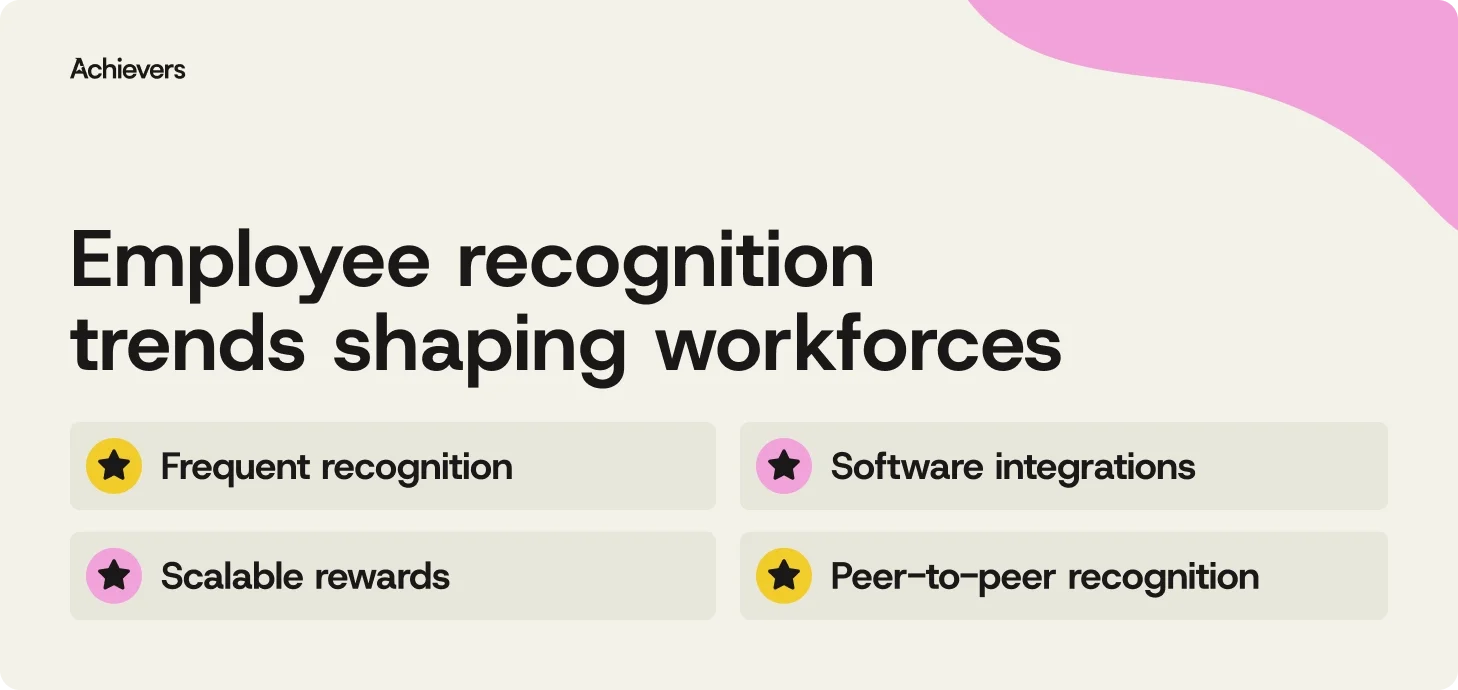
The fix? Treat your recognition program as an internal marketing campaign. AWI research consistently demonstrates a direct correlation between recognition frequency and key performance indicators such as productivity, retention, and employee belonging – but only when employees actively participate in the platform.
The most effective companies are:
- Launching programs with clear communication: Explaining the "why" and "how" of the recognition system.
- Regularly highlighting program successes: Sharing stories and data that showcase the program’s impact.
- Securing leadership buy-in and participation: Ensuring senior leaders are visible advocates and active users.
- Integrating program promotion into onboarding: Introducing new hires to the recognition culture from day one.
- Providing ongoing training and support: Ensuring employees feel confident and equipped to use the platform.
Visibility is a critical driver of repeated behavior. When leadership models the desired actions, it sets a powerful precedent, encouraging broader adoption and embedding recognition into the organizational fabric.
8. Data-Driven Decision-Making in Recognition
Leading organizations are leveraging recognition data to inform strategic talent management decisions. This involves tracking recognition frequency, identifying key sources of recognition (managerial vs. peer), analyzing trends across diverse demographics and teams, and sharing these insights with leadership. According to AWI’s 2026 Engagement and Retention Report, employees who feel appreciated are an astonishing 17 times more likely to envision a long-term career at their company, making recognition data indispensable for engagement and retention strategies.
To translate data into actionable insights, organizations are:
- Establishing clear recognition metrics: Defining what success looks like and how it will be measured.
- Conducting regular data analysis: Reviewing trends and identifying areas for improvement.
- Sharing anonymized data with leaders: Providing objective insights into employee sentiment and engagement.
- Using data to personalize recognition strategies: Tailoring approaches based on observed patterns.
- Benchmarking against industry standards: Comparing recognition program performance to best practices.
Future Horizons: Technological Advancements in Employee Engagement
Beyond the immediate trends, several technological advancements are poised to further revolutionize employee engagement and recognition. These innovations promise to make recognition more intelligent, insightful, and deeply integrated into the employee experience.
1. Artificial Intelligence in Employee Engagement Technology
Artificial intelligence (AI) is emerging not as a replacement for human interaction, but as a powerful enabler of more consistent employee engagement. AI tools are streamlining the process of recognizing peers and providing leaders with deeper insights into employee sentiment and engagement data. Early indications from the 2026 State of Employee Recognition Report suggest momentum, with 14% of employees reporting that AI tools simplify recognition for managers and peers.
The successful adoption of AI is contingent on its implementation. IBM research indicates that employees are 34% more likely to embrace new business structures when engagement is a core component of the transformation process. Looking ahead, AI is expected to operate largely behind the scenes, facilitating more frequent and frictionless employee engagement.
2. Analytics and Data as Engagement Signals
The sophisticated analysis of engagement data, encompassing recognition activity and feedback patterns, is becoming instrumental in understanding the evolving employee experience. This data provides critical insights into employee connection, participation levels, and overall engagement across various teams and roles. As analytics become more interpretable, engagement data will transition from a periodic reporting tool to a regular resource for informing decisions related to company culture, performance management, and retention strategies.
3. Employee Development Through Ongoing Engagement
The focus on employee development is intensifying as individuals seek to acquire new skills and adapt to evolving job requirements. Growth is no longer confined to formal training programs or annual review cycles. Recognition and feedback can now serve as real-time indicators of an employee’s strengths, acquired skills, and impactful contributions, enabling them to better understand their professional development trajectory through their day-to-day work.
As this trend solidifies, professional development is becoming a more continuous and visible process. Engagement technology will increasingly support this by helping employees and leaders track progress over time, facilitating ongoing development conversations and decision-making throughout the year, rather than relying solely on formal performance reviews.
4. Wellbeing and Psychological Safety at Work
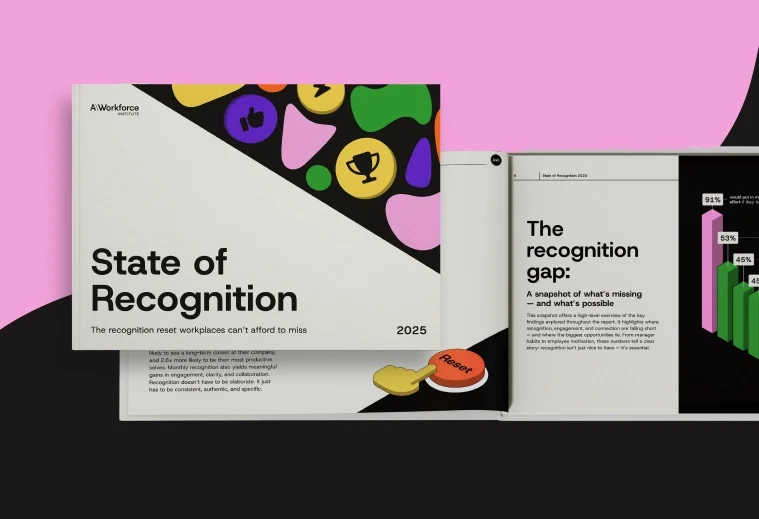
The increasing importance placed on employee wellbeing and psychological safety reflects a heightened awareness of how supported individuals feel in their work environments. Feeling recognized and valued plays a significant role in this, with AWI research indicating that 24% of employees believe recognition would boost their confidence during periods of change.
Looking forward, engagement technology is expected to be deployed more strategically to reinforce wellbeing through consistent, everyday interactions. Recognition and feedback mechanisms will become crucial for identifying early signs of stress or disengagement, fostering positive behaviors that build trust and inclusivity. Over time, these tools will play a more substantial role in shaping employees’ perceptions of support and psychological safety as an integral part of their work experience.
5. Continuous Feedback and Engagement
The demand for more frequent feedback is growing as employees seek clarity and direction in real-time. Engagement technology facilitates the timely delivery of recognition and feedback, enabling employees to understand what is working well and where they are making a tangible impact.
Feedback is evolving to feel more natural and ongoing. Engagement software tools will continue to support regular, lightweight feedback throughout the year, helping teams maintain alignment as priorities shift. This integration will transform feedback into a seamless component of daily work, rather than an event reserved for formal review cycles.
Achievers: A Platform Aligned with Modern Recognition Trends
These evolving trends underscore a fundamental shift in how recognition is perceived and practiced within the contemporary workplace. Implementing these strategies effectively requires the right technological infrastructure. Achievers has developed a platform specifically designed to meet these demands, with every component engineered to align with the expectations of today’s workforce: frequent recognition, meaningful rewards, and personalized experiences that transcend transactional interactions.
The Achievers platform offers:
- A comprehensive recognition engine: Facilitating various forms of recognition, from peer-to-peer to manager-led initiatives.
- A vast reward marketplace: Providing employees with personalized choices that align with their preferences.
- Integrated communication tools: Seamlessly embedding recognition into existing workflows.
- Robust analytics and reporting: Offering insights into program effectiveness and employee engagement.
- Global accessibility and scalability: Supporting diverse workforces across geographical boundaries.
Achievers empowers organizations to foster recognition that connects individuals to purpose, helping to shape a desired organizational culture through consistent moments of appreciation.
Bringing Recognition Trends to Life
The trends shaping employee recognition in 2026 are fundamentally about creating workplaces where individuals feel seen, supported, and connected to a larger mission. When recognition is consistent, personal, and easily administered, it yields benefits that extend far beyond morale. It drives enhanced performance, cultivates deeper trust, and fosters long-term loyalty.
The positive news is that organizations do not have to navigate this evolution alone. Whether embarking on the journey of establishing a recognition program or seeking to elevate an existing one, Achievers provides the essential tools, strategic insights, and dedicated support needed to build a sustainable and impactful recognition culture.